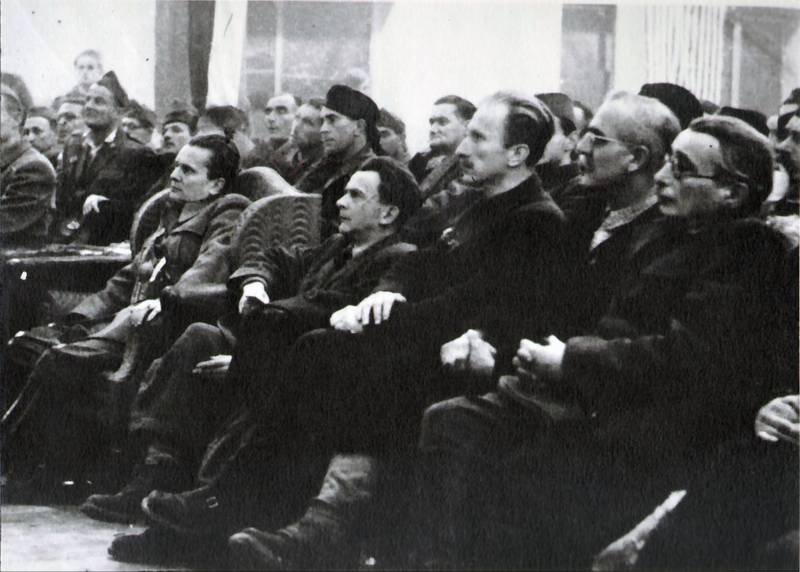


Stalin and Tito: 1947 – Explaining History
While the Sino-Soviet split of the 1960s is perhaps the most profound schism in the communist world, the earlier rupture between Joseph Stalin and Josip Broz Tito of Yugoslavia was, in many ways, more psychologically damaging to the Kremlin.
In this week’s podcast, I explored this fascinating schism, drawing on R.J. Crampton’s excellent Eastern Europe in the Twentieth Century – And After. The split wasn’t just about geopolitics; it was about the very nature of socialist sovereignty.
The Independent Path
Unlike the leaders of Poland, Hungary, or East Germany, Tito did not ride into power on the back of a Soviet tank. The Yugoslav Partisans liberated their own country from Nazi occupation, a fact that gave Tito a unique legitimacy and independence.
Stalin, ever paranoid, viewed this independence not as an asset, but as a threat. His worldview required absolute conformity from satellite states. Communist parties were expected to be subordinate to Moscow, serving Soviet foreign policy interests above their own national needs. Tito, who had famously telegraphed Stalin during the war saying, “If you cannot help us, then please do not hinder us,” refused to fit this mold.
Economic Exploitation and “Grandfather Stalin”
The friction wasn’t just ideological; it was economic. As Crampton details, the Soviets treated Yugoslavia less like an ally and more like a colony. Moscow demanded that Yugoslavia focus on agriculture rather than industry, ensuring a steady supply of cheap food for the USSR.
They set up “joint stock companies” that were blatantly exploitative, assessing Soviet inputs at inflated post-war prices while valuing Yugoslav resources at pre-war rates. When Tito complained, Stalin admitted these structures were designed for “defeated enemy states”—a stunning admission of how he viewed his supposed allies.
Cultural Arrogance
The split was also fueled by cultural resentment. Soviet officials were deeply patronizing, with Stalin’s cultural tsar Andrei Zhdanov once asking a senior Yugoslav communist if they even “had an opera” in Yugoslavia.
The Soviets flooded the country with overpriced propaganda films and books, demanding they be prioritized over Western culture. The absurdity reached its peak when the Yugoslavs were charged $20,000 for a mediocre Soviet spy film, while Laurence Olivier’s Hamlet cost them only $2,000. For a proud nation that had fought its own war of liberation, this condescension was intolerable.
The Legacy of the Split
By 1948, the tension was untenable. The Yugoslav Communist Party was expelled from the Cominform, and Stalin reportedly claimed, “I will shake my little finger, and there will be no more Tito.”
He was wrong. Tito survived, and Yugoslavia carved out a “third way,” pioneering the Non-Aligned Movement. The split forced the Yugoslav leadership to develop their own critique of Stalinism, identifying it not as true socialism, but as a bureaucratic state capitalism that exploited workers.
Ultimately, the rift was so deep that by 1953, Stalin was actively plotting Tito’s assassination—a plan only halted by the Soviet dictator’s own death. It serves as a potent reminder that in the world of totalitarianism, the heretic is often hated more than the infidel.
Transcript
Nick: Welcome again to the Explaining History podcast.
Now, if you are interested in the Soviet Union, Stalin, Lenin, or anything on the subject of modern Russia, listen to the end. I’m going to be announcing a live webinar I’m hosting in January for students of Russian history. So stick around for details on how to sign up.
Today, we’re going to talk about a particular aspect of the final years of Stalinism: the schism between Stalin and Tito. It’s really important to understand how schismatic Soviet communism was. The questions in Stalin’s mind about Mao—and later the Sino-Soviet split under Khrushchev—were one aspect of this. But a more pressing matter for Stalin was Tito, the communist ruler of Yugoslavia.
Tito had managed to seize power in Yugoslavia largely without Soviet help. He held a more non-aligned view of Yugoslavia’s development, a more independent view, and didn’t necessarily subscribe to the Stalinist line of Marxist-Leninism.
A key part of Stalin’s rather paranoid worldview during the interwar years was that communist parties in non-communist countries needed to show conformity to the Soviet line. They needed to be part of the Comintern and deal ruthlessly with rival parties on the Left. This, Stalin argued, was the only way to create unity of action, but it was also a useful tool for furthering Soviet foreign policy. Crucially, you didn’t want Trotskyist parties emerging.
The situation changed at the end of the Second World War because a large part of Eastern Europe was occupied by the Red Army, allowing Stalin to impose regimes of his choosing. But Yugoslavia didn’t fall easily into that mold. Stalin saw Tito as a potential threat because he was an alternate voice within the communist world.
We’re going to look today at R.J. Crampton’s Eastern Europe in the Twentieth Century – And After. Specifically, chapter 15 on the Yugoslav-Soviet split.
Crampton notes that the Prague coup of February 1948 appeared to give Stalin mastery over Eastern Europe. Yet, Stalin felt his monopoly of power threatened from within. On June 28, 1948, the Yugoslav Communist Party was expelled from the Cominform.
Beneath the surface, there had always been tension. The Communist Party of Yugoslavia (CPY), thanks to its war record and the fact that its leaders spent the war fighting in Yugoslavia rather than waiting in Moscow, felt self-confident. As a victor power, Yugoslavia didn’t have to answer to an Allied Control Commission.
Sources of frustration appeared during the war itself. The Partisans expected military assistance from the USSR but were largely disappointed. At one point, an exasperated Tito telegraphed Stalin: “If you cannot help us, then please do not hinder us.”
After the war, Stalin made disparaging remarks about the Partisans, comparing them unfavorably to the Bulgarian army, which he claimed had a “proper officer cadre.” Ironically, during the war, the British decided to back Tito rather than the Yugoslav monarchy because they realized Tito was far more likely to defeat the Germans.
Stalin was also alarmed by what he considered “Partisan excesses.” He was concerned by their ferocious policies in 1941-42, which included executing alleged kulaks and enforcing collectivization. You might think this would be music to Stalin’s ears, but Stalin wasn’t a leader who simply said, “Great, do what we did.” He looked at things on a case-by-case basis. He wanted Yugoslavia to remain a stable buffer state against the West, not a hotbed of unpredictable radicalism.
Stalin advised caution in his takeover of Eastern Europe, suggesting communist parties participate in coalition governments before gradually taking over. The Yugoslavs viewed this advice as unwarranted.
Stalin argued that in other states, the “Popular Front” strategy allowed communists to eliminate opponents slowly. In Yugoslavia, he claimed, the Partisans had recruited too many peasants, swamping the “true bearers of socialist revolution”—the urban proletariat. This allegation was false; the CPY was firmly controlled by Marxist intellectuals. However, it mirrored the anxiety the Soviets would later have about Mao—that the wrong sort of revolution would produce something alien to Soviet communism.
The CPY’s independence was also evident in its economic policy. Arguing that Yugoslavia was rich in raw materials, they set out to build a heavy industrial base. Their Five-Year Plan of 1947 earmarked huge investment for industry, restricting consumption. This was exemplary Stalinism—mimicking the forced industrialization of the Soviet Five-Year Plans.
However, the Soviets made it clear they would not provide the capital for this. They needed resources for their own reconstruction. Instead, they expected Yugoslavia to concentrate on agriculture. This is how imperial powers work; they want satellite states to focus on their comparative advantage to supply the metropole.
The Soviets expected Yugoslavia to accept economic domination. They proposed a joint bank with a Soviet director, which would have wielded enormous power over the Yugoslav economy. Under trade treaties, Yugoslavia had to sell raw materials to the USSR at low prices. The Soviets also created joint stock companies for air services and shipping, assessing Soviet inputs at inflated 1946 prices while valuing Yugoslav inputs at 1938 prices. When Tito complained, Stalin abolished the companies, admitting they were institutions designed for “defeated enemy states.”
The Soviets were equally domineering in the cultural sphere. Andrei Zhdanov, the Soviet cultural supremo, once condescendingly asked a senior Yugoslav official, “Do you have an opera in Yugoslavia?” They insisted on increasing the number of Russian plays and films in Yugoslavia. The Yugoslavs were happy to present quality material, but resented paying exorbitant prices for rubbish. They were charged $20,000 for a Soviet spy film, while Laurence Olivier’s Hamlet cost only $2,000.
Furthermore, Stalin placed agents throughout the Yugoslav party and state structures. Red Army officers on secondment demanded salaries three or four times higher than their Yugoslav equivalents. This caused deep resentment.
Tito and his associates were not prepared to tolerate this treatment. They insisted that their path to socialism, while different from Stalin’s, was equally valid. As tensions rose, the Yugoslav leadership developed a critique of Stalinism itself. They argued that in the USSR, the abolition of private property had not led to worker control, but to exploitation by a new privileged bureaucracy, maintained by an enormous police apparatus.
This schism ran so deep that by 1953, Stalin had a plan to assassinate Tito—a plan aborted only by Stalin’s own death.
Announcement:
I want to mention the live event coming up. On January 11th, I will be hosting a one-hour (perhaps slightly longer) study masterclass on the Soviet Union and the Stalin era.
If you are studying this for GCSE, A-Level, IB, or any other exam board, this is for you. We will be delving into the Five-Year Plans, the Stalinist Terror, and the power struggles. We will also cover exam techniques and essay writing tips, followed by a Q&A. I’ll be putting out an online ticket at a very reasonable price, so keep an eye out for reminders.
Thanks very much for listening, and I’ll catch you on the next Explaining History podcast. Bye-bye.

Leave a Reply