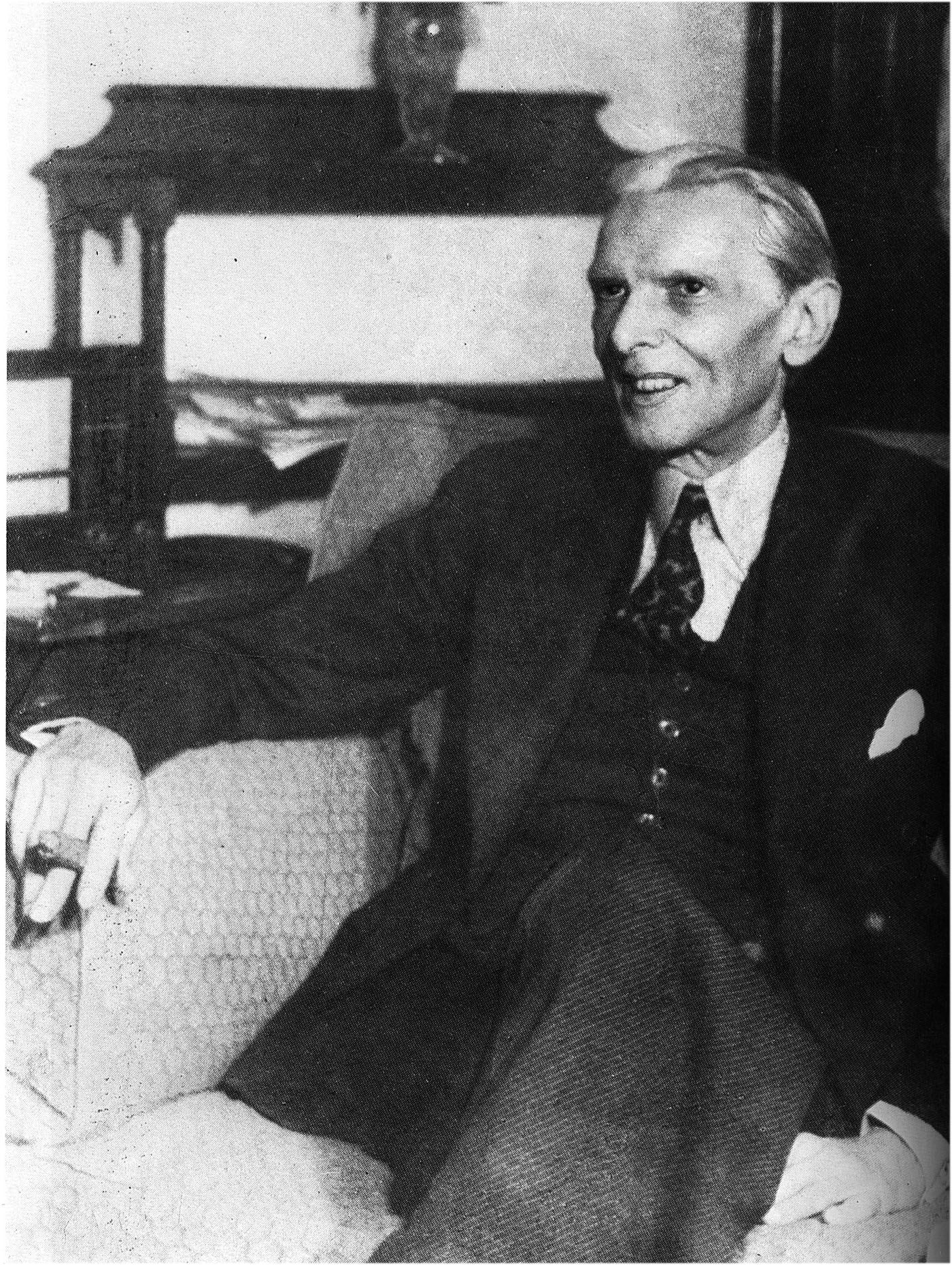

By the 1930s–40s, the All-India Muslim League (AIML) under Muhammad Ali Jinnah claimed to represent all of British India’s Muslims, even demanding a separate state (Pakistan) at its 1940 Lahore session. League leaders pointed to electoral successes – for example, winning 87% of all Muslim seats in the 1946 provincial elections – as proof that they were “the sole representative of Muslim India” . The League’s spectacular rallies (such as the August 1946 “Direct Action Day” meeting in Calcutta, shown below) underscored its mass appeal. Yet this picture was incomplete: many Muslims and Muslim organizations disagreed that the League spoke for all Indian Muslims. Instead they offered competing visions of Muslim interests – from religious unity to class-based nationalism – and actively campaigned for alternative outcomes. This article examines the League’s claim and the various Muslim voices that challenged it, from the Jamiat Ulema-e-Hind to regional parties like Punjab’s Unionists and Pashtun nationalists, and considers how these conflicts shaped the path to Partition.
The Muslim League’s Claim and Its Basis
By the 1940s Jinnah presented the League as the undisputed spokesman for India’s 70+ million Muslims. In its propaganda, every election victory was invoked as a mandate – indeed, after the League won 425 of 1585 seats in 1946 (virtually all Muslim seats), the party declared that this “verified its claim to be the sole representative of Muslim India” . Officially, British authorities even treated the League as the Muslim community’s representative (while branding rival groups as “so-called” ).
Congress critics challenged this claim: they pointed out that only about a quarter of India’s Muslims were eligible to vote in the 1946 elections due to restrictive property and education-based franchise rules. They also argued that the Muslim League’s support came primarily from urban elites and landed gentry, rather than the wider Muslim population, particularly peasants and rural labourers.
Nevertheless, the League’s electoral gains and organizational reach gave weight to its claim. Jinnah himself “professed to speak for the whole Muslim population” , framing India’s crisis as a Hindu-Muslim one. The Lahore Resolution (1940) voiced the League’s demand for a separate Muslim federation. After World War II, with British power waning, Jinnah pressed harder: in 1946–47 he insisted that without Pakistan, “Muslim humanity will be the greatest sufferers” (Jinnah speech, 1946) – a claim many ordinary Muslims did not share. Importantly, in many Muslim-majority provinces the League was weak before 1940. For example, in the 1937 Punjab elections the secular, multi-faith Unionist Party won 78 of 89 Muslim seats, while the League won only 2 . Thus until mid‑1930s most Punjabi Muslim voters supported an alliance of Muslims, Hindus and Sikhs, not the communal League. Only after Jinnah’s “Punjab Pact” of 1937 – under pressure on Unionist chief Sir Sikandar Hayat Khan – did many Punjab Muslims start shifting toward the League .
Despite the League’s eventual dominance, it was never unchallenged. Multiple Muslim leaders and movements loudly declared that they, too, spoke for Muslims – often a very different political community than the League envisioned. The rest of this article surveys the major challengers.
Religious Scholars and “Composite” Nationalism: Jamiat Ulema-e-Hind
One of the earliest and most prominent challengers was the Deobandi-led Jamiat Ulema-e-Hind (JUH), founded in 1919. The Jamiat’s scholars (ʿulamāʾ) insisted on Hindustani nationalism and were fiercely against partition. Its most famous leader, Maulana Hussain Ahmad Madani, argued that Muslims and Hindus had coexisted for centuries as one nation. As Madani wrote in 1940, “Muslims have been together with the Hindus since they moved to Hindustan… Till the time there are Muslims in India, they will be together with the Hindus.” He scoffed at calls to separate: “All ten crore Muslims of India are guilty then of being with the Hindus.” This letter makes clear Madani’s point: Muslims live intertwined with Hindus in every nook of India (bazaars, schools, offices, courts, etc.), so there is no natural rupture separating them.
Underpinning this was Madani’s view that India was a single territorial nation-state, not a collection of separate religious nations. He argued that “the fundamental institution of contemporary political life was the territorial nation-state,” and India already embodied that . From this standpoint, British imperialism was the real enemy, not Hindu-Muslim unity. Madani warned that Partition was a British “ploy” to weaken India’s independence movement and extend colonial control . Pointing to past British tactics (e.g. how Britain had carved up the Ottoman Empire), he urged Muslims to resist the idea of a Muslim-only state. In debates and pamphlets, Madani dissected Jinnah’s proposals: he noted that even League leaders admitted Pakistan would have a Western-style democracy and socialist elements . He ridiculed dreams of a Sharia-based Pakistan when Jinnah said the state would be founded by a democratically elected assembly . In short, Jamiat-ul-Ulama believed India’s Muslims should fight for a united, independent India alongside Hindus – a stance reinforced by their alliance with Congress (the JUH formed an Azad Muslim Board to contest elections alongside Congress). British authorities often cited this composite doctrine; a 1940 Delhi conference of nationalist Muslims proclaimed that no power would “rob Indian Muslims of their just rights as Indian nationals,” regardless of faith .
Madani and other Jamiat leaders therefore accused Jinnah of betraying Islam and India. When critics branded him a “Hindu sympathizer,” Madani retorted that indeed he was born and raised in India and had always worked among Hindus. He wrote: “If two people live together… they will share a lot of things… Who is not with the Hindus?… All ten crore Muslims… are guilty then of being with the Hindus.” (His impassioned letter was meant to show that everyday life and economic ties made coexistence natural.) Thus the JUH held that Indian Muslims’ destiny was bound up with all Indians, not a separate Muslim nation. This broad religious coalition ultimately took form in the All-India Azad Muslim Conference, which the JUH helped found in 1940.
Secular and Class-Based Opposition: Majlis-e-Ahrar and Others
In Punjab, a notable secular-nationalist Muslim party also arose: Majlis-e-Ahrar-e-Islam (Ahrar), founded in 1929 by former Khilafat activists like Syed Ata Ullah Shah Bukhari and Chaudhry Afzal Haq. The Ahrar were intensely anti-colonial and anti-feudal, but they opposed the Muslim League’s separatism. They argued that Partition served the elites, not ordinary Muslims. As Ahrar leader Chaudhry Afzal Haq declared in 1941, “Partition of India is, in fact, the cry of upper classes… It is not a communal demand as some people think but a stunt in order that the poor classes may not concentrate their thought and energies on all important questions of social and economic justice.” . In other words, he saw Pakistan as a diversion engineered by landlords and rulers to sidetrack Muslims from pressing for reform. Haq and others also pointed out that Ahrar’s rank-and-file were rural and working-class Muslims, whose interests (land reform, jobs, education) were neglected by both British and communalist elites.
The Ahrar joined the JUH in the Azad Muslim Conference in 1940 and campaigned for Hindu-Muslim unity. They held massive rallies (“Pakistan murdabad!”) and ran anti-League candidates in elections. In 1946, Ahrar’s joint platform with other groups briefly held some Muslim seats in Punjab (the Unionist-Ahrar-Congress coalition ran the province). In 1947, after Partition, Ahrar leaders who remained in India even organized as Majlis-e-Ahrar Hind. (Many Ahrar who stayed in Pakistan—descendants of Bukhari and Ludhianvi—later became involved in religious politics there.) The Ahrar thus provided a vocal, grassroots challenge to the League’s elitism, arguing in effect that Muslim destiny should be decided by majority interests, not landlord politics .
The Punjab Context: Unionists and Secular Alliances
Punjab’s politics illustrate the diversity of Muslim opinion. From World War I through the 1930s, Punjab was dominated by the Unionist Party, a unique multi-community agrarian party founded by Sir Fazl-i-Husain and led later by Sir Sikandar Hayat Khan and Sir Khizar Hayat Tiwana. The Unionists represented rural landowners (Muslim, Hindu and Sikh) and campaigned on farmers’ issues, not communal division . In the 1937 elections, Unionists swept Punjab: they won 98 of 175 seats (including 78 of the 89 Muslim seats), leaving the Muslim League with only 2 seats . This showed most Punjabi Muslims preferred Unionists’ secular agrarian agenda to the League’s separatism. (It’s notable that after this defeat Jinnah negotiated the 1937 Sikandar–Jinnah Pact, through which Sikandar allowed some League collaboration. But Sikandar himself remained largely a nationalist allied to Congress and Akalis .)
After Sikandar’s death in 1942, Sir Khizar Hayat Tiwana became Unionist chief minister. Tiwana continued the party’s multi-faith policy – even refusing Jinnah’s demand to add “Muslim” to the party name, since he “opposed the partition of India” and wanted to keep Hindu and Sikh allies . As historian Ian Talbot notes, Tiwana (like Sikandar before him) “believed that Punjabi Muslims had more in common with Punjabi Hindus and Sikhs” than with Muslims elsewhere . British official histories and contemporary papers documented that anti-Partition sentiment ran deep even among staunch Unionist Muslims: one account notes that “not only anti-colonial Muslims [in Punjab] were opposed to the Partition… but also those who considered the continuation of British rule good for the country – Sir Fazl-e-Hussain, Sir Sikandar Hayat and Sir Khizr Hayat Tiwana… were opposed to the Partition.” .
Tiwana’s principled secularism, however, made him a target for the League. When he balked at renaming the Unionist Party, Jinnah’s League branded him a communal apostate. In early 1947 the League launched its Direct Action campaign in Punjab, essentially boycotting and disrupting his Congress-Akali coalition. Under intense pressure and with communal violence rising, Tiwana resigned by March 1947 . In short, while the Unionist Party had spoken for Punjab’s Muslims through broad coalition politics, it was ultimately swept aside by the communal upheavals leading to Partition. (After 1947 the party dissolved: many Muslim Unionists joined the new Pakistan Muslim League, while the party ceased in India and Pakistan .)
Pashtun Nationalism: The Khudai Khidmatgar
In the North-West Frontier Province (NWFP), a powerful Muslim but non-league movement challenged Jinnah: Khan Abdul Ghaffar Khan’s Khudai Khidmatgar (“Servants of God”), aka the “Red Shirts.” This Pashtun-led, largely rural organization practiced Gandhian nonviolence and allied itself with the Indian National Congress from 1930 onward . Bacha Khan (as he was called) and his followers believed Muslim and Hindu Punjabis were one nation, and openly rejected the two-nation theory. When the League demanded NWFP Muslims vote for Pakistan, Bacha Khan accused the British governor of joining “an open conspiracy with the Muslim League to bathe the province in blood” .
The Khudai Khidmatgars consistently sided with Congress-led nationalist groups. In 1940 they helped found the Azad Muslim Conference. In 1946 they swept the NWFP elections (with Congress), and Dr. Khan Sahib (Bacha Khan’s brother) became provincial chief minister . When Congress finally accepted the idea of Partition in mid-1947 without consulting him, Bacha Khan famously bitterly told Congress leaders “you have thrown us to the wolves.” In June 1947 the Khudai even put forward a separate Pashtun option: the Bannu Resolution demanded that Pashtuns be given the choice of an independent “Pashtunistan” rather than join Pakistan . When this was refused by the British, the Khudai Khidmatgars boycotted the 1947 NWFP referendum (in which 99% voted for Pakistan) because the ballot offered no independence option . (Had the Khudai participated, the one-sided result would have been far different.)
Thus in Pashtun areas the League’s claim held virtually no resonance: the popular Muslim movement there was secular, Congress-aligned, and thoroughly opposed to division. The later incorporation of NWFP into Pakistan in 1947 happened despite this resistance; it was carried out after the majority of anti-League Pashtuns had abstained, revealing how political engineering overcame regional dissent.
Other Muslim Voices and Coalitions
Beyond these headline groups, a wide array of other Muslim organizations voiced opposition to the League’s monopoly. In Bengal, for example, A.K. Fazlul Huq’s Krishak Praja Party (a primarily Muslim peasant party) won the 1937 legislature and later allied with Congress, rejecting separatism . In Sindh, Allah Bakhsh Soomro (a Congress-allied Muslim leader) declared that Muslims of every faith must live “together in our country in an atmosphere of perfect amity” and enjoy “equal benefits of their joint property” . Shia leaders also spoke out: the All-India Shia Political Conference joined the Azad Muslim Conference, as did various Ahl-i-Hadith and orthodox Hindu-aligned Muslim groups. Even within Congress ranks, prominent Muslims like Abul Kalam Azad and Asaf Ali denounced Partition.
Notably, in April 1940 an All-India Azad Muslim Conference was convened in Delhi, bringing together over 1,400 nationalist Muslim delegates from dozens of organizations . This gathering explicitly opposed the League. Its leaders declared that Pakistan was “impracticable and harmful to the country’s interest generally, and of Muslims in particular” . Sindh’s Soomro warned that no power would be allowed to rob Muslims of their rights as Indian nationals . The Canadian scholar W.C. Smith observed that this Azad Conference appeared to represent the “majority of India’s Muslims” (the British press similarly reported its large attendances were “five times” those at contemporaneous League meetings ). Congress leaders like Nehru lauded it as “very representative and very successful” in rallying Muslims for a united India. In response to these challenges, League allies in government dismissed the Azad Conference as a “so-called” body, further cementing the League’s public image as the Muslim leadership recognized by the British .
Implications for Partition
The clash of visions among Indian Muslims had profound effects on Partition’s course. The League’s two-nation theory won acceptance by early 1947, but only after years of contestation. The presence of vocal opponents meant that not all Muslims endorsed Pakistan – an important point often overlooked in popular narratives. In the end, partition left behind millions of Muslims in (what became) India, and Hindus/Sikhs in Pakistan, many of whom had supported composite nationalism. This reality owed much to the alternative Muslim voices. For instance, despite the League’s dominance in the 1946 elections, Punjab’s moderate Muslim leaders (e.g. Khizr Tiwana) initially formed a coalition with Congress and Akalis . After Partition, that Unionist legacy helped Sikh-Hindu refugees integrate with Punjabi Muslims who had opposed extremism. In Pakistan, the League’s triumph meant that groups like the Ahrar and Khudai were marginalized – sometimes violently (the Khudai were suppressed in 1947–48, and Ahrar-led anti-Ahmadi campaigns in the 1950s eventually led to Ahrar’s ban). In India, many Jamiat and Congress-aligned Muslims participated in shaping the new secular republic, drawing on the legacy of unity politics (India’s first Prime Minister, Nehru, counted many Muslim comrades who fought communalism).
More broadly, the competition for Muslim support polarized British policy. In 1946 the Cabinet Mission looked to a united India partly because it recognized that the League’s claim of monopoly was far from absolute; yet once India’s leaders failed to agree internally, the British turned to their advisers (the “so-called representative” League) and sanctioned partition. The political fragmentation among Muslims thus both enriched Indian politics with diverse ideas and, paradoxically, made agreement harder. Where regions had strong anti-League movements, the process of drawing borders and preserving minority rights became thornier. In NWFP and Punjab, for example, communal violence in 1947 would claim thousands of lives, a direct outcome of the League stirring up passions against its critics.
In summary, India’s Muslims in the 1930s–40s were not a monolith, and “Muslim public opinion” was hotly contested. The Muslim League (with Jinnah) was just one claimant to Muslim representation – a powerful one by 1946, but one that ultimately could not speak for all. The Jamiat Ulema-e-Hind, Majlis-e-Ahrar, Khudai Khidmatgar, Unionist and other movements each presented rival claims to represent Muslim interests, grounded in religious doctrine, regional identity or socioeconomic class. Each held its own vision of India’s future, from Islamic solidarity within a united India to Pashtun autonomy or secular reform. The fact that Partition was still agreed upon reveals that the League’s vision, backed by electoral gains and British acquiescence, ultimately outweighed these others – but only by sidelining them. The 1947 settlement thus imposed one definition of Muslim-ness on a subcontinent of many, with consequences that would echo for decades to come.
Further Reading on Muslim Political Identity
The Lahore Resolution — Examines the Muslim League’s shift from minority rights to statehood.
Divide and Rule? — Investigates how colonial policy deepened communal divisions that fed separatist narratives.
Census, Community and Nation — Explores how the British state classified—and politicised—religious identity.
Listen & Learn: Related Podcast Collections
Explore these curated episode collections to go deeper on the history behind this article:

Leave a Reply