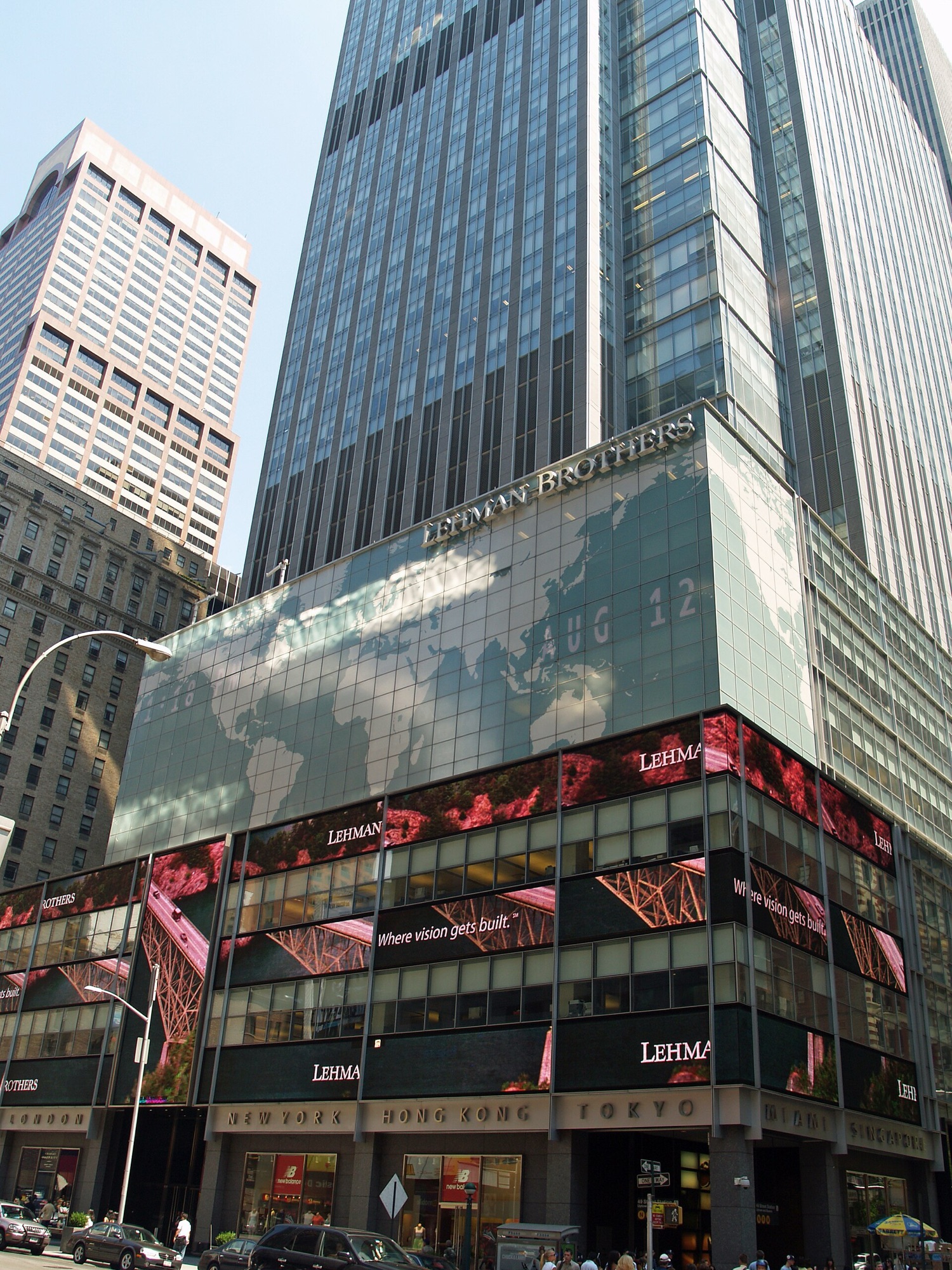

On the morning of September 12, 2008, a small group of the most powerful men in global finance gathered in the basement of the Federal Reserve Bank of New York, a fortress-like stone building overlooking the Hudson River. The meeting, convened by New York Fed President Timothy Geithner, included Treasury Secretary Henry Paulson (a former Goldman Sachs chief executive), Federal Reserve Chairman Ben Bernanke, and the chief executives of the most powerful Wall Street firms: Lloyd Blankfein of Goldman Sachs, John Mack of Morgan Stanley, John Thain of Merrill Lynch, and Vikram Pandit of Citigroup. The agenda was simple but urgent: Lehman Brothers, one of the nation’s oldest and largest investment banks, was running out of cash. The executives had assembled to find a buyer or orchestrate a rescue—or else prepare for an unprecedented nightmare: the bankruptcy of a major Wall Street institution.
Wall Street had become accustomed to bailouts. In March 2008, the government had orchestrated a rescue of Bear Stearns by JPMorgan Chase, with the Federal Reserve providing a $29 billion financing facility to facilitate the fire-sale takeover. In early September, the government had seized control of mortgage giants Fannie Mae and Freddie Mac, placing them into conservatorship. The message from Washington, delivered repeatedly by Paulson, was that the government would not allow a major financial institution to fail. But at the New York Fed, the message would change. Over the next 48 hours, Paulson and his team would repeatedly reject proposals to rescue Lehman Brothers. A last-minute deal with Barclays, a British bank, would collapse after UK regulators refused to waive shareholder approval. And at 1:45 am on September 15, Lehman Brothers Holdings Inc. filed for Chapter 11 bankruptcy protection——the largest bankruptcy in American history, with $639 billion in assets and $613 billion in debt.
The decision not to rescue Lehman was the most fateful of the financial crisis. In the days and weeks that followed, the global financial system nearly collapsed. The commercial paper market, which funded corporate operations, froze. The money market mutual fund industry suffered a run. Interbank lending seized up. Within days, the government was forced to rescue insurance giant AIG with an $85 billion loan——later expanded to over $180 billion——and to propose a $700 billion bailout of the entire financial system. The world economy plunged into the deepest recession since the Great Depression. The “Lehman Shock,” as it became known in Asia and Europe, would be debated for years: Did Paulson and Bernanke make a catastrophic error, or was letting Lehman fail a painful but necessary refusal to normalize bailouts?
This article traces the fall of Lehman Brothers: the firm’s long decline, the frantic weekend of negotiations, the collapsed Barclays deal, the contested decision not to provide a government backstop, and the global panic that followed. It examines the arguments for and against the rescue, the legal constraints that bound policymakers, and the enduring consequences of the weekend that broke the world economy.
Road to Collapse: How Lehman Became Vulnerable
Lehman Brothers had survived every financial crisis for more than a century and a half. Founded in 1844 by German immigrant Henry Lehman as a dry goods store in Montgomery, Alabama, the firm had grown into a global investment banking powerhouse. Unlike Goldman Sachs or Morgan Stanley, which were known for their risk management, Lehman was a swaggering, aggressive firm that embraced the housing boom with enthusiasm rather than caution. Under CEO Richard Fuld, who had joined Lehman as a trader in 1969 and fought off repeated attempts to oust him, the firm became perhaps the most aggressive Wall Street underwriter and trader of subprime mortgage securities.
The Subprime Exposure
By 2006, Lehman had amassed a massive portfolio of commercial real estate holdings and mortgage-related securities. The bank’s exposure to residential and commercial real estate had ballooned to $111 billion. Lehman was also a major underwriter of subprime mortgages: in 2006, it packaged $57.2 billion of subprime loans into securities, representing a 138% increase from the previous year. The firm’s subprime unit, BNC Mortgage, had grown from 4,000 employees in 2005 to 7,600 employees in 2006. Lehman was making more subprime loans than Countrywide Financial, the nation’s largest independent mortgage lender.
The firm’s revenue from real estate operations, including lending and trading, grew from $1.1 billion in 2000 to $4.7 billion in 2004 and $5.6 billion in 2005. Lehman’s total revenue reached a record $19.2 billion in 2006. Richard Fuld was celebrated on Wall Street as a visionary; his annual compensation, which included salary and stock options, reached $44 million in 2006 and $71 million cumulatively in the years leading up to the crisis. Lehman’s share price, which had been trading around $15 in the late 1990s, peaked at over $86 in February 2007. The firm had a market capitalization of nearly $60 billion.
But Lehman was also extraordinarily leveraged. For every dollar of its own capital, the firm had borrowed nearly $31. By December 2006, Lehman’s total assets stood at $573 billion, with shareholders’ equity of just $19 billion. The leverage ratio of 30-to-1 meant that a decline of just 3 to 4 percent in the value of Lehman’s holdings would wipe out the equity of the firm entirely. This, combined with Lehman’s heavy reliance on short-term repo funding to finance its holdings of mortgage securities, made the firm highly vulnerable.
The Warning Signs
The first signs of trouble emerged in 2007. BNC Mortgage, the subprime unit, posted a quarterly loss of $31 million. In March 2007, Lehman announced a 15 percent reduction in its workforce at BNC, and in August 2007, the firm closed the unit entirely, laying off 1,200 employees. In June 2007, Lehman reported that it had set aside $225 million to cover losses from mortgage-backed securities, a figure that would prove woefully inadequate. In August 2007, the firm posted a 10 percent decline in quarterly profits. Fuld publicly dismissed the subprime collapse as a “contained” problem, telling investors that the firm had “limited exposure” to subprime mortgages and that the dislocation in credit markets would “pass.” “I believe,” he said, “that we have the best risk management of any firm on Wall Street.”
Fuld’s confidence was misplaced. By late 2007, Lehman was sitting on a mountain of toxic assets that were rapidly losing value. Because accounting rules allowed firms to value hard-to-price assets using their own internal models rather than actual market prices, Lehman was able to postpone recognizing the full extent of its losses. The firm reported profits of $4.2 billion in 2007, but analysts later estimated that the actual losses on Lehman’s mortgage portfolio had already reached $50 billion. The gap between reported profits and actual economic losses was a ticking time bomb.
The Failed Barclays Deal: A Drama in Three Acts
In the months leading up to its collapse, Lehman explored multiple survival options. In August 2008, the Korea Development Bank expressed interest in buying a stake, but negotiations never advanced. The firm explored selling its asset management business, including the Neuberger Berman unit, but could not find a buyer at an acceptable price. By early September, Lehman’s shares had plunged 90 percent from their peak, and the firm’s survival depended on finding a merger partner or securing government support.
Act One: Friday, September 12 – The New York Fed Meeting
On Friday, September 12, Geithner convened the heads of the major Wall Street banks at the New York Fed. The message was blunt: find a solution for Lehman by Monday morning, or the firm would file for bankruptcy. Paulson, who had virtually renounced any public use of bailout funds, made it clear that no government money would be made available. “I’m being called Mr. Bailout,” he reportedly told the assembled executives. “I can’t do it again.” The Treasury secretary’s position was unequivocal: the private sector had to solve its own problems.
The Wall Street CEOs were not so sure. Their own firms had enormous counterparty exposure to Lehman: they had traded derivatives with Lehman, lent money to Lehman, and relied on Lehman as a clearinghouse for trades. A Lehman bankruptcy would trigger massive losses across the financial system. The executives wanted the government to provide some form of backstop, much as it had done for Bear Stearns.
The only serious bidder was Barclays, the British banking giant. Barclays was interested in acquiring Lehman’s core operations—its investment bank, its trading desks, its prime brokerage business—but not its $60 to $80 billion portfolio of toxic commercial real estate assets. To complete the acquisition, Barclays needed either a guarantee from the US government to absorb those toxic assets (the “bad bank” solution) or a waiver from British shareholders. It could not acquire the whole firm without such a backstop.
Act Two: Saturday, September 13 – The Bad Bank Proposal
On Saturday, the Wall Street CEOs, working with Paulson and Geithner, developed a plan. The major banks would pool resources to create a “bad bank” —a special purpose vehicle that would purchase Lehman’s troubled real estate assets, removing them from the balance sheet so that Barclays could acquire the healthy parts of the firm. The structure mimicked the Bear Stearns rescue, in which the Federal Reserve had taken $30 billion of Bear’s toxic assets off JPMorgan Chase’s hands.
The banks proposed to contribute a combined $5 to $10 billion to capitalize the bad bank. Paulson, however, rejected the plan. He insisted that the private sector contribute far more—perhaps as much as $25 to $30 billion. The banks refused. Geithner warned that Lehman could not be allowed to open for business on Monday; if no deal was struck by Sunday night, the firm would be forced into bankruptcy.
Act Three: Sunday, September 14 – The Barclays Collapse
On Sunday morning, Lehman’s lawyers and Barclays’s lawyers were feverishly drafting documents for a takeover. By late afternoon, it appeared a deal was at hand. But a major obstacle remained: under UK law, Barclays needed shareholder approval to complete a deal of this magnitude. A shareholder vote would take weeks, if not months. Lehman could not survive weeks. Barclays needed a government guarantee—either from the US or the UK—to waive the shareholder vote requirement.
Paulson called his British counterpart, Chancellor of the Exchequer Alistair Darling. Paulson urgently requested that the British government authorize Barclays to waive shareholder approval and complete the acquisition immediately. The British regulatory system, however, was different from America’s. The Financial Services Authority (FSA), the independent regulator, and the Bank of England, the central bank, would both need to approve. Darling had no direct authority to order the FSA to waive the rules.
The call did not go well. Paulson later wrote in his memoir On the Brink that he believed the British were deliberately stalling. For their part, the British authorities expected the US government to stand behind Lehman as it had for Bear Stearns and Fannie Mae. Paulson had told them no government money was available, but the British were skeptical. After all, the US had just seized Fannie and Freddie the previous weekend; they assumed Paulson would ultimately provide a backstop. Darling, in a later interview, said he made it clear that he would not “expose UK taxpayers to risks taken by an American bank.” The FSA refused to waive the shareholder vote requirement.
Just before midnight, with the deal dead, the executives at the New York Fed filed out of the building. Lehman Brothers would file for bankruptcy at 1:45 am. The bankers returned to their offices to prepare for the worst trading day in Wall Street history.
The Decision Not to Rescue: Moral Hazard or Monumental Mistake?
The decision to let Lehman fail has been debated for more than a decade. The government’s stated position was that it lacked legal authority to rescue Lehman. Unlike Bear Stearns, which had sufficient collateral to secure a Federal Reserve loan, Lehman was too far gone. Bernanke later testified that “the Federal Reserve could not provide financing to support a purchase of Lehman because it lacked sufficient collateral.” Moreover, the Federal Reserve’s emergency lending powers under Section 13(3) of the Federal Reserve Act required that a firm be in “unusual and exigent circumstances” and that loans be “secured to the satisfaction of the Federal Reserve.” Lehman’s collateral, in the Fed’s judgment, was insufficient.
But many economists and policymakers have argued that the decision was a catastrophic error. By allowing a major investment bank to fail, Paulson and Bernanke signaled to global financial markets that no institution was safe. The collapse triggered a run on the entire shadow banking system. The commercial paper market, which funded corporate America’s daily operations, froze. The repo market, which provided short-term funding to investment banks, evaporated. Money market mutual funds, which had been considered as safe as cash, suffered a run when the Reserve Primary Fund “broke the buck” because of its exposure to Lehman debt. Money market funds held over $3.5 trillion in assets; overnight, large institutional investors withdrew their funds, freezing a critical source of short-term lending for banks and corporations.
The critics’ argument is straightforward: the government had already demonstrated a willingness to rescue systemically important financial institutions. It had rescued Bear Stearns. It had seized Fannie and Freddie. Days after Lehman filed, the government would rescue AIG and support a massive bailout of the entire banking system through TARP. Why was Lehman the line in the sand?
The defenders of the decision have their own arguments. Paulson believed that the market was becoming addicted to bailouts. After Bear Stearns, Goldman Sachs, Morgan Stanley, and other banks had issued debt at favorable rates, effectively pricing in a government guarantee. Paulson believed that rescuing Lehman would only deepen moral hazard—the incentive to take excessive risks because losses will be socialized. Moreover, the government had tried to find a private solution for Lehman, but when Barclays withdrew, no credible buyer remained. A loan to Lehman would have been too risky for the Fed.
Perhaps the most compelling argument in favor of the decision was that the government was legally constrained. Ken Griffis, a senior economist at the FDIC, later told the Financial Crisis Inquiry Commission: “Bear Stearns was a liquidity problem. Lehman was a solvency problem.” The distinction was critical. Bear Stearns had suffered a run but still had assets of reasonable value. Lehman was insolvent—its assets were worth far less than its liabilities. The Fed is legally prohibited from lending to insolvent institutions.
The Filing: Chapter 11 and Its Immediate Consequences
At 1:45 am on Monday, September 15, 2008, Lehman Brothers Holdings Inc. filed for Chapter 11 bankruptcy protection in the Southern District of New York. It was the largest bankruptcy in American history. The filing listed $639 billion in assets and $613 billion in debt. The bankruptcy filing—the largest in U.S. history, with over $600 billion in assets—immediately triggered an unparalleled freeze in global financial markets.
The immediate consequences were devastating. The Dow Jones Industrial Average plunged 504 points, or 4.4 percent, on the first day of trading after the filing. Over the next week, global stock markets would lose more than $10 trillion in value. But the real damage was in the credit markets. The London interbank offered rate (Libor), the benchmark for short-term lending between banks, soared. Banks stopped lending to one another, hoarding cash in anticipation of further failures. The commercial paper market, which nonfinancial corporations rely upon to meet payroll and cover daily operating expenses, froze completely. General Electric, one of the largest issuers of commercial paper, saw its borrowing costs spike to unprecedented levels and found that it could not roll over maturing debt at any price.
The money market fund industry, which held over $3.5 trillion in assets, suffered a classic bank run. When the Reserve Primary Fund announced that it had “broken the buck”—its net asset value had fallen below $1 per share, to 97 cents, because of $785 million in losses on Lehman commercial paper—institutional investors rushed to withdraw their funds. Within days, the Treasury was forced to offer a temporary guarantee for money market funds to stop the bleeding.
Credit default swap spreads on financial institutions exploded. Counterparties scrambled to hedge their exposure to Lehman, driving spreads to levels that implied an imminent risk of default for every major financial institution. The interbank lending market, the lifeblood of the financial system, effectively shut down.
The Barclays Aftermath: A Belated Acquisition
Lehman’s bankruptcy did not end Barclays’s interest in the firm’s assets. Throughout the autumn of 2008, Barclays negotiated with Lehman’s bankruptcy administrators to acquire the core operations of the firm. On September 17, just two days after the bankruptcy filing, Bankruptcy Judge James Peck approved the sale of Lehman’s North American investment banking and trading operations to Barclays for $1.75 billion. The sale included Lehman’s headquarters building at 745 Seventh Avenue in Manhattan, its trading floors, its prime brokerage business, and client accounts representing thousands of institutional investors. The deal was later valued at nearly $13 billion after the inclusion of additional assets.
The Barclays acquisition effectively revived Lehman’s core operations under a new owner. Thousands of Lehman employees who expected to lose their jobs kept their positions, though now working for a British bank. Former employees have frequently remarked that the Barclays deal “did not close before the bankruptcy filing, forcing nearly 25,000 Lehman employees to lose their jobs and benefits overnight”; while many were eventually rehired by Barclays, the intervening period revealed the personal trauma caused by the government’s decision not to find a buyer earlier.
The acquisition also raised uncomfortable questions. If Barclays could buy Lehman’s healthy operations for $1.75 billion only two days after the bankruptcy filing, why had the government not facilitated a similar deal before Lehman filed? The answer, as Paulson and Bernanke have repeatedly stated, was that they had tried. Barclays had required a government guarantee and shareholder relief. After the filing, with Lehman in bankruptcy, the dynamics changed: Barclays could pick off assets without taking on the worst liabilities. But the healthier assets were sold cheaply; the losses from the toxic real estate portfolio were borne by Lehman’s creditors, not Barclays. The bankruptcy process, in other words, transferred value from Lehman’s stakeholders to Barclays.
The Global Contagion: Europe and Asia
The effects of Lehman’s collapse were not confined to the United States. They rippled across the globe with devastating speed. The failure sent shockwaves across the globe within hours. By the end of September, banks in nearly every developed country had required some form of government intervention.
In the United Kingdom, the government was forced to nationalize the bank Bradford & Bingley and inject billions into Royal Bank of Scotland and Lloyds TSB. In Germany, the government bailed out Hypo Real Estate, a major commercial property lender. In Belgium, the government nationalized Fortis, the largest financial institution in the Benelux region, and later orchestrated its sale to BNP Paribas. In the Netherlands, the government nationalized parts of ABN AMRO, the Dutch banking giant. In Iceland, the entire banking system collapsed; the three largest banks—Glitnir, Landsbanki, and Kaupthing—failed within weeks, causing a humanitarian crisis that the International Monetary Fund would later describe as “the largest financial crisis experienced by any country in modern history relative to the size of its economy.”
The contagion extended to emerging markets as well. Russia’s stock market fell 17 percent in a single day, and the central bank was forced to intervene to support the ruble. Countries that had little direct exposure to Lehman—like those in the Middle East, Africa, and Latin America—suffered as capital flows reversed. The combination of a credit freeze and sinking global demand pushed the entire world economy into a synchronized downturn.
The Legal Aftermath: Years of Litigation
The Lehman bankruptcy was not resolved quickly. The case—formally styled In re Lehman Brothers Holdings Inc.—became the most complex bankruptcy in American history. The sheer scale of Lehman’s operations made the case uniquely challenging: Lehman had thousands of subsidiaries, millions of open derivative contracts, and counterparties all over the world. It was the most complex bankruptcy in history.
The legal proceedings lasted more than three years. Lehman’s creditors filed claims totaling more than $1.2 trillion—nearly twice the company’s reported liabilities at the time of filing, reflecting claims related to derivatives and other contingent obligations. Resolving the claims required the development of entirely new legal frameworks. The bankruptcy judge, James Peck, was forced to rule on novel issues of bankruptcy law: the treatment of cross-border insolvency for global financial institutions, the priority of derivative claims versus other creditor claims, and the authority of the bankruptcy court to unwind trades that had been executed in the minutes before the filing.
The distribution of Lehman’s remaining assets to creditors was a slow and painful process. In 2012, nearly four years after the filing, Lehman’s bankruptcy administrators announced a plan to return approximately $65 billion to creditors—roughly 20 cents on the dollar of the claims filed. By 2015, the recovery rate had risen to about 30 cents on the dollar. In 2024, 16 years after the filing, Lehman’s estate was still making final distributions to creditors; the total recovery rate varied by claim class, with some classes recovering as much as 40 percent of their original claims and others recovering nearly nothing. The protracted legal process was among the most expensive in history, with legal fees exceeding $2 billion.
The “Moral Hazard” Legacy
The decision not to rescue Lehman Brothers has left an enduring legacy on financial regulation. The term “Lehman Shock” entered the financial lexicon to describe a sudden, catastrophic loss of confidence that can freeze entire markets. The argument that regulators should not rescue failing banks—the “moral hazard” argument—has become a central tenet of post-crisis macroprudential policy. Regulators now talk openly about “resolution authority” and the need to let banks fail in an orderly fashion, without systemic disruption.
But the lesson of Lehman is not that moral hazard arguments triumphed. It is that letting a systemically important financial institution fail, without adequate preparation, is extraordinarily dangerous. In the aftermath of Lehman, Congress passed the Dodd-Frank Wall Street Reform and Consumer Protection Act of 2010, which included a new “Orderly Liquidation Authority” (OLA)—a mechanism designed to allow regulators to wind down a failing financial institution without triggering a systemic panic, without requiring a taxpayer bailout, and without having to resort to bankruptcy proceedings that were never intended for institutions of Lehman’s complexity.
Yet despite a decade and a half of the new Resolution Framework, it has never actually been tested. The OLA has never been used. Bankers and regulators still debate whether it would work in a crisis. Some argue that the memory of Lehman has created an implicit government guarantee for large banks—a guarantee that is even stronger than before, because regulators have shown that they will do whatever it takes to prevent another Lehman. This is the other side of the moral hazard ledger: by allowing one systemically important bank to fail, the government may have made it less likely that it will ever allow another to fail again.
Conclusion
The fall of Lehman Brothers was the pivotal moment of the 2008 financial crisis. The decision not to rescue the firm—whether born of legal constraints, political calculation, or a principled stand against moral hazard—unleashed a global panic that forced governments around the world to intervene on an unprecedented scale. Within days of Lehman’s filing, the US government proposed a $700 billion bailout of the financial system, the Federal Reserve opened emergency lending facilities to a range of nonbank financial institutions, and the Treasury guaranteed money market funds. Within weeks, governments across Europe and Asia were nationalizing banks, backstopping deposits, and cutting interest rates to near zero.
The debate over whether Paulson and Bernanke made the right decision will never be settled. What is certain is that the failure of Lehman Brothers—a 158-year-old institution that had survived panics, depressions, and wars—fundamentally changed the relationship between the government and the financial system. Before Lehman, bailouts were the exception. After Lehman, the government was the insurer of last resort for the entire financial system. The weekend that broke the world economy also created the world we live in today: a world of too-big-to-fail banks, emergency central bank interventions, and a lingering distrust of financial institutions.
Lehman Brothers is now a memory. Its headquarters building at 745 Seventh Avenue houses the New York offices of Barclays, the firm that acquired its core operations. Its name is rarely spoken on Wall Street. But its legacy is everywhere: in the regulations that govern banks, in the trillions of dollars of central bank assets, and in the fear that policymakers feel when they contemplate allowing a major financial institution to fail. The fall of Lehman Brothers was the moment the financial crisis became a global catastrophe—and the moment the old world of deregulated finance came to an end.
Further Reading & Sources
· Fuld, Richard. Testimony before the Financial Crisis Inquiry Commission, 2010.
· Geithner, Timothy F. Stress Test: Reflections on Financial Crises. Crown, 2014.
· Griffis, Ken (FDIC Senior Economist). Statement to the Financial Crisis Inquiry Commission, 2010.
· Lehman Brothers Holdings Inc. Chapter 11 Bankruptcy Petition (Case No. 08-13555), United States Bankruptcy Court, Southern District of New York, filed September 15, 2008.
· McDonald, Lawrence G., and Patrick Robinson. A Colossal Failure of Common Sense: The Inside Story of the Collapse of Lehman Brothers. Crown Business, 2009.
· McLean, Bethany, and Joe Nocera. All the Devils Are Here: The Hidden History of the Financial Crisis. Portfolio, 2010.
· Paulson, Henry M. On the Brink: Inside the Race to Stop the Collapse of the Global Financial System. Business Plus, 2010.
· Sorkin, Andrew Ross. Too Big to Fail: The Inside Story of How Wall Street and Washington Fought to Save the Financial System—and Themselves. Viking, 2009.
· Financial Crisis Inquiry Commission. The Financial Crisis Inquiry Report. Public Affairs, 2011.
· Wessel, David. In Fed We Trust: Ben Bernanke’s War on the Great Panic. Crown Business, 2009.
Listen & Learn: Related Podcast Collections
Explore these curated episode collections to go deeper on the history behind this article:

Leave a Reply