
Introduction
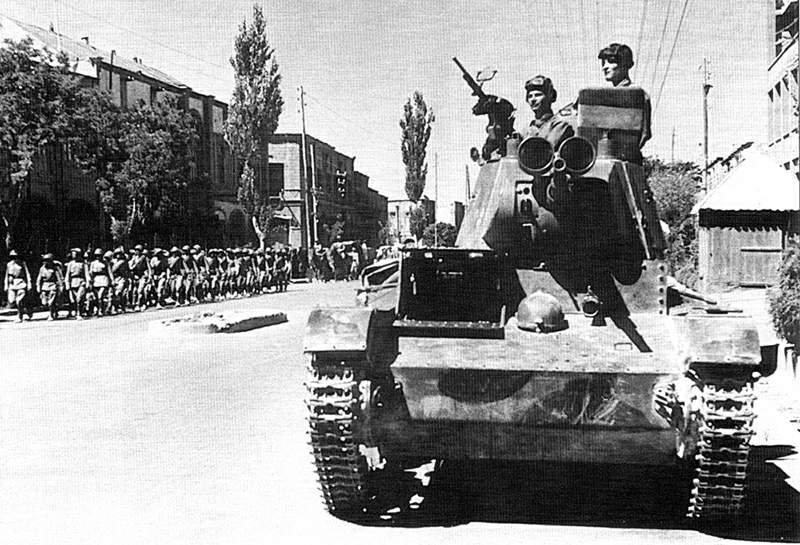
In the early morning hours of August 25, 1941, residents of Tehran awoke to the drone of aircraft and the distant rumble of explosions. Within hours, Soviet forces poured into the northern provinces while British troops landed at the port of Abadan in the south. The joint invasion of Iran—code-named Operation Countenance—was swift and overwhelming. While there were pockets of stubborn Iranian resistance, notably around Gilan-e Gharb and in the northern provinces, the military was overmatched and effectively defeated within days. By September 16, Reza Shah Pahlavi, the formidable monarch who had dragged Iran into the modern era with an iron fist, was forced to abdicate in favor of his twenty-one-year-old son. He was taken into British custody and boarded a vessel bound for exile, eventually dying in South Africa in 1944. He would never return.
This moment—the forced abdication of a sitting monarch by foreign powers—represents one of the most consequential turning points in modern Iranian history. Yet outside specialist circles, it remains overshadowed by the 1953 coup and the 1979 revolution. This article argues that the 1941 invasion and abdication was a crucial, and under-appreciated, turning point that destabilized the Iranian state and created essential preconditions for the later crises of 1953 and 1979. While other factors—including Cold War geopolitics, the Shah’s own later policies, and the oil-driven transformations of the 1960s and 1970s—were critical to those later events, understanding 1941 is essential to understanding why Iranians came to view foreign intervention with such profound suspicion, and why the revolution of 1979 was, in many ways, the working out of contradictions introduced on that August morning.
Iran’s Strategic Position on the Eve of War
To understand why the Allies invaded, we must first understand Iran’s place in the global order of 1941. The country occupied a position of almost absurd strategic importance. To the north lay the Soviet Union, locked in a desperate struggle against Nazi Germany following Hitler’s June 1941 invasion. To the south and east lay British-controlled Iraq and India, the jewel of the British Empire. Between them sat Iran, neutral on paper but increasingly problematic in practice.
The critical factor was supply. Following the German invasion, the Soviet Union desperately needed military equipment and matériel from the Western Allies. The Arctic convoys to Murmansk were dangerous and costly. The Pacific route was vulnerable to Japan. The only viable alternative was the so-called “Persian Corridor”—a network of roads, railways, and ports that could funnel supplies from the Persian Gulf, across Iran, and into the Soviet Caucasus. For the Allies, keeping this route open and secure was not a matter of preference but of survival.
There was, however, a complication: Reza Shah Pahlavi. The man who had ruled Iran since 1921 had built his reputation on freeing the country from foreign domination. He had ended the capitulations that granted Europeans extraterritorial rights, unified the country under a strong central government, and pursued a policy of aggressive modernization. He had also, by 1941, become increasingly reliant on German economic and technical ties as a strategic counterweight to Britain and the USSR—a policy the Allies interpreted as dangerous sympathy.
This reliance should not be misunderstood as ideological Nazism. Reza Shah was an authoritarian nationalist pursuing a balancing strategy, not a committed fascist. Germany had no colonial history in Iran, unlike Britain and Russia, who had spent the nineteenth and early twentieth centuries carving the country into spheres of influence. German trade missions, technical advisors, and cultural outreach were therefore welcome counterweights to the overbearing British and Soviet presence. By 1941, several thousand German nationals were working in Iran, in positions ranging from railway engineers to telecommunications advisors. Modern scholarship suggests that the threat they posed as a potential “fifth column” was likely exaggerated relative to the Allies’ broader strategic aims, but for London and Moscow, already fighting for survival, the presence was unacceptable.
The Invasion: Operation Countenance
The Allied ultimatum, delivered on August 16, 1941, demanded the expulsion of all German nationals. Reza Shah refused, proposing a gradual reduction that would preserve his policy of neutrality. For the Allies, gradualism was impossible. On August 25, they struck.
The invasion was a study in overwhelming force. The Soviet Union committed three armies, approximately 400,000 troops, advancing from the Caucasus and Central Asia. British forces, including Indian Army divisions, moved from Iraq into Khuzestan and the western provinces. The Iranian military, despite Reza Shah’s investment in a modern army, was overmatched. The navy was sunk at its moorings in the Caspian. The air force was destroyed on the ground. Some units fought stubbornly—particularly in the mountains of Gilan and around the western city of Kermanshah—but organized resistance collapsed within days. Troops surrendered or melted away into the countryside.
What followed was not merely a military occupation but a profound national humiliation. The Allies imposed their control over the country’s infrastructure, communications, and government. They forced the closure of the German embassy and the expulsion of all Axis nationals. They took control of the Trans-Iranian Railway, the very symbol of Reza Shah’s modernization project, and began moving war matériel northward at a staggering pace. By war’s end, the Persian Corridor would deliver on the order of five million tons of supplies to the Soviet Union.
But the occupation’s most dramatic political act was still to come: the removal of the monarch himself.
The Abdication: A Dynasty’s Foundational Wound
Reza Shah’s abdication was not a spontaneous event but a calculated act of political surgery by the occupying powers. The British, in particular, had concluded that the stubborn, independent-minded shah could not be trusted to cooperate. He was too proud, too nationalistic, too unwilling to serve as a compliant figurehead. He had to go.
The mechanism was pressure, applied relentlessly over three weeks. British and Soviet forces advanced toward Tehran—Soviet troops were moving on the capital by September 16 and entered the city the following day. British diplomats delivered increasingly blunt messages. On September 16, Reza Shah signed an instrument of abdication, handed power to his son, and was driven to the coast in a British armored car. He boarded a vessel bound for exile, transported under British control via India to South Africa, where he would die in 1944, broken and bitter.
The choice of successor was not accidental. Mohammad Reza Pahlavi was young, inexperienced, and widely perceived as more pliable than his father. The Allies calculated—correctly, as it turned out—that he would cooperate with the occupation and accept the subordinate position they assigned him. What they did not fully appreciate was the damage they had done to the institution of monarchy itself.
Reza Shah had built his legitimacy on two foundations: his role as the architect of modernization and his image as the defender of national sovereignty against foreign encroachment. The abdication shattered the second foundation completely. A shah who owed his throne to foreign bayonets could never again claim to embody the nation’s independence. The Pahlavi dynasty, barely twenty years old, had suffered a wound from which it would never fully recover.
It is worth noting, however, that Iranian society was not monolithic in its response. Reza Shah’s authoritarianism and economic policies had generated real resentment, and some contemporaries welcomed his removal—even as they disliked the foreign role in it. The abdication was simultaneously a national humiliation for many and, for others, a release from two decades of dictatorial rule. This complexity would shape the ambiguous politics of the years that followed.
The Consequences: Seeds of Future Upheaval
The 1941 invasion and abdication set in motion a series of developments that would shape Iranian politics for generations. Four consequences stand out as particularly significant.
The Resurgence of Political Pluralism
Reza Shah’s dictatorship had suppressed virtually all independent political activity. Political parties were banned. The press was muzzled. Trade unions were crushed. The clergy, intellectuals, and tribal leaders who might have opposed his rule were either co-opted, exiled, or silenced.
The occupation changed everything. With the old dictator gone and the Allies preoccupied with the war, political space opened dramatically. Prisoners were released. Exiles returned. Newspapers proliferated, expressing views from communist to Islamist to liberal nationalist. Trade unions organized strikes and won concessions. The Tudeh Party (Iran’s communist party) emerged as a major force, particularly among industrial workers and intellectuals. The National Front, led by the charismatic Mohammad Mossadegh, began to take shape.
This political opening was not entirely welcomed by the occupying powers. The British, in particular, watched the growth of the Tudeh Party with alarm, seeing Soviet influence behind every labor dispute. But they tolerated it because they had to—they needed Iranian cooperation for the war effort, and overt repression would have been counterproductive.
The Survival and Adaptation of Clerical Networks
Reza Shah had been aggressively secularizing. He had banned the veil, required Western dress, brought religious endowments under state control, and systematically reduced the clergy’s traditional roles in education and law. The invasion eased this campaign. With the state weakened and the shah discredited, the harshest measures against clerical institutions could no longer be enforced.
This did not mean the clergy were suddenly empowered above other political actors—the 1940s were, after all, a decade of intense secular mobilization. But the easing of pressure allowed clerical networks to survive and adapt. It was during this period that a young cleric named Ruhollah Khomeini began his political activism, initially focused on countering the influence of the Tudeh Party and the secular left. The institutional space that opened after 1941, while not decisive in itself, contributed to the clergy’s ability to re-emerge as a political force in later decades.
The Deepening of Foreign Suspicion
For ordinary Iranians, the occupation was a visceral lesson in the reality of great power politics. They watched as their country was invaded, their monarch deposed, their resources appropriated—all in the service of a war they had not chosen. They experienced inflation, conscription, and the heavy-handed presence of foreign troops who treated Iran as occupied territory.
This experience bred a deep and lasting suspicion of foreign powers, particularly Britain and the Soviet Union. The terms of the occupation had been formally outlined in the Tripartite Treaty of Alliance of January 1942, which committed the Allies to withdraw within six months of the war’s end. But when the war ended, the Soviets did not withdraw—on March 2, 1946, six months after the war’s official conclusion, Soviet forces remained in place. The next day, columns of troops began marching toward Tehran. This blatant violation of the treaty’s terms, which would lead to the Azerbaijan crisis of 1946, only deepened the lesson Iranians had already learned: great powers said one thing and did another.
When Americans replaced the British as the dominant Western power after the war, that suspicion was gradually transferred to Washington. The 1941 invasion became part of the collective memory of foreign betrayal, a memory that would be powerfully reactivated during the 1953 coup and again during the 1979 revolution.
The Weakening of the Monarchy
Most immediately, the abdication fatally compromised the Pahlavi monarchy. Mohammad Reza Shah spent the war years learning to navigate among the occupying powers, the resurgent political forces, and the remnants of his father’s establishment. He learned to be flexible, to compromise, to work with the system rather than against it. These skills would serve him well in the short term, allowing him to survive the immediate postwar chaos.
But flexibility had a cost. Unlike his father, who ruled by fear and command, Mohammad Reza Shah ruled by maneuver and manipulation. He never commanded the same instinctive respect or fear. His legitimacy was always conditional, always dependent on his ability to manage competing forces rather than to embody the nation’s will. When the crisis of 1953 came, he would flee rather than fight—and would return only in the baggage train of a CIA-backed coup. The pattern set in 1941 repeated itself, each time deepening the monarchy’s dependence on foreign support and each time eroding its domestic legitimacy.
The Occupation’s Human Dimension
Beyond these structural consequences, the occupation had immediate human costs that shaped Iranian attitudes for decades. The Allies requisitioned food, fuel, and transport, creating shortages that fell heaviest on the urban poor. Inflation eroded wages. Conscription drained young men from farms and factories. The presence of foreign troops—Soviet in the north, British in the south, and eventually American throughout—created constant friction.
The Soviet zone was particularly harsh. The Red Army treated northern Iran almost as conquered territory, extracting resources with minimal compensation and suppressing dissent with brutal efficiency. The Azerbaijani and Kurdish regions saw the installation of Soviet-sponsored autonomous governments that would have to be crushed after the war. For Iranians who lived through this period, the experience of Soviet occupation left lasting scars.
Even the Americans, generally perceived as less threatening than the British or Soviets, contributed to the sense of national subordination. The Persian Gulf Command, the U.S. military mission that managed the supply route, operated largely on its own terms, with the Iranian government having limited practical leverage over day-to-day operational decisions despite formal sovereignty. Well-intentioned American advisors often behaved as though Iran were a colonial possession rather than a sovereign ally.
The Legacy: 1941 as Precondition for 1953 and 1979
Historians sometimes treat the 1941 invasion and abdication as a prelude to the main event: the 1953 coup that overthrew Mossadegh and restored the shah’s autocratic power. This is understandable—1953 was more dramatic, more consequential in the short term, and more directly tied to Cold War tensions. But treating 1941 as merely prologue misses its deeper significance.
The 1941 invasion created conditions that made 1953 possible. It opened the political space that allowed Mossadegh to emerge as a national leader. It discredited the monarchy and forced the young shah into a pattern of dependency that would repeat at the moment of crisis. It deepened the popular suspicion of foreign intervention that Mossadegh would mobilize in his oil nationalization campaign. And it gave the British and Americans the habit of treating Iran as a country whose sovereignty could be overridden when their interests demanded it.
The connection to 1979 is less direct but equally important. The 1941 abdication demonstrated that the Pahlavi monarchy could be removed by foreign pressure—a lesson not lost on those who sought to remove it again thirty-eight years later, albeit this time through internal revolution. The political pluralism that emerged after 1941 created networks, ideas, and leaders that would resurface in the revolutionary movement. The clergy’s survival and adaptation during the 1940s provided part of the institutional base for Khomeini’s eventual takeover. And the popular memory of foreign domination, repeatedly reinforced by subsequent interventions—1953, the 1964 Status of Forces Agreement, the enduring presence of American advisors and influence—gave the revolution its powerful anti-imperialist dimension.
None of this is to say that 1941 caused 1979. Too much happened in between—the White RevolutionWhite Revolution Full Description:The White Revolution was a project of authoritarian modernization. It sought to break the power of traditional landlords through land redistribution and to rapidly industrialize the economy. It was billed as a bloodless (“white”) revolution to prevent a communist (“red”) one. Critical Perspective:Despite lofty goals, the reforms destabilized the social order. The land reforms often failed to provide peasants with enough resources to farm effectively, driving millions into urban slums where they became foot soldiers for the revolution. Furthermore, the rapid secularization alienated the powerful merchant class (Bazaaris) and the clergy, creating a united front of opposition against the Shah., the oil boom, the creation of SAVAK, the global upheavals of the 1970s—to support such a direct line. But 1941 was the first in a series of shocks that progressively delegitimized the Pahlavi state and embedded in Iranian political culture a deep suspicion of foreign power. When revolutionary crowds chanted “Death to America” in 1979, they were expressing an anger whose roots stretched back to that August morning in 1941, through the 1953 coup, through every subsequent intervention that confirmed the lesson first taught by the invasion.
Conclusion: The First Domino
The Allied invasion and abdication of 1941 remains under-appreciated in popular histories of modern Iran. It lacks the drama of the 1953 coup, the ideological clarity of the 1979 revolution, the human tragedy of the Iran-Iraq WarIran-Iraq War
Short Description (Excerpt):A brutal eight-year conflict (1980–1988) initiated by Saddam Hussein’s invasion of Iran. While devastating, the war inadvertently strengthened the Islamic Republic, allowing it to suppress internal dissent under the guise of wartime patriotism.
Full Description:The Iran-Iraq War was one of the 20th century’s bloodiest conflicts, featuring trench warfare and the use of chemical weapons. Saddam aimed to seize oil-rich territory and crush the revolutionary threat next door. Instead, Iran mobilized a massive volunteer force (“human waves”) fueled by religious fervor to defend the revolution.
Critical Perspective:Khomeini famously called the war a “divine blessing.” It allowed the regime to militarize society and label any political opposition as treason. The war forged the identity of the Islamic Revolutionary Guard Corps (IRGC) and entrenched the narrative of Iran as a besieged fortress of Islam fighting against a corrupt world, a narrative that sustains the state to this day.
Read more. But it was, in many ways, the first domino—the event that set in motion a chain of consequences that would shape the country for the rest of the twentieth century.
For the Allies in 1941, the invasion was a necessary act of wartime expediency. The Persian Corridor helped defeat Nazi Germany, and that was justification enough. But for Iranians, the invasion was something else entirely: a reminder of their country’s vulnerability, a demonstration of the limits of their sovereignty, and a lesson in the ruthlessness of great power politics. That lesson would be learned, internalized, and eventually acted upon.
When Mohammad Reza Pahlavi fled Iran in January 1979, he was repeating his father’s journey—leaving the country under pressure, never to return. The parallel was not lost on those who watched him go. The revolution that forced him out was, among other things, a final reckoning with the legacy of 1941. It was Iran’s declaration that the era of foreign-imposed rulers had ended.
Understanding this connection does not excuse the excesses of the Islamic RepublicIslamic Republic
Short Description (Excerpt):The unique form of government established after the revolution. It is a hybrid system combining elements of a modern parliamentary democracy (elections, president, parliament) with a theocratic guardianship (Supreme Leader, Guardian Council).
Full Description:The Islamic Republic was the outcome of the referendum in 1979. While it has the trappings of a republic, ultimate power resides with the unelected religious leadership. The constitution explicitly subordinates the will of the people to the principles of Islam as interpreted by the Supreme Leader.
Critical Perspective:This dual structure creates a permanent institutional conflict. The tension between the “republican” mandate (popular sovereignty) and the “Islamic” mandate (divine sovereignty) results in a system where elected officials are often powerless to implement change if it contradicts the interests of the clerical elite. It represents an experiment in “religious democracy” that critics argue is inherently contradictory.
Read more or justify its authoritarianism. But it does explain why so many Iranians, including many who have suffered under the current regime, remain deeply suspicious of foreign intervention. The memory of 1941 is long, and its lessons are not forgotten.
Further Reading
For readers interested in exploring this topic further, the following sources provide excellent starting points:
· Abrahamian, Ervand. A History of Modern Iran. Cambridge University Press, 2008. The standard one-volume history, with excellent coverage of the occupation period.
· Curtis, Caitlin N. “The Policy Regarding Iran: Circumstances Surrounding the Allied Invasion in 1941.” Montview Journal of Research & Scholarship, vol. 2, 2016. A concise scholarly treatment of the occupation and its consequences.
· Majd, Mohammad Gholi. August 1941: The Anglo-Russian Occupation of Iran and Change of Shahs. University Press of America, 2012. The most detailed treatment of the invasion itself.
· Motter, T.H. Vail. The Persian Corridor and Aid to Russia. Center of Military History, U.S. Army, 1952. The official U.S. military history, available online, with extensive detail on the supply operation.
· Skrine, Clarmont. World War in Iran. Constable, 1962. A memoir by a British diplomat who served in Iran during the occupation, offering an insider’s perspective.
· Stewart, Richard A. Sunrise at Abadan: The British and Soviet Invasion of Iran, 1941. Praeger, 1988. A readable military history focused on the campaign itself.

Leave a Reply