
The interwar period in the Middle East witnessed two of the most radical, state-led modernization projects of the twentieth century. Under Mustafa Kemal Atatürk in Turkey and Reza Shah Pahlavi in Iran, these newly configured nations embarked on aggressive campaigns to transform their societies into modern, sovereign, and secular republics. These revolutions were not merely political or economic; they were profoundly cultural, aiming to forge new citizens by eradicating perceived backwardness and supplanting traditional Islamic and monarchical identities with new, Western-oriented national ones. This top-down imposition of modernity, however, generated a deep and pervasive cultural crisis. The very process of “catching up” with the West created an anxious tension between two poles: on one hand, the fear of Gharbzadegi (“Westoxication” or “West-struckness”)—a slavish, derivative imitation that would annihilate authentic identity. On the other, the urgent desire to construct a usable, “authentic” national culture, often by selectively excavating a glorified, pre-Islamic past. This article argues that the cultural landscapes of interwar Iran and Turkey became battlegrounds where state-mandated modernity clashed with profound existential doubt. While the state promoted a futurist, positivist nationalism, leading intellectuals and artists responded with a modernist literature and art characterized by alienation, nihilism, and a haunting search for meaning in a world where old verities had been shattered. This crisis of identity, born from the rupture of rapid Westernization, produced some of the most powerful and unsettling cultural works of the era.
The State’s Blueprint: Authoritarian Modernization from Above
The projects of Atatürk and Reza Shah were born from a shared diagnosis: their societies were weak, backward, and humiliated by Western dominance due to the weight of clerical obscurantism and outmoded tradition. Their prescription was a sweeping, revolutionary transformation from above, implemented with authoritarian zeal.
The Kemalist Revolution in Turkey was the more comprehensive and ideological. Following the War of Independence and the abolition of the Sultanate (1922) and Caliphate (1924), Atatürk enacted his Six Arrows of republicanism, nationalism, populism, statism, secularism, and revolution/reform. The cultural ramifications were immediate and visceral:
· Secularism and the Assault on Religious Institutions: The replacement of Sharia with the Swiss Civil Code (1926) was a direct attack on the social authority of the ulema (religious scholars). Dervish lodges were closed, religious titles abolished, and public religiosity pushed firmly into the private sphere.
· Linguistic Engineering: The 1928 Language Reform replaced the Ottoman Arabic script with a modified Latin alphabet. This was intended to increase literacy, break ties with the Ottoman/Islamic past, and orient the nation toward Europe. The concurrent “Sun-Language Theory” absurdly posited Turkish as the mother of all languages, a pseudoscientific attempt to claim primordial superiority.
· Sartorial Revolution and Social Discipline: The Hat Law of 1925 banned the fez, a symbol of Ottoman modernity, and promoted the Western brimmed hat. It also discouraged the veil, though not outlawing it as forcefully as in Iran. These were acts of social engineering, using the body as a canvas for the new national identity.
Reza Shah’s Modernization in Iran, while equally ambitious, was less ideologically coherent and more focused on centralizing power and creating a strong, unified state. His program, influenced by his admiration for Atatürk, included:
· Secularization and Clerical Containment: Like Atatürk, Reza Shah curtailed clerical power, bringing religious endowments (waqf) and courts under state control. He forcibly unveiled women in 1936, a shocking and deeply unpopular edade that provoked public protest.
· Nationalist Myth-Making: He promoted a pre-Islamic, Aryanist nationalism, changing the country’s name from Persia to Iran in 1935 to emphasize its “Aryan” roots. He invested heavily in archaeology to glorify the Achaemenid and Sassanian empires, constructing a direct lineage that bypassed the Islamic period.
· Centralization and Infrastructural Development: He built a national railway, expanded secular education, and created a modern army and bureaucracy to crush tribal autonomy and enforce the will of the center.
In both cases, the state became the sole architect of modernity, defining authenticity not as an organic folk tradition, but as a nationalist essence to be manufactured and imposed. This created a profound disjuncture between the official, optimistic narrative of national progress and the lived experience of cultural dislocation.
The Intellectual Vacuum and the Rise of Nativist Anxiety
The state’s violent rupture with the immediate past—the Ottoman and Qajar Islamic heritage—created a spiritual and intellectual vacuum. What would fill it? The borrowed codes of Western civilization felt alien and imposed. This dilemma gave rise to a powerful discourse on cultural authenticity and its corruption.
The most famous formulation of this anxiety came from the Iranian intellectual Jalal Al-e Ahmad. Though writing in the 1960s, his seminal pamphlet Gharbzadegi (1962) precisely diagnosed the interwar condition. He defined it as a disease, a state of being “struck” or “intoxicated” by the West, resulting in a deracinated elite who mimicked Western forms without understanding their substance, becoming “manufactured” men estranged from their own people and history. While a later work, it crystalized the fears that haunted interwar thinkers: that modernization was not empowerment, but a new, more subtle form of colonial subjugation—a loss of soul.
In Turkey, a similar discourse emerged among intellectuals who, despite supporting Kemalism in principle, worried about its cultural costs. Thinkers like Ahmet Hamdi Tanpınar (a novelist and essayist) spent his career exploring the “painful harmony” of East and West in the Turkish soul. His work grappled with the psychological scars of the reform era, the sense of historical discontinuity, and the search for an aesthetic synthesis that could heal the rupture. The state’s nationalist historiography, which portrayed the Ottoman past as a dark age of stagnation, left many feeling culturally orphaned, adrift between a denigrated past and an imported future.
This nativist anxiety was not a call to return to a theocratic past, but a desperate search for an authentic modernity—a way to be modern without being Western, to progress without losing the self. It was the central, unresolved question of the era.
Literary Modernism as a Mirror of Crisis: The Case of Sadeq Hedayat
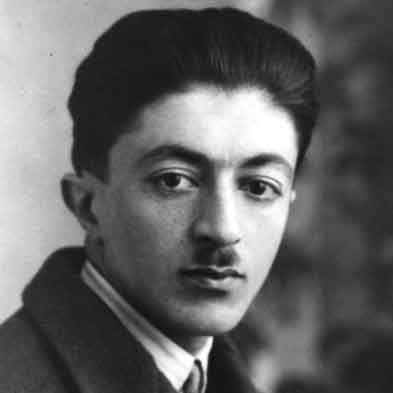
If the state produced propaganda and nationalist epics, the most authentic cultural response to the crisis was found in a darker, introspective literary modernism. No figure embodies this better than the Iranian writer Sadeq Hedayat (pictured above), whose work constitutes a devastating philosophical critique of the interwar condition.
Hedayat, from an aristocratic family and educated in Europe, was the archetypal Gharbzadegi subject: deeply versed in Western literature (Kafka, Sartre, Poe) yet obsessed with Iran’s ancient and folk traditions. His masterpiece, The Blind Owl (1937), is a surreal, hallucinatory novella that stands as one of the seminal texts of global modernism. It is not a political novel, but a metaphysical one that reflects the disintegration of a world.
· Alienation and Nihilism: The narrator, isolated in a decaying house, is consumed by madness, murder, and ontological despair. This profound alienation mirrors the experience of an intellectual cut off from a meaningful social and religious cosmos by the state’s reforms, yet unable to believe in the state’s new nationalist myths.
· The Grotesque Body and Cultural Decay: The recurring, terrifying image of the ethereal woman transforming into a rotting, diseased figure represents the dual perception of Iran: a romanticized ideal of purity (the pre-Islamic past) corrupted into a grotesque, sickly present. The body itself becomes a site of horror, reflecting the violent, disfiguring impact of forced change.
· A Rejection of Easy Narratives: The Blind Owl offers no redemption, no nationalist uplift, no faith in progress. It is a scream of existential anguish that directly contradicts the positivist, forward-marching narrative of the Pahlavi state. Hedayat’s other works, like the short story “The Stray Dog,” similarly depict marginalized figures navigating a cruel, meaningless urban landscape, highlighting the human cost of rapid modernization that left so many behind.
Hedayat’s ultimate act—his suicide in Paris in 1951—was seen by many as the logical conclusion of his worldview, the final testament of a soul that could find no home in the hybrid, fractured world that Reza Shah’s Iran had become. He became the patron saint of the alienated intellectual, his work a dark mirror held up to the gleaming facade of state modernity.
Comparative Architectures of Identity: Archaeology, Language, and the Invented Past
Both states understood that to create a new future, they had to control the past. They became avid patrons of archaeology and linguistic reform, using them as tools to construct an “authentic” national identity that served their modernizing agendas.
Turkey embarked on the Turkish History Thesis and Sun-Language Theory. These state-sponsored doctrines argued that the Turks were a primordial white, Aryan race who originated in Central Asia and were the source of all human civilization, including Chinese, Mesopotamian, and even ancient Greek culture. This bizarre pseudoscience served a clear purpose: it erased the Ottoman Islamic identity (framing Turks as conquerors who had been corrupted by Persian and Arab culture) and reinvented them as native, civilizing Europeans of the East. Museums and school textbooks were purged of Arabic and Persian influences to create a “pure” Turkish lineage.
Iran under Reza Shah pursued a parallel Aryanist nationalism. He enthusiastically supported archaeological excavations, most notably at Persepolis, the ceremonial capital of the Achaemenid Empire. The lavish 2500th Anniversary Celebration in 1971 was the apotheosis of this, but its roots were in Reza Shah’s era. By glorifying Cyrus the Great and Darius, the state promoted an image of Iran as a mighty, centralized, and tolerant empire—a direct model for the Pahlavi state. This narrative deliberately marginalized the Islamic period as an “Arab interlude” of decline. The invention of ancient festivals like Nowruz as a national (rather than Zoroastrian/new year) celebration further cemented this link to a pre-Islamic golden age.
In both countries, language was a key battleground. Atatürk’s script change was a revolutionary break. Reza Shah, while not changing the script, established the Academy of Persian Language to purge Arabic and Turkish loanwords and invent “pure” Persian equivalents. This was a less violent but equally conscious effort to linguistically purify the nation and align it with its imagined ancient self. These projects were attempts to manufacture a deep, “authentic” roots for the superficial, modern nation-state, papering over the recent, Islamic past with a distant, imperial one.
The Limits of Imposition and the Seeds of Future Conflict
By the outbreak of World War II, both states had achieved remarkable superficial transformations. Ankara and Tehran had modern boulevards, universities in Western dress, and growing secular elites. Yet, the cultural crisis was far from resolved; it was merely suppressed.
The Kemalist and Pahlavi reforms were largely an urban phenomenon, imposed on a skeptical, often resistant peasantry and provincial society. The banning of the veil in Iran provoked outrage and forced women into isolation. The closure of Sufi lodges in Turkey destroyed vital community and spiritual centers. The new nationalist histories felt abstract and alien compared to the lived rhythms of Islamic time and local tradition.
The state’s version of authenticity was too thin and instrumental to sustain a rich cultural life. It offered flag, language, and a distorted history, but it could not answer deeper questions of meaning, belonging, and spiritual fulfillment that religion and organic tradition had addressed. The brilliant, despairing modernism of a Hedayat was one response. The other, slower-burning response was a retreat into a more resilient, populist Islamic identity that the state had failed to eradicate.
This set the stage for the great political and cultural conflicts of the later 20th century. The top-down, secular-nationalist modernity of the interwar autocrats created a deeply bifurcated society: a Westernized elite versus a traditional mass. The failure to create a genuine, synthesized cultural identity—one that could embrace modernity without self-loathing, and tradition without reaction—left a vacuum. This vacuum would eventually be filled by powerful counter-movements: from the Islamic Revolution of 1979 in Iran, which explicitly framed itself as a cure for Gharbzadegi, to the resurgence of political Islam in Turkey, which challenged the Kemalist secular compact. The interwar crisis of “Westoxication” vs. “Authenticity” was not settled; it was merely the first, state-driven chapter in an ongoing, and often violent, struggle to define the soul of the modern Middle East.

Leave a Reply