
Introduction: The Divorce of the Entente
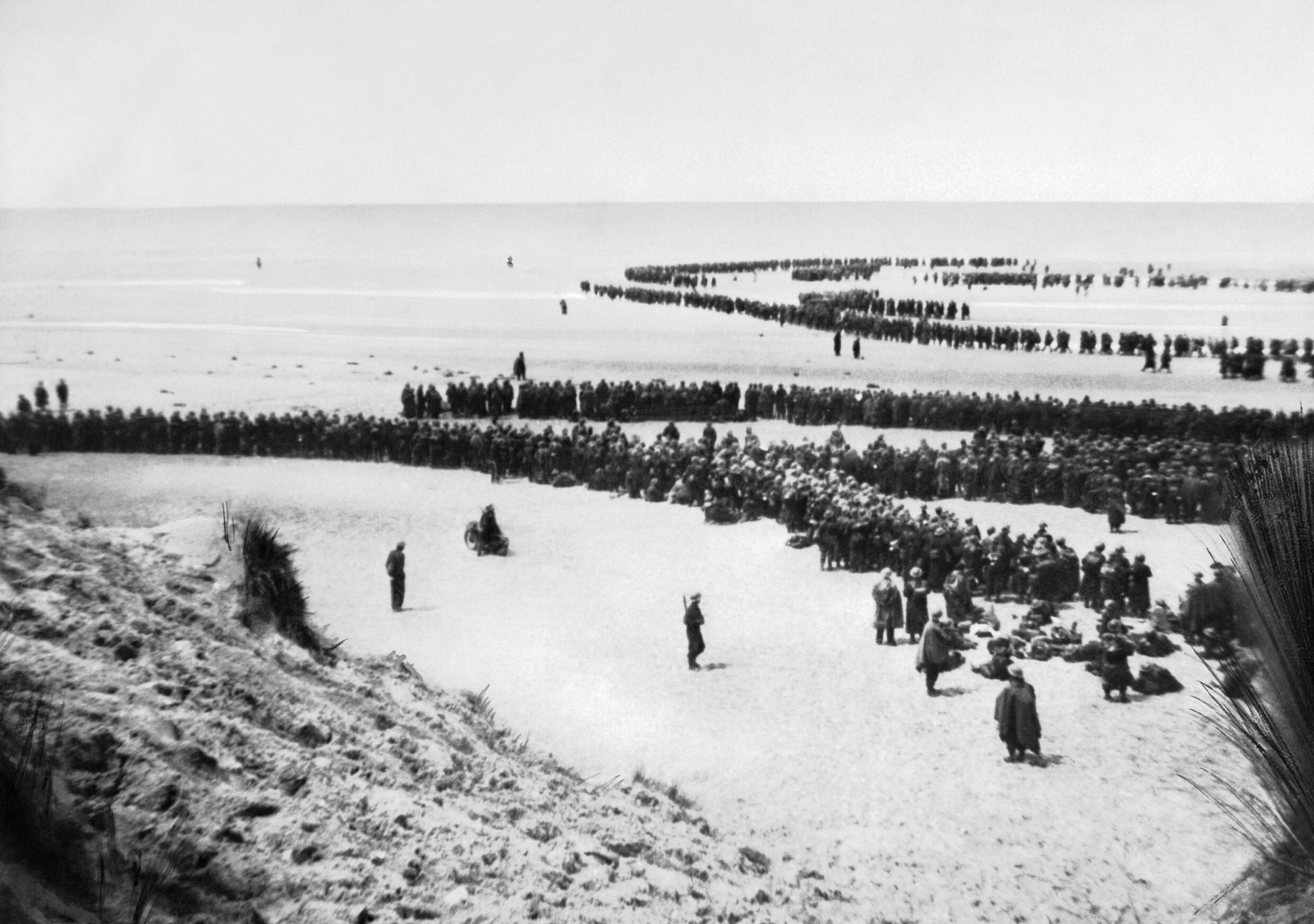
On June 4, 1940, Winston Churchill addressed the House of Commons with one of the most famous speeches in the English language: “We shall fight on the beaches…” To the British people, the evacuation of Dunkirk was a “miracle,” a moment of supreme national resilience where 338,000 men were snatched from the jaws of annihilation.
Across the Channel, the perspective was radically different. To the French army and public, Dunkirk was not a miracle; it was a betrayal. It was the moment the British cut and ran, abandoning the French rearguard to die on the beaches while the Royal Navy prioritized “Tommy.”
This bitterness did not end at Dunkirk. It festered through the chaotic weeks of June, culminating in the Armistice, and exploded into violence in July with the British attack on the French fleet at Mers-el-Kébir. In the span of six weeks, the Entente Cordiale—the alliance that had held the line in 1914—dissolved into mutual suspicion, recrimination, and bloodshed.
This article examines the collapse of the Anglo-French alliance not as a military inevitability, but as a diplomatic and psychological rupture. It explores the British decision to withhold fighter squadrons, the friction of the evacuation, and the catastrophic misunderstanding of French naval honor that led Churchill to order the shelling of his former ally. It argues that this “divorce” was the essential precondition for the collaborationist politics of the Vichy regime, allowing Pétain to frame Britain, not Germany, as the true enemy of France.
The Imbalance of Blood: The Continental Commitment
The seeds of the rupture were sown long before 1940. The alliance was structurally unbalanced. In World War I, Britain had eventually committed a massive land army to the Western Front. In 1939–1940, the British contribution was comparatively tiny. By May 1940, the British Expeditionary Force (BEF) numbered 10 divisions. The French Army mobilized over 80.
To the French poilu, this disparity was evidence that Britain was willing to fight “to the last Frenchman.” This sentiment was exploited ruthlessly by German propaganda (“Where are the Tommies?”), but it reflected a genuine strategic divergence. Britain viewed the war primarily as a naval and air conflict; France viewed it as a land battle for survival.
This divergence became acute in May 1940 over the issue of the Royal Air Force (RAF). As the French lines collapsed, Prime Minister Paul Reynaud pleaded with Churchill to send more Hurricane and Spitfire squadrons to France. He argued that the decisive battle was happening now.
Churchill, advised by Air Chief Marshal Hugh Dowding, refused. Dowding argued that if the fighter squadrons were consumed in the chaotic skies over France, Britain would be defenseless against the inevitable German invasion. Churchill made the brutal, rational calculation to prioritize the defense of the British Isles over the survival of France. To the French, this was abandonment. To the British, it was survival. Both were right, and that was the tragedy.
Dunkirk: Salvation or Betrayal?
The evacuation at Dunkirk (Operation Dynamo) is the emotional core of the rupture. As the Panzers pinned the Allied armies against the sea, the British command decided to evacuate. Lord Gort, commander of the BEF, unilaterally ordered a retreat to the coast, often without informing his French counterparts (Generals Blanchard and Weygand).
On the beaches, the friction was visceral. In the initial days, British ships refused to take French soldiers. There were ugly scenes of British soldiers fixing bayonets to prevent French troops from boarding boats. While Churchill eventually ordered that French troops be evacuated in equal numbers (“Bras-Dessus Bras-Dessous”), the initial perception was indelible: the British were leaving.
Critically, the evacuation was only possible because the French First Army fought a suicidal rearguard action at the Siege of Lille, delaying the Germans for four days. 40,000 French soldiers surrendered so that the BEF could escape. At Dunkirk itself, French troops held the perimeter until the end. When the final ships left on June 4, they took the last British troops, leaving roughly 40,000 French defenders on the beach to become prisoners of war.
The optics were devastating. The British army had escaped; the French army had been sacrificed. This sense of betrayal was the psychological soil in which the Anglophobia of Vichy would grow.
The Union That Never Was
In the dying days of the campaign, a desperate attempt was made to salvage the alliance. On June 16, inspired by Jean Monnet and Charles de Gaulle, Churchill proposed a “Franco-British Union.”
It was a radical document. It declared that “France and Great Britain shall no longer be two nations, but one Franco-British Union.” It proposed joint citizenship, a single war cabinet, and shared responsibility for the costs of war.
It was a breathtaking offer of political merger. However, the French cabinet rejected it. By June 16, the defeatism in Bordeaux was total. The proposal was viewed by the defeatists (Pétain, Weygand, Chautemps) not as a lifeline, but as a trap—a British attempt to seize France’s colonial empire and reduce France to a dominion like Canada. “We would be a British colony!” cried Pétain.
The rejection of the Union marked the end of the political alliance. Reynaud resigned that evening, and Pétain took power to seek an armistice.
The Obsession with the Fleet
With the Armistice imminent, British strategic anxiety focused entirely on one asset: the French Navy (Marine Nationale).
Under Admiral Darlan, the French Navy was a formidable modern force. It possessed fast battleships (Dunkerque, Strasbourg) that were superior to many British vessels. If these ships fell into German hands, the balance of naval power would shift, threatening Britain’s Atlantic lifeline.
Article 8 of the Armistice terms stated that the French fleet would be demobilized and disarmed under German supervision. Darlan swore a solemn oath to Churchill that no French ship would ever be allowed to be used by the Germans. “I will never give them up,” he promised.
Churchill did not trust Darlan. He did not trust a government led by Pétain. He operated on the worst-case assumption: that Hitler would seize the ships regardless of promises.
Operation Catapult: The Tragedy of Mers-el-Kébir
On July 3, 1940, Churchill launched Operation Catapult. The Royal Navy seized French ships in British ports (sometimes with bloodshed). But the main blow fell at Mers-el-Kébir in Algeria, where the core of the French fleet was anchored.
British Admiral Somerville arrived with Force H and delivered an ultimatum to French Admiral Gensoul: join the British, sail to the West Indies to be demilitarized, or scuttle the ships. If not, the British would sink them.
Through a series of miscommunications and stubborn pride, the negotiations failed. Gensoul, offended by the threat, refused to back down. At 5:54 PM, the British opened fire.
It was a massacre. The French ships, anchored and unable to maneuver, were sitting ducks. The battleship Bretagneexploded, taking nearly 1,000 sailors down with her. In ten minutes, 1,297 French sailors were killed by their allies of the previous month.
The Political Aftermath: Vichy’s Legitimacy
The strategic impact of Mers-el-Kébir is debated (it did demonstrate British resolve to the USA), but the political impact in France was unambiguous. It solidified the legitimacy of the Vichy regime.
Until July 3, many Frenchmen were unsure about Pétain’s collaboration. After Mers-el-Kébir, Britain was easily painted as the hereditary enemy—Perfide Albion. German propaganda had a field day, distributing posters showing a drowning French sailor with the caption “Remember Mers-el-Kébir.”
It allowed Vichy to frame its collaboration with Germany as a defensive necessity against British aggression. It justified the “National Revolution” as a turning away from the liberal, Anglo-Saxon world. It meant that for the next two years, French forces would fight the British (in Dakar, Syria, and Madagascar) with far more vigor than they had fought the Germans.
Conclusion: The Alliance of Convenience
The rupture of 1940 reveals the fragility of alliances built on divergent interests. The Anglo-French entente was never a marriage of love; it was a marriage of fear—fear of Germany. When the German blow landed, the divergent survival strategies of the two nations tore them apart. Britain, an island empire, retreated behind its moat. France, a continental power, had nowhere to retreat to.
The bitterness of 1940 lingered for decades. It shaped De Gaulle’s prickly relationship with the “Anglo-Saxons” and his later vetoing of British entry into the EEC. The tragedy is that both Churchill and Pétain acted rationally according to their own national interests, but their rationalities were incompatible. In the wreckage of the alliance, the only victor was Adolf Hitler, who watched with satisfaction as his enemies turned their guns on each other.
Historiographical Note
1. The “Churchill Myth” vs. French Memory
British historiography has traditionally defended Mers-el-Kébir as a “painful necessity” (Churchill’s term) that proved Britain’s will to fight. Martin Thomas and Peter Mangold offer a more critical view, arguing that the ultimatum was mishandled and that the risk of Germans seizing the ships was technically minimal (German sailors couldn’t operate French complex machinery overnight).
2. The Dunkirk Debate
Julian Jackson highlights the “French perspective” of Dunkirk, which is largely absent in English narratives. He emphasizes the sacrifice of the French First Army at Lille, without which the evacuation would have failed.
3. The Franco-British Union
Avi Shlaim has written extensively on the failed Union proposal. He argues it was a genuine, albeit desperate, attempt at federalism that failed because the French political class was already psychologically committed to the armistice.
4. Darlan’s Role
George Melton’s biography of Darlan revises the Admiral’s reputation. Often seen as a villain, Melton shows Darlan was obsessed with preserving the Fleet’s neutrality as France’s last bargaining chip, and that he truly never intended to hand it to Hitler.
Further Reading
- Thomas, Martin. The French Empire at War, 1940-45 (Manchester University Press, 1998).
- Essential for understanding the global fallout of the rupture, particularly the undeclared naval war between Vichy and Britain in the colonies.
- Kersaudy, François. Churchill and De Gaulle (Collins, 1981).
- A brilliant analysis of the stormy relationship between the two leaders, framing their personal conflict within the broader strategic divorce.
- Gates, Eleanor M. End of the Affair: The Collapse of the Anglo-French Alliance, 1939-40 (University of California Press, 1981).
- The definitive diplomatic history of the breakup.
- Jackson, Julian. The Fall of France (Oxford, 2003).
- The chapter on “The British Betrayal?” offers a balanced assessment of the recriminations.
- Collier, Richard. The Sands of Dunkirk (Collins, 1961).
- While older, it provides vivid accounts of the friction on the beaches between the French and British troops.

Leave a Reply