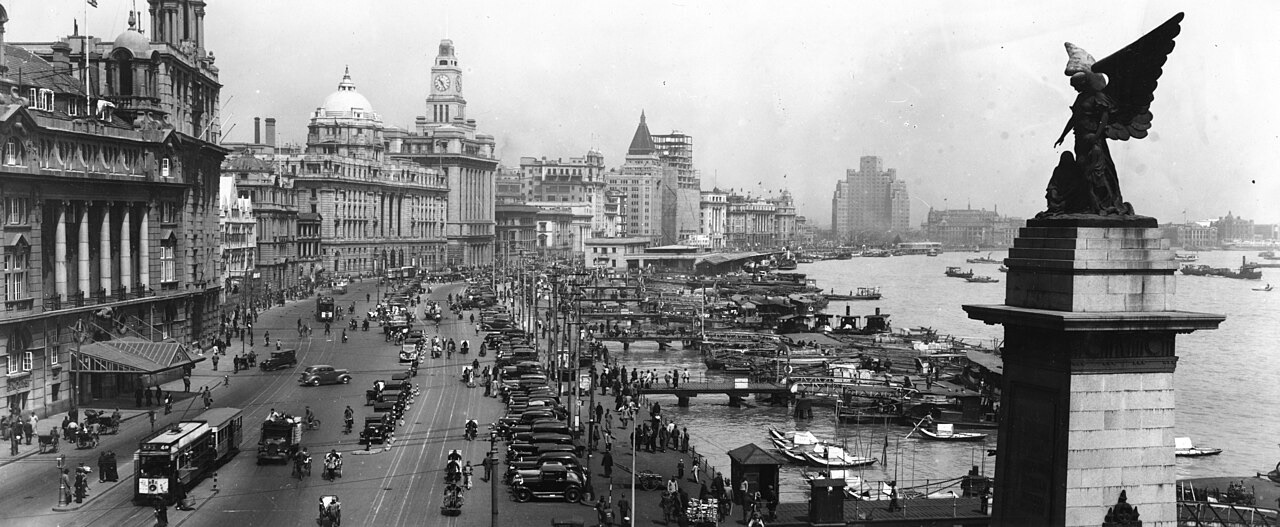

The interwar period witnessed the dramatic ascent of a new urban phenomenon: the colonial cosmopolis. Cities like Bombay, Shanghai, and Cairo were not merely administrative centers of empire but explosive, hybrid crucibles where global currents collided. Far from being passive imitators of a Western metropolitan ideal, these cities became dynamic laboratories where a distinct, fraught, and profoundly influential form of modernity was forged. This modernity was characterized by an intense, often dizzying juxtaposition: art deco cinemas stood beside traditional bazaars; American jazz pulsed through nightclubs where multiple ethnicities mingled under the anxious gaze of colonial authorities; and a vibrant vernacular press debated nationalism, socialism, and feminism. This article argues that the cosmopolitan modernity of these interwar metropolises was a product of their unique “semi-colonial” or “colonial-port” status, which created spaces of relative—though always contested—autonomy. Within these spaces, local actors, from industrialists and filmmakers to writers and social reformers, appropriated and indigenized global technologies and cultural forms to create something new: a self-consciously modern urban culture that simultaneously challenged the hegemony of the colonial West and unsettled the traditions of their own hinterlands. By examining the parallel yet distinct trajectories of Bombay, Shanghai, and Cairo, we can map a transnational geography of interwar modernity that was born not in the capitals of Europe, but in the electric, anxious, and creative heart of the colonial world.
The Structural Condition: Ports, Pluralism, and Partial Sovereignty
To understand the distinctive modernity of these cities, one must first appreciate their shared structural condition as nodal points in global imperial networks. Bombay was the “Gateway of India,” the primary port and financial engine of the British Raj. Shanghai was divided into the International Settlement and the French Concession, territories under foreign administration that turned the city into a hyper-capitalist “paradise of adventurers” largely outside Chinese sovereign control. Cairo, while the capital of a nominally independent kingdom after 1922, remained under heavy British imperial influence and was the administrative hub for a vast swath of the Arab world.
This condition created a paradoxical foundation for modernity: partial sovereignty and managed pluralism. Colonial authorities, focused on commerce and control, often permitted—or were forced to accept—a degree of social and cultural experimentation that would have been more difficult to contain in a fully sovereign national capital. These cities became magnets for migration, drawing in not only a diverse array of Europeans (traders, missionaries, refugees) but also vast numbers of regional migrants: Chinese from Jiangnan and Guangdong pouring into Shanghai; Parsis, Gujaratis, and Marathis into Bombay; and Syrians, Armenians, and fellahin from the Egyptian countryside into Cairo. This created extraordinarily heterogeneous societies, where communities lived in close proximity, interacting in the markets, on the streets, and in new leisure spaces. The constant negotiation of difference—through commerce, conflict, and collaboration—became a defining feature of urban life, fostering a pragmatic, hybrid consciousness that stood in contrast to the purist ideologies of both colonial rulers and rising nationalist movements.
The Cinematic Imagination: Forging Mass Culture and National Archetypes
Nowhere was the creative synthesis of the colonial cosmopolis more visible than in its burgeoning film industries. Cinema, the quintessential modern art form of the 20th century, was eagerly adopted and radically transformed in Bombay, Shanghai, and Cairo, becoming a primary arena for crafting modern subjectivities.
In Bombay, the advent of sound in 1931 with Alam Ara catalyzed the consolidation of the Hindi film industry. Filmmakers like Himansu Rai (founder of Bombay Talkies) combined Hollywood studio techniques with Indian mythological, folk, and social themes. The “talkie” created a new, pan-Indian mass culture, blending Hindustani dialogue with elaborate song sequences that drew on both classical ragas and popular folk tunes. Movies like Achhut Kanya (1936), a social reform film on untouchability, used the melodramatic form to debate modern issues of caste and love, creating new urban archetypes. The film star, the vamp, and the modern couple became powerful symbols of a new India in the making, their glamour and conflicts playing out on screens from Lahore to Madras.
Shanghai’s film industry of the 1930s was one of the most sophisticated in the world. Operating in a city saturated with American and European movies, studios like the Lianhua Film Company created a distinctive “Shanghai style.” Left-wing filmmakers, influenced by Soviet montage and social realism, produced masterpieces like The Goddess (1934), a poignant critique of social hypocrisy starring Ruan Lingyu. These films often portrayed the city itself—its neon-lit streets, its oppressive wealth, and its desperate poverty—as a central character. The “modern girl” (modeng xiaojie), with her cheongsam, cigarette, and ambivalent morality, became a potent and controversial symbol of Shanghai’s dizzying, dangerous modernity, representing both liberation from tradition and the corrupting influence of foreign capital.
In Cairo, the studio system flourished along the banks of the Nile. The iconic singer Umm Kulthum’s cinematic performances, beginning in the 1930s, fused classical Arabic poetry with orchestral arrangements, crafting an image of authentic yet modern Egyptian identity. Comedies starring the beloved Naguib el-Rihani satirized the clash between tradition and modernity, while melodramas explored changing gender roles and family dynamics. Egyptian cinema, distributed across the Arab world from Morocco to Iraq, established Cairo as the cultural capital of the Arab Nahda (renaissance), projecting a glamorous, sophisticated image of a modern Arab society that was both Islamic and cosmopolitan.
In all three cases, cinema was more than entertainment; it was a battleground. Colonial censors scrutinized content for sedition. Traditionalists decried its moral influence. Yet, it provided a powerful, shared visual language through which millions negotiated the promises and perils of modern life, forging a new, media-based public sphere.
Soundscapes of Modernity: Jazz, Gramophone, and the Anxiety of Pleasure
If cinema shaped the visual imagination, new soundscapes defined the sensory experience of the interwar cosmopolis. The arrival of gramophone records and radio democratized music, creating mass markets for local and global genres. But it was jazz that became the ultimate auditory symbol of this era’s complex cultural traffic.
In Shanghai, jazz was the heartbeat of the nightclub scene in the International Settlement. Venues like the Paramount Ballroom and the Canidrome featured Filipino and Russian jazz bands playing for a mixed audience of Chinese elites, Western businessmen, and gangsters. For many Chinese, jazz represented the thrilling, decadent pulse of Western modernity. Composers like Li Jinhui created “Shidaiqu” (modern songs), which blended jazz rhythms with Chinese pentatonic melodies, producing a hugely popular hybrid form that conservatives condemned as morally degenerate “yellow music” (huangse yinyue). Here, musical taste became a proxy for a larger cultural war.
In Bombay, jazz influenced the burgeoning film music industry. Composers like Anil Biswas and the legendary duo Shankar-Jaikishan incorporated swing and foxtrot rhythms into their film scores, creating a syncretic popular music that felt both contemporary and Indian. The cosmopolitan environment of hotels like the Taj Mahal Palace provided a stage for both visiting American jazz musicians and local performers, creating a circuit of exchange. Meanwhile, the gramophone allowed the devotional bhajans of a singer like M.S. Subbulakshmi and the playful, often risqué, “stage songs” of the Marathi-Hindustani theater to reach new audiences, fragmenting and pluralizing the city’s soundscape.
Cairo’s encounter with jazz was similarly transformative. In the nightclubs of Opera Square, Lebanese and Egyptian musicians adapted jazz for Arabic audiences. More profoundly, the iconic singer Umm Kulthum leveraged radio (her monthly live broadcasts became a national event) and recording technology to unprecedented effect. Her long, improvisational renditions of classical poetry, broadcast from Cairo across the Arab world, created a sense of simultaneous, collective experience—an “imagined community” of listeners united in a modern, mediated, yet deeply traditional aesthetic moment. The contrast between the communal, almost sacred, listening to Umm Kulthum and the individualistic, bodily pleasure of jazz encapsulated the city’s cultural dichotomy.
These new soundscapes generated profound anxiety. Colonial authorities feared that nightclubs and dance halls were spaces of racial mixing and political intrigue. Nationalist elites and religious conservatives saw them as sites of moral corruption and Western cultural invasion. Yet, for the urban dweller, they offered a powerful, sensual experience of a global modernity, a chance to participate in a world that extended far beyond the colonial port.
The Built Environment: Art Deco, Anxiety, and the Architecture of Aspiration
The physical fabric of these cities was radically reshaped in the interwar period, embodying in steel, concrete, and neon the aspirations and anxieties of the age. The dominant architectural idiom was Art Deco, a style that perfectly suited the colonial cosmopolis. Its geometric forms were modern but not dogmatically European; it could be adapted to incorporate local motifs, making it a flexible language for expressing a hybrid identity.
In Bombay, the Backbay reclamation project created space for a stunning stretch of Art Deco apartment buildings and cinemas along the Marine Drive, later dubbed the “Queen’s Necklace.” These buildings, designed by Indian architects like G.B. Mhatre, featured Western streamline curves alongside motifs of lotuses, sunbursts, and elephants. They housed the city’s new professional class—lawyers, businessmen, film stars—who sought a lifestyle that was visibly international yet distinct from the neo-Gothic imperial pomp of the old British Fort area. The Eros Cinema, with its ziggurat form, became a temple to this new celluloid modernity.
Shanghai went further, building what became the world’s second-largest collection of Art Deco structures. The Park Hotel, the Broadway Mansions, and countless apartment blocks (shikumen and newer lilong) created a stunning vertical cityscape. This architecture served the city’s booming commercial life and housed its diverse population, from foreign taipans to the Chinese middle class. The Bund’s skyline was a direct, competitive statement of capitalist power, asserting Shanghai’s parity with London or New York. Yet, this glittering facade concealed the desperate poverty of the shantytowns (zhangpeng) and factory slums, a duality that plagued the city’s conscience.
In Cairo, modernity expressed itself in the new suburbs of Heliopolis and Garden City, built in a blend of Art Deco, Moorish Revival, and European styles. These planned communities, with their wide boulevards, cinemas, and department stores like Cicurel, were designed for a cosmopolitan elite. They stood in stark contrast to the dense, “medieval” fabric of historic Cairo, creating a spatial segregation between the modern, Westernized city and the “traditional” Arab city. This architecture was a physical manifestation of the Nahda project: aspiring to be part of the modern world while selectively referencing an Islamic past.
In all three cities, architecture was not neutral. It was a declaration of values, creating spaces that facilitated new social behaviors—from promenading on boulevards to apartment living—that broke with older, more communal patterns. It materialized the dream of a global modernity, even as its gleaming surfaces reflected the deep social inequalities that such modernity produced.
The Cosmopolitan Paradox: Liberation, Alienation, and the Nationalist Backlash
The vibrant, hybrid culture of the interwar cosmopolis was inherently unstable, breeding its own antithesis. The very forces that fueled its creativity—cultural mixing, rapid change, social mobility—also generated profound alienation and a powerful nationalist backlash.
For every writer like the Shanghai modernist Mu Shiying, who celebrated the city’s sensory overload and erotic charge in his fragmented, cinematic stories, there were many who experienced the city as a site of loneliness and moral decay. The anonymity of urban life could be liberating, especially for women and migrants escaping rural patriarchy, but it could also be deeply disorienting. The Bengali intellectual in Bombay, the Chinese writer in the International Settlement, or the Syrian journalist in Cairo often felt caught between worlds, fully at home in none—a condition of rootless cosmopolitanism that was both stimulating and agonizing.
More consequentially, the cosmopolitan project attracted fierce criticism from rising nationalist movements. Indian nationalists of the Gandhian persuasion saw Bombay’s glamour as a superficial, Westernized crust on a nation that needed to find its soul in the village. Gandhi himself famously critiqued the seductive corruption of modern city life. In China, both the conservative Guomindang and the communist intellectuals condemned Shanghai as a “parasitic” city, a creature of foreign imperialism that sucked the lifeblood from the Chinese nation and propagated a sick, commercialized culture. The powerful leftist literary movement, while based in Shanghai, often depicted the city as a monster of exploitation.
In Egypt, the Muslim Brotherhood, founded in 1928, grew rapidly by attacking the secular, Westernized morality of Cairo’s elite, advocating for a return to Islamic principles as the only authentic basis for society. The cosmopolitan ideal of a society where religious and ethnic identity were private matters clashed directly with the Brotherhood’s vision of an Islamic state.
The Second World War and the subsequent wave of decolonization would violently resolve this paradox. Shanghai’s cosmopolitan era ended with the Japanese occupation and, definitively, with the Communist victory in 1949. Bombay’s centrality was challenged by the partition of India and the rise of linguistic regionalism. Cairo’s cosmopolitan pluralism diminished after the 1952 Revolution and the subsequent exodus of its foreign communities. The interwar cosmopolis, a product of a specific, fleeting moment of globalized imperial capitalism, proved impossible to sustain in the age of the nation-state. Yet, its legacy is indelible. It demonstrated that modernity was not a single, Western-originated path but a global, recombinant process. In the electric labyrinths of Bombay, Shanghai, and Cairo, between the wars, the future—in all its fragmented, hybrid, and contentious glory—was born.

Leave a Reply