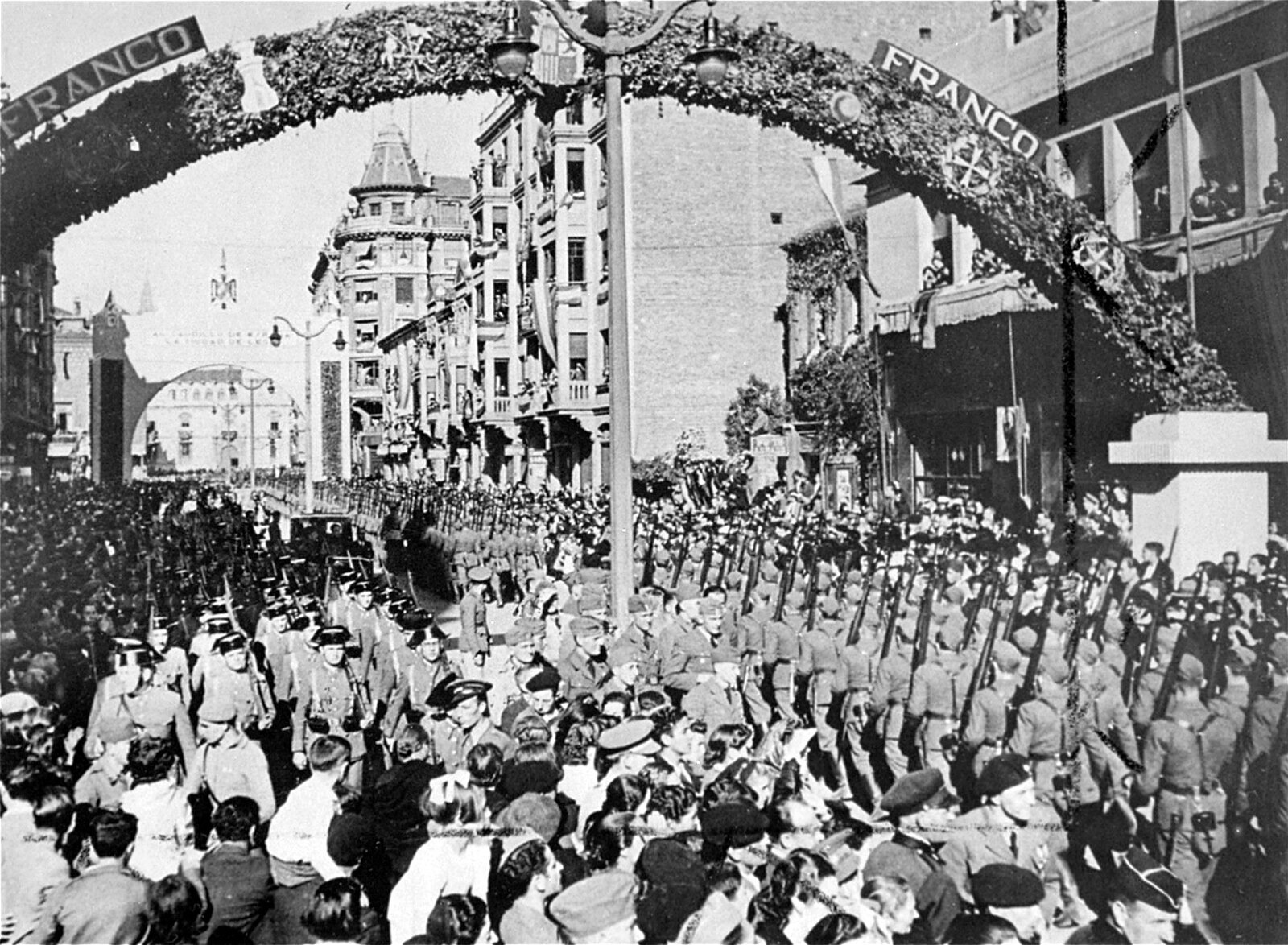

The Spanish Civil War (1936-1939) occupies a uniquely contested space in modern historical memory, often obscured by layers of political mythmaking. For decades, a powerful and persistent narrative—forged in the propaganda of the era and solidified by the Cold War—framed the conflict as a stark, elemental clash between the forces of democracy and fascism, a simplistic binary that served as a potent prelude to the larger world war that followed. While this interpretation contains elements of truth, particularly in how the conflict was perceived and mobilized by contemporary international actors, it fundamentally distorts the complex Spanish reality it seeks to describe.
The war’s origins were profoundly national, rooted in the intense social, political, and religious fractures of a Spain struggling with the aftermath of imperial decline, uneven modernization, and the fierce tensions between centralizing state authority, regional identities, and revolutionary aspirations. It was a Spanish crisis, born of Spanish contradictions.
However, the rapid and decisive intervention of foreign powers—Nazi Germany, Fascist Italy, the Soviet Union, and others—transformed this internal struggle into the first definitive proxy war of the twentieth century. This internationalization did not supersede the war’s native character but rather grafted onto it a new and deadly dimension, making Spain the battlefield where the ideologies and military technologies of the coming global confrontation were first tested.
For Nazi Germany, under Adolf Hitler, the conflict presented a singular strategic opportunity that transcended mere ideological sympathy for the Nationalist rebels. The intervention, orchestrated through the meticulously organized Legion Condor, was an exercise in realpolitik and military experimentalism. Spain functioned as a sanctioned laboratory—a vast proving ground where the doctrine, technology, and psychology of a new form of warfare could be refined under combat conditions, free from the direct risks of a continental war. This essay argues that the German engagement was characterized less by a passionate crusade for fascism than by a cold, pragmatic calculation to advance the Reich’s strategic interests and tactical preparedness. Through an analysis of the Legion Condor’s structure, its technological and doctrinal innovations in close air support and combined arms warfare, and the symbolic atrocity of Guernica, we will trace how Spain served as the essential dress rehearsal for the Wehrmacht, directly forging the tools of Blitzkrieg that would unleash the Second World War. In doing so, we move beyond the simplistic “dress rehearsal” metaphor to examine the precise mechanisms by which a localized civil conflict became an indispensable catalyst for a wider, industrialized global war.
While Adolf Hitler’s alignment with Francisco Franco’s Nationalists was rooted in a natural ideological sympathy, the German intervention, meticulously orchestrated through the Legion Condor, transcended mere alliance. Spain served, above all, as a sanctioned proving ground for the nascent Wehrmacht—a vast, open-air laboratory where the theories of a new, terrifying form of warfare could be tested under live combat conditions. Here, away from the scrutinizing eyes and severe consequences of the European heartland, Germany could experiment with weaponry, refine combined arms doctrine, and practice psychological terror. This was not simply foreign aid; it was a coldly calculated experiment in future warfare, with the Spanish landscape and its people as its subjects. The lessons learned in the skies over the Basque Country and the plains of Aragon did not just influence the Second World War; they actively forged the tool of Blitzkrieg that would unleash it.
The Genesis of the Condor Legion: Strategic Gambit and Military Pragmatism
Hitler’s decision to intervene in late July 1936 was characteristically rapid, emerging from an opportunistic cocktail of ideological affinity, strategic ambition, and military pragmatism. The initial request, delivered by Franco’s emissaries on July 22, was for transport aircraft—specifically Junkers Ju 52s—to airlift the Army of Africa from Spanish Morocco to the mainland, a move critical to the rebellion’s survival. Historian Ian Kershaw argues that Hitler’s impulse was fundamentally opportunistic: he saw a chance to establish a pliant, anti-communist regime on France’s border, divert Anglo-French attention from Central Europe, and thwart the spread of Soviet influence. Yet, from this initial gamble, a more systematic and ambitious program quickly evolved.
The military establishment, particularly the fledgling Luftwaffe under the bombastic Hermann Göring, immediately perceived the conflict’s utility. Göring, eager to build an independent air force empire and prove its worth, became a fervent advocate for extensive involvement. The army (Heer), though more cautious, recognized the unparalleled value of combat experience. The vehicle created to manage this escalating commitment was the Legion Condor, a masterpiece of diplomatic duplicity and military efficiency. Formally a “volunteer” corps to maintain the crumbling façade of the Non-Intervention Committee, it was, in reality, a full expeditionary force of the German state. Established in November 1936 and directly subordinate to the Wehrmacht High Command (Oberkommando der Wehrmacht), its “volunteer” status was a transparent fiction; personnel were selected from active-duty units, their pay and families’ benefits maintained by the German state.
Command was entrusted to two formidable officers who would become architects of the coming war: Generalmajor Hugo Sperrle, a gruff, imposing Bavarian who commanded respect, and his chief of staff, the brilliant and ruthless Lieutenant Colonel Wolfram von Richthofen (a cousin of the famed World War I ace). Under their direction, the Legion grew into a self-contained, combined-arms task force, peaking at nearly 19,000 men who rotated through Spain during the conflict. Its structure was deliberately comprehensive:
· Air Components: Bomber squadrons (initially Ju 52s, later the modern Heinkel He 111 and Dornier Do 17), fighter squadrons (Heinkel He 51 biplanes, swiftly replaced by the revolutionary Messerschmitt Bf 109), dedicated ground-attack aircraft (the Henschel Hs 123), and reconnaissance and naval units.
· Ground Components: A panzer detachment equipped with the new Panzer I light tank, a formidable force of 88mm and 37mm anti-aircraft guns (which would double as superb anti-tank weapons), anti-tank companies, signals battalions, and extensive logistical and engineering support.
This integrated structure was no accident. It allowed Germany to test not only individual weapons systems but the entire logistical, command, and supply chain required to project and sustain force far from home. The financial architecture of the intervention was equally sophisticated. The covertly state-owned trading company HISMA (Compañía Hispano-Marroquí de Transportes) and its German counterpart ROWAK (Rohstoffe-und Waren-Einkaufsgesellschaft) created a closed, self-financing loop. Spanish mineral resources—iron ore, pyrites, copper—were extracted and shipped to Germany in exchange for arms and credit, ensuring the venture burdened neither the Reich’s treasury nor its foreign currency reserves. As historian James S. Corum emphasizes, this created a “twofold policy” from the outset: to ensure a Nationalist victory while providing the Luftwaffe and Heer with irreplaceable combat experience at minimal financial cost and manageable political risk.
The Laboratory in Action: Testing Technology, Tactics, and Doctrine
The harsh terrain of Spain became a brutal but effective live-fire testing range, where theoretical manuals met the unforgiving reality of combat. The lessons learned were not abstract; they were written in the blood of both sides and directly shaped the evolution of the German war machine.
The Evolution of Air Power: From Dogma to Devastating Practice
The Luftwaffe entered Spain wedded to the dominant inter-war dogma of strategic bombing—the belief that independent air campaigns could cripple an enemy’s will and capacity to fight. The workhorse Ju 52, a slow, tri-motored transport adapted as a bomber, proved this doctrine fatally flawed. Its vulnerability to Republican fighters, including the agile Soviet Polikarpov I-15 biplane and the faster monoplane I-16, was starkly revealed. This failure prompted a rapid technological and doctrinal pivot.
The deployment of modern, fast monoplane bombers like the Heinkel He 111 and Dornier Do 17 was accelerated. More crucially, the war forced a revolution in fighter tactics and technology. The Heinkel He 51 biplane was utterly outclassed by the I-16, known as the Mosca (Fly). The urgent response was the deployment of the Messerschmitt Bf 109 B in early 1937. This sleek, all-metal monoplane with a closed cockpit and retractable landing gear represented a quantum leap. In the hands of young pilots like Werner Mölders, Spain became a workshop for tactical innovation. Mölders, analyzing combat losses, systematically dismantled the rigid, three-aircraft Kette formation. He developed the loose, flexible four-finger Schwarm, where two Rotten (pairs) could provide mutual cover and exploit initiative. This tactical system, formalized and taught to all Luftwaffe pilots, would provide a devastating advantage in the early years of World War II.
The most significant doctrinal shift, however, was in the conceptualization of air power itself. The theory of close air support (CAS)—the integration of aerial strikes directly with the maneuvering ground battle—was transformed into a precise, devastating science. Wolfram von Richthofen, an aggressive proponent of air power as tactical artillery, was its prime architect. He developed and refined a system of forward air controllers: Luftwaffe liaison officers embedded directly with advancing Nationalist front-line units, equipped with radios to call in pinpoint strikes on enemy strongpoints, artillery batteries, and troop concentrations. This system, practiced and perfected in the brutal battles of attrition at Brunete (July 1937) and later in the Aragon and Ebro campaigns (1938), became the operational bedrock of the Blitzkrieg. The Ju 87 Stuka dive-bomber, whose later prototypes were tested in Spain, would become the screaming symbol of this doctrine, but it was the integrated system of communication, command, and control that was Spain’s true legacy.
Ground Forces: The Limits of Armor and the Birth of Combined Arms
The German ground contingent, though smaller than its air counterpart, provided equally vital, if sometimes sobering, lessons. The Panzer I tank, the mainstay of the Legion’s panzer detachment, was exposed as a deadly dead-end. Its thin armor was vulnerable to even light anti-tank rifles and artillery, and its armament of twin machine guns was powerless against fortified positions or enemy tanks. This exposure of weakness was, in its way, as valuable as the proof of a concept. It provided irrefutable evidence to German designers and tacticians, directly spurring the development of heavier, more powerfully armed models like the Panzer III (with a 37mm gun) and Panzer IV (with a short 75mm howitzer).
More importantly, the war underscored that tanks alone were not a decisive weapon. The Germans in Spain learned to coordinate their panzers with other mobile arms. The 88mm Flak gun, renowned for its accuracy and high muzzle velocity, was used in a ground anti-tank role for the first time, a terrifyingly effective improvisation that would become standard. Motorized infantry and combat engineers learned to work in concert with tanks to reduce obstacles and secure breakthroughs. This ethos of combined arms (Zusammenwirken der Waffen)—the seamless integration of tanks, mobile artillery, infantry, and engineers into a single, fast-moving fist—was practiced relentlessly in the Nationalist advances. It was this combined arms philosophy, not the tank in isolation, that constituted the essence of Blitzkrieg. The war also highlighted critical logistical shortcomings, particularly in maintenance and spare parts supply over long distances, lessons that would be studiously, if not always successfully, applied to the larger scales of World War II.
Guernica: The Crucible of Terror and Its Historiographical Shadow
The bombing of the Basque town of Guernica on Monday, April 26, 1937, stands as the horrific and iconic apex of Germany’s experimental war. Under the direct planning and command of Wolfram von Richthofen, the Condor Legion, in coordination with the Italian Aviazione Legionaria, subjected the undefended civilian town to a methodical, three-hour attack. The assault followed a clear pattern: waves of Dornier Do 17 and Heinkel He 111 bombers dropped high-explosive bombs to shatter buildings and rupture infrastructure, followed by incendiaries to ignite the wreckage. Low-flying Heinkel He 51 and Messerschmitt Bf 109 fighters then strafed the streets and surrounding fields, targeting fleeing civilians. The result was the near-total destruction of the town’s center, with casualties estimated between 200 and 300 civilians.
The historiography of Guernica is a microcosm of the larger debate over the nature of the German intervention: was it a military action with tragic collateral damage, or a deliberate experiment in terror bombing? The immediate Nationalist propaganda line, eagerly adopted by some German diplomats, claimed the “Reds” had dynamited and burned their own town—a falsehood meticulously dismantled by journalists like George Steer and historians ever since.
Scholarly interpretation has evolved and diverged. Military historians such as James S. Corum and Robert H. Whealey, while acknowledging the horrific civilian toll, contextualize the raid within the ongoing Vizcaya offensive. They point to Guernica’s strategic relevance as a communications node: it housed a key bridge and a crossroads used for Republican retreats and reinforcements. Von Richthofen’s own war diary references these “traffic routes” as targets. From this perspective, Guernica was a brutal application of the new tactical doctrine—interdiction—carried out with a criminal disregard for civilian life and the principles of discrimination.
In stark contrast, historians like Paul Preston, Antony Beevor, and Ian Patterson frame Guernica as a premeditated act of psychological warfare, a Schrecklichkeit (frightfulness) operation designed explicitly to break the will of the staunchly Republican Basques and demoralize the northern front into collapse. They emphasize the symbolic weight of Guernica as the ancient seat of Basque liberties, the choice of a market day to maximize casualties, and the absence of any genuine military presence. This interpretation views the raid as a laboratory test for the efficacy of terror against civilian populations, a hypothesis that would find its ultimate expression in the bombing of Warsaw, Rotterdam, and the Blitz.
Perhaps the most nuanced view, synthesizing these positions, is that the raid served both purposes simultaneously, revealing the inherent brutality of the new warfare Germany was perfecting. The tactical objective of interdiction and the strategic objective of terror were not mutually exclusive; they were two sides of the same coin in a doctrine that deliberately erased the line between front line and home front. The international outcry, immortalized by Pablo Picasso’s painting, also provided the Nazi regime with a crucial lesson in propaganda management. Henceforth, in conflicts they controlled, they would exert far tighter censorship over war reporting to manage global opinion.
The Institutionalization of Experience: Forging the Future Wehrmacht
The true value of the Spanish laboratory was not merely in the testing of machines, but in the creation of a battle-hardened cadre of officers, pilots, and NCOs who would form the tactical backbone of the early Wehrmacht victories. The personnel rotation system ensured a steady flow of experience back into the Reich’s military academies and staff colleges. By the war’s end, approximately 15,000 German airmen and 5,000 ground troops had served in Spain.
The impact on leadership was profound. Hugo Sperrle would go on to command Luftflotte 3 during the Battle of Britain and the Blitz. Wolfram von Richthofen, the operational mastermind, would command the VIII. Fliegerkorps, the close air support spearhead for army groups in the invasions of Poland, France, and the Soviet Union. Werner Mölders, the tactical genius of the fighter arm, became the first pilot to score 100 aerial victories and was appointed the first General der Jagdflieger. These men did not just bring back stories; they brought back validated procedures, revised tactical manuals, and an unshakeable confidence born of proven methods.
The institutional learning was systematic. Detailed after-action reports, technical evaluations of equipment under combat stress, and analyses of enemy tactics were fed directly into the German military-industrial complex. The Panzer I’s failures informed the design of the Panzer III. The fighter tactics of Mölders were codified into new training syllabi. The close air support protocols developed by von Richthofen became standard operating procedure. The Legion Condor itself became a model for future expeditionary force organization.
The Direct Line to Poland and the World War: From Rehearsal to Performance
The seamless coordination witnessed in the invasion of Poland on September 1, 1939, was not a spontaneous emergence of military genius; it was the polished performance of a script rehearsed for nearly three years on the stages of Jarama, Brunete, and the Ebro. The Blitzkrieg that stunned the world was the direct, logical application of lessons institutionalized from Spain.
The opening strikes of World War II bore the unmistakable signature of the Spanish laboratory. The Junkers Ju 87 Stuka dive-bombers, screaming down on Polish positions, were the technological heirs of the close air support doctrine perfected by von Richthofen. The Panzer divisions that sliced through Polish lines were not solo actors; they were the nucleus of combined arms battle groups, integrating motorized infantry, combat engineers, and anti-tank units exactly as practiced with Franco’s troops. The swift, paralyzing thrusts that bypassed strongpoints relied on the radio-linked flexibility and initiative honed by junior officers in Spain. Even the terror bombing of Wieluń, a Polish town bombed without military justification in the war’s first hours, echoed the grim logic of Guernica.
The Wehrmacht that rolled across Europe in 1939-41 was an army that had already been bloodied. It possessed a confidence, a cohesion, and a rehearsed playbook that its opponents, for all their theoretical knowledge, lacked. The victory in the West in 1940, though a more complex operational masterpiece, still rested on this foundation of live combat experience. The risks taken, the tempo maintained, and the integration demanded were all validated by the earlier, smaller-scale conflict.
Conclusion
To characterize the German intervention in the Spanish Civil War as a “dress rehearsal” is not to indulge in historical metaphor but to describe a concrete, deliberate policy of military experimentation. The Legion Condor was a venture that yielded immense strategic dividends for the Third Reich: it secured a friendly, neutral regime in Iberia for the coming war, provided unparalleled combat experience for a generation of personnel, validated and refined the revolutionary tactics of Blitzkrieg, and exposed the paralyzing weaknesses of the Western democracies’ diplomatic posturing.
Yet, this clinical analysis must not obscure the profound human cost. The laboratory’s subjects were the Spanish people, upon whom this experiment in modern, total warfare was imposed without consent. Towns like Guernica were not just tactical objectives; they were communities shattered to gather data. The war’s ultimate, tragic lesson for Hitler and his generals was that the violent, technologically integrated, and morally unconstrained warfare they practiced could succeed, and that the international community, despite its protests, would not act decisively to stop them. In this grim, causative sense, the Spanish Civil War was not merely a proxy conflict or a prelude. It was the opening chapter of the Second World War, a chapter written in the operational manuals of the Wehrmacht, forged in the factories retooled after Spanish feedback, and etched forever in the ashes of a Basque town whose name became a universal synonym for the horror of war against civilians.

Leave a Reply