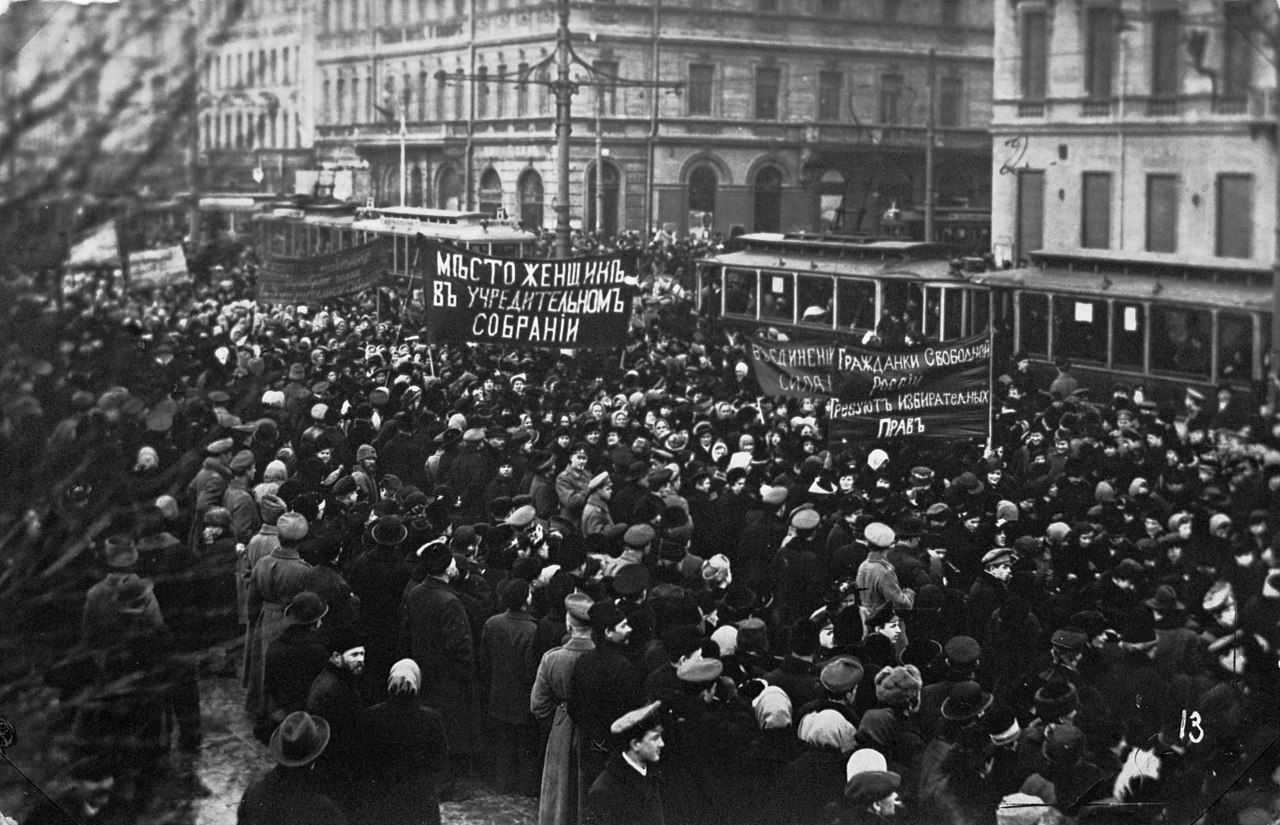

The Russian Revolution of 1917 is not just a historical event; it is a battlefield of interpretation. For over a century, historians have argued over why the Romanov dynasty fell and how the Bolsheviks seized power. Was it the inevitable march of history? A violent coup by a small band of fanatics? or a genuine popular uprising betrayed by dictatorship?
In this week’s podcast, I explored these competing historiographies, arguing that understanding how history is written is just as important as knowing the dates and names.
The Soviet Orthodoxy
For decades, the official Soviet line was one of inevitability. Drawing on a rigid interpretation of Marxism, Soviet historians argued that the revolution was the scientifically determined outcome of class struggle. The proletariat, led by the vanguard Bolshevik party, rose up to overthrow the bourgeoisie.
However, as I noted in the episode, this view required ignoring much of what Marx actually said. Marx believed revolution would happen in advanced industrial societies like Germany, not in agrarian Russia. The Soviet narrative was less history and more state mythology, designed to legitimize the regime.
The Liberal School
During the Cold War, Western historians (the “Liberal School”) countered this with the “coup d’état” theory. They argued that the revolution was not a mass movement but a seizure of power by a small, disciplined group of fanatics—the Bolsheviks—who lacked popular support. They emphasized the “Great Man” theory, focusing on the incompetence of Nicholas II or the genius of Lenin.
While there is truth to the idea that the Bolsheviks were a minority, this view often ignores the deep social grievances that made the old order so fragile. It risks reducing complex structural forces to the whims of individuals.
The Revisionist Turn
In the 1960s and 70s, a new generation of “Revisionist” social historians (like Sheila Fitzpatrick) began to look history “from below.” They argued that while the Bolsheviks may have been opportunistic, there was a genuine mass movement. The slogans of “Peace, Land, and Bread” resonated because the Russian people were exhausted by war and hunger. The revolution wasn’t just imposed from above; it was driven by a society that had simply stopped functioning.
The Cultural Turn
Finally, after the opening of the Soviet archives in 1991, historians like Orlando Figes attempted a synthesis. In A People’s Tragedy, Figes acknowledges the popular uprising but also the Bolshevik betrayal. He focuses on “mentalities”—the culture of violence in the Russian countryside and how the trauma of World War I radicalized the population.
The Structural Reality
My own view aligns with the structural argument: You cannot overthrow a functioning state. Revolutions happen when states degrade to the point of collapse. The Tsarist regime didn’t fall solely because of Lenin; it fell because it could no longer feed its people, equip its army, or maintain order. The Bolsheviks didn’t create the chaos; they navigated it better than anyone else.
Student Announcement:
If you are studying this topic for A-Level or IB, understanding these debates is the key to top marks. On Sunday, January 25th, I am hosting a live masterclass on The Russian Revolution and Stalinism. We will cover essay structure, exam psychology, and how to use historiography to elevate your arguments. Tickets are limited—link in the show notes!
Transcript
Nick: Welcome to the Explaining History podcast.
First, a quick housekeeping note. I am using a new microphone today, so let me know if the sound quality is an improvement!
Before we get into our core topic, I have a key announcement. Our Russian Revolution and Stalinism Masterclass is on Sunday, January 25th at 3pm UK time. This is for students who want to learn top-grade essay structure, unpack new ideas about the period, and master the mindset needed for exams. We will be getting inside the head of the examiner to see exactly what they are looking for. There are only 100 places, so click the link in the show notes to book your spot and avoid disappointment.
Now, let’s talk about the Russian Revolution. In the last few days, I’ve discussed the shocking events in Venezuela, and I’ll return to that geopolitical picture soon. But today, we are focusing on historiography—the study of how history is written.
The Russian Revolution is hard to explain through a single lens. There are several competing schools of thought.
First, the Soviet School. This was the product of Marxist-Leninism and Stalinism. It presented the revolution as historically inevitable—dictated by the “iron laws of history.” The problem is that Marx himself didn’t think revolution would happen in Russia; he looked to industrial Germany. The Soviet view was largely state mythology, designed to legitimize the regime.
Second, the Liberal School. Dominant in the West during the Cold War, this view argued that the revolution was a coup d’état—a violent seizure of power by a small, disciplined group of fanatics (the Bolsheviks) who lacked popular support. There is a grain of truth here; the Bolsheviks did lose the Constituent Assembly elections to the Social Revolutionaries. However, the Liberal view often relies too heavily on the “Great Man” theory—blaming everything on the incompetence of Nicholas II or the brilliance of Lenin.
My argument is that you cannot seize power from a functioning state. A state that is robust and operable has the means of repression to stop you. A coup only happens when the state has already stopped functioning. Nicholas II was certainly incompetent, but even a competent Tsar would have struggled with the structural contradictions of the Russian Empire during World War I.
Third, the Revisionist School. Emerging in the 1960s and 70s, social historians like Sheila Fitzpatrick challenged the “coup” narrative. They argued that there was a genuine mass movement from below. The Bolshevik slogans of “Peace, Land, and Bread” resonated because they matched the aspirations of a people exhausted by war and hunger. The collapse of the old order was driven by social grievances, regardless of Lenin’s machinations.
Fourth, the Post-Revisionist/Cultural School. After the Soviet archives opened in 1991, historians like Orlando Figes (A People’s Tragedy) synthesized these views. They acknowledged the popular uprising but also emphasized the “mentalities” of the time—the deep-seated culture of violence in the Russian countryside and the radicalizing effect of the First World War.
Finally, we have Post-Soviet Russian Historiography. This is divided. Some view the revolution as a national catastrophe that interrupted Russia’s development. Others, aligned with the current Putin regime, try to reconcile “Red” and “White” into a single narrative of Russian state strength—a nationalist fairy tale.
Ultimately, I lean towards the structural explanation. The Tsarist state collapsed because it degraded its own ability to function. The war created economic shocks that made the old order unsustainable. The Bolsheviks didn’t just create a revolution; they stepped into a vacuum left by a state that had already failed.
If you want to learn how to use these arguments in your exams, join us for the masterclass. It will transform how you write about history.
Take care, and I will catch you on the next podcast later today, where we might return to the current global nightmare. Bye!

Leave a Reply