-
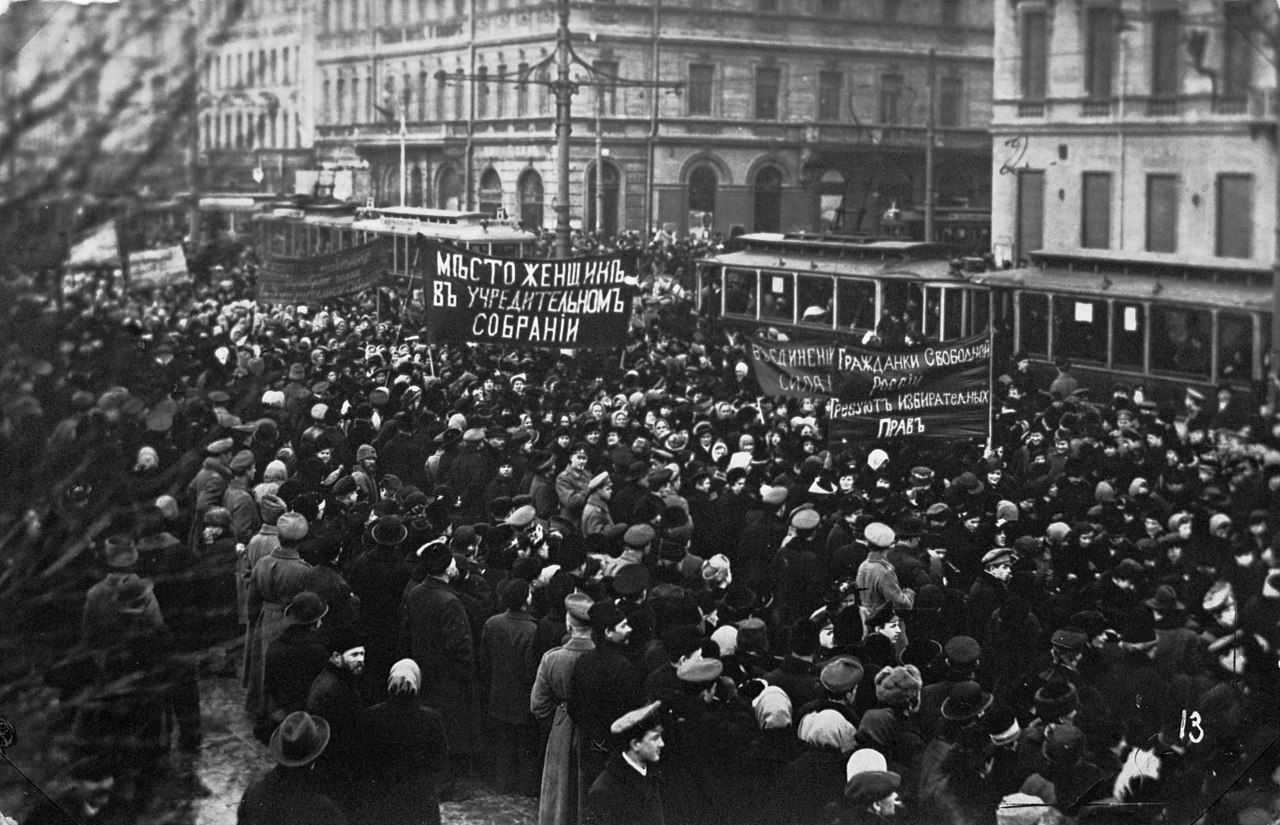
The Russian Revolution of 1917 is not just a historical event; it is a battlefield of interpretation. For over a century, historians have argued over why the Romanov dynasty fell and how the Bolsheviks seized power. Was it the inevitable march of history? A violent coup by a small band of fanatics? or a genuine popular uprising betrayed by dictatorship? In this week’s podcast, I explored these competing historiographies, arguing that understanding how history is written is just as important as knowing the dates and names. The Soviet Orthodoxy For decades, the official Soviet line was one of inevitability. Drawing on a rigid interpretation of Marxism, Soviet…
-

Between 1918 and 1924, Lenin and the Bolsheviks performed one of the most dramatic U-turns in modern history. First, during the Civil War, they implemented War Communism, a brutal, desperate attempt to force Russia into a perfect communist state overnight. It was an economic disaster that brought the country to its knees. Then, in 1921, facing total collapse, Lenin slammed on the brakes and reversed, introducing the New Economic Policy (NEP), a “strategic retreat” that brought back elements of capitalism. These two policies are a story of ideological ambition versus pragmatic reality. They represent the two extremes of Bolshevik thinking.…
-
The Bolshevik seizure of power in October 1917 was just the beginning. For the next three years, Russia was torn apart by a brutal and chaotic Civil War. The new Bolshevik government (the Reds) was fighting for its very survival against a vast and diverse collection of enemies (the Whites), who were supported by foreign powers. On paper, the Reds should have lost. They were surrounded, outnumbered, and hated by many. Yet, they won. How did this happen? The answer is that the Russian Civil War was a contest between a ruthless, unified, and brilliantly led Red Army and a…
-
In just eight months, the Bolsheviks went from being a small, radical party with its leaders in exile to the rulers of the largest country on earth. The October/November Revolution was not a spontaneous mass uprising like the one in February; it was a brilliantly executed, clinical coup d’état, led by a small group of determined revolutionaries who seized power in a city that was ready to fall. But how did they do it? How did this minority party manage to overthrow the government and take control? The answer is a classic historical combination: the fatal weaknesses of their opponent,…
-
When Tsar Nicholas II abdicated in February/March 1917, it felt like a new dawn for Russia. The Provisional Government, made up of liberal politicians from the old Duma, took charge, and Russia was declared the “freest country in the world.” Yet, just eight months later, this new government was swept away with barely a whimper, overthrown by the Bolsheviks in the October Revolution. How did it all go so wrong, so fast? The answer is that the Provisional Government, faced with an impossible situation, made a series of catastrophic and avoidable mistakes. It failed to address the key demands of…
-
On 2nd March 1917, aboard his royal train stranded at a remote station, Tsar Nicholas II, the last autocrat of Russia, signed a piece of paper that ended 300 years of Romanov rule. He didn’t fall to a carefully planned coup or a Bolshevik-led revolution; he fell because his government had completely rotted from within, and when the people finally rose up, the one institution he relied upon to protect him – the army – simply refused to do so. To write a top-grade essay on this topic, you must act as a political detective, explaining the final, fatal sequence…
-
In 1914, Russia entered the First World War with a wave of patriotic flag-waving. The Tsar’s picture was held aloft by cheering crowds, and St. Petersburg was renamed the more Russian-sounding Petrograd. Less than three years later, the flags were gone, the cheers had turned to curses, the Tsar was under arrest, and the Russian Empire had ceased to exist. How did this happen? The answer is that the First World War was a catastrophe that took all of Russia’s deep-seated problems – poverty, inequality, and political repression – and magnified them a hundred times over. It was the final,…
-
After the chaos of the 1905 Revolution, Tsar Nicholas II knew his regime had been pushed to the brink of collapse. He turned to one man to be his enforcer and saviour: Pyotr Stolypin, a tough, determined, and intelligent minister. Stolypin’s plan to save the Tsar was a brutal and ambitious two-pronged strategy, famously known as the ‘carrot and the stick’. But did it work? Was Stolypin the last great hope of the Tsarist system, or was his project a tragic failure that was too little, too late? For your AQA exam, the key is to evaluate. You cannot simply list…
-
On a freezing Sunday in January 1905, a priest named Father Gapon led a peaceful march of workers to the Tsar’s Winter Palace in St. Petersburg. They carried pictures of the Tsar and sang hymns, intending to deliver a loyal petition asking for better working conditions. They were met not by their “Little Father,” the Tsar, but by soldiers with rifles. Hundreds were shot down in the snow. This event, “Bloody Sunday,” was the spark that ignited a firestorm. The 1905 Revolution was a chaotic, year-long explosion of anger that shook the foundations of the Russian Empire and forced the…
-
On a freezing Sunday in January 1905, a peaceful crowd of workers marched towards the Tsar’s Winter Palace in St. Petersburg to deliver a petition. They were met not by their “Little Father,” the Tsar, but by rifle fire. The massacre of that “Bloody Sunday” lit a fuse, and the Russian Empire exploded in a year of strikes, mutinies, and peasant uprisings. This was the 1905 Revolution. The revolution ultimately failed. The Tsar survived. But it was a failure that shook the foundations of the autocracy and, as Lenin later called it, a “great dress rehearsal” for the final, successful…