-

By spring 1945 the tide of World War II had turned decisively. Nazi Germany would surrender within weeks, and even as fighting raged on in the Pacific the Axis defeat was seen as imminent. In this atmosphere U.S. President Franklin D. Roosevelt died (April 12) on “the eve of complete military victory in Europe,” just months before Japan’s defeat . His successor, Harry Truman, knew that the postwar settlement could not wait for total victory. Addressing the San Francisco meeting, Truman declared that delegates’ task was singular: “You are to write the fundamental charter” of a new organization whose “sole…
-
By the late summer of 1944, World War II’s momentum had decisively shifted in favor of the Allies. In Europe, Allied armies had landed in Normandy, liberated Paris, and were pressing toward Germany’s borders, while Soviet forces swept westward across Eastern Europe . The “halcyon days” of mid-1944, as historian Michael Howard called them, saw the looming defeat of Nazi Germany and Imperial Japan, prompting Allied leaders to turn their focus from winning the war to securing the peace . Amid the optimism, serious questions arose: How would a shattered world be rebuilt, and what kind of international order could…
-
By late 1943 the course of World War II had decisively shifted. After the Soviet victory at Stalingrad (Feb. 1943) and the crushing of German forces at Kursk (July 1943), the Axis powers were retreating on all fronts. In Italy the Allies had invaded Sicily and toppled Mussolini, and in the Pacific the U.S. was advancing from Guadalcanal to Bougainville. With the pendulum swinging to Allied advantage, the “Big Three” (Churchill, Roosevelt, Stalin) recognized the need to plan not only final offensives but also the postwar settlement. As one commentator noted, against “a decisive turn of the tide in the Allies’ favour,…
-
The 1905 Russian Revolution was no accident of fate—it stemmed from long-brewing social, economic, political, and military pressures. This structured analysis explores these underlying causes to reveal why Imperial Russia erupted in revolution in 1905.
-

• GET THE COMPLETE STUDY NOTE BUNDLE ON THE CAUSES OF THE RUSSIAN REVOLUTION HERE Introduction The Russian Revolution of 1917 – comprising the February Revolution and the October Revolution – was a watershed that toppled the centuries-old Tsarist autocracy and led to the establishment of Bolshevik rule. Historians have long debated the causes of this revolution, producing a rich historiography with contrasting interpretations. These debates often fall into distinct schools of thought: the Soviet (Marxist-Leninist) view, which portrays the revolution as an inevitable class uprising; the Western liberal (or “orthodox”) view, which emphasizes political failures and sees the Bolshevik…
-
In the summer of 1942, the German Wehrmacht launched Case Blue, an massive military offensive aimed at gaining control over the resource-rich Caucasus and the strategic city of Stalingrad. The intention was twofold – to tap into the wealth of oil supplies that would fuel their military efforts and simultaneously cripple the Soviet Union’s capacity to fight back. However, achieving victory in the Caucasus proved to be a Herculean task. The German forces found themselves battling not just the determined Red Army but also a host of logistical issues. The harsh climate and rugged terrain of the Caucasus demanded a…
-

War Communism was the cluster of coercive economic policies developed during the Russian Civil War, especially from mid-1918 to early 1921. Military supply, urban hunger and monetary collapse shaped those policies, but Bolshevik hostility to private trade and hopes of moving rapidly beyond a market economy also mattered. Historians disagree about the relative weight of emergency and ideology. In March 1921 Lenin’s government began replacing War Communism with the New Economic Policy (NEP). Grain requisitioning gave way to a tax in kind, most small-scale private trade became legal again and peasants could sell surplus produce. The state retained control of…
-
Leon Trotsky was a Marxist revolutionary and Soviet politician who played a key role in the Bolshevik Revolution of 1917. He was a close ally of Vladimir Lenin and served as the founder and commander of the Red Army. However, Trotsky was eventually exiled from the Soviet Union due to his opposition to Joseph Stalin’s leadership and policies. Trotsky’s exile from the USSR was a significant event in Soviet history and had a profound impact on the international communist movement. After being expelled from the Communist Party in 1927, Trotsky was forced into exile in Turkey, France, and Norway, before…
-
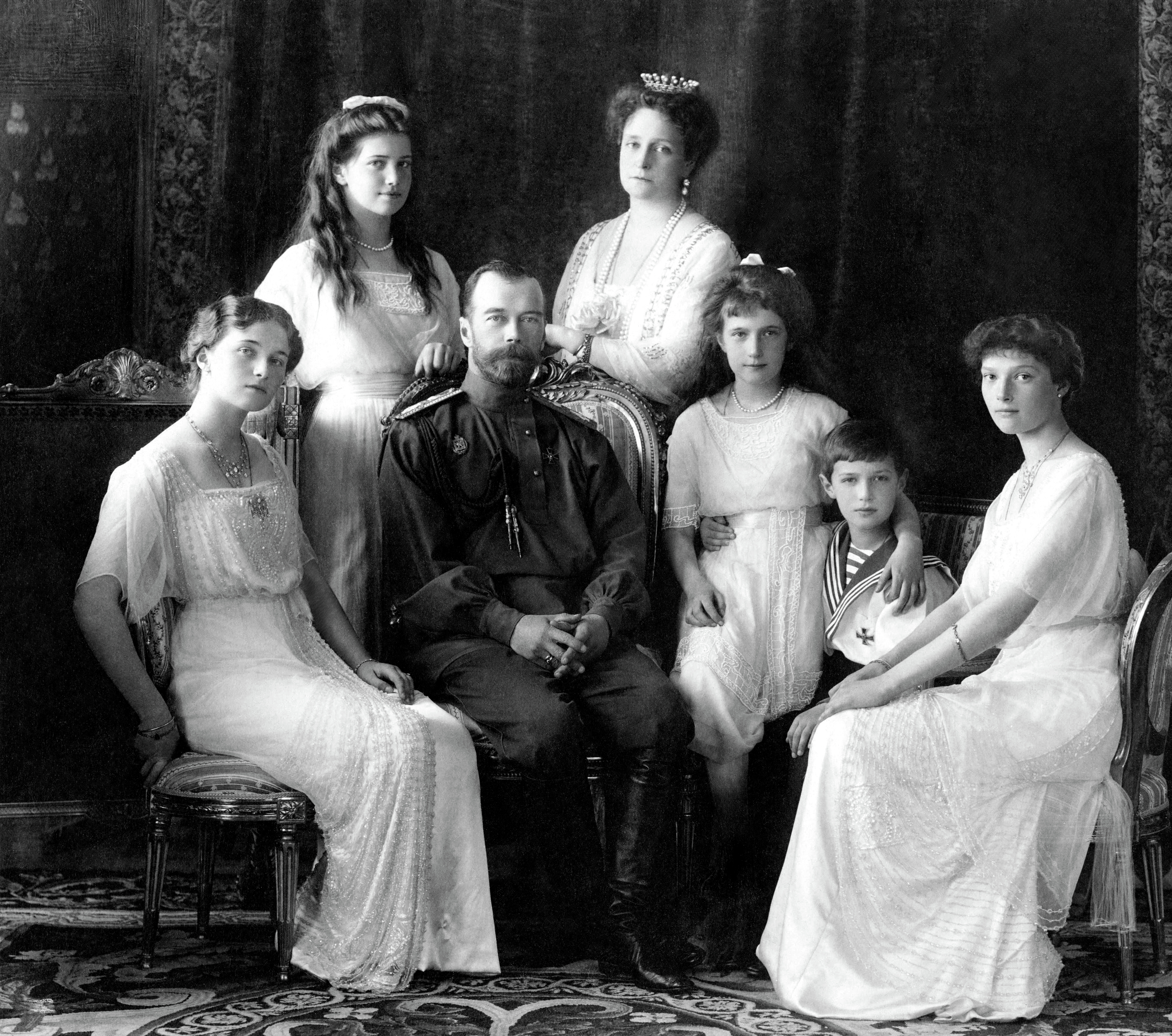
This is an article for A level AQA history students studying Russia from Tsarism to Communism that summarises the period of study into easy learning concepts
-
Noam Chomsky pointed out when he was observing the role of the press during the Vietnam War, that it had a significant role to play in atrocities. The job of print and broadcast media, he argued, was to legitimise and explain away mass killings and to tell the story of why they were necessary. Looking at the role of the Soviet press, there is abundant evidence for this. Chomsky was writing about a notionally independent US media which generally found itself in broad agreement with the government. Here we will look at the role of a heavily controlled newspaper in…