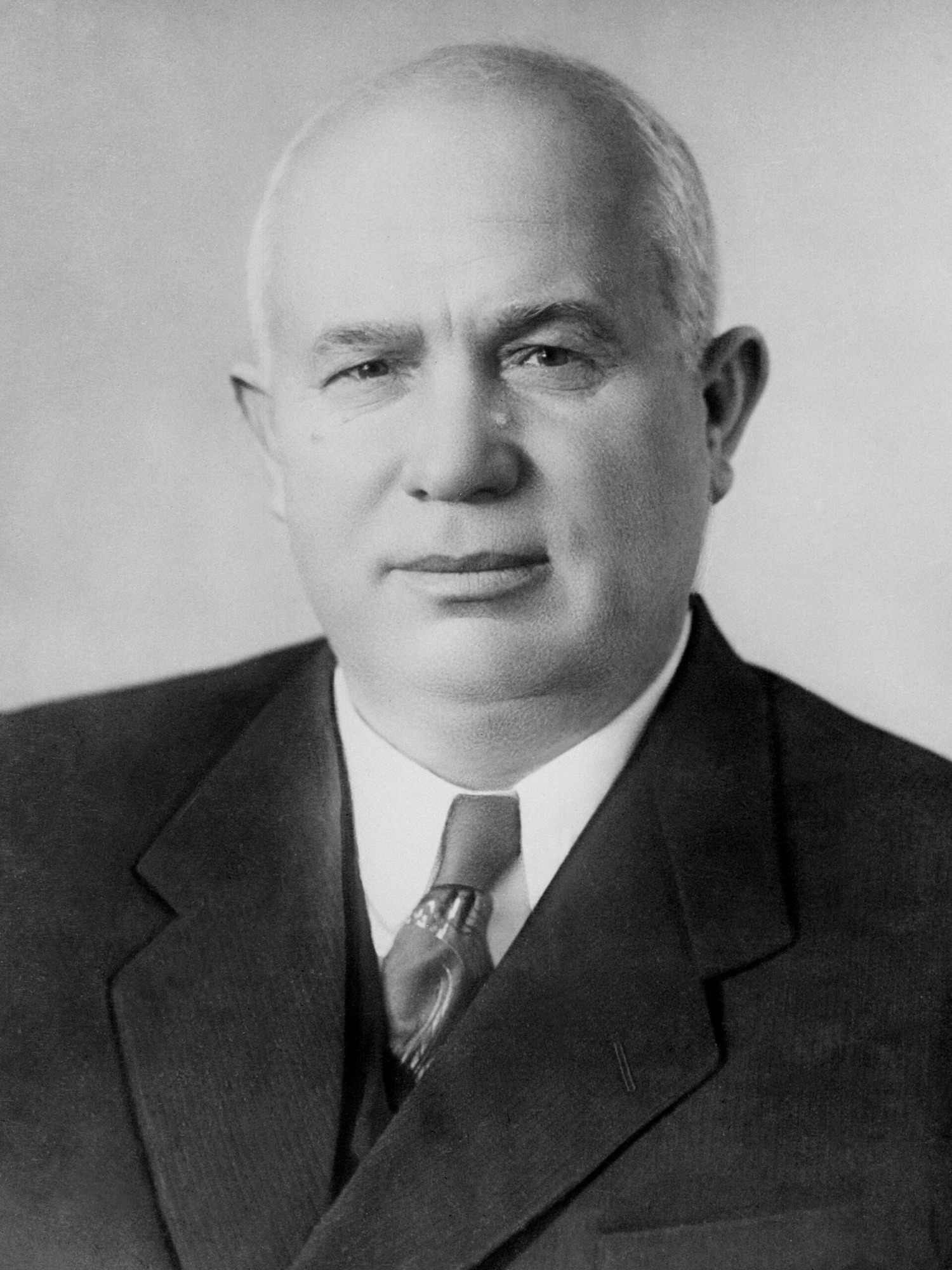

Spec link: AQA “Tsarist and Communist Russia, 1855–1964” — the final decade of the course, and the period examiners most often find thinly answered.
When Stalin died in March 1953, the men who inherited his state faced a problem they could not say aloud: the system worked, but it was killing the people who ran it and starving the people it ruled. Nikita Khrushchev — Party Secretary from September 1953 and, after defeating his rivals, the dominant figure by 1957 — spent the next eleven years trying to reform Stalinism without dismantling the Party’s monopoly on power. The contradiction at the heart of that project explains both his genuine achievements and his eventual fall. This article maps the four domestic fields students most need for the 1855–1964 synoptic view: de-Stalinisation, agriculture, industry and living standards, and the limits of the “Thaw.”
De-Stalinisation and the Secret Speech
The decisive moment came at the Twentieth Party Congress in February 1956, when Khrushchev delivered his “Secret Speech” — On the Cult of Personality and Its Consequences — to a closed session of delegates. He catalogued Stalin’s crimes against loyal Party members, the purges of the 1930s, the wartime blunders, and the “cult of personality” that had elevated one man above the collective leadership Lenin supposedly intended. Crucially, he attacked Stalin’s abuse of Communists, not the Revolution itself: the terror against the wider population and the collectivisation famines were passed over. This was de-Stalinisation as controlled demolition, designed to release pressure and legitimise the new leadership while leaving the Party’s foundations untouched.
The consequences ran ahead of Khrushchev’s intentions. Within the USSR, the Gulag population fell sharply as amnesties and rehabilitations gathered pace — millions were released, and hundreds of thousands of the dead were posthumously cleared. Abroad, the speech destabilised the bloc: unrest in Poland and, most seriously, the Hungarian Rising of October–November 1956, which the Soviets crushed with tanks. The lesson students should draw is that de-Stalinisation was always bounded. Khrushchev would criticise Stalin to strengthen the Party, but he would not tolerate any challenge to Party rule — a line the Hungarians discovered fatally.
Agriculture: the Virgin Lands and the corn obsession
Agriculture was the Soviet economy’s chronic weakness, and Khrushchev — who fancied himself an agronomist — made it his signature cause. The Virgin Lands campaign, launched in 1954, ploughed up vast tracts of previously uncultivated steppe in Kazakhstan and western Siberia. Hundreds of thousands of Komsomol volunteers were mobilised, and for a few years grain output rose impressively: the 1956 harvest was a genuine triumph. But the scheme was ecologically reckless. The thin topsoil, exposed and over-cropped, began to blow away in dust storms by the early 1960s, and yields collapsed. The campaign is the classic case study in Khrushchev’s method — bold, mobilising, statistically dramatic in the short term, and unsustainable.
Alongside it ran the “corn craze,” an attempt to imitate American feed-grain agriculture by sowing maize across climatic zones where it could not ripen. Procurement prices were raised to give peasants an incentive, and the private plots that fed much of the population were, for a time, encouraged rather than squeezed. Yet the structural problem — collective farms with no genuine incentive to produce — remained. The humiliation of 1963, when a poor harvest forced the USSR to import grain from the capitalist West, exposed the whole edifice and did enormous damage to Khrushchev’s authority.
Industry, the Seven-Year Plan and “goulash communism”
In industry, Khrushchev inherited a machine still geared to heavy production and rearmament. He tried two things at once: to sustain Soviet power (the space programme — Sputnik in 1957, Gagarin in 1961 — was the propaganda jewel) while also, for the first time since the 1920s, promising the ordinary citizen a material dividend. This was the essence of what critics dubbed “goulash communism”: the claim that socialism should be judged by whether it filled shops and homes.
There were real gains. The housing programme was the most tangible: mass-produced apartment blocks — the khrushchyovki — rehoused millions who had lived in communal squalor, and however shoddy, a private flat was a revolution in daily life. Wages rose, the working week shortened, pensions were extended, and consumer goods slowly appeared. But Khrushchev’s administrative reforms undercut his own aims. The sovnarkhozy reform of 1957, which replaced central industrial ministries with regional economic councils, was meant to cut Moscow’s bureaucratic tangle; in practice it created local empire-building and planning chaos, and antagonised the central apparatus whose careers he had disrupted. His 1962 decision to split the Party itself into industrial and agricultural wings alienated the one constituency he could not afford to lose — the Party officials.
The Thaw and its limits
Culturally, the period is remembered as the “Thaw,” after Ilya Ehrenburg’s novel. Censorship loosened; the sensational publication in 1962 of Solzhenitsyn’s One Day in the Life of Ivan Denisovich, with Khrushchev’s personal blessing, brought the Gulag into print. Contact with the outside world widened. But the Thaw froze and thawed by Khrushchev’s mood and political need. The persecution of Boris Pasternak over Doctor Zhivago in 1958, and Khrushchev’s crude public attacks on abstract artists, showed that the boundaries of permitted expression were arbitrary and could snap shut without warning. Intellectual freedom was a gift from above, not a right — and gifts can be withdrawn.
Why he fell — and what it tells us
In October 1964 Khrushchev’s own colleagues, led by Brezhnev and Suslov, removed him in a bloodless Presidium coup and pensioned him off. That he was retired rather than shot is itself the measure of how far de-Stalinisation had changed the rules of Soviet politics — a real, if grim, achievement. He fell because he had made enemies everywhere: the Party officials whose security he had threatened, the military and heavy-industry lobby he had squeezed, and a population whose raised expectations he had failed to meet after the 1963 harvest.
For the 1855–1964 synoptic argument, Khrushchev is the pivot on which the whole “change and continuity” question turns. Set against 1855, the transformation of the Russian state is total; set against Stalin, the change is one of style and severity rather than of structure. The Party still ruled alone, the economy was still centrally commanded, and dissent was still policed. Khrushchev is best understood not as the man who ended Stalinism but as the man who tried to make it liveable — and discovered that a system built on terror and command could not easily be reformed by a leader unwilling to surrender either.
Further reading on Explaining History: the Stalinist-era pieces on the Five Year Plans and everyday life under Stalin provide the essential “before” against which Khrushchev’s reforms should be measured.

Leave a Reply