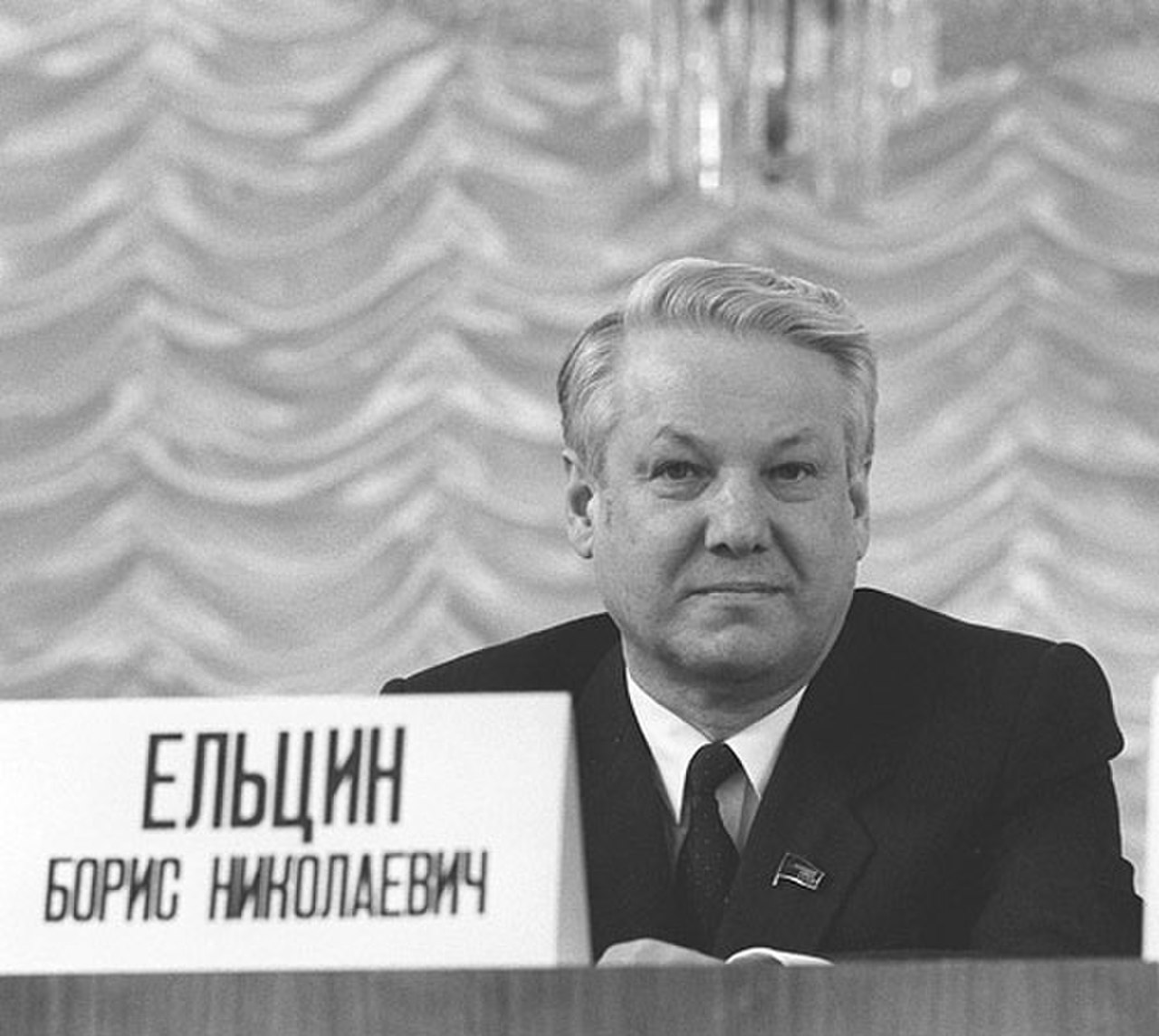

In the latest solo episode of the Explaining History Podcast, we explore John Gray’s False Dawn and the remarkable parallels between two failed attempts to remake Russia on a Western model – Bolshevism and the “shock therapy” of the post‑Soviet 1990s.
The Treaty of Versailles and the Missed Opportunity
After the First World War, John Maynard Keynes wrote The Economic Consequences of the Peace, warning that the Carthaginian nature of the Treaty of Versailles – the punishment of Germany – would set in motion terrible consequences. Keynes argued that new systems of economic international cooperation were needed, and that the peace had failed to address the problem of Russia and the Bolshevik Revolution.
Georges Clemenceau, the French prime minister, took the opposite view. He thought the peace wasn’t harsh enough. “We’ll have to fight this war again in 20 years,” he said. In different ways, both men were right.
The end of the Second World War saw no overarching treaty, only the division of Germany agreed at Potsdam. The tensions between the victorious powers quickly precipitated the Cold War. And at the end of the Cold War, in 1991, there was another missed opportunity – perhaps even more consequential.
The Two Utopias
John Gray’s False Dawn argues that Russia has been the site of two Western utopian experiments in the 20th century. The first was Bolshevism. In its earliest and most radical phase, War Communism (1918‑21), it produced deindustrialisation and famine. It led to Stalin’s revolution from above, in which the collectivisation of agriculture destroyed peasant farming in Russia.
The second was “shock therapy” – the programme of rapid price liberalisation and mass privatisation implemented in the aftermath of the Soviet collapse. Shock therapy aimed to construct a free market in post‑communist Russia. It produced instead a species of mafia‑dominated anarcho‑capitalism.
Both utopian experiments had enormous human costs. Both were failed modernisations, guided by Western theories or models that had little relevance to Russia’s history or circumstances.
The Human Cost
The horrors of Soviet Communism are well documented. Go to any bookshop in the West, and you’ll find a section on the Gulag, on Stalin’s terror, on the everyday privations of life under Stalinism. It is a monument to what happens when a revolution takes hold in a state unable to support it, surrounded by enemies, and obsessed with finding internal traitors.
But there are very few books about the second utopian experiment – the shock therapy of the 1990s – and the extent to which it led to hardship and loss of life. Collapsing life expectancies, poverty, gangsterism, violence, and an oligarchic state that was eventually centralised under Vladimir Putin. This is an equally important story, equally important warning, because the mafiarisation of Russian politics has spread far more successfully than Bolshevism ever did.
The Parallels
Gray draws a direct parallel between the two projects. Like the utopia envisaged by Lenin, the global free market aims to bring into being a state of affairs that never hitherto existed in human society. In a global free market, the movement of goods, services, and capital are unfettered by political controls, and markets have been detached from their original societies and cultures. This is a utopia divorced from history, hostile to vital human needs, and finally as self‑destroying as any that has been attempted.
The global free market, like Soviet communism, requires the exercise of force chiefly at the peripheries of power and in the early stages of its construction. Both systems are experiments in economic rationalism. Both tell us that rising productivity will solve most social problems. Both exalt economic growth over all other goals and values. Both are hostile to national cultural differences, to tradition, and to history.
The Consequences
What was the human cost of shock therapy in Russia? Removal of price controls and mass privatisation led to spiralling inflation that wiped out life savings and led to massive impoverishment. Svetlana Alexievich, in Second‑Hand Time, describes a civil engineer – a man with a good professional job – reduced to buying toys from a factory and driving to Eastern Europe to sell them, just to survive.
This is the greatest of neoliberalism’s crimes: collapsing life expectancy, just as you see it in the United States. An explosion of inequality, wealth sucked upwards, and the development of a new underclass where criminality becomes deeply embedded in everyday life.
The Missed Settlement
The tragedy is that none of this was inevitable. At the end of the Cold War, there was an opportunity for a new world settlement – one that might have integrated Russia into the world system, rather than treating it as a defeated power to be dismembered. It was advocated by actors on both sides, and yet it never emerged.
Instead, we got free‑market triumphalism and the chaotic dismantling of the Soviet Union. The triumphalism is an extraordinarily powerful force – deluded, sure, but powerful. And we exist with it now, in different guises.
The Lesson
The lesson of the 20th century is that you cannot impose a Western model on a country with a different history and culture. War Communism was an attempt to impose Marxian socialism on a country with no industrial base to sustain it. Shock therapy was an attempt to impose an American‑style free market on a country with no institutions to support it. Both failed, and both caused enormous suffering.
As Gray writes, the global free market is a post‑totalitarian utopia. It does not require totalitarian regimes, but it does require the sacrifice of cultures, traditions, and human needs on the altar of economic growth. The shock troops of the free market – the IMF, the US State Department, the editorial pages of major newspapers – share with the Bolsheviks a contempt for history and a belief that human beings can be reshaped to fit the needs of a new rational economy.
They were wrong. And we are living with the consequences.
If you enjoyed this piece, please consider supporting the Explaining History Podcast. We are migrating from Patreon to Substack – details in the show notes.

Leave a Reply