
Cinema was the twentieth century’s own art form — the only major artistic medium to be invented after industrialisation and before the digital age. Painting, music, literature, theatre, architecture: all of these had ancient roots, long traditions, accumulated techniques and critical vocabularies going back centuries. Cinema had none of this. When the Lumière brothers projected their first films in a Paris café basement in December 1895, they were demonstrating a new machine, and nobody yet knew what it was for. Within thirty years, it had become the most popular entertainment form in the world. Within fifty, it was the medium against which all other popular cultural forms measured themselves. No other art form matched its combination of mass reach, emotional immediacy, and technical complexity, and no other was so thoroughly shaped by the specific conditions of the century that produced it: capitalism and propaganda, war and exile, the collapse of empires and the emergence of new publics who went into the dark to see the world explained to them.
The earliest films were essentially recordings: the train arriving at the station, workers leaving the factory, a baby eating breakfast. Their power was the power of the index — the documentary thrill of an image produced by the thing itself, light bouncing off a real surface and onto a chemically sensitive plate. What this power became, as filmmakers began to understand what the medium could do, was something for which no previous aesthetic theory had prepared anyone. Film could compress time and expand it; it could move through space with a freedom that no stage could match; it could create the illusion of a subjective point of view, placing the viewer inside the visual field of a character in a way that prose could suggest but only film could perform. The invention of editing — the cut between shots — was the decisive formal discovery: the revelation that meaning emerged not from the shot itself but from the relationship between shots, that two images placed in sequence produced a third thing that neither contained alone.
The Silent Era: A Language Being Invented
The silent period, which lasted from the 1890s to the late 1920s, was the era in which cinema’s basic formal language was being developed, and the work of its great practitioners retains a formal brilliance that the subsequent decades of technical refinement have not superseded. D.W. Griffith’s The Birth of a Nation (1915) was simultaneously a pioneering work of cinematic syntax — introducing close-ups, intercutting, and parallel editing into mainstream American film — and a vicious piece of white supremacist propaganda that portrayed the Ku Klux Klan as heroes and helped revive the organisation’s membership. The film was screened at Woodrow Wilson’s White House, praised by critics for its technical achievement, and protested by the NAACP for its racism. Both responses were correct.
The Soviet directors of the 1920s — Sergei Eisenstein, Dziga Vertov, Vsevolod Pudovkin — developed the most theoretically sophisticated account of cinema’s formal possibilities, specifically through the concept of montage: the idea that the rapid juxtaposition of images created not merely movement but dialectical meaning, that cinema was uniquely capable of producing political and intellectual content through purely visual means. Eisenstein’s Battleship Potemkin (1925) and October (1927) were commissioned as propaganda for the Soviet state and transcended that commission through sheer formal ambition. German Expressionism, flowering in the same decade, took cinema in a different direction: the distorted sets, the canted angles, and the grotesque lighting of The Cabinet of Dr Caligari (1920) and Nosferatu (1922) expressed a specifically post-war German cultural anxiety — the sense of a world whose rational surfaces concealed monstrous depths — through purely visual means.
Hollywood and the Studio System
The American film industry, which had migrated to Hollywood before the First World War to take advantage of the California light and the distance from the Edison Trust’s patent enforcement, developed in the 1920s and 1930s into the most efficient entertainment production system the world had ever seen. The studio system — in which the major companies (MGM, Paramount, Warner Brothers, RKO, Fox) owned not only the production facilities and the contract players but also the distribution networks and the exhibition chains — was a form of vertical integration that gave the studios almost complete control over what American audiences could see and how much they paid to see it.
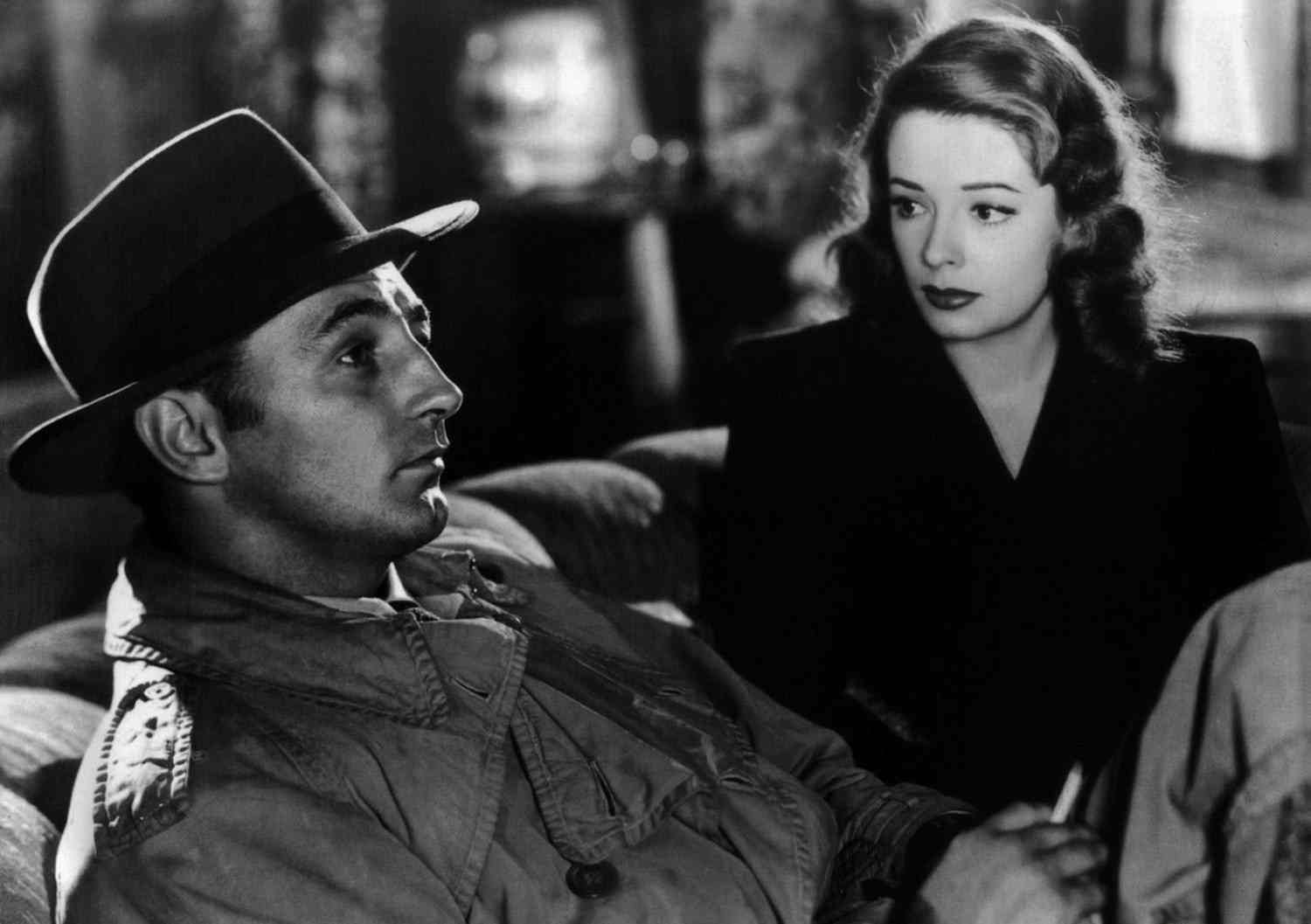
The system produced, in its golden age between the late 1920s and the early 1950s, a body of work remarkable for its consistency and its craft. The directors, writers, and actors who worked within it operated under significant constraints — the Production Code that governed content from 1934, the studio executives who controlled final cut, the contract system that bound performers to seven-year deals with no power of refusal — and within those constraints produced films of extraordinary sophistication. The screwball comedy, the film noir, the musical, the Western: these were genres whose formal conventions were precisely calibrated to the conditions of mass production and mass consumption, and the best work in each — Howard Hawks’s His Girl Friday, Billy Wilder’s Double Indemnity, John Ford’s The Searchers — achieved within those conventions something that the conventions themselves did not require.
Orson Welles arrived in Hollywood in 1940 with an extraordinary radio background and an unusual degree of contractual freedom. Citizen Kane (1941), made when Welles was twenty-five, was the result: a film that took the formal achievements of the previous thirty years of cinema — deep focus, expressive lighting, non-linear narration, the subjective camera — and combined them in a structure of such formal originality that it seemed to exhaust the possibilities of the medium while opening new ones. Its influence was immense and its commercial failure almost immediate: William Randolph Hearst, the newspaper magnate whom the film’s protagonist obviously resembled, used his publications to kill the film’s box office. Welles never again had the same creative freedom, and his subsequent career became a long negotiation between his ambitions and the industry’s constraints.
Cinema and Power: Propaganda and Influence
Cinema’s relationship to political power was never innocent, and both democratic and authoritarian governments understood early that the medium’s emotional directness made it unusually effective for political purposes. Leni Riefenstahl’s Triumph of the Will (1935), commissioned by Hitler and documenting the 1934 Nuremberg Rally, was and remains the most celebrated — and most debated — example of cinema as political propaganda: a film of undeniable formal beauty in the service of a project of undeniable evil, whose aesthetic achievement is inseparable from its political function. The film’s use of low angles to monumentalise the Nazi leadership, its choreography of mass crowds into abstract visual patterns, its construction of Hitler as a quasi-divine figure descending from the clouds: these techniques were deployed with unprecedented systematic skill.
The American wartime cinema of 1941 to 1945 — John Ford’s documentaries, Frank Capra’s Why We Fight series, the patriotic features produced by Hollywood at the government’s explicit encouragement — operated in the same basic register of political persuasion, though towards democratic ends. What they demonstrated was the medium’s versatility: the same technical toolkit could serve radically different political projects, which meant that cinema was never inherently one thing politically, however much specific films might be.
The Postwar Rupture: Neorealism and the New Waves
The Second World War broke the prewar conventions of cinema in ways that opened new formal and moral possibilities. Italian neorealism — the movement associated with Roberto Rossellini (Rome Open City, 1945), Vittorio De Sica (Bicycle Thieves, 1948), and Luchino Visconti — emerged from the specific conditions of postwar Italy: a shattered infrastructure, a shortage of film stock, a political and moral urgency that made the artificialities of the studio system seem not merely technically obsolete but morally dishonest. Shooting on location with non-professional actors, using the bombed and impoverished streets as sets, these films created an aesthetic of witness that was simultaneously a formal innovation and an ethical statement: cinema could be a record of how people actually lived rather than a dream manufactured on a sound stage in California.
In France, the generation of critics writing for the journal Cahiers du Cinéma in the early 1950s — including François Truffaut, Jean-Luc Godard, Claude Chabrol, and Jacques Rivette — developed a theory of the director as auteur: the idea that the best films bore the consistent personal vision of their directors, that great cinema was a form of personal expression comparable to literature or painting, and that the constraints of genre and the studio system were material through which an individual sensibility could nevertheless make itself known. The French New Wave that these critics produced when they began making films themselves — Truffaut’s The 400 Blows (1959), Godard’s Breathless (1960) — was a cinema of self-consciousness: films that knew themselves to be films, that cited and played with their own generic antecedents, that refused the invisible technique of Hollywood classicism in favour of jump cuts, handheld cameras, and direct address to the audience.
World Cinema
The postwar decades produced major filmmaking traditions across the globe that were not reducible to any European or American paradigm. Akira Kurosawa’s work in Japan — Rashomon (1950), Seven Samurai (1954), Ran (1985) — drew on Japanese narrative and theatrical traditions while engaging with Hollywood genre cinema in a feedback loop that proved strikingly generative: Seven Samurai was remade as The Magnificent Seven; Kurosawa’s samurai films were transposed to the American West in Sergio Leone’s Dollars trilogy. Satyajit Ray’s Apu Trilogy (1955–59) brought a neorealist tenderness and formal precision to Indian cinema and was recognised internationally as among the finest work of its decade.
In Brazil, Cinema Novo — the movement associated with Glauber Rocha and Nelson Pereira dos Santos in the 1960s — combined the political radicalism of the post-colonial moment with a formal roughness that was simultaneously the product of limited resources and a deliberate aesthetic choice. Rocha’s concept of an “aesthetics of hunger” argued that underdevelopment could be the condition for a more honest cinema than the polished surfaces of Hollywood could produce. In Senegal, Ousmane Sembène made what is generally recognised as the first sub-Saharan African feature film, Black Girl (1966), and proceeded across four decades to create a body of work that engaged with the legacies of colonialism and the contradictions of postcolonial African society with formal rigour and political directness.
The Blockbuster and After
The Hollywood blockbuster, which is conventionally dated to the release of Jaws in 1975 and Star Wars in 1977, represented the transformation of cinema under new economic conditions. The saturation release — opening a film in thousands of cinemas simultaneously rather than allowing it to build an audience through limited release — combined with massive advertising campaigns and licensed merchandise to create a new model of film as franchise event, in which the movie itself was the opening gesture of a commercial relationship rather than a self-contained artistic object. George Lucas’s Star Wars produced licensed merchandise revenue that dwarfed the box office; Steven Spielberg’s Indiana Jones series demonstrated that the same characters and world could generate multiple sequels across decades.
The consequence was the progressive marginalisation of mid-budget adult drama from the theatrical mainstream — not its disappearance, but its movement toward the independent sector that the blockbuster era paradoxically stimulated by demonstrating the scale of the mainstream’s commercial appetite and leaving space for everything that appetite did not consume.
What Cinema Meant
Cinema was, for the greater part of the twentieth century, the primary shared cultural experience of mass society. The weekly trip to the cinema — a ritual that crossed class lines more completely than almost any other leisure activity — was the occasion on which populations encountered images of themselves, images of others, images of worlds they would never visit and lives they would never lead. The stars whose faces filled the screen were among the best-recognised human beings on earth; the stories they enacted shaped the emotional vocabulary of their audiences in ways that the influence studies of social science could quantify but not fully capture.
What cinema could do that no other form could was take the audience inside a subjectivity — make them see through a character’s eyes, feel through a character’s body, experience the world as another consciousness — with an immediacy that prose could achieve only gradually and that theatre could produce only in the special conditions of live performance. It could do this for 500 million people simultaneously. The formal technology of the point-of-view shot, the close-up, the reaction shot, the cut: these were the instruments of an empathy machine of unprecedented scale, and what they were used to make the global audience feel — about race and gender, about violence and desire, about heroism and villainy and the relationship between individual fate and social structure — constituted one of the most significant moral education programmes in human history. It was almost entirely unplanned, commercially driven, and wildly inconsistent; it was also real, and it left its marks on everyone who sat in the dark and watched the light.

Leave a Reply