
The Neocons Admit Defeat – How Robert Kagan’s Atlantic Article Marks the End of the American Century
Robert Kagan, a leading architect of the Project for a New American Century, has declared that the Iran war is a catastrophe and that America has effectively lost. What does it mean when the hawks themselves give up?
What does it mean for a project of US imperialism when the people who designed that project publicly declare that it has failed? It means two things. Firstly, curtains for the project in question. Secondly, the prospects for American empire are now extremely grim – in unprecedented ways.
That, in essence, is the significance of a recent article by Robert Kagan in *The Atlantic*. Kagan is not a left‑wing critic of American power. He is arguably the key intellectual figure behind the Project for a New American Century (PNAC) – the neoconservative think tank that gave us the foreign policy of George W. Bush, the wars in Afghanistan and Iraq, and the doctrine of pre‑emptive unilateralism.
When Kagan writes that Iran has effectively won the war, that the Straits of Hormuz are permanently lost, and that the post‑war American order is finished, we should pay attention.
What Was PNAC?
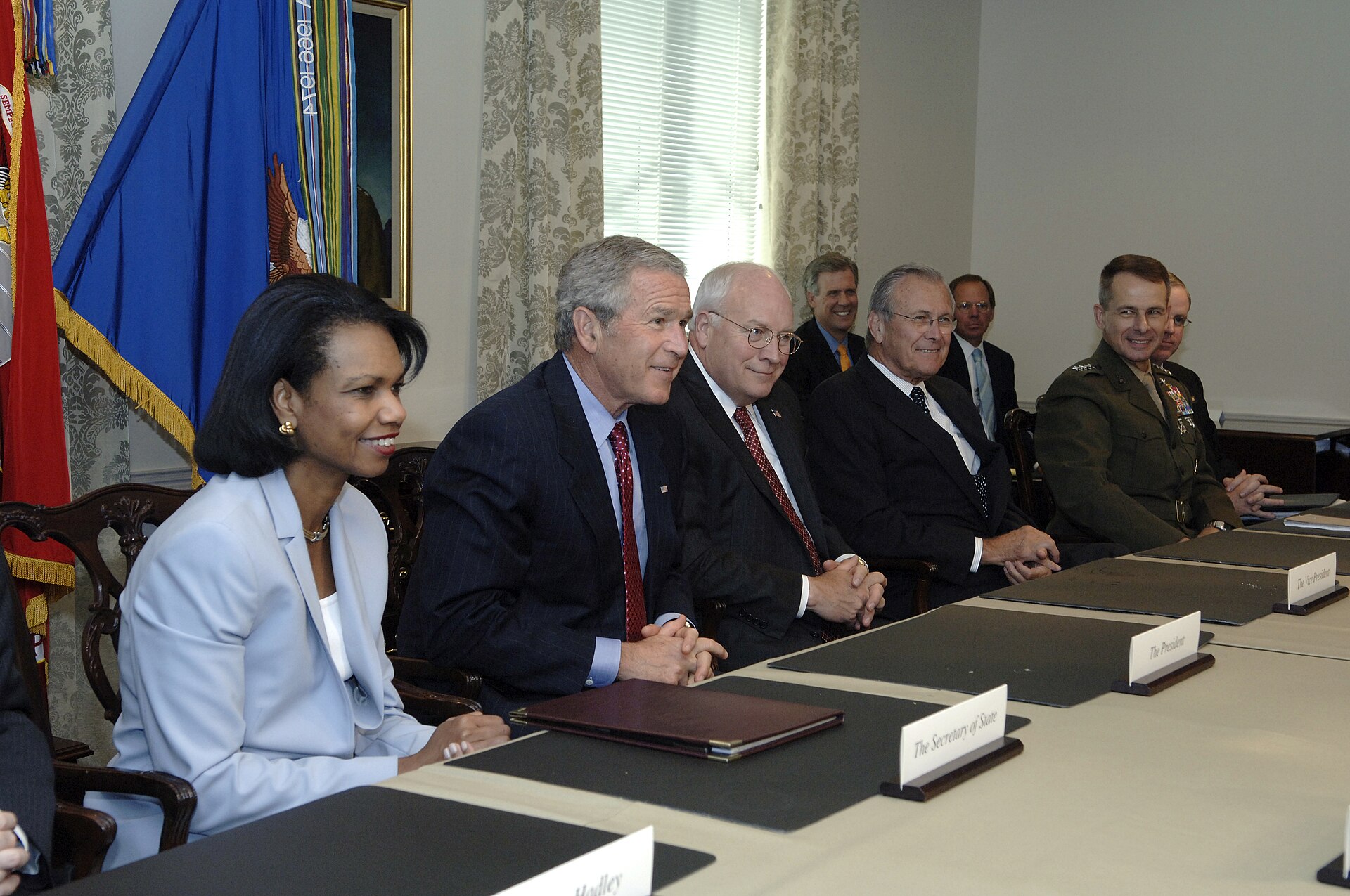
The Project for a New American Century was founded in 1997 by William Kristol and Robert Kagan. Its signatories included Dick Cheney, Donald Rumsfeld, Paul Wolfowitz, and other luminaries of the Bush administration. Its founding statement declared that the United States needed to “shape a new century favourable to American principles and interests”. In practice, this meant unilateral military dominance, the ability to fight and win two major wars simultaneously, and the forcible removal of hostile regimes – with Iran at the very top of the hit list.
PNAC’s 2000 report, “Rebuilding America’s Defenses”, laid out the vision: permanent military bases in the Middle East, regime change in Iraq (as a stepping stone to Iran), and a “full‑spectrum dominance” that would deter any challenger. The neocons were explicit that the American century could only be preserved through constant, aggressive warfare. The road to Tehran, they believed, ran through Baghdad.
9/11 gave them the pretext. The invasion of Afghanistan (2001) and Iraq (2003) followed. But the grander plan – the assault on Iran – had to wait. Instead, the Iraq War bogged down, the American public grew weary, and the neocons fell from favour. But their ideas never died. They simply waited for another opportunity.
Kagan’s Admission
Now, that opportunity has arrived – and it has produced the opposite of what the neocons intended. Writing in *The Atlantic*, Kagan has effectively admitted that the Iran crisis is a catastrophe of unprecedented proportions. His key points are worth quoting at length:
– The war is unwinnable. Iran has effectively won. They will never let go of the Straits of Hormuz.
– Iran has inverted everything that previously existed. The straits have been turned from a passageway of free navigation into the world’s most significant global pinch point.
– Iran will now let through regimes that pay and those it likes; regimes it dislikes will be economically starved.
– America cannot project power into the Gulf. It has presented itself as an unreliable ally.
– Countries like Taiwan and Japan will not hesitate to break ties with the United States if a more powerful regional predator comes calling.
Kagan’s only proposed solution is a “massive generational land and air war” to occupy Iran forever – an impossibility on so many levels that it would take a whole separate podcast to explain why. That he even mentions it tells you everything. It is the strategic equivalent of Napoleon, after Moscow, deciding that a second invasion might work. Or Hitler, after Stalingrad, doubling down.
The neocons, it seems, never walk away from an insane proposition. But Kagan’s willingness to state the catastrophe in such stark terms – and his inability to offer any realistic alternative – signals that even they recognise the game is up.
The Saudi Rupture
Even more significant, perhaps, is the response from Saudi Arabia. According to reports in the Wall Street Journal Saudi Prince Turki Al-Faisal a senior member of the Saudi royal family – a former head of intelligence – has publicly stated that Saudi Arabia views America and Israel as the aggressors in the Gulf war. This is extraordinary.
The Saudi‑American alliance was forged by Franklin Roosevelt himself, during World War II. The king of Saudi Arabia met Roosevelt on an American warship, where they agreed on a bargain: America would have first refusal on Saudi oil, and Saudi Arabia would receive an ironclad American guarantee of protection. That alliance has endured for nearly a century, through coups, crises, and wars.
Now it is fraying. The Saudis believe – probably correctly – that the attack on Iran was designed, at least in part, to draw them into a war. The main beneficiary would have been Israel, which has long sought to embroil the United States in a direct confrontation with Iran. The Saudis are not fools. They saw the attempt for what it was, they watched America fail, and they have drawn their own conclusions.
The likely outcome is that Saudi Arabia – and other Gulf states – will now make some kind of arrangement with Iran. Not friendship, not alliance, but pragmatic coexistence. American bases in the Gulf have already been hit by Iranian missiles and withdrawn. The era of American naval supremacy in the region is over.
The End of Pax Americana
Taken together, Kagan’s admission and the Saudi rupture signal the end of the post‑war American order. Pax Americana – the system of alliances, naval dominance, and dollar hegemony that has existed since 1945 – is unravelling.
The implications are staggering. In the coming decades, the world will revert to a system of regional powers, spheres of interest, and great‑power competition – but without the stabilising presence of a global hegemon. Smaller nations will have no choice but to accommodate larger neighbours. Taiwan will accommodate China. The Koreas, Japan, the Philippines – all will have to find their own modus vivendi with Beijing. The Gulf states will accommodate Iran. America will retreat behind its oceans, still powerful, still dangerous, but no longer capable of projecting force at will.
The neocons dreamed of a new American century. What they have delivered is the end of the old one. Robert Kagan’s article is not a confession; it is an obituary. The project for a new American century is dead. And American empire, in the Gulf at least, is finished.

Leave a Reply