
Introduction
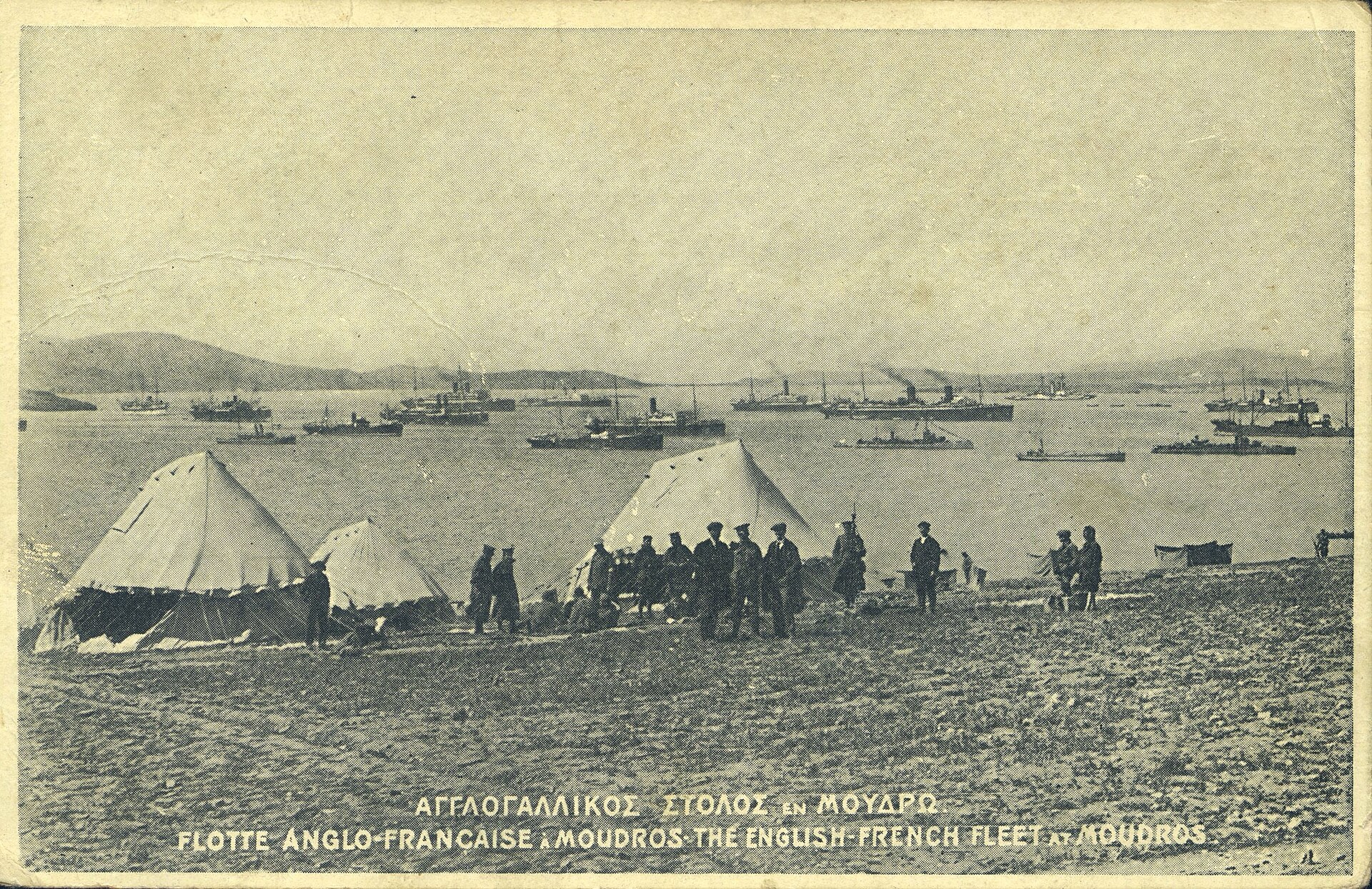
On the afternoon of October 30, 1918, aboard the British battleship HMS Agamemnon, anchored in the harbour of the Greek island of Lemnos, two men signed a document that would forever alter the Middle East. Rauf Orbay, the Ottoman minister of marine, affixed his signature for the Ottoman Empire. Admiral Sir Somerset Gough-Calthorpe, the British commander in the Mediterranean, signed for the Allied powers. The Armistice of Mudros—just four pages long and negotiated in less than thirty-six hours—formally ended Ottoman participation in the First World War. But it did far more than that. It dismantled the Ottoman Empire, opened its territories to Allied occupation, and created the conditions for the Turkish War of Independence, the redrawing of the Middle East, and the emergence of the modern Republic of Turkey.
The armistice was a surrender, not a negotiated peace. The Ottoman Empire had been fighting for four years across five fronts, from the Caucasus to the Hejaz, from Gallipoli to Mesopotamia. By October 1918, that empire was exhausted. Its armies were in retreat, its economy was in ruins, its population was devastated by war, famine, and deportation. The collapse of Bulgaria on September 29, 1918, had opened the land route to Istanbul, and the British were preparing to march on the capital. The Ottoman government, now led by a new cabinet under Ahmed Izzet Pasha, had no choice but to seek terms.
Yet the terms themselves were remarkable—not for their harshness, but for their ambiguity. The armistice contained twenty-five articles, but one in particular—Article 7—would prove decisive. It gave the Allies the right to occupy “any strategic points” in the Ottoman Empire should they perceive a threat to their security. This vague language became a blank check for occupation. In the months following the armistice, Allied forces would occupy Istanbul, the Dardanelles, the Black Sea coast, and eventually the Anatolian heartland itself. The Ottoman Empire, already militarily defeated, would be subjected to a piecemeal dismemberment that its leaders had signed into existence.
The Road to Mudros: The Collapse of 1918
By the summer of 1918, the Ottoman Empire was on the verge of disintegration. The war had stretched its resources to the breaking point. The army had suffered over 300,000 dead, with countless more wounded, captured, or permanently disabled. The civilian population had endured unimaginable suffering: the Armenian deportations had claimed hundreds of thousands of lives; famine had ravaged Lebanon and Syria; typhus and other diseases swept through cities and refugee camps. The Ottoman currency was worthless, and the government was effectively bankrupt.
Militarily, the situation was dire. In September 1918, the Allied forces on the Salonika front launched a massive offensive that shattered the Bulgarian army. Bulgaria, the Ottoman Empire’s land link to its Central Power allies, surrendered on September 29. The Ottoman capital was now exposed to an overland Allied advance from the west. Simultaneously, British forces under General Allenby had broken through Ottoman lines in Palestine, capturing Damascus and Aleppo and pushing north toward Anatolia. In Mesopotamia, the British had captured Mosul—the last major Ottoman oil-producing center—and were advancing toward the Turkish heartland.
The Ottoman government was in chaos. The CUP leadership—the triumvirate of Enver, Talat, and Djemal Pashas—had dominated Ottoman politics since 1913. But their disastrous management of the war had made them deeply unpopular. In early October 1918, Talat Pasha’s government resigned, and the new cabinet was formed by Ahmed Izzet Pasha, a respected general who had been sidelined by the CUP. The new government had one overriding objective: to secure the best possible armistice terms before the Allies reached Istanbul.
Ahmed Izzet and his cabinet understood that the empire could not continue fighting. The remnants of the Ottoman army were scattered across Anatolia, the Caucasus, and Syria, and there was no realistic prospect of defending the capital. The only question was what kind of armistice they could obtain. Would it be a negotiated ceasefire that preserved the empire’s institutions and territorial integrity? Or would it be an unconditional surrender that left the empire at the mercy of its enemies?
The answer would come at Mudros.
The Negotiations: 36 Hours on the Agamemnon
The Ottoman delegation, led by Rauf Orbay, departed Istanbul on October 27, 1918, aboard a small torpedo boat. Rauf was an unusual choice: a naval officer of Circassian origin, he had been a hero of the 1912–13 Balkan Wars and had served as the chief of naval staff. He was also a secret member of the CUP, though he was not part of the inner triumvirate. His presence signaled that the new government was willing to distance itself from the discredited CUP leadership while still drawing on experienced military men.
The delegation arrived at Mudros harbor on the morning of October 28. HMS Agamemnon, a pre-dreadnought battleship with a distinguished service record, lay at anchor. The British delegation was led by Admiral Gough-Calthorpe, a pragmatic career officer who had been given broad discretion by the British government. The negotiations were conducted in French, the diplomatic language of the era, and moved with remarkable speed—largely because the British held nearly all the cards.
The Ottoman delegation had been given a list of objectives by Ahmed Izzet Pasha. They were to seek an armistice that would allow the Ottoman army to remain intact, preserve the integrity of the Ottoman heartland (Anatolia and eastern Thrace), and prevent the occupation of Istanbul. They hoped to negotiate terms similar to those offered to Germany, which had not yet surrendered. But the Allies had no interest in leniency. The war in the Middle East had been long and bloody, and British public opinion—influenced by reports of Ottoman atrocities against Armenians and the mistreatment of British prisoners at Kut—demanded a harsh settlement.
The negotiations were conducted over two days, October 28–29. The Ottomans made repeated requests for modifications to the draft terms, but Gough-Calthorpe was firm. The most contentious issue was Article 7, which gave the Allies the right to occupy “any strategic points” in the event of a threat to their security. The Ottomans argued that this language was too broad and could be used to justify occupation of any part of the empire. Gough-Calthorpe assured them that the article would be invoked only if the Allies deemed it necessary for their safety—an assurance that would prove meaningless.
By the afternoon of October 30, the Ottomans had exhausted their arguments. Rauf Orbay signed the armistice at approximately 2:30 PM. The terms were announced publicly shortly thereafter. The Ottoman Empire had surrendered.
Article 7: The Blank Cheque
The Armistice of Mudros contained twenty-five articles, but Article 7 was the one that would shape the post-war order. It read: “The Allies have the right to occupy any strategic points in the event of a situation arising which threatens the security of the Allies.” The language was deliberately vague. What constituted a “strategic point”? What counted as a threat to Allied security? Who would make that determination? The armistice left these questions unanswered—and the Allies answered them in the broadest possible way.
Within days of the armistice, British naval forces entered the Dardanelles and anchored off Istanbul. On November 13, 1918, a flotilla of Allied warships—British, French, Italian, and Greek—steamed through the Bosphorus and dropped anchor in the Golden Horn. For the first time in centuries, the Ottoman capital was occupied by foreign troops. Ottoman soldiers were disarmed, Ottoman warships were impounded, and the Ottoman government was reduced to a shadow of its former authority.
But Article 7 justified far more than the occupation of Istanbul. Over the following months, Allied forces occupied the Black Sea ports of Samsun, Trabzon, and Batum; the strategic railway junctions of Anatolia; and eventually, the city of İzmir (Smyrna) on the Aegean coast, which was occupied by Greek troops in May 1919 with Allied approval. Each occupation was justified by reference to Article 7 and the need to maintain order or prevent threats to Allied security. In practice, Article 7 became the legal basis for the piecemeal dismemberment of the Ottoman Empire.
The Ottoman government protested repeatedly, but it had no means of resistance. The army had been demobilized, its weapons impounded, its commanders dismissed. The Allied military authorities in Istanbul exercised effective control over the capital, and Ottoman officials understood that any defiance would be met with swift retaliation. The armistice, which the Ottomans had hoped would preserve their empire, had instead delivered it into Allied hands.
The Occupation of Istanbul: A City Transformed
The Allied occupation of Istanbul, which lasted from November 1918 until the final evacuation in October 1923, was a transformative period for the Ottoman capital. A city that had been the center of Islamic and imperial power for nearly five centuries suddenly found itself under foreign military administration. The Ottoman parliament was dissolved, the sultan was reduced to a figurehead, and the streets were patrolled by British, French, and Italian soldiers.
The occupation was not uniformly harsh—at least not initially. The Allied powers were technically at peace with the Ottoman Empire, and they maintained a semblance of Ottoman sovereignty. Sultan Mehmed VI remained on his throne, and Ottoman officials continued to administer civilian affairs under Allied supervision. But the psychological impact was profound. For the residents of Istanbul, the sight of foreign warships in the Bosphorus and British soldiers in the streets was a humiliation that could not be forgotten.
The occupation also became a crucible for Turkish nationalism. Istanbul was home to a vibrant intellectual and political culture, and the occupation radicalized many young officers, journalists, and civil servants who had previously been ambivalent about the CUP’s nationalist agenda. Secret societies began to form, dedicated to resisting the occupation and preserving Turkish sovereignty. The most important of these would eventually coalesce around Mustafa Kemal Pasha, a successful general who had distinguished himself at Gallipoli and on the Syrian front.
The occupation also exposed the deep divisions within Ottoman society. The sultan and his government, hoping to preserve what remained of Ottoman authority, pursued a policy of cooperation with the Allies. They believed that by demonstrating compliance, they could secure better terms in the eventual peace treaty. But many Turks viewed this collaboration as collaboration with the enemy, and they increasingly looked to nationalist resistance movements in Anatolia rather than to the government in Istanbul.
The Armistice Aftermath: Demobilization, Chaos, and Resistance
The signing of the armistice did not bring peace to Anatolia. It brought a different kind of war. As the Ottoman army demobilized, hundreds of thousands of soldiers—many of them armed—dispersed across the countryside. Some returned to their villages; others joined bandit gangs or paramilitary organizations. The Allied powers, particularly Britain, attempted to disarm the remaining Ottoman forces, but the task was overwhelming. The Anatolian interior remained largely outside Allied control, and it was here that the seeds of resistance were sown.
The demobilization also created a power vacuum that was filled by competing nationalist movements. The most significant emerged in eastern Anatolia, where General Kâzım Karabekir refused to demobilize his troops and instead organized them into a defensive force. Similar movements arose in the west, where local militias formed to resist Greek and Italian encroachments. By early 1919, Anatolia was in a state of low-intensity insurgency, with nationalist forces clashing with Allied troops, Armenian militias, and each other.
The Allied response to this resistance was inconsistent. The British, who had the largest military presence in the region, were stretched thin by commitments in Ireland, India, and elsewhere. They lacked the troops to pacify Anatolia, and they increasingly relied on Greek forces to maintain order in the western provinces. This reliance on Greek troops—who had their own territorial ambitions—would prove catastrophic. The Greek occupation of İzmir in May 1919, authorized by the Allied Supreme Council, triggered a mass mobilization of Turkish nationalist forces and set the stage for the Greco-Turkish War.
The Treaty of Sèvres: The Armistice Made Permanent
The Armistice of Mudros was intended to be a temporary ceasefire, to be followed by a comprehensive peace treaty. That treaty—the Treaty of Sèvres—was signed on August 10, 1920, by the Ottoman government in Istanbul. It represented the full expression of the punitive logic that had begun at Mudros.
The Treaty of Sèvres dismantled the Ottoman Empire with a thoroughness that even the most pessimistic Ottoman leaders had not anticipated. The empire lost all its Arab provinces, which became British and French mandates. Eastern Anatolia was divided between a new Republic of Armenia and an autonomous Kurdish region. The Aegean coast, including İzmir, was placed under Greek administration, pending a plebiscite that would almost certainly have resulted in annexation. The Straits were internationalized, and the Ottoman army was limited to 50,000 men. The Ottoman government retained nominal sovereignty over a rump state in central Anatolia—but only on paper.
The Treaty of Sèvres was a Carthaginian peace, designed to ensure that the Ottoman Empire could never threaten the Allies again. But it was never implemented. The nationalist movement that had been gathering strength in Anatolia since the armistice refused to accept the treaty. Under the leadership of Mustafa Kemal, the nationalists established a rival government in Ankara, raised a new army, and launched a war against the Allied occupation and its Greek proxies.
The Abrogation: From Sèvres to Lausanne
The Turkish War of Independence (1919–1922) rendered the Treaty of Sèvres a dead letter. The nationalist forces, commanded by Mustafa Kemal and his generals, defeated the Greek army in a series of campaigns that culminated in the burning of İzmir and the flight of Greek troops into the Aegean in September 1922. The British, overextended and unwilling to commit to a new war, withdrew their forces from the neutral zone around the Dardanelles.
The armistice that ended the Greco-Turkish War—the Armistice of Mudanya, signed in October 1922—marked the final collapse of the Mudros settlement. The Allies, recognizing that the Treaty of Sèvres was unenforceable, agreed to negotiate a new peace treaty with the Ankara government. The resulting Treaty of Lausanne (July 24, 1923) replaced Sèvres and established the borders of the modern Republic of Turkey.
The contrast between Sèvres and Lausanne could not have been starker. Lausanne recognized Turkish sovereignty over eastern Thrace, Anatolia, and the core territories that would become the Turkish Republic. The provisions for Armenian and Kurdish independence were abandoned. The Greek administration of İzmir was ended. The capitulations—the system of extraterritorial privileges that had long exempted foreigners from Ottoman law—were abolished. In exchange, Turkey accepted the loss of its Arab provinces and agreed to a population exchange with Greece that forcibly transferred nearly two million people across the Aegean.
The Treaty of Lausanne was a diplomatic triumph for Mustafa Kemal’s government, but it was also a final recognition that the Ottoman Empire was gone. The treaty made no reference to the sultan or the caliphate; it dealt with the Republic of Turkey, a new state that had risen from the ashes of empire. The last Ottoman sultan, Mehmed VI, had already fled Istanbul on a British warship in November 1922. The caliphate would be abolished in March 1924. The empire that had ruled for six centuries was no more.
Article 7 in Historical Memory
The Armistice of Mudros, and particularly Article 7, occupies a central place in Turkish national memory. For generations of Turks, Mudros symbolized the humiliation of defeat and the treachery of the Allies. The vague language of Article 7 was interpreted as proof that the Allies had never intended to honor their promises, and that the Ottoman government—especially the CUP leadership—had been naive to trust them. The armistice became a cautionary tale, a reminder that foreign powers would exploit any weakness and that only armed resistance could preserve Turkish sovereignty.
In the historiography of the Ottoman collapse, Mudros is often presented as the moment when the empire’s fate was sealed. The armistice itself did not dismantle the empire; that would be done by the Treaty of Sèvres and the subsequent Allied occupations. But Mudros made those occupations possible. By accepting Article 7, the Ottoman government signed away its sovereign authority and placed its territory at the mercy of the Allies. The armistice was, in this sense, a self-inflicted wound—a surrender that created the conditions for a far more devastating peace.
Yet some historians have offered a more nuanced view. They note that the Ottoman government at Mudros had few alternatives. The army was collapsing, the capital was threatened, and the Allies were prepared to impose even harsher terms if the Ottomans delayed. Ahmed Izzet Pasha and Rauf Orbay were not naive; they understood that the armistice would be used against them. But they hoped—perhaps against all evidence—that the Allies would adhere to the principles of President Wilson’s Fourteen Points, which had promised respect for the national sovereignty of the Ottoman Empire. That hope was misplaced, but it was not unreasonable given the diplomatic climate of October 1918.
The Legacy of Mudros
The Armistice of Mudros was more than a military surrender; it was a constitutional moment in the transformation of the Middle East. The armistice and its aftermath destroyed the Ottoman Empire, but they also created the conditions for the emergence of new states—Turkey, Syria, Iraq, Lebanon, Jordan, Palestine—whose borders and political systems were shaped by the Allied occupations that Mudros made possible.
For Turkey, the legacy of Mudros is ambiguous. On one hand, the armistice was a national humiliation, a moment of defeat that is still commemorated with a mixture of sorrow and anger. On the other hand, the resistance to the Mudros settlement—the Turkish War of Independence—became the foundational event of the Turkish Republic. Mustafa Kemal’s leadership during the war of independence, his rejection of the Treaty of Sèvres, and his negotiation of the Treaty of Lausanne transformed him into Atatürk, the father of the Turkish nation. In this sense, Mudros was the death of one empire and the birth of a new nation-state.
For the Arab lands of the former Ottoman Empire, Mudros was also a turning point. The armistice ended Ottoman sovereignty over Syria, Iraq, Palestine, and Arabia, but it did not bring independence. Instead, the Arab provinces were partitioned into British and French mandates under the League of Nations—a system of colonial administration disguised as international trusteeship. The mandate system, which was formalized at the San Remo Conference in 1920, would shape the political development of the Middle East for decades, creating borders and state structures that remain contested to this day.
For the Armenians, Greeks, and other Christian minorities of the Ottoman Empire, Mudros brought neither security nor justice. The Armenian genocide had already occurred; the armistice did nothing to punish its perpetrators or restore Armenian lands. The brief period of Armenian independence (1918–1920) ended with the Turkish-Armenian War and Sovietization. The Greek population of Anatolia was expelled in the 1923 population exchange. Mudros, which had been presented as a step toward a just peace, instead marked the beginning of a new round of ethnic violence and forced displacement.
Conclusion
The Armistice of Mudros was a short document that produced a long history. Its twenty-five articles, negotiated in less than two days, ended the Ottoman Empire’s participation in the First World War. But they also opened a period of occupation, resistance, and war that would continue for five more years. The vague language of Article 7—the blank check for Allied occupation—became the instrument through which the Ottoman Empire was dismantled, piece by piece, province by province.
Yet Mudros was not the end. It was, in many ways, a beginning. The Turkish War of Independence, which began as a response to the Mudros settlement, gave birth to the Republic of Turkey. The mandate system, which the armistice enabled, created the state structures of the modern Middle East. The population exchanges and ethnic cleansings that followed Mudros reshaped the demographic map of the region, producing the largely homogeneous nation-states that exist today.
When Rauf Orbay signed the armistice on the Agamemnon, he was performing an act of surrender. But he was also setting in motion a chain of events that would transform the Middle East. The armistice that unmade the Ottoman Empire also made the world that followed it—a world of nation-states, borders, and national identities that continue to be contested and defended. In that sense, the 36 hours at Mudros were not the end of a history, but the beginning of ours.
Further Reading & Sources
· Erickson, Edward J. Ordered to Die: A History of the Ottoman Army in the First World War. Greenwood Press, 2001.
· Fromkin, David. A Peace to End All Peace: The Fall of the Ottoman Empire and the Creation of the Modern Middle East. Henry Holt, 1989.
· Gingeras, Ryan. The Last Days of the Ottoman Empire. Penguin, 2022.
· Mango, Andrew. Atatürk: The Biography of the Founder of Modern Turkey. Overlook Press, 1999.
· Rogan, Eugene. The Fall of the Ottomans: The Great War in the Middle East. Basic Books, 2015.
· Shaw, Stanford J. The Ottoman Empire in World War I. Cambridge University Press, 2008.

Leave a Reply