
The dawn of the 20th century placed the Philippines in a uniquely fraught colonial position. After the revolutionary hopes of 1896 were quelled, the archipelago transitioned not to independence but from over three centuries of Spanish rule to a new, technologically advanced, and ideologically distinct American empire. This shift created a profound cultural dilemma for the Filipino intellectual class, the heirs to the ilustrado (enlightened) tradition of José Rizal and the Propaganda Movement. Where their forebears had written in Spanish to appeal to Madrid for reform, the new generation faced a different colonizer with a doctrine of “benevolent assimilation,” promising tutelage in democracy and modernity through the English language. This article argues that a distinct Filipino modernism emerged in the 1920s and 1930s, one characterized not by passive imitation but by a complex, often agonized, process of critical assimilation. Filipino writers and artists, working primarily in English, wielded the colonizer’s linguistic and formal tools not merely to replicate Anglo-American models, but to negotiate, interrogate, and ultimately subvert the premises of American imperialism. They forged a literature that was simultaneously an act of mastery over the new colonial idiom and a subtle, persistent critique of the cultural displacement and social inequities that empire wrought. This modernism, born in the shadow of the new empire, became the crucible in which a modern Filipino identity—cosmopolitan yet particular, wounded yet resilient—was articulated.
From Propaganda to Pedagogy: The American Project and the Filipino Response
The American colonization of the Philippines, following the brutal Philippine-American War (1899-1902), was framed not as classic imperial subjugation but as a “civilizing mission.” The policy of “benevolent assimilation” presented the U.S. as a disinterested tutor, bringing education, public health, and democratic institutions. The cornerstone of this project was a massive, centralized public education system, with English as the sole medium of instruction. This was a profound act of linguistic imperialism, intended to create a generation of Filipinos who would think, and by extension, aspire, within an American framework.
For the Filipino elite and emerging middle class, this presented both an opportunity and a trap. Mastery of English was the new key to social mobility, bureaucratic employment, and access to global modernity. The University of the Philippines (founded 1908) and the pensionado program (sending students to U.S. universities) created a new, American-educated intelligentsia. However, this came at a steep cultural cost: the rapid marginalization of Spanish and, more devastatingly, the demotion of native vernacular languages to the realm of the domestic and the provincial. The intellectual was thus thrust into a liminal space: fluent in the language of power yet psychologically distant from the lived, vernacular experience of the masses. The question that haunted this generation, as writer and critic Salvador P. López posed, was whether literature in English could ever be anything more than “a beautiful but sterile hybrid.”
The initial literary output, seen in early magazines like The Filipino Student and The College Folio, was indeed largely imitative and assimilationist. Poems celebrated American heroes and landscapes; essays grappled earnestly with the tenets of democracy. Yet, even in this apprentice phase, the struggle was evident. The act of writing in English about a Filipino reality created an inherent tension—a cognitive dissonance between the imported form and the local content—that would soon become the very engine of a uniquely Filipino modernist expression.
The Birth of a Tradition: Paz Marquez-Benitez and the Nuances of Disillusion
The signal moment for this nascent modernism arrived in 1925 with the publication of “Dead Stars,” a short story by Paz Marquez-Benitez. Appearing in the landmark first issue of The Philippine Herald magazine, it is widely considered the first modern Filipino short story in English. On its surface, it is a poignant tale of romantic nostalgia: Alfredo, now engaged to another, encounters Julia, the woman he loved eight years earlier, and realizes his feelings for her are merely the memory of a feeling, like the light from a “dead star.”
Read allegorically, however, “Dead Stars” becomes a profound meditation on the Filipino condition under America. The story is steeped in the aesthetics of what critic Caroline S. Hau identifies as “colonial pastoral”—a depiction of an ordered, tranquil provincial life that subtly masks the tensions of colonial rule. Alfredo, a young lawyer, represents the new, English-speaking professional class. His conflict between Esperanza (hope), his steady, socially appropriate fiancée, and Julia, the glamorous, elusive visitor from Manila, mirrors the national conflict between traditional Hispanic-Filipino structures and the seductive, uncertain promise of American modernity.
The genius of the story lies in its climax: the realization that the luminous ideal (Julia/America) is empty, a dead star whose light reaches us long after the source is extinct. The future with Esperanza is predictable and perhaps dull, but it is real. Marquez-Benitez, writing with a psychological realism learned from Anglo-American models but applied to a distinctly Filipino social milieu, captured the central disillusion of her generation: the recognition that the dazzling promise of Americanization might lead to a kind of emotional and cultural spectrality. “Dead Stars” established the keynotes of Filipino modernism in English: technical proficiency, psychological depth, and a haunting, ironic awareness of loss and false promise lurking beneath the surface of colonial progress.
Formal Innovation and Vernacular Consciousness: The Emergence of a Canon
Following Marquez-Benitez, the 1930s witnessed an explosion of literary activity that moved from apprenticeship to confident, innovative expression. Writers began to consciously grapple with the formal and linguistic challenges of their position, leading to two major strands of modernist development.
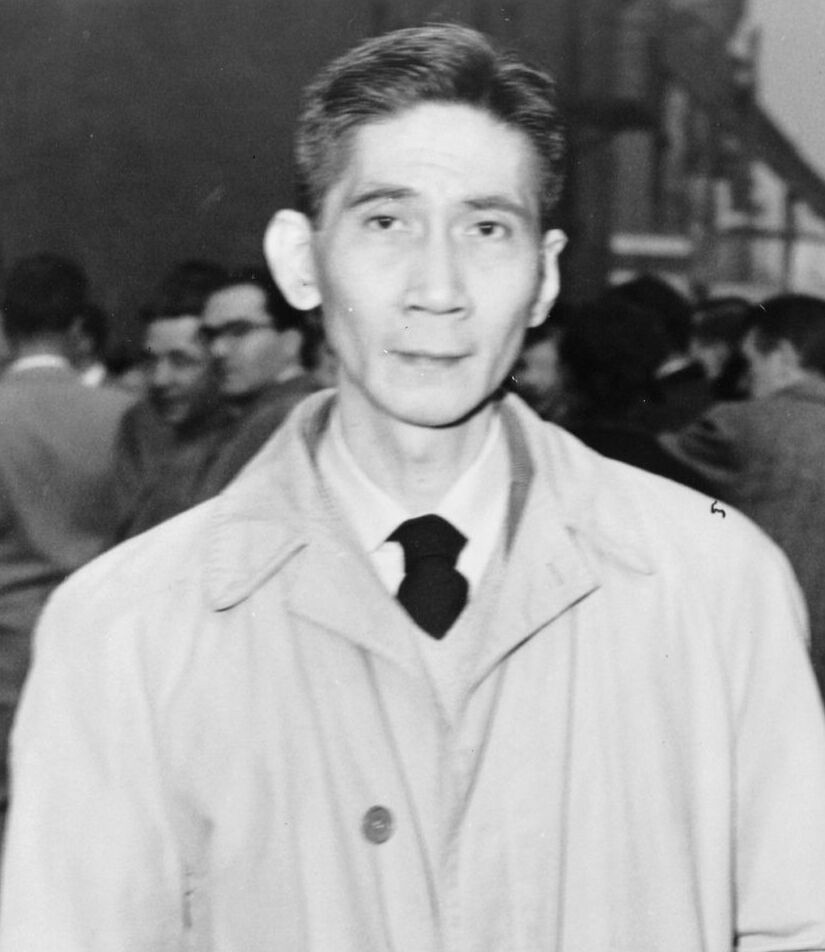
The first strand was that of high modernism and aesthetic experimentation, best exemplified by Jose Garcia Villa (pictured above). Dubbed the “Pope of Greenwich Village” for his later life in New York, Villa was a radical formalist. His early collections like Footnote to Youth (1933) contained stories of rural Philippine life, but his true innovation was poetic. He developed “comma poems,” where every word was followed by a comma, creating a fractured, breathless rhythm meant to approximate the cadences of Tagalog in English. He also pioneered “reversed consonance” and other intricate techniques. Villa’s project was one of defiant, autonomous artistry. He insisted on being judged by universal (i.e., Western modernist) aesthetic standards, seeking to vault Philippine literature onto the world stage by mastering and then transcending its forms. His work declared that the Filipino writer could be not just a provincial chronicler but an avant-garde originator.
The second, and ultimately more influential, strand was vernacular modernism and social realism. This group, often associated with the U.P. Writers’ Club and literary editor A.V.H. Hartendorp, sought to root their English in the specific textures of Filipino life. They aimed for what critic Bienvenido Lumbera called a “sedimented” English, layered with the rhythms, idioms, and sensibilities of native speech and experience.
Key figures included:
· Manuel E. Arguilla: In stories like “How My Brother Leon Brought Home a Wife,” Arguilla masterfully rendered the Ilocano rural world. His prose used English to evoke the cadence of Ilocano speech and the precise, sensory details of provincial life—the smell of sun-hardened earth, the sound of cart wheels—asserting the dignity and beauty of the local against the abstract pull of Americanization.
· Arturo B. Rotor: A doctor by profession, Rotor brought clinical precision and deep empathy to stories of ordinary Filipinos confronting modernity, disease, and social change.
· Carlos Bulosan: Although his major work, America Is in the Heart, was published in 1946, its spirit was forged in the 1930s. Bulosan’s writing exposed the brutal reality behind the American dream for the Filipino migrant laborer, channeling social protest into a powerful, autobiographical modernism.
These writers collectively built a canon. Their venue was the magazine Philippine Magazine, edited by Hartendorp, which became the central platform for a self-consciously national literature in English. They proved that English could be made to bear the weight of specifically Filipino realities, transforming it from an imperial imposition into a tool for national self-portraiture.
The Lingua Franca of Nationalism: English and the Imagined Community
Paradoxically, English became a crucial medium for the expression of Filipino nationalism in this period. Unlike the dozens of mutually unintelligible vernacular languages, English served as a neutral lingua franca for the archipelago’s diverse ethnic groups. Through nationally circulated magazines and anthologies, a Tagalog from Manila, an Ilocano from the north, and a Cebuano from the south could all read the same story about each other’s lives. In this way, literature in English performed a vital, nation-building function, helping to foster what Benedict Anderson would term an “imagined community” of Filipinos.
This was not an uncomplicated process. The writer Salvador P. López, in his seminal 1940 critique “Literature and Society,” ignited a fierce debate. He attacked the prevailing aestheticism of Villa and his circle as escapist “art for art’s sake,” arguing that in a society riddled with poverty and injustice, literature had a profound social responsibility. López championed a “proletarian literature” that would use English to expose the ills of the feudal and colonial order. This debate—between aesthetic autonomy and social commitment—mirrored global modernist tensions but was charged with particular urgency in a colonial setting. It forced Filipino writers to confront the political implications of their chosen language and form, ensuring that their modernism was never merely a stylistic exercise but was always engaged in a dialogue about the nation’s soul and future.
The Critical Assimilation: Mastery as Strategy
The ultimate achievement of interwar Filipino modernism was the strategy of critical assimilation. This was a two-fold maneuver: first, the flawless acquisition of the colonizer’s cultural tools (the English language, literary forms, modernist techniques), and second, the deliberate deployment of those tools to ends unforeseen and often subversive to the colonial project.
American education aimed to produce docile, admiring subjects. It produced, instead, a generation of critical thinkers who used their analytical skills to dissect American hypocrisy. The pensionado who returned not with blind admiration but with a nuanced understanding of both America’s strengths and its racial contradictions was a subversive figure. The writer who used the sonnet form to lament the erosion of native tradition, or the short story technique of O. Henry to depict the clash between pakyaw (contract) labor and capitalist exploitation, was engaging in a literary act of resistance.
This modernism did not seek to reject the foreign outright, nor to retreat into a nativist purism—an impossibility given the deep hybridity of Philippine culture after centuries of colonization. Instead, it sought to Filipinize the foreign and modernize the local. It created a synthesis where the nervous, introspective psyche of modern fiction could house a specifically Filipino anxiety about identity. It allowed the folk tale to be recast in the language of psychological realism. The result was a body of work that was undeniably modern, recognizably Filipino, and irrevocably shaped by the American encounter.
The Japanese invasion and occupation in 1941 brutally interrupted this flourishing. Yet, the literary culture forged in the 1920s and 1930s provided the foundation for the post-war generation. The legacy of this interwar modernism is its demonstration that agency could be exercised even under the heavy shadow of empire. By mastering the language of the master, Filipino writers stopped being mere apprentices and became articulate critics, elegant mourners, and sophisticated architects of their own modern identity. They proved that one could write in English and yet be fiercely, unmistakably Filipino—a paradox that lies at the heart of the nation’s cultural consciousness to this day.
Photo by Walter Albertin

Leave a Reply