
The Spanish Civil War was not only fought with rifles, artillery, and aircraft across the Iberian Peninsula; it was waged simultaneously on a global battlefield of public perception through an unprecedented and sophisticated campaign of propaganda. This conflict is frequently cited as the first “media war” of the modern age, a characterization that acknowledges the conscious, industrialized use of mass communication technologies—newsreels, radio, photojournalism, and the illustrated press—to shape narratives, mobilize international opinion, and legitimize intervention. While the technologies themselves were not entirely novel, their systematic and centralized deployment by all belligerents, aimed at both domestic and foreign audiences, represented a qualitative shift in the relationship between warfare and information. Propaganda in Spain was not a peripheral activity but a central front, integral to the war effort. This essay argues that the propaganda war was a constitutive element of the conflict’s status as a global proxy struggle. The competing narratives crafted in Burgos, Barcelona, Madrid, Rome, Berlin, and Moscow were designed not merely to describe the war but to define its very essence for foreign governments and publics, thereby influencing the crucial calculus of diplomatic recognition, non-intervention, and material support. An analysis of the institutional machinery, visual and verbal strategies, and the fraught role of foreign correspondents reveals a conflict where the struggle to control meaning was as fierce as the fight for territory, with lasting consequences for the practice of war reporting and the politics of memory.
The Machinery of Persuasion: Institutionalizing Information Control
From the outset, both the Nationalist and Republican factions recognized the imperative of managing information. They established elaborate, state-directed apparatuses for propaganda, reflecting their differing political structures but sharing a common goal: the monolithic presentation of their cause.
In the Nationalist zone, propaganda was centralized under a strict military and clerical authoritarianism. The Delegación del Estado para Prensa y Propaganda, established in late 1936 and later reorganized, exercised rigid control over all media. Censorship was absolute; newspapers were either suppressed or brought into alignment, and all copy required prior approval. This control extended to the moral and theological framing of the conflict. The Church, having overwhelmingly supported the rebellion, provided a powerful ideological apparatus. Pastoral letters, such as the collective letter of the Spanish bishops in July 1937, framed the war as a “crusade” against “atheistic, communist barbarism,” a sacred struggle for Christian civilization. This fusion of military and religious rhetoric, disseminated through controlled press, radio, and countless pamphlets, created a potent, emotionally resonant narrative for domestic and Catholic audiences worldwide. International outreach was managed through agencies like Radio Nacional de España, which broadcast in multiple languages, and by cultivating sympathetic foreign journalists, while actively impeding or expelling critical ones.
The Republican propaganda effort was, by contrast, initially fragmented, reflecting the political pluralism of the Popular Front. Anarchist, socialist, communist, and republican groups all produced their own materials. However, as the war progressed and the government, under Soviet influence, consolidated power, propaganda too became more centralized. Key institutions emerged, such as the Commissariat de Propaganda of the Generalitat in Catalonia and the national Ministry of State. The Republic’s great challenge was to project an image of legitimate, constitutional democracy defending itself against fascist aggression, while also managing the revolutionary reality within its zone. Soviet advisors played a significant role in streamlining this message, emphasizing patriotism, discipline, and anti-fascist unity over social revolution to appeal to Western democracies. The Republic excelled in visual propaganda, producing iconic posters that mobilized themes of popular resistance, imperiled women and children, and the defense of culture.
Foreign powers injected their own propaganda machinery directly into the Spanish arena. Nazi Germany’s Legion Condor included propaganda units that filmed and photographed its actions for domestic consumption, while also supplying Franco’s forces with material. The USSR provided not only advisors but also the template for agitprop, influencing the style and content of Republican posters and broadcasts. The global scale of this informational intervention underscores the war’s proxy nature; Spain became a screen upon which the broader ideological battles of the decade were projected.
The Battle of Images: Photography, Poster Art, and the Framing of Atrocity
Visual propaganda proved uniquely powerful in shaping international perception, exploiting the relatively new capacity to disseminate photographs and films rapidly across borders.
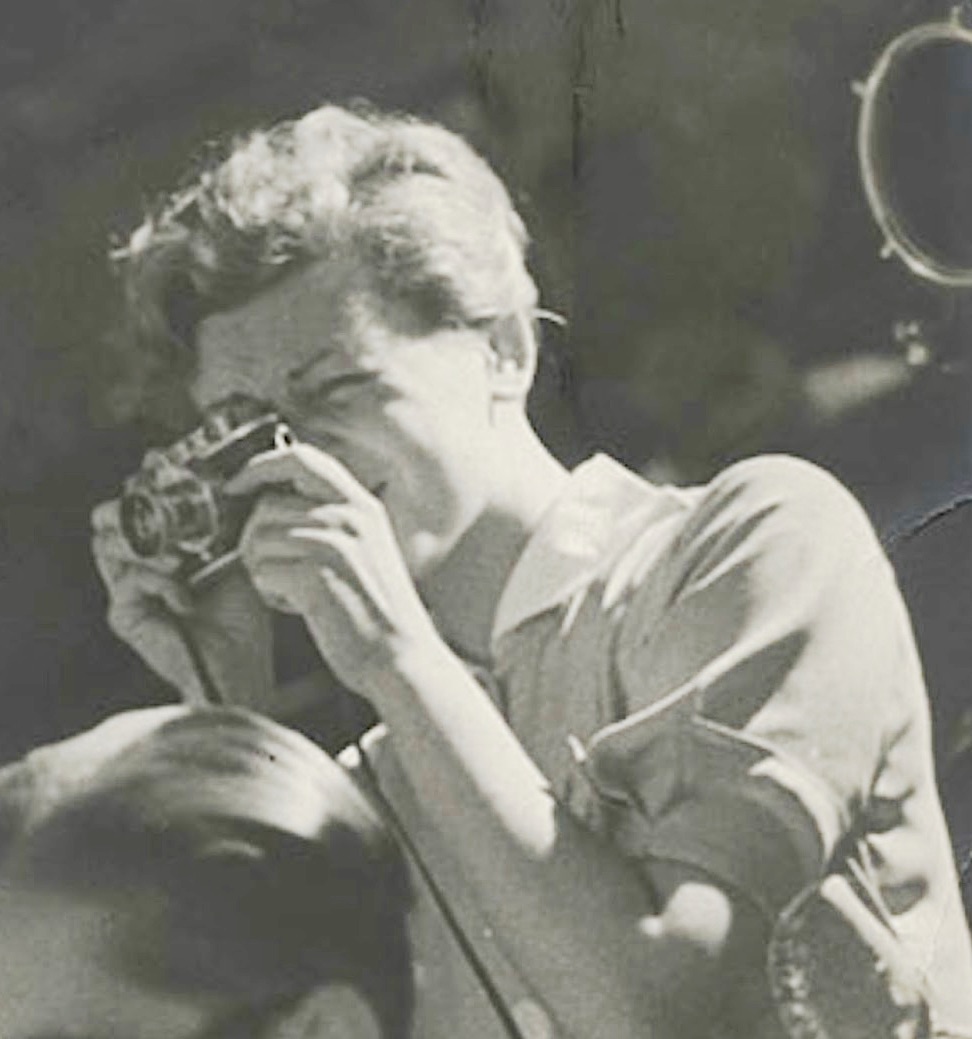
Photography occupied an ambivalent space between documentation and propaganda. Images carried an aura of objective truth, yet their selection, cropping, and captioning made them potent ideological tools. Republican propagandists, and the foreign photographers sympathetic to their cause, produced enduring icons of anti-fascist resistance. Robert Capa’s “The Falling Soldier” (1936), depicting a militiaman at the moment of death, became perhaps the most famous war photograph of the twentieth century, symbolizing tragic sacrifice. Its authenticity has been subsequently debated by historians such as Phillip Knightley and Robert Whelan, a controversy that itself highlights the difficulty of disentangling reportage from myth-making in this conflict. Capa’s partner, Gerda Taro (pictured above) was killed in 1937 capturing the Battle of Brunete. Photographs of bombed civilians in Madrid and Barcelona, circulated internationally by the Republic’s press offices, were instrumental in crafting an image of fascist barbarism.
The Nationalists, initially less adept at visual media, soon developed their own strategies. They focused on images of orderly troops, pious rituals, and the alleged “red terror”—exhumed bodies from mass graves presented as evidence of communist atrocities. These images were designed to affirm the rebellion’s narrative of restoring order and saving Christian Spain from chaos. The bombing of Guernica presented a pivotal propaganda disaster for Franco. The Nationalist insistence that the Basques had destroyed their own town, despite overwhelming eyewitness and journalistic evidence to the contrary (most famously from The Times’s George Steer), demonstrated a willingness to construct alternative realities, a tactic that foreshadowed the “big lie” strategies of totalitarian regimes.
Poster art was another dominant visual medium, particularly in the Republican zone. Reflecting its political diversity, Republican posters ranged from anarchist exhortations to collectivization to communist calls for disciplined unity. Their aesthetic borrowed from Soviet constructivism, European modernism, and traditional Spanish folk art. They were instruments of mobilization, urging enlistment, hygiene, agricultural production, and anti-fascist vigilance. Nationalist posters, often more traditionally illustrative and religious in iconography, emphasized faith, fatherland, and the cult of the Caudillo.
The Correspondents’ War: Witnesses, Participants, and Mythmakers
The Spanish Civil War attracted an extraordinary constellation of foreign writers and journalists, transforming them from mere observers into active participants in the propaganda struggle. Their dispatches did not simply report on the war; they interpreted it for a world choosing sides.
The press corps was sharply divided. Sympathetic reporters like the New York Times’s Herbert L. Matthews and the Daily Express’s Sefton Delmer often filed copy favorable to the Republic, highlighting its democratic character and civilian suffering. On the Nationalist side, journalists like the Daily Mail’s Harold G. Cardozo and The Times’s James Holburn (operating under strict censorship) conveyed the rebel perspective of order and anti-communism. Their reports were not neutral; they were filters through which the competing Spanish narratives reached foreign publics and policymakers.
Beyond journalists, literary intellectuals became combatants in the war of words. Writers like Ernest Hemingway (For Whom the Bell Tolls), George Orwell (Homage to Catalonia), and Arthur Koestler (Spanish Testament) produced works based on direct experience that became foundational texts in the conflict’s mythology. Their influence was immense. Hemingway’s dispatches for the North American Newspaper Alliance and his subsequent novel romanticized the Republican struggle for an American audience. Orwell’s later account provided a devastating critique of the Stalinist suppression of the revolution from within, shaping leftist disillusionment for generations. These literary engagements underscore how the war was processed and defined as much by foreign intellectuals as by Spanish actors.
The non-intervention policy of Western democracies created a further distorting effect. As historian Herbert R. Southworth demonstrated in his seminal work Le Mythe de la croisade de Franco, the reluctance of the French and British press to alienate Franco or provoke Germany led to systematic downplaying of Axis intervention and, at times, the parroting of Nationalist propaganda claims. This media environment made it exceptionally difficult for the Republic to have its case—and its legitimate right to purchase arms—fairly heard in the democracies whose support it desperately needed.
Radio and Film: The Technologies of Mass Mobilization
New technologies extended the reach and emotional impact of propaganda. Radio, a medium that could cross front lines and national borders instantaneously, was weaponized by both sides. The Republic used radio broadcasts from Madrid, famously with the slogan “¡No pasarán!”, to sustain morale. Nationalist Radio Nacional, with its more professional operation and powerful transmitters, broadcast news bulletins, speeches, and religious services, aiming to demoralize Republican listeners and unite its own zone. For international audiences, shortwave broadcasts in multiple languages sought to influence foreign opinion directly.
Cinema and newsreels offered the powerful illusion of direct witness. Both sides produced weekly newsreels shown in domestic and, where possible, foreign cinemas. The Republic’s footage, much of it compiled and distributed through international leftist networks, highlighted popular militias, international solidarity, and air raid damage. Franco’s side, with German technical assistance, produced Noticiario Nacional, showcasing military parades, captured cities, and the alleged peace and piety of its territory. The documentary España leal en armas (1937), edited by the French communist filmmaker Louis Aragon, and the Nationalist response España heroica (1938), demonstrate how film was harnessed to create competing epic narratives of the war.
Legacy: The Manufacture of Memory and the Historiographical Shadow
The propaganda war did not end in April 1939; it set the terms for the decades-long battle over historical memory. The Franco regime’s victor’s history, enforced by censorship and education, institutionalized the “Crusade” narrative for forty years, suppressing alternative accounts. In exile and within the underground opposition, the Republican narrative was kept alive through the memoirs, histories, and cultural production of the defeated.
The historiography of the war has been, in large part, a protracted effort to deconstruct these propagandistic legacies. Early general histories, even those striving for objectivity, were inevitably shaped by the partisan source materials available. The opening of Soviet and other international archives after the Cold War, alongside the pioneering critical work of scholars like Herbert Southworth, Paul Preston, and Helen Graham, has allowed for a more nuanced understanding that disentangles the event from its mythologized representations. This scholarship has revealed how effectively propaganda externalized the conflict, framing a complex, indigenous Spanish struggle as a stark, Manichean prelude to World War II—a framing that served the interests of multiple foreign powers and which the combatants themselves often internalized and performed.
In conclusion, the Spanish Civil War’s status as the first modern media war is secure, but its significance lies deeper than the mere adoption of new technologies. It represented the full maturation of propaganda as an essential component of total war, where controlling narrative was inseparable from controlling territory. The intense internationalization of this informational struggle was a direct function of the war’s proxy character. Foreign governments and movements did not just send arms and troops; they sent narratives, scripts, and visual vocabularies to explain why Spain mattered. The correspondents, photographers, and intellectuals who flocked there became, often unwittingly, vectors for these competing global ideologies. Consequently, the “Spanish Civil War” that entered world history was, from the very beginning, a carefully curated production, a fact that demands continual critical vigilance from historians. The war proved that in the modern age, the battlefield of perception is not ancillary to the physical conflict; it is its necessary and defining counterpart.
Leave a Reply