

Stalin, Collectivisation and the Grain Crisis 1927-8 – Explaining History
History is often shaped not just by material conditions, but by how leaders interpret those conditions. In the late 1920s, Joseph Stalin looked at the Soviet countryside and saw an enemy that wasn’t there.
In this week’s podcast, I explored the roots of the Soviet famine and collectivization, focusing on the critical period of 1928-1929. Using Robert Conquest’s classic study The Harvest of Sorrow as a guide, we stepped into the mindset of the Bolshevik leadership to understand why they declared war on their own peasantry.
The Grain Problem
By 1928, the Soviet Union faced a genuine economic crisis. Grain exports, vital for funding industrialization, had virtually ceased. The breakup of large estates after the revolution had inadvertently returned much of Russia’s arable land to subsistence farming. Peasants were producing food, but they were consuming most of it themselves.
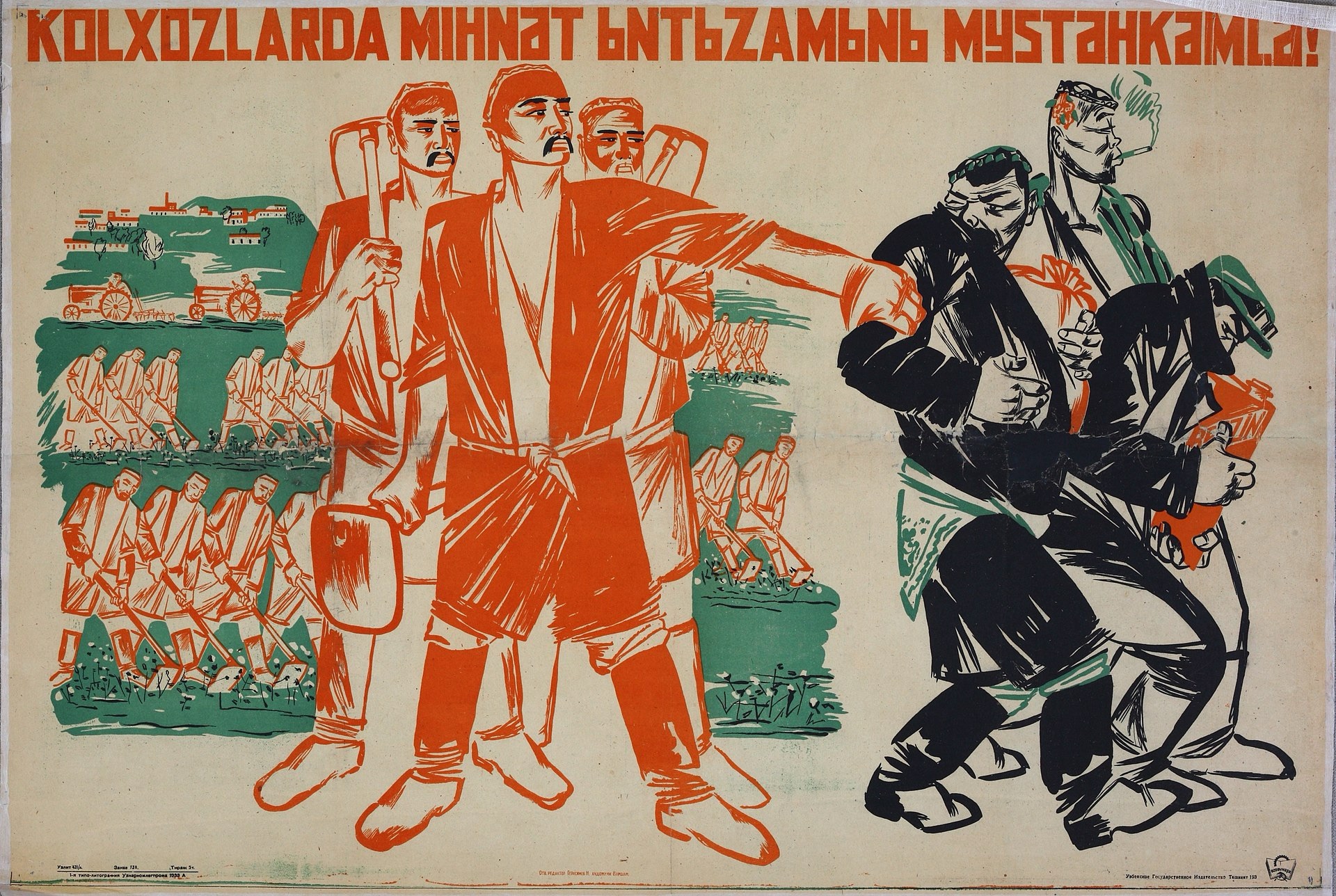
To the Bolsheviks, who viewed the world through a strict Marxist-Leninist lens, this wasn’t just an economic structural issue; it was class warfare. When a peasant stored grain in his loft, he saw it as insurance against a bad harvest or fluctuating prices. Stalin saw it as “speculation”—a deliberate attempt by a capitalist class (the Kulaks) to hold the proletarian state to ransom.
The Myth of the Kulak
The tragedy is that the Bolsheviks fundamentally misunderstood village life. They saw a binary class struggle between rich “Kulaks” and poor peasants. In reality, the village was a complex web of kinship and mutual obligation. The “rich” peasant was often just the most efficient farmer, or someone who hired a neighbor during harvest—a standard practice in rural communities.
Stalin’s regime needed a scapegoat for the grain shortages. The Kulak fit the bill perfectly. By framing the grain crisis as a battle against a “capitalist element” in the countryside, Stalin justified the violent seizure of grain and the forced collectivization of agriculture.
The Fog of Data
One of the most shocking revelations in Conquest’s work is the extent to which Soviet policy was based on garbage data. The statistical agencies of the 1920s were overwhelmed and often produced conflicting figures.
Stalin claimed that marketable grain was half of pre-war levels, despite gross output being the same. He concluded that the “missing” grain was being hoarded. In reality, as later Soviet scholars admitted, the grain marketing figures were significantly underestimated. The grain wasn’t being hoarded by a secret capitalist cabal; the state simply didn’t know how much grain there actually was.
The Second Revolution
This combination of ideological blindness and statistical incompetence led to catastrophe. Stalin viewed collectivization not just as an economic necessity, but as a “Second Revolution”—a way to finish the work of the Civil War by crushing the last remnants of capitalism.
The result was a war on the peasantry that led to the death of millions. It serves as a grim reminder that when a state combines absolute power with absolute paranoia—and fuels it with bad data—the consequences are almost always fatal.
Transcript
Nick: Welcome again to the Explaining History podcast.
I’m doing this episode particularly for history students studying Stalin. I want to give you a deeper historical context to collectivization and the famine it caused—deeper than you might get in a standard textbook.
I want us to try to situate ourselves mentally in the minds of the communist leadership. Their view of the peasantry was informed, as it always was with Stalin, by history and by the Marxist-Leninist filter through which he interpreted it.
We are looking at a very famous book, The Harvest of Sorrow by Robert Conquest. Conquest has contributed to this field probably more than most historians, and he has been involved in heated debates over the nature of the Soviet famines.
Note: If you are studying this topic, look at the show notes. I am putting in links to 10 previous podcast episodes on the AQA Revolution and Dictatorship module that cover most of this area.
Reading from the chapter “Collision Course” (1928-29), Conquest writes:
“There were indeed problems. By 1928, the export of grain had virtually ceased. Before World War One, half the grain production had come from landlord and Kulak farms… In 1927, the peasants owned 314 million hectares as against 210 million before the revolution… The non-Kulak peasant who had produced 50% of the grain before the war and consumed 60% of what he produced now produced 85% of the grain and consumed 80% of that.”
You have a real problem here. The breaking up of landlord estates and the favoring of poorer peasants led to a situation where much of Russia’s arable land returned to subsistence farming. This is no good if you are trying to leapfrog out of being a peasant country and into industrialization.
The state’s problem was how to get hold of the grain. At the 15th Party Congress in 1927, the veteran Bolshevik Grigory Sokolnikov warned against seeing peasant grain reserves as a “Kulak war against the proletarian economic system.” He warned that launching a crusade to take it would mean returning to the requisitioning of War Communism.
However, it was convenient for Stalin to think of grain reserves as evidence of capitalist class formation. If you look for class enemies, you look at a Kulak with sacks of grain in his loft and say, “You are speculating. You are restricting supply to manipulate price.”
In reality, the peasants were hedging against market fluctuations and famine. They were ensuring they didn’t starve. But the Bolsheviks didn’t understand village life. They didn’t understand that the village wasn’t just split into “rich” and “poor”—it was a complex web of obligation, kinship, and mutual aid.
Conquest notes that the alternative was the intelligent use of market and fiscal measures, but the regime lacked coherence. They fluctuated prices wildly—changing the price of flax five times in two years. This unpredictability encouraged peasants to hold onto their produce.
Furthermore, the data was wrong. Conquest writes that the basic figures Stalin relied on were highly distorted. Stalin accepted an estimate of 10.3 million tons for gross grain marketing in 1926-27, while the true figure was likely 16.2 million tons. The state assumed there was less grain than there was, or that more was being hidden than actually was.
When a state doesn’t know its basic numbers, it cannot function effectively. As one Soviet scholar noted, local officials overwhelmed by forms just “put down the first thing that came into their heads.”
Stalin claimed that marketable grain was half what it was before the war, despite gross output being the same. His conclusion? “The blame lay primarily on the Kulak.” He decided the solution was the transition to collective, socially conducted agriculture and a struggle against the capitalist elements of the peasantry.
Stalin viewed 1917 as the political revolution, but the late 1920s as the “Second Revolution.” He believed that while the Bolsheviks had won the Civil War, class enemies had gone to ground. They had put on masks.
As Sheila Fitzpatrick points out in Everyday Stalinism, paranoid thinking is baked into the system because of the revolutionary worldview. Stalin saw the battle against the Kulaks as a continuation of the Civil War by other means.
Announcement:
In January, I will be running a live masterclass on how to answer exam questions on the Russian Revolution and Soviet history. It will be invaluable for A-Level, IB, and GCSE students. Keep your eyes peeled for details on the website!

Leave a Reply