

Japanese War Crimes in China 1937-45 – Explaining History
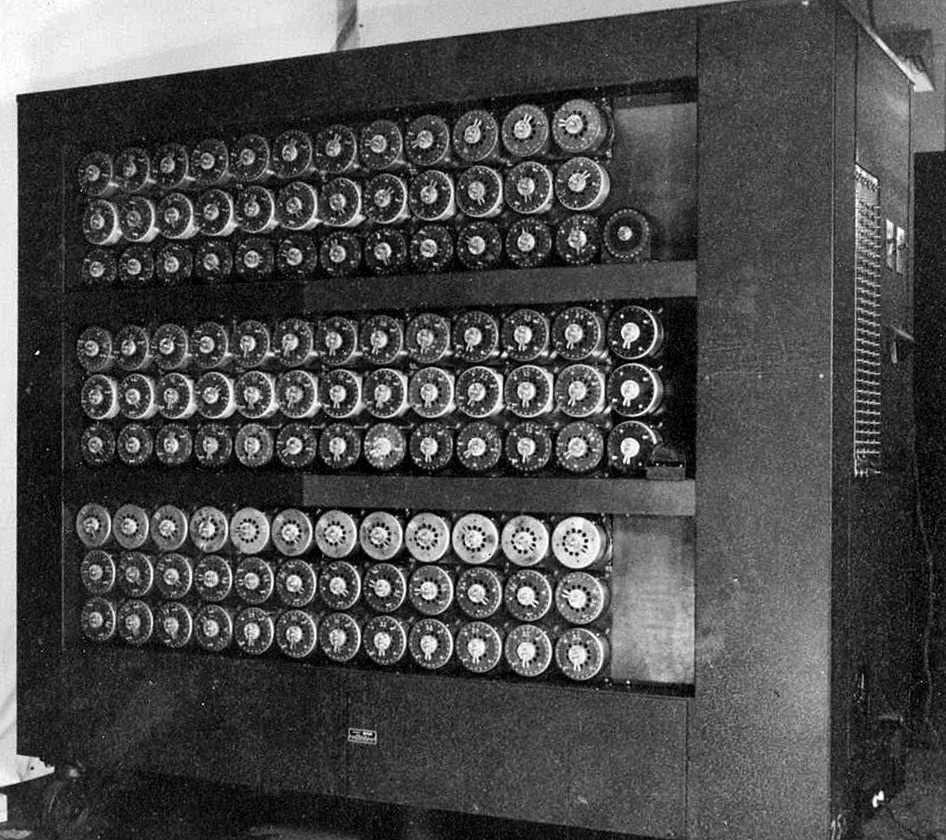
When we think of Bletchley Park, the popular imagination—fueled by films like The Imitation Game—often conjures images of Cambridge mathematicians and eccentric geniuses like Alan Turing. While accurate, this image is incomplete. The reality of the Government Code and Cypher School (GC&CS) was a vast industrial operation involving thousands of people from diverse backgrounds.
In a recent episode of the podcast, I was joined by author Maggie Ritchie to discuss this wider history. Her new book, White Raven, was inspired by a chance encounter with the late Moira Beaty—a Glasgow artist who, for decades, held a secret past.
The Artist in the Hut
Moira Beaty’s journey to Bletchley Park challenges the standard narrative of the “boffin.” Recruited not for her mathematical prowess, but for her artistic eye, Beaty was a student at the Glasgow School of Art when she was identified as having a talent for spotting patterns.
As Ritchie explained in our interview, Beaty was just 18 when she signed the Official Secrets Act. Like many women of her generation, she described her time at Bletchley not as a period of drudgery, but as the “happiest time of her life.” The war had created a temporary suspension of the rigid British class system. In the huts of Bletchley, the daughter of a Glasgow ice-rink manager could work alongside debutantes and professors, judged solely on her ability to crack the German Enigma traffic.
Beaty’s story also highlights a lesser-discussed aspect of Bletchley: the presence of international intrigue within the allied camp. Beaty had a wartime affair with a “White Russian” (anti-Bolshevik) British intelligence officer. This relationship serves as the spark for Ritchie’s novel, bridging the gap between the hot war against Hitler and the freezing relations with Stalin.
The “Bletchley” of the Cold War
While Bletchley Park is world-famous, Ritchie’s work sheds light on a forgotten institution that served a similar purpose during the Cold War: The Joint Services School for Linguists (JSSL).
After 1945, the enemy shifted from Berlin to Moscow. The British government realized it was woefully short of Russian speakers. The solution was the JSSL, where brilliant National Service conscripts were force-fed Russian language and culture in intensive courses.
Ritchie’s book focuses on the JSSL based at Crail, an abandoned airfield in the East Neuk of Fife, Scotland. This location was pivotal. During the 1950s, Scotland was becoming a strategic frontier in the Cold War, eventually hosting the US nuclear submarine fleet at Holy Loch.
The alumni list of the various JSSL branches reads like a “Who’s Who” of late 20th-century British culture, including playwrights Alan Bennett and Michael Frayn, and former Bank of England Governor Eddie George. It was a place of intellectual ferment, similar to Bletchley, but operated under the darker cloud of nuclear paranoia.
The Ideology of Betrayal
One of the most fascinating aspects of our discussion was the motivation behind Cold War espionage. Why did Britons—some of them patriots—spy for the Soviet Union?
We often view the Cold War through the lens of its conclusion, knowing that the Soviet Union would eventually collapse. However, in the 1950s, the future was unwritten. The “Red Clydeside” tradition in Scotland meant that communism was a mainstream political force for many working-class communities.
Furthermore, as Ritchie points out, there was a prevalent geopolitical theory regarding nuclear weapons: balance. Spies like Melita Norwood (the “Granny Spy” exposed in 1999) argued that giving nuclear secrets to Russia wasn’t treason, but a necessary act to prevent the United States from becoming the world’s sole, bullying superpower. This concept of “Mutually Assured Destruction” as a peacekeeping tool created a moral grey zone where ordinary people could be seduced into espionage—sometimes by ideology, sometimes by excitement, and sometimes, as in White Raven, by a lover.
A Legacy of Silence
Moira Beaty, like thousands of others, kept her secrets for decades. She returned to her life as an art teacher in Scotland, her pivotal role in defeating Nazism locked away behind the Official Secrets Act. It is only now, as that generation passes, that we are beginning to piece together the full human tapestry of intelligence work—a story that stretches from the codebreaking huts of Buckinghamshire to the windswept airfields of Fife.
Maggie Ritchie’s book, White Raven, is available now from Scotland Street Press.
Click here to read the episode’s complete transcript
Nick: Welcome again to the Explaining History podcast. I’m very delighted today to be joined by author Maggie Ritchie, who is here to talk about wartime intelligence work, codebreaking, and perhaps we’ll even hear a bit about intelligence work during the Cold War. We are discussing the remarkable story of Glasgow-born Moira Beattie, a wartime intelligence codebreaker.
Of course, when you see places like Bletchley Park in movies, we never really get a sense of the scale of the operation and how many people were involved. There is no shortage of stories about codebreakers and people that worked in signals intelligence, as there were thousands upon thousands of them. So, let’s focus to begin with on Moira—who she was and what her journey was into intelligence work.
Maggie: Well, I met Moira Beattie when she was 91 years old—unfortunately, she has passed away since. She was opening an exhibition of the “Glasgow Girls” painters, as she had been one of them in the 1950s.
I went to her house—her little tiny studio—and was met by this very tiny woman. In the course of the interview, which was originally about her artwork for a newspaper, she showed me a sketch of a very handsome, striking young man. I asked her, “Who is that?”
That is when she said to me, “Oh, that was my lover at Bletchley Park when I was 18, and he was a Russian intelligence officer.”
That was the spark behind my book, White Raven. That day, the local reporting story kind of went out of the window. I did write the story for a national paper about her art, but I tucked the Bletchley story away.
I sat down with her later to talk about Bletchley Park. She couldn’t tell me many details of her actual work because it was still “Ultra” classification. You know, the people who worked there signed the Official Secrets Act. They never told their partners, their husbands, their wives, or their families where they were working or the nature of their work.
But she did tell me about day-to-day life. She said, “I know people had a hard time during the Second World War, but it was the best time of my life. It was just amazing, the happiest time.”
She was only 18 when she went there. She had completed a year at the Glasgow School of Art, and a friend of hers—another artist—had suggested her as a secretary. She went down for an interview, signed the Official Secrets Act, and was hired.
In the course of her secretarial work, she happened upon a coded message from the Germans. Because she had an artistic eye, she was good at spotting patterns. She effectively broke the code by spotting a pattern. She was immediately recruited into Alan Turing’s hut. She actually broke a very important code that impressed Turing and his colleagues.
What she said about Bletchley was that it was like a university because there were so many interesting people there. She said the best thing about it was—and remember, she was just an ordinary girl from Glasgow—that they didn’t care about you being a woman or what class you came from. In the very class-ridden Britain of the early 1940s, all that was important was your brain and your ability to break these codes in a race against time.
She mentioned there were some debutantes there who were very nice, but they were mostly making and bringing the tea in their pearls and twinsets with their posh voices. She made some amazing friends and even ran an art school with the then-director of the Courtauld Institute. It just sounded amazing.
Then she fell in love with this Russian. He was a “White Russian,” meaning he was a British intelligence officer but from a Russian background and spoke fluent Russian. She said he was the one who was already wary of the Soviets. He knew that Stalin was a “bad guy” even when the Soviets were our allies. He didn’t trust them and had started an anti-Soviet espionage unit.
They had an affair, but then it broke up. I think he had to go on missions, or it became too dangerous. She didn’t really go into why they broke up, but she was so depressed she became suicidal and had a breakdown. She eventually went to work in a propaganda film unit before returning to art college. But those couple of years at Bletchley stayed with her all her life.
Nick: I think that is really interesting. You read about this in many oral histories of the Second World War. It was a time of horror, hardship, and suffering, but for some people, it was the most vivid, exciting, and—for lots of women—liberating moment of their entire lives. Nothing quite like it had ever come along before.
It was a revolutionary moment. You describe the temporary erosion of social class, which very much reassembled itself quickly after the war. But there were moments where working-class people experienced things they would always have been excluded from, simply out of the necessities of war. You can’t remove that experience from people once they have seen those different vistas in life.
Maggie: Moira was the inspiration. In my book White Raven, the character is named differently—I just took Moira’s story as a starting point. I wanted to carry the story on to see what happened afterward.
The real Moira Beattie went on to finish art college, become an art teacher, and get married. But I always imagined it must be difficult—what do you do after an experience like Bletchley?
My character is now in 1956, working as a teacher in a very polite girls’ school in Edinburgh. She is bored and itching for something else to do. A friend of mine, a television director, had come across an abandoned base outside Crail in the East Neuk of Fife—a picturesque fishing village in Scotland. It was a ruined base that had been a Russian language school for conscripts during the Cold War.
Clever conscripts were sent there to learn Russian from exotic Russian émigrés and Soviet defectors because the Cold War was escalating, and we needed interpreters, translators, and spies. It was called the Joint Services School for Linguists (JSSL).
In my fiction, my character meets her Russian while she is in Crail painting. He recruits her to teach art at the JSSL. He has also been to Bletchley, so they have that shared history. The JSSL was very similar to Bletchley in that it was a classless place full of clever, artistic people, linguists, and scientists. She feels right at home there. From that, she is recruited into espionage.
It is set at a time when Scotland was pivotal in the Cold War because of its geographic location. It was the time when they were deciding where to position nuclear-powered submarines.
Nick: It is really interesting. If you look at the classic films and books on espionage, like The Imitation Game, and viewed them from outside Great Britain, you’d be forgiven for thinking that only English people ever did any spying. Non-English voices often get erased from the narrative, let alone non-English middle-class voices. Was Moira from a relatively humble background?
Maggie: She was from a very ordinary background in Glasgow. I think her mother used to run the ice rink that existed around the corner from me. I would say she was lower-middle class or upper-working class. She certainly wasn’t a “Benedict Cumberbatch” type by any means.
Nick: And she met Turing?
Maggie: Yes, she worked in the same hut as him, I believe. That is the extent of the work I know about. She clammed up immediately when asked for details. She told me about the punishing work schedules, working round the clock. She also mentioned she had digestive problems because the food was quite terrible. Though, you speak to other Bletchley Park veterans and they say, “Oh, the food was marvelous!” Maybe they were used to boarding school food!
Nick: Or there were different rations for different people. For those that don’t know Bletchley Park, there is a nice country house there, but the rest of the site was essentially Nissan huts, wasn’t it? Fairly drafty and not particularly comfortable. While it was probably safer than other war work, it was arduous. It feels like a gigantic intelligence factory.
From everything you’ve read, was the intelligence work of the Cold War particularly different from the wartime conditions?
Maggie: I think a lot of it was different. You read memoirs and they say a lot of the work was quite boring—listening to signals and Russian messages. But it was a form of preparation. There was a huge fear that we would end up in a nuclear war between America and Russia, and Britain would be part of that.
The JSSL was preparation so that men could become interrogators, fluent in Russian, if they were to catch Russian spies. Some learned Czech or Serbian. Some of them did become spies and went behind the Iron Curtain.
It was a fraught time, which is why my character is seduced into it by her Russian contact. He tells her there is a nuclear arms race: “The Americans have nuclear-powered submarines, Russia doesn’t. Let’s even the playing field a bit.”
Nick: There was a woman, Melita Norwood, exposed as a Russian spy in the 1990s. When she was exposed, she was very elderly and amazingly told the press on her doorstep to go away and leave her alone—which is a brilliantly British reaction.
But she basically said that at the time, it was evident there was going to be one big bully in the world—the USA—and you had to give secrets to the Soviet Union to prevent that. While you can critique that for its naivety in giving Stalin nuclear secrets, some realists in international relations would say that is how you create balance between countries.
Maggie: That is absolutely right. My character is a British patriot, not a communist, but there are still those arguments swirling around, and she is open to some of it. I also make the point, which John le Carré has made, that a lot of spies do it because it is exciting. She is bored, and she thinks she is serving a bigger cause.
Nick: It’s interesting you mention serving the country. David Reynolds wrote a book called The Long Shadow, where he argues that the decline of British national identity is generational. He notes that Scots, Welsh, and Irish people of that generation served in the British Army or experienced war work together. Whatever their feelings about England, there was a stronger sense of British national identity.
He argues that the rise of Scottish and Welsh nationalism from the 70s onwards is partly because subsequent generations didn’t have that shared experience. It’s fascinating that your character sees herself as a British patriot.
Maggie: I was also inspired by John Buchan and The Thirty-Nine Steps. He was a typical Scot of that era—he worked abroad, lived in Canada, and was a product of the British Empire, but he was also a proud Scot. I have a cat-and-mouse chase through Scotland in the book inspired by The Thirty-Nine Steps.
I can identify with that dual feeling of identity. My father was with the British Council, part of the Foreign Office, so I was brought up in countries all over the place. I have that outlook, but I am also a proud Scot. My character, Rosie Anderson, has that international outlook in the 50s as well.
Nick: That brings us to a natural end. Can we have a brief plug about the book?
Maggie: It is coming out on November 15th, called White Raven. In the book, a “Raven” is what the KGB called their male spies who used powers of seduction to recruit people. I will also be at the ‘iWrite Glasgow’ Book Festival. The book is published by Scotland Street Press.
Nick: As we always say, if you like the sound of the book, please buy it from your local independent retailer or directly from the publisher to keep money in the publishing ecosystem. Maggie, it was a delight to talk to you.
Maggie: Thank you very much, Nick. It was my absolute pleasure.

Leave a Reply