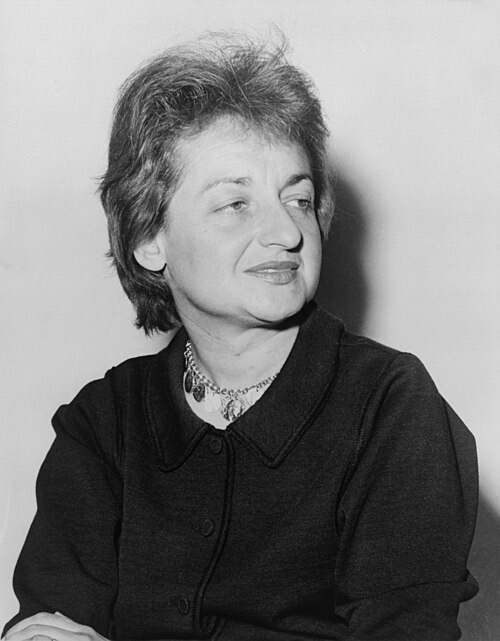

In the spring of 1963, a forty-two-year-old journalist and mother of three published a book that began with a problem she could not quite name. Betty Friedan had spent five years investigating the lives of American women — conducting interviews, reading the women’s magazines that told suburban housewives who they were and what they wanted, consulting sociologists and psychologists and advertisers whose professional project was to manage female aspiration. What she found was a pervasive and almost unspeakable dissatisfaction: women who had followed every instruction the postwar culture had given them, who had married young and moved to the suburbs and devoted themselves to their children and their husbands and their homes, and who were nevertheless experiencing a formless, nameless unhappiness that the culture around them had no framework for acknowledging.
Friedan called it “the problem that has no name.” The Feminine Mystique — her account of how American culture had constructed an image of femininity that fulfilled women’s needs only in theory, and that in practice produced dependency, infantilisation, and a slow starvation of the intelligence and ambition that education had cultivated and domestic ideology then required to be suppressed — became one of the most widely read and discussed books of its decade. It was not the first critique of women’s condition, and its analysis had real limitations: it spoke primarily to the experience of educated, middle-class white women, and it was largely silent on the very different experiences of Black women, working-class women, and women for whom the suburban domestic ideal was not a trap they had fallen into but a world from which they were structurally excluded. These omissions would become significant later. But in 1963, in the particular moment it addressed, the book named something real, and naming it changed what was possible.
The women’s liberation movement that emerged across the following decade drew on multiple sources and proceeded through multiple channels simultaneously. It drew on the civil rights movement, in which many of its early activists had cut their political teeth and from which they took both organisational models and an understanding of how structural inequality persists beneath the surface of formal equality. It drew on the New Left student radicalism of the early 1960s, and in particular on the frustration of women within that movement who found themselves assigned to making coffee and taking minutes while men made speeches and took decisions. It drew on a longer feminist tradition going back to the suffrage movement and further still, a tradition that the postwar political settlement had marginalised but not erased. And it drew on the specific material conditions of the 1960s: rising female participation in higher education, the availability of the contraceptive pill from 1960, and the growing gap between women’s expanding economic and intellectual capabilities and the legal and social frameworks that continued to treat them as dependents.
The Legal Revolution
The legislative achievements of the women’s movement between 1963 and 1973 represent one of the most rapid and comprehensive transformations of a legal framework in American history. The Equal Pay Act of 1963, passed the same year as The Feminine Mystique, formally prohibited pay discrimination based on sex — though its enforcement mechanisms were weak and its coverage limited, and the gap between legal equality and economic equality would remain vast for decades. The Civil Rights Act of 1964, whose principal purpose was to prohibit racial discrimination, included in its Title VII a prohibition on employment discrimination based on sex — an addition whose legislative history is somewhat ironic, since the sex provision was introduced by a conservative Southern congressman, Howard W. Smith of Virginia, who appears to have expected it to derail the bill by making it seem absurd. It passed, and Title VII became the primary federal tool for challenging employment discrimination against women.
The National Organisation for Women, founded in 1966 with Betty Friedan as its first president, was explicitly modelled on the civil rights organisations that had driven legislative change through lobbying, litigation, and public pressure. Its founding statement called for “a fully equal partnership of the sexes, as part of the worldwide revolution of human rights.” NOW pursued a strategy of working within existing political institutions, using the law and the courts to expand rights and eliminate formal discrimination. Title IX of the Education Amendments of 1972, which prohibited sex discrimination in educational programmes receiving federal funding, transformed women’s participation in university education and collegiate sport. Roe v. Wade, the Supreme Court decision of January 1973, recognised a constitutional right to abortion in the first trimester of pregnancy, removing the criminal prohibitions that had made abortion dangerous and driven millions of women to illegal procedures. These were genuine victories, won through sustained political organisation, and they changed material conditions in ways that the women who had preceded the movement could not have imagined.
The question of what the law could and could not accomplish was one the movement grappled with throughout this period. Legal equality meant the formal removal of discriminatory barriers; it did not automatically change the social practices, cultural norms, and institutional habits that had produced inequality in the first place. Women who were now legally entitled to the same jobs as men still faced employers who assumed they would leave when they married, colleagues who did not take them seriously, and professional cultures that had been built around assumptions of male priority. The law was a necessary instrument, and it was not sufficient.
The Radical Turn
Alongside the legislative strategy of organisations like NOW, a different strand of feminist activism was developing that was less interested in reforming existing institutions than in understanding and challenging the deeper structures of women’s subordination. The consciousness-raising group — small gatherings of women who met to share their personal experiences and discover, through the process of comparison and discussion, that what had seemed like individual problems were in fact common conditions produced by common structures — became the characteristic organisational form of what was called women’s liberation, as distinct from the more institutionally oriented women’s rights movement. The insight that personal experience was not merely personal but political — that what happened in marriages and bedrooms and kitchens was as much a site of power as what happened in boardrooms and legislatures — gave the movement its most enduring slogan: the personal is political.
The theoretical work produced by the radical wing of the movement ranged from the sociological to the provocative. Shulamith Firestone’s The Dialectic of Sex (1970) argued that the oppression of women was not primarily a matter of legal discrimination or cultural conditioning but of the biological facts of reproduction, which had produced a sexual class system analogous to and intersecting with economic class. Kate Millett’s Sexual Politics (1970) introduced a systematic analysis of how literary culture — specifically the work of Henry Miller, Norman Mailer, and D.H. Lawrence — both reflected and reproduced a patriarchal organisation of gender and power. Germaine Greer’s The Female Eunuch (1970) was angrier, more polemical, and more widely read than either: it argued that women had been conditioned to accept a castrated version of their own capacity for life and desire, and that liberation required not reform but transformation.
Gloria Steinem, whose combination of glamour, wit, and political seriousness made her the movement’s most recognisable public face, co-founded Ms. Magazine in 1972 — a publication intended to serve women readers as adults with serious political interests rather than as consumers of domesticity tips and beauty advice. The magazine’s first issue sold out its first print run of 300,000 copies in eight days. It ran the first national petition on abortion, to which 53 prominent women added their names, declaring publicly that they had had abortions at a time when such declarations carried serious personal and professional risk.
Race, Class, and the Problem of Sisterhood
The claim that women constituted a unified political subject — that their shared experience of gender oppression outweighed the differences of race, class, and sexuality that divided them — was challenged from within the movement itself almost from the beginning, and the challenge became sharper and more theoretically sophisticated as the decade progressed. Black feminist thinkers had been arguing since at least the early twentieth century that the experience of Black women could not be adequately captured by frameworks focused solely on gender or solely on race, and that the interplay between racial and sexual subordination produced specific conditions that neither the mainstream women’s movement nor the civil rights movement had fully addressed.
The Combahee River Collective, a Black feminist organisation founded in Boston in 1974, produced a statement in 1977 that became a foundational document of what would later be theorised as intersectionality. “We are actively committed to struggling against racial, sexual, heterosexual, and class oppression,” it declared, “and see as our particular task the development of integrated analysis and practice based upon the fact that the major systems of oppression are interlocking.” Angela Davis’s Women, Race and Class (1981) examined the specific histories of Black women’s labour, reproductive coercion, and political organising, arguing that the mainstream women’s movement’s focus on reproductive rights had historically centred the demands of white middle-class women while ignoring the forced sterilisation that had been practised on poor women and women of colour. The critique was not a rejection of feminism but a demand for a more honest and more comprehensive account of what women’s liberation actually meant for all women.
The movement’s relationship to lesbianism and sexual politics added another dimension of internal conflict. When the National Organisation for Women’s early leadership treated lesbian visibility as a political liability — Friedan infamously referred to the “lavender menace” — it generated fierce internal contestation. Lesbian feminists argued that the compulsory heterosexuality that structured women’s lives was not merely a personal preference but a political institution, and that a feminism that failed to challenge it was incomplete. By the mid-1970s, these arguments had substantially reshaped the movement’s politics, though the tensions never entirely resolved.
Backlash and Legacy
The Equal Rights Amendment, which simply stated that “Equality of rights under the law shall not be denied or abridged by the United States or by any State on account of sex,” passed Congress in 1972 with strong bipartisan support and was ratified by thirty-five of the thirty-eight states required for it to become part of the Constitution. Then the campaign to ratify it stalled and reversed, undone in large part by a remarkably effective opposition movement led by Phyllis Schlafly, a conservative Catholic activist whose STOP ERA campaign argued that the amendment would eliminate the legal protections that marriage and motherhood afforded women, require women to serve in combat roles, and mandate unisex bathrooms. The campaign was, in factual terms, largely inaccurate; in political terms, it was devastatingly effective. By 1982, when the ratification deadline passed, the ERA was dead.
The defeat of the ERA was part of a broader conservative mobilisation that reshaped American politics in the late 1970s and 1980s. The New Right — the coalition of economic libertarians, social conservatives, and evangelical Christians that would eventually find its electoral expression in the Reagan coalition — identified feminism and the cultural changes it had produced as a primary threat to an American way of life it was committed to defending. Anti-abortion activism, which crystallised around the formation of the National Right to Life Committee in 1968 and intensified after Roe v. Wade, became one of the New Right’s most effective organising causes. The language of “pro-family” politics constructed a vision of gender order that was explicitly in opposition to the women’s movement’s demands, and it found a substantial constituency among women as well as men.
Susan Faludi’s Backlash: The Undeclared War Against American Women (1991) documented the pervasive ways in which popular culture, journalism, and public policy in the 1980s had worked to reverse the gains of the previous decade — arguing that the rollback was a response not to the failure of feminism but to its success, and that the cultural narrative of the liberated woman’s unhappiness was constructed precisely to discourage further liberation. Whether one accepts the full force of Faludi’s argument or not, the structural pattern she identified was real: the political energy of the women’s liberation movement had encountered powerful forces of resistance that limited and in some respects reversed what the movement had achieved.
What did change, and lastingly? The legal framework governing women’s employment, education, credit, and reproductive rights had been fundamentally transformed. Women’s participation in higher education and professional life had expanded to a degree that would have seemed impossible in 1963. Aspects of personal and domestic life — the distribution of domestic labour, the cultural expectations around marriage and motherhood, the assumption that a woman’s primary identity was defined by her relationship to a husband and children — had been permanently altered, even when they had not been fully transformed. The language available for describing women’s experience had expanded in ways that were difficult to reverse: once the problem had been named, it could not be unnamed.
The women’s liberation movement was the most successful cultural revolution of the postwar era in the sense that it changed what was thinkable, speakable, and legally permissible in a domain — the organisation of gender — that touched the daily life of every person in the society it transformed. It was also, as its own most searching critics recognised, incomplete: its achievements were unequally distributed across lines of race and class, its political gains were vulnerable to reversal, and the deeper structures of economic and social inequality that it had identified as the foundations of gender oppression proved more resilient than the legal frameworks that had seemed to sustain them. The revolution continued, and continues.

Leave a Reply