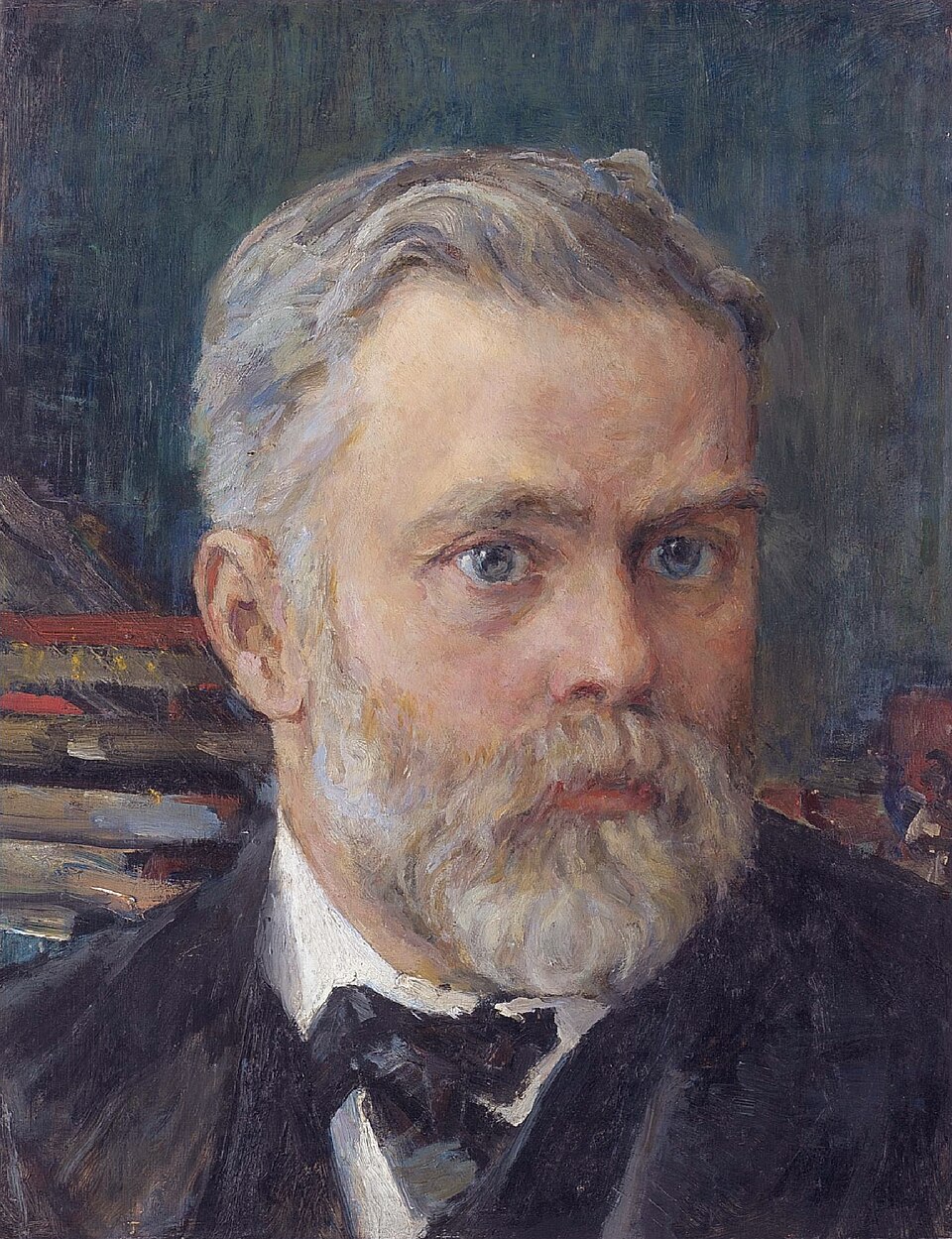

In the latest episode of the Explaining History Podcast, author Douglas Brunt reveals the extraordinary story of Emanuel Nobel – the man who built the world’s largest oil empire, only to have his name systematically erased by Stalin.
Most people have heard of Alfred Nobel, inventor of dynamite and founder of the Nobel Prizes. But few have heard of his nephew, Emanuel Nobel – and that is precisely what Stalin intended.
By 1900, Emanuel Nobel had built Nobel Brothers Petroleum Company into an oil empire larger than Standard Oil. He was the most important oil man in the world, dominating the vast fields of Baku (modern-day Azerbaijan), pioneering the first oil tanker, and supplying fuel to the Tsar’s armies. Yet today, his name is virtually unknown. His statues were torn down. His factories renamed. His history rewritten.
This is not a footnote. It is the story of how the 20th century was shaped – and how a brutal dictator tried to erase the past.
From Swedish Bankruptcy to Russian Empire
Emanuel Nobel’s grandfather, also named Emmanuel (with an inexplicable spelling difference), fled Sweden after a bankruptcy ruling, leaving his family behind. He was a genius inventor who built bridges and early undersea mines. He made contacts with the Tsar’s ministers and secured a large contract for mines used in the Crimean War.
But when Russia lost that war, they refused to honour the contracts. The grandfather went bankrupt again. He left Russia, and his son Alfred later invented dynamite, becoming a millionaire in Western Europe. Meanwhile, the two older brothers stayed behind, restarting the manufacturing business in northern Russia.
Their big break came when they received an order for 100,000 rifles for the Tsar. To build the wooden stocks, one brother travelled south to the Caspian Sea, looking for timber. In Baku, he stumbled across oil. The year was 1873 – the same year Standard Oil was founded in America.
Emanuel Takes the Reins
Emanuel inherited the business in 1888 at the age of 29. He was less of an engineering genius than his father, but he was a brilliant financier and diplomat. Just as Russia’s modernising Tsars were opening the economy – allowing foreign investors to buy land instead of relying on short-term leases – Emanuel seized the opportunity.
Baku at the time was a backward, dangerous oil field. Workers died in frequent explosions. But Nobel introduced technology copied from Standard Oil, and soon his company was producing more crude than Rockefeller’s. In 1878, the Nobels launched the world’s first oil tanker, breaking the stranglehold of railways and opening overseas markets.
By the time the First World War began, Nobel controlled more than half of Russia’s oil. His dividends, which had averaged 8-12% in peacetime, soared to 40-50% during the war. He was supplying the Tsar’s war machine – and also building hospitals for wounded soldiers, with his half‑sister working as a nurse.
The Benevolent Employer
One reason Nobel survived the 1905 revolution where others did not was his treatment of workers. In a brutal industry known for draconian methods, Nobel was an enlightened employer. He built schools, housing, and leisure facilities. His employees called themselves “Nobelites” with pride. They protected his operations while sabotaging those of the Rothschilds, who were also Jewish and faced vicious anti‑Semitic attacks.
Even Stalin – who worked in the Baku oil fields as a young revolutionary agitator – knew Nobel personally. But that familiarity would prove fatal to Nobel’s legacy.
The Revolution and a Sliding Door
Emanuel was open to reform. He was cozy with the Tsarist regime but welcomed the February Revolution of 1917, which established a provisional democratic government. He even involved himself in early political negotiations between the two revolutions. But he could not work with the Bolsheviks.
By 1919, he was a refugee in a southern Russian resort town, protected by a thin buffer of White Army troops. Lenin, needing Nobel’s expertise to keep the oil flowing, sent a message: “Citizen Nobel, please come to Moscow and help us nationalise the industry.” Nobel had no intention of doing so.
Instead, he wrote to Lord Balfour, the British leader at the Paris Peace Conference. He warned that the Red Army would attack Baku by August 1919. If the British reinforced their small Dunster Force of 1,200 troops, they could crush the Bolsheviks before they consolidated power. Winston Churchill – then in the political wilderness after Gallipoli – argued for sending 100,000 men. He insisted that this would nip communism in the bud: no Soviet Union, no Cold War, no communist China, Korea, or Cuba.
But the British were exhausted, in massive debt, and convinced that Lenin’s regime would collapse on its own. They did nothing.
As Douglas Brunt says, “It’s a crazy sliding‑door moment. If they had listened, the 20th century might have looked completely different.”
Escape and Erasure
Nobel eventually fled Russia in a harrowing escape – by train, by covered wagon, in disguise – aided by former employees who risked their lives to save him. He set up in Stockholm and later in Paris, selling 50% of his Russian assets to Standard Oil in the hope that US backing would help him recover his empire. But communism proved far more durable than anyone predicted.
What followed was even worse. Stalin systematically erased Emanuel Nobel from history. The Nobel Brothers Petroleum Company became the Soviet Petroleum Company. The Ludwig Nobel Machine Factory became Rusky Diesel. Statues were torn down, streets renamed, archives purged.
George Orwell witnessed this rewriting of history and used it as the direct inspiration for 1984 – the famous scene of crumbling statues and false memory. Nobel was the number one figure on the receiving end of Stalin’s memory‑hole.
Today, the story of Emanuel Nobel is finally being told. His lost empire is a reminder that history is not only made by great powers and revolutions. It is also made – and unmade – by the individuals crushed beneath them.
*Douglas Brunt’s *The Lost Empire of Emanuel Nobel* is published on 19th May. Please order from an independent bookstore or directly from the publisher.*
If you enjoyed this piece, please consider supporting the Explaining History Podcast. We are migrating from Patreon to Substack – details in the show notes.

Leave a Reply