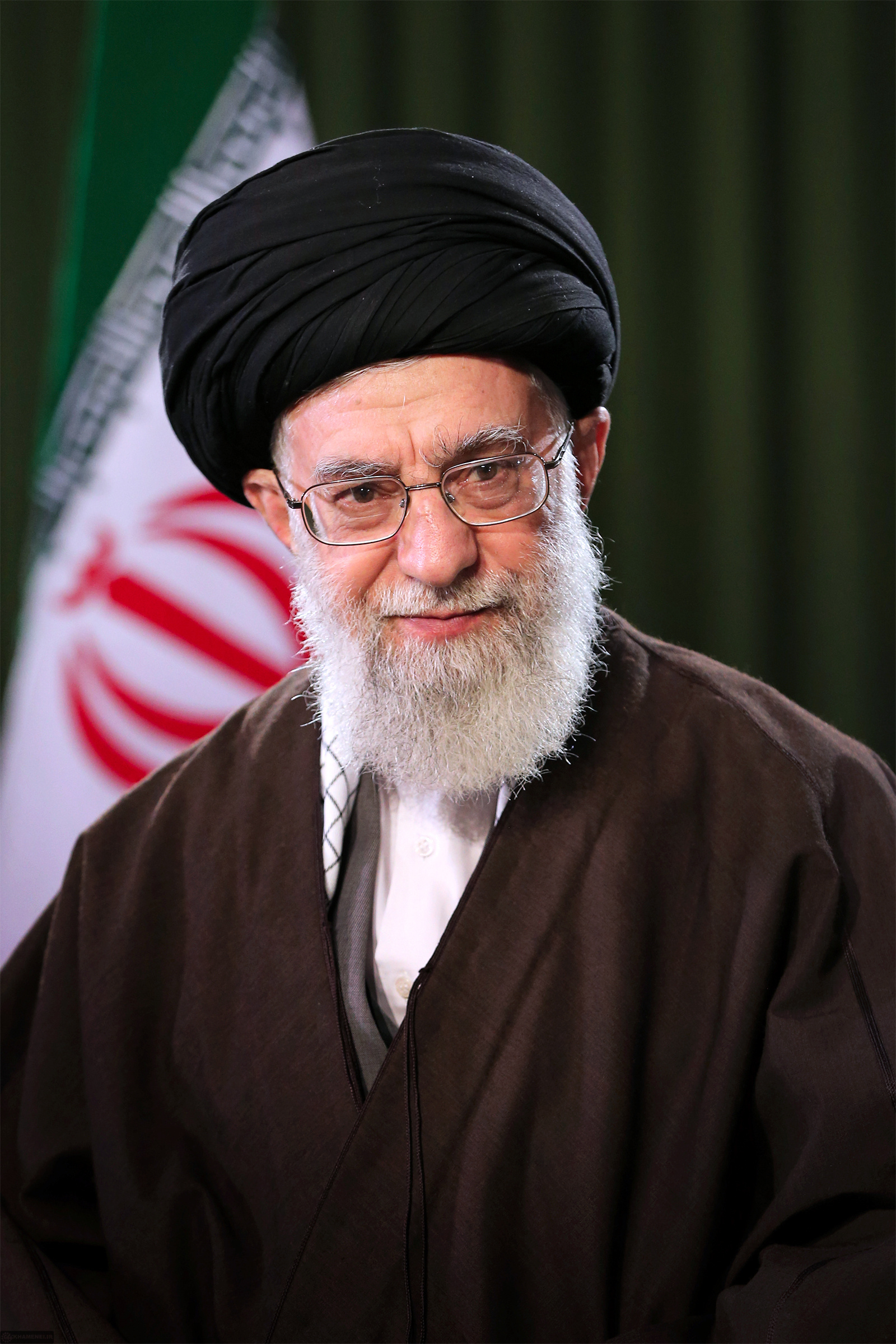

In this expanded analysis, we trace the long arc of American intervention in the Middle East—from the calculated ambitions of the Project for a New American Century to the erratic, improvisational warfare of the Trump era. The assassination of Ayatollah Khamenei marks not a triumph of strategy, but the culmination of a decades-long decline in American statecraft.
The Origins: Project for a New American Century
The road to Tehran was always intended to run through Baghdad. As early as 1998, the neoconservative Project for the New American Century (PNAC) was calling for the invasion of Iraq . Its signatories—Dick Cheney, Donald Rumsfeld, Paul Wolfowitz, and others—envisioned a sweeping reordering of the Middle East that would secure American dominance for generations. Iraq was to be the first domino; Iran, Syria, and North Korea would follow .
Paul Rogers, emeritus professor of Peace Studies at Bradford University, has documented how this thinking permeated Washington in the early 2000s. At a conference shortly after Bush’s 2002 “axis of evil” speech, a member of the Bush transition team patiently explained to European academics that the coming war “wasn’t really about Iraq, it was about Iran” . The logic was simple: occupy Iraq, surround Iran with US bases and allies, and the mullahs would have no choice but to capitulate.
The neoconservatives were not operating in isolation. A 1996 white paper titled “A Clean Break,” prepared for incoming Israeli prime minister Benjamin Netanyahu, had urged the same approach—war on Iraq, reinstalling the Hashemite monarchy, and using it to influence Lebanon’s Shiites toward a more pro-Israeli stance . The alignment between Likudnik ambitions and neoconservative ideology was more than coincidental; it was structural.
The Iraq War: Catastrophic Success
The 2003 invasion achieved regime change in Baghdad but utterly failed to democratise the Middle East. Instead, it sharpened the struggle between Shiites and Sunnis, destabilised the entire region, and created the conditions for the rise of ISIS . The human cost was staggering: at least 186,000 Iraqi civilians killed directly, several times that number injured .
What made the Iraq occupation particularly disastrous was the absence of serious post-war planning. This stood in stark contrast to the occupations that followed World War II. Post-war Japan, rebuilt under MacArthur, benefited from genuine intellectual engagement with questions of social reconstructionReconstruction
Full Description:The period immediately following the Civil War (1865–1877) when the federal government attempted to integrate formerly enslaved people into society. Its premature end and the subsequent rollback of rights necessitated the Civil Rights Movement a century later. Reconstruction saw the passage of the 13th, 14th, and 15th Amendments and the election of Black politicians across the South. However, it ended with the withdrawal of federal troops and the rise of Jim Crow. The Civil Rights Movement is often described as the “Second Reconstruction,” an attempt to finish the work that was abandoned in 1877.
Critical Perspective:Understanding Reconstruction is essential to understanding the Civil Rights Movement. It provides the historical lesson that legal rights are fragile and temporary without federal enforcement. The “failure” of Reconstruction was not due to Black incapacity, but to a lack of national political will to defend Black rights against white violence—a dynamic that activists in the 1960s were determined not to repeat.
Read more. MacArthur—despite his reactionary politics—understood that creating a stable society required workers’ rights, a modern constitution, and the removal of warmongers from power. The result was a broadly pluralistic Japan that remained stable for decades.
Iraq, by contrast, was handed to Republican Party loyalists in their twenties with no relevant experience. The disbandment of the Iraqi army—against explicit US Army advice—turned hundreds of thousands of trained soldiers into armed and embittered opponents of the occupation. When the Iraqi National Museum was looted and its ancient treasures destroyed, Donald Rumsfeld’s response captured the ethos perfectly: “Freedom is messy.”
The neoconservative project was already in trouble by 2006. PNAC itself ceased functioning that year, reduced to “a voice-mail box and a ghostly website” . But the underlying ambition—regime change in Tehran—never died. It simply went underground, awaiting new opportunities.
The Long Shadow: US-Iran Relations 1953–2026
The current crisis cannot be understood without appreciating the depth of US-Iranian antagonism. It stretches back to 1953, when英美情报机构联手推翻了伊朗民族主义首相摩萨台, reinstalling the Shah and securing Western access to Iranian oil . That coup implanted a poison in bilateral relations that has never been fully expunged.
The 1979 revolution transformed Iran from a pro-Western monarchy into an anti-Western theocracyTheocracy Full Description:Theocracy represents the absolute fusion of religious and political hierarchies. In this system, there is no separation between the laws of the state and the laws of God. Civil legal codes are often replaced or heavily informed by scripture, and the administration of the state is carried out by the clergy. Legitimacy is not earned through elections or inheritance, but through the interpretation of divine will. Critical Perspective:Critically, theocracies fundamentally alter the nature of political dissent. By equating the will of the state with the will of God, any opposition to the government is framed not as legitimate political disagreement, but as blasphemy or heresy. This structure places the ruling elite above human accountability, often justifying authoritarian control over the private lives, morality, and bodies of citizens under the guise of spiritual salvation.. The hostage crisis that followed—52 Americans held for 444 days—cemented mutual hostility . The United States responded by designating Iran a state sponsor of terrorism in 1984, imposing ever-tightening sanctions through the 1990s .
The 2015 Joint Comprehensive Plan of Action (JCPOA) represented a rare moment of diplomatic possibility. Iran agreed to strict limits on its nuclear programme in exchange for sanctions relief. But the deal’s fatal flaw, as critics noted, was its silence on human rights. Sanctions relief flowed to regime elites and the Islamic Revolutionary Guard Corps (IRGC), not ordinary Iranians. For Kurds, Baloch, Arabs, and other minority groups, the deal changed nothing—except to strengthen the hand of their oppressors .
When Trump withdrew from the JCPOA in 2018, he argued that it had “failed to protect America’s national security interests” . The withdrawal was followed by a “maximum pressure” campaign of sanctions, the designation of the IRGC as a terrorist organisation in 2019, and the assassination of Qasem Soleimani in 2020 . Each step escalated tensions while producing no strategic gain.
The June 2025 Attacks and Iranian Retaliation
The conflict entered a new phase in June 2025. According to an official Iranian statement delivered at the UN Human Rights Council, on the dawn of June 13, 2025, while Iran was conducting nuclear negotiations “in full good faith,” it became the target of “a blatant aggression by the Zionist occupying regime” . The United States, as a permanent member of the Security CouncilSecurity Council Full Description:The Security Council is the only UN body with the authority to issue binding resolutions and authorize military force. While the General Assembly includes all nations, real power is concentrated here. The council is dominated by the “Permanent Five” (P5), reflecting the military victors of the last major global conflict rather than current geopolitical realities or democratic representation. Critical Perspective:Critics argue the Security Council renders the UN undemocratic by design. It creates a two-tiered system of sovereignty: the Permanent Five are effectively above the law, able to shield themselves and their allies from scrutiny, while the rest of the world is subject to the Council’s enforcement., “not only refused to fulfill its responsibilities for maintaining international peace and security, but also in full cooperation and support for the Zionist aggressor regime attacked four peaceful nuclear facilities in Iran” .
The 12-day war that followed was devastating. According to Iranian officials, approximately 1,100 compatriots were killed, including 102 women (two of them pregnant), 45 children and adolescents (the youngest just two months old), and 14 academic and scientific elites. More than 5,600 civilians were injured. Critical infrastructure—residential areas, hospitals, schools, water and electricity systems—was targeted on a large scale. Nearly 10,000 residential units were destroyed or severely damaged .
Iran retaliated by bombing the Al Udeid air base in Qatar, a major US facility . The cycle of violence was now fully engaged.
The Assassination of Khamenei
On Saturday, March 1, 2026, the United States and Israel carried out coordinated strikes on Iran, hitting more than 30 targets in an operation reportedly resulting in the death of Supreme Leader Ayatollah Ali Khamenei. Washington called it “Operation Epic Fury”; Israel termed it “Lion’s Roar” .
Khamenei had led Iran since 1989, wielding control over the state’s political, military and religious institutions for more than three decades. His death removes the single most important figure in the Islamic RepublicIslamic Republic
Short Description (Excerpt):The unique form of government established after the revolution. It is a hybrid system combining elements of a modern parliamentary democracy (elections, president, parliament) with a theocratic guardianship (Supreme Leader, Guardian Council).
Full Description:The Islamic Republic was the outcome of the referendum in 1979. While it has the trappings of a republic, ultimate power resides with the unelected religious leadership. The constitution explicitly subordinates the will of the people to the principles of Islam as interpreted by the Supreme Leader.
Critical Perspective:This dual structure creates a permanent institutional conflict. The tension between the “republican” mandate (popular sovereignty) and the “Islamic” mandate (divine sovereignty) results in a system where elected officials are often powerless to implement change if it contradicts the interests of the clerical elite. It represents an experiment in “religious democracy” that critics argue is inherently contradictory.
Read more. But what comes next is far from clear.
The strategic logic, if it can be called that, appears to be the same logic that animated the Iraq invasion: kill the leader, and the regime will collapse. It fundamentally misunderstands both the nature of the Islamic Republic and the dynamics of Iranian nationalism. Even Iranians who loathe the regime have historically rallied around figures like Soleimani because they seemed to keep foreign threats at bay . The “maximum pressure” strategy has, if anything, strengthened the IRGC’s grip on the economy while devastating ordinary Iranians’ living standards.
The “Chancer” in Chief
To understand how we arrived at this point, we need to understand the nature of Trump’s decision-making. Comparisons to Hitler are always problematic, but there is a useful parallel in the concept of the “chancer.” Hitler in the 1930s was constantly testing boundaries, seeing what he could get away with, and becoming increasingly convinced that nobody would stop him . After the fall of France in 1940, he threw caution to the wind—taking risk after risk until his luck finally ran out in the Soviet Union.
Trump appears to operate on similar instincts. The success of the Soleimani assassination in 2020—which provoked only limited retaliation—appears to have convinced him that killing Iranian leaders carries no real cost. The assassination of Khamenei was reportedly decided on a whim, based on the assumption that removing the top guy would be enough .
This is not strategy; it is improvisation masquerading as policy. And it ignores the hard realities on the ground. Iran has abundant missiles, cheap drones, and the capacity to shut down the Strait of Hormuz—through which about 20% of global petroleum passes . A 1973-style oil crisis is now a real possibility.
The Nuclear Proliferation Lesson
One of the great ironies of this crisis is what it teaches the rest of the world. The Iran nuclear deal, imperfect as it was, represented a non-proliferation success. Iran was complying with its terms. Trump withdrew anyway, then escalated to assassination, then invaded.
The lesson for any “rogue state” watching is unambiguous: the North Korea model works. The only reliable protection against the United States is a nuclear weapon. International non-proliferation efforts have suffered a catastrophic blow.
As the Global Security Review notes, “If the past is any indication, a nuclear deal without guarantees for the people of Iran will reinforce the status quo: economic benefits funneled to regime elites, intensified repression of national and ethnic minorities, and continued expansion of Iran’s regional influence at the expense of its citizens” . The human rights dimension—consistently sidelined by Western negotiators—is not incidental to the crisis; it is central.
Britain’s Role: The Special Relationship After Suez
And then there is Britain. Since the Suez Crisis of 1956, Britain has not had an independent foreign policy. Harold Macmillan, who became Prime Minister in the wake of Suez, focused his efforts on rebuilding the Anglo-American relationship by supporting US strategic objectives . There was “an element of denial in the whole British government, which for too long maintained the pretence of British leadership and influence in the Commonwealth” .
This denial persists today. Keir Starmer’s government has already agreed that America can use British air bases. Whether the British public has any appetite for being drawn into a war launched on a whim remains to be seen. But the structural reality is clear: Britain will follow the United States, as it has done since 1956.
The scholarly literature on the “special relationship” confirms this pattern. Successive British governments have attempted to perform the same active foreign policy role that Churchill’s government defined in 1945, but the reality has been one of declining status and influence . The current crisis merely makes this visible.
Conclusion: A War Too Far?
Paul Rogers titled his 2006 book A War Too Far: Iraq, Iran and the New American Century . Nearly twenty years later, the question remains: how far is too far?
The neoconservative dream of a reordered Middle East lies in ruins. Iraq is fragile, Syria is devastated, and now Iran is being drawn into a war that nobody planned and nobody can control. The intellectual and strategic capacity that characterised post-war occupations like Japan and Germany has been replaced by improvisation, wishful thinking, and the erratic instincts of a single man.
What happens next is unknowable. What is certain is that ordinary people—Iranians, Iraqis, and potentially many others—will pay the price. A nuclear deal that ignores human rights, as the Global Security Review warns, “will serve as yet another tool for the government to sustain its policies of repression and forced assimilation” . If a new agreement emerges from this crisis, who will it serve? The regime elites who have monopolised sanctions relief in the past? Or the Kurds, Baloch, Arabs, and other minority groups who have borne the brunt of repression?
These are questions that require more than instant analysis. They require the kind of patient, reflective thinking that the internet accelerates past and that this crisis urgently demands.
This is an unfolding situation. Further analysis will follow as events develop. If you’re in the region, stay safe.

Leave a Reply