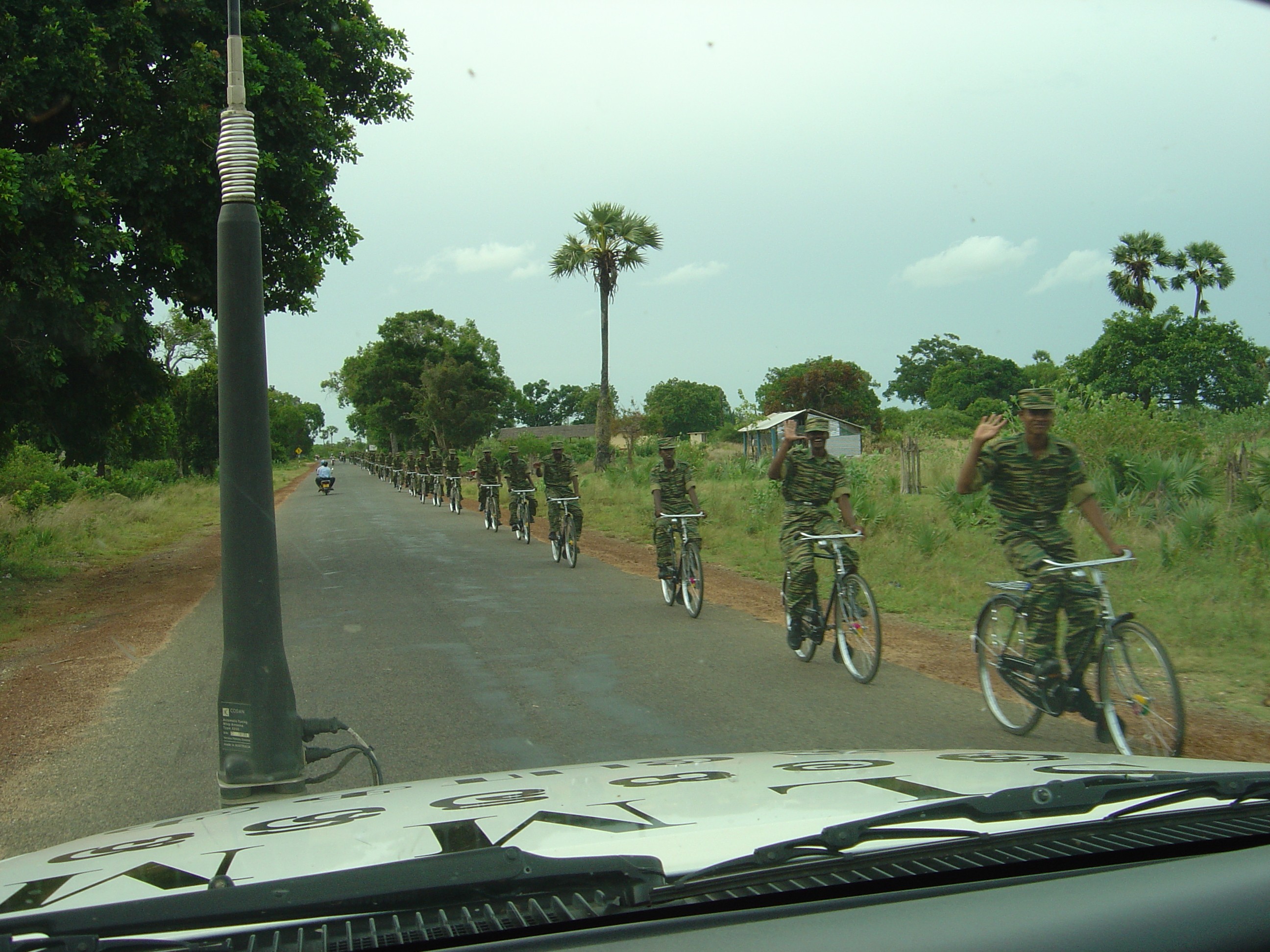

This article examines one of the most distinctive and consequential aspects of the Liberation Tigers of Tamil Eelam (LTTE): its construction and operation of a comprehensive de facto state in the Northern Vanni region of Sri Lanka. Following its expulsion of the Indian Peace Keeping Force (IPKF) and the Sri Lankan military from the area by 1990, the LTTE transformed from a guerrilla insurgency into a territorial entity exercising sovereign-like control over a significant population. This “shadow state,” which functioned until its violent collapse in 2009, was not merely a military holding area but a complex, ambitious experiment in proto-statehood. It was designed to administer civilian life, project the image of a legitimate, functioning Tamil Eelam, and serve as the ultimate strategic asset in the group’s political struggle. This analysis argues that the LTTE’s governance in the Vanni was a profound paradox: a system that provided functional, often efficient administration and social services, while simultaneously enforcing its authority through authoritarian control, forced conscription, and the systematic suppression of dissent. The ultimate failure of this project reveals the inherent contradictions of attempting to build a state through the apparatus of a militarized, totalitarian movement, and its brutal endgame would ensnare the civilian population in a catastrophic humanitarian disaster.
The Genesis of a De Facto State: From Military Control to Civil Administration
The LTTE’s establishment of territorial control in the Vanni—primarily the districts of Kilinochchi and Mullaitivu—was a deliberate strategic evolution. This region, with its historical identity as a forested frontier and buffer zone, became the heartland of the LTTE’s state-building project. By the early 1990s, having secured this territory, the LTTE moved to consolidate its rule not just militarily but civically. The driving imperative was dual: to meet the practical needs of governing a population of several hundred thousand people, and to build an unassailable political claim to legitimacy, both for the local Tamil populace and the international community.
The administrative structure that emerged was centralized and hierarchical, mirroring the LTTE’s military command but extending into all facets of civilian life. Kilinochchi town became the administrative capital, housing the headquarters of the nascent civil service. The LTTE established parallel institutions to those of the Sri Lankan state: a police force, a judiciary, a bank, a transport board, and a network of “secretariats” overseeing health, education, and reconstruction. This was a conscious performance of statehood, designed to demonstrate the LTTE’s capacity not only to wage war but to govern peace. The existence of this functioning administration became a central bargaining chip in peace negotiations, most notably underpinning the LTTE’s detailed Proposal for an Interim Self-Governing Authority (ISGA) in 2003. This document, which demanded “plenary power for the governance of the north-east,” was essentially a blueprint to formalize and expand the de facto sovereignty the LTTE already exercised in the Vanni.
The Machinery of Governance: Institutions of Order and Control
The everyday reality of life in the Vanni was shaped by a suite of LTTE-run institutions that combined public service with pervasive social control.
The Justice System: The LTTE established its own courts and legal code, dealing with civil disputes, criminal cases, and violations of its own decrees. While this provided a mechanism for resolving conflicts in the absence of state institutions, justice was swift and often harsh, with punishments aligned with the movement’s austere disciplinary codes. The system’s primary function was to enforce LTTE authority and maintain social order conducive to its military and political goals.
Revenue and Economic Management: To fund its state and war machine, the LTTE developed a sophisticated domestic revenue apparatus. This included formal taxation on businesses and incomes, “licensing fees” for transport and trade, and the operation of its own “Bank of Tamil Eelam”. It also monopolized key economic activities, such as the distribution of fuel and cement. This financial system was crucial for insulating the Vanni economy from Colombo and creating a self-sustaining wartime fiscal base, complementing the vast diaspora fundraising networks.
Social Services and “Hearts and Minds”: The LTTE invested significantly in social infrastructure, running schools with a curriculum that emphasized Tamil history and nationalist ideals, operating hospitals and clinics, and managing housing and agricultural boards. These services filled a void left by the retreating central government and were powerful tools for legitimizing LTTE rule, presenting the movement as a caring, capable provider. They fostered a degree of normalized daily life and social cohesion under LTTE auspices.
The Security Apparatus: Underpinning all governance was the omnipresent security and intelligence wing. The LTTE regulated all movement into and out of the Vanni through a strict pass system. Its intelligence operatives monitored the population for dissent, loyalty, and potential recruitment. This framework ensured control but also created an atmosphere of surveillance and fear, where the boundaries between civilian life and the militant project were deliberately blurred.
The Civilian Dilemma: Between Patronage and Coercion
The relationship between the Vanni population and the LTTE state was characterized by a profound and tragic ambiguity. For many civilians, the LTTE was simultaneously a protector, a provider, and a prison guard.
On one hand, the administrative structures provided essential order and services in a war zone. For Tamils who had experienced state-sponsored violence and discrimination, the LTTE’s rule could initially feel like a form of community self-determination and security. The proto-state offered a tangible, if imperfect, representation of the Tamil Eelam they were told they were fighting for.
On the other hand, the LTTE’s demands on the population were total and non-negotiable. The most grievous of these was systematic forced recruitment, which intensified as the war entered its final phases. The LTTE conscripted boys and girls, often as young as 14, into its fighting forces and auxiliary units. Families were compelled to provide labor for fortification works. The movement strictly controlled freedom of expression, political activity, and even cultural life, eliminating any space for alternative Tamil voices. As one study of the Vanni population notes, the social fabric was subjected to immense strain, with traditional community relationships and networks often destroyed under the pressures of war and authoritarian control.
Civilians were thus caught in a double bind: dependent on the LTTE system for survival and identity, yet exploited by it as a human resource to be mobilized and consumed in the conflict. This dynamic fatally compromised the authenticity of the LTTE’s claim to purely represent the people’s will.
The 2003 ISGA Proposal: The Shadow State’s Bid for Legitimacy
The apex of the LTTE’s political strategy for its controlled territories was the Interim Self-Governing Authority (ISGA) proposal presented during the Norwegian-brokered ceasefire. This document is the clearest official articulation of how the LTTE sought to translate its de facto control into recognized legal authority.
The proposal was staggering in its scope, demanding for the ISGA:
· Plenary legislative and executive powers over the northeast, including law and order, taxation, and administration.
· Control over land and natural resources, including adjacent seas.
· Power to engage in foreign finance and trade directly.
· An initial governing board where the LTTE would hold an absolute majority of appointees.
· The creation of an independent judiciary and human rights commission.
While framed as an interim arrangement, the ISGA’s provisions would have created a virtually independent state within Sri Lanka. International reaction was cautiously interested but recognized the proposal exceeded previous discussions on federalism. Domestically, it was explosive. The Sri Lankan government rejected it as a move toward secession, while Sinhala nationalist parties denounced it as “de facto Tamil Eelam”. The proposal’s failure, and the political crisis it triggered in Colombo, helped catalyze the resumption of war. It demonstrated that the LTTE’s state-building, rather than creating a bridge to a negotiated solution, had created facts on the ground that the Sri Lankan state found existentially unacceptable.
The Collapse: The Shadow State as a Death Trap
The final, brutal chapter of the Vanni state revealed the ultimate logic of its existence: the civilian population was its core strategic resource and, in the end, its primary victim. During Eelam War IV (2006-2009), as the Sri Lankan military advanced, the LTTE abandoned any pretense of governing for the people’s welfare and treated them as assets of the military struggle.
As territory shrank, the LTTE forcibly retreated with the entire civilian population, preventing them from fleeing to government-controlled areas. This turned the Vanni into a vast human shield. Hundreds of thousands were squeezed into an ever-smaller coastal strip, with the LTTE positioning its fighters and artillery among them—a clear violation of international humanitarian law constituting the use of human shields.
The once-functioning institutions broke down. Hospitals in Puthukkudiyiruppu (PTK) and elsewhere, which had been pillars of LTTE governance, were repeatedly shelled, with both sides accusing the other of violating their protected status. The “safe zone” unilaterally declared by the government became a scene of carnage. In these final months, the shadow state dissolved into a chaotic, apocalyptic landscape where the distinction between combatant and civilian was obliterated by the LTTE’s tactics and the government’s retaliatory bombardment. The governance project ended not with a political settlement but with what survivors described as an indescribable “pralayam” (cataclysm), leaving deep collective trauma.
Conclusion: The Legacy of a Failed Proto-State
The LTTE’s experiment in governance in the Vanni stands as a seminal case study in the ambitions and pathologies of insurgent state-building. It proved that a non-state actor could develop remarkably complex administrative capabilities, sustaining a parallel society for nearly two decades. This achievement provided the LTTE with immense strategic depth, legitimacy, and a powerful narrative of viability.
However, its foundation was fatally flawed. The state was built not on consent and pluralism but on the mono-ethnic, mono-political authority of a militarized cult of personality. Its institutions served the war effort first and the people second. In its final act, this contradiction became mortal: the civilians it claimed to govern and protect were instrumentally used as a strategic buffer, leading to catastrophic loss of life. The Vanni state, therefore, was ultimately less a prototype for a nation and more the ultimate fortification for a faltering army. Its history illustrates the tragic axiom that a state born from and sustained by total war may inevitably be consumed by it, taking its subject population down with it. The ruins of this shadow state—physical, institutional, and psychological—form a central part of the unresolved legacy of Sri Lanka’s civil war.

Leave a Reply