
The protracted nature of the Sri Lankan civil war, spanning 26 years, presents a fundamental logistical question: how did a non-state insurgent group, confined to parts of a small island, sustain a costly modern military campaign against a sovereign state? The answer lies not solely in the jungles of the Vanni, but in the globalized networks of the Tamil diaspora. From Toronto and London to Sydney and Zurich, Tamil expatriate communities became the essential financial and logistical engine of the Liberation Tigers of Tamil Eelam (LTTE). This article examines the complex, multifaceted system of diaspora financing, arguing that it constituted a form of transnational insurgency, where the economic power of a globally dispersed population was systematically harnessed to fund a localized territorial conflict. This system evolved from voluntary donations into a sophisticated, and at times coercive, global enterprise encompassing charitable fronts, commercial ventures, and illicit procurement networks, making the diaspora an indispensable, if often conflicted, pillar of the LTTE’s war machine. The financial lifeline extended by the diaspora was not a peripheral support function but a central strategic component that dictated the war’s duration, scope, and character, ultimately creating both the conditions for the LTTE’s resilience and the contours of its geopolitical isolation.
The Diaspora Foundation: Exodus, Grievance, and Political Consciousness
The Sri Lankan Tamil diaspora, now estimated at nearly one million people, was largely created by the conflict itself. Waves of emigration followed each major outbreak of violence: after the 1958 and 1977 riots, the cataclysmic 1983 pogrom, and subsequent escalations in the 1990s. This migration was selective, consisting disproportionately of the educated, professional, and financially capable middle class. Settled in the West, they achieved significant economic success but remained psychologically and politically tethered to the fate of their homeland. This created a unique demographic: a traumatized, prosperous, and highly motivated population residing in jurisdictions with stable financial systems and liberal norms of association, which the LTTE learned to exploit with remarkable effectiveness.
This diaspora was united by a powerful, three-part motivation that transformed personal success into political capital:
- Shared Grievance and Guilt: Direct experience or familial memory of discrimination, violence, and loss forged a deep-seated sense of injustice. For those who escaped, financial contribution became a way to alleviate a form of survivor’s guilt, a tangible connection to the struggle of relatives and friends left behind. Remittances, initially for family survival, were progressively framed as contributions to collective national survival.
- Nationalist Projection and Identity Preservation: For many, supporting the LTTE—which presented itself through its own media as the sole defender of Tamil rights—became the primary way to maintain a distinct Tamil nationalist identity in foreign lands. In the social spaces of diaspora communities—cultural associations, temple events, private gatherings—support for the “cause” became a key marker of authentic identity. The LTTE skillfully catered to this, providing a clear, action-oriented narrative that gave purpose to diasporic life.
- Coercion and Social Pressure: As the LTTE consolidated control, support was not always purely voluntary. The organization skillfully leveraged intimate social bonds and community reputation. LTTE affiliates in diaspora hubs maintained detailed knowledge of community members’ standing and family connections in Sri Lanka. Refusal to contribute could lead to social ostracization, character assassination, or, most potently, explicit threats to the safety and property of relatives in LTTE-controlled areas. This created a powerful enforcement mechanism that operated through fear and obligation, ensuring a high degree of compliance.
This combination of genuine solidarity, aspirational nationalism, and imposed obligation created a vast, receptive base for the LTTE’s fundraising apparatus. The diaspora’s economic success provided the capital; its psychological state provided the motivation; and its social networks provided the transmission belts. This transformed individual remittances into collective war finance, creating a revenue stream that was both geographically dispersed and politically potent.
The Formal Architecture: Front Organizations and “Charitable” Fundraising
The LTTE’s international strategy relied on constructing a formidable façade of legitimacy to operate openly in Western democracies. This was achieved primarily through a globally coordinated network of humanitarian and cultural front organizations, which served as the public face and primary fundraising vehicle of the transnational insurgency. The most prominent and sophisticated of these was the Tamil Rehabilitation Organization (TRO). Registered as a charitable non-governmental organization in dozens of countries, including the United States, United Kingdom, Canada, Australia, and across continental Europe, the TRO presented a public mission of aiding war-affected and displaced Tamils in Sri Lanka. It employed professional staff, published annual reports, partnered with international NGOs on specific projects, and expertly navigated the discourse of humanitarianism.
Its function, however, was fundamentally dual-purpose and integral to the LTTE’s state-building project:
· Fundraising, Legitimacy, and Mobilization: The TRO and similar fronts organized high-profile cultural events, charity dinners, walkathons, and public rallies. These events were masterclasses in community mobilization, attracting thousands and generating substantial donations. They served a triple function: raising funds, reinforcing nationalist solidarity through speeches and cultural performances laden with LTTE iconography (the image of Prabhakaran, the tiger flag), and signaling the strength and organization of the diaspora to host countries and the Sri Lankan state. Donors received receipts for tax deductions, embedding the process within the legitimate financial systems of their adopted countries.
· Financial Channeling and Resource Diversion: A significant, if deliberately obscured, portion of the funds raised was systematically siphoned to LTTE coffers. Investigations by national intelligence agencies and judicial proceedings, such as a seminal 2006 Canadian Federal Court case, detailed how the TRO’s operations in Sri Lanka and internationally were directly controlled by the LTTE’s financial hierarchy. Funds designated for “rehabilitation” or “development” were routinely diverted to purchase military hardware, pay cadre salaries, and finance the LTTE’s civil administration. The TRO’s infrastructure—offices, vehicles, and personnel—often doubled as logistics nodes for the broader insurgent apparatus. Other key fronts included the World Tamil Movement (WTM) in Canada, which was eventually dismantled by authorities after being proven a primary fundraising arm, and the Tamil Coordinating Committee (TCC) in the UK.
Alongside charities, the LTTE developed a network of diaspora-based commercial ventures. These included restaurants, grocery stores and import-export firms specializing in South Asian goods, wire services, travel agencies, and even pawnshops. These businesses served multiple roles: they provided legitimate employment for diaspora members and LTTE operatives; generated a steady stream of revenue through a form of informal taxation or obligatory “profit-sharing”; and offered a ready-made infrastructure for money laundering and the movement of personnel. A travel agency, for instance, could book flights for cadre movement or for families visiting LTTE-controlled areas, while also commingling illicit funds with legitimate ticket sales.
The Informal System: Taxation, Extortion, and Global Logistics
Beneath the layer of formal fronts operated a more coercive and clandestine financial infrastructure, essential for moving large sums and procuring illicit goods. The most pervasive mechanism was the informal “tax” or “voluntary contribution” system, a parallel fiscal regime imposed on the diaspora community. LTTE representatives or affiliated “collectors” in major diaspora hubs would approach families and businesses, requesting annual contributions often calculated as a percentage of income or as a fixed sum. These were not mere requests; they were presented as a national duty. Payment ensured social standing and protection; refusal triggered consequences. The system was hierarchical, with local collectors reporting to regional coordinators who in turn linked to the LTTE’s international secretariat, ensuring efficiency and accountability within the illicit network.
The consolidation and transnational movement of these funds relied on hawala or undiyal networks—informal value transfer systems based on trust, familial connections, and ethnic bonds. A donor in London would give cash to a hawala broker. That broker would contact a counterpart in Colombo or Chennai via phone or fax, using a code to authorize the release of an equivalent sum in local currency to an LTTE agent, minus a small commission. No physical currency crossed borders, and records were minimal or non-existent. This system, centuries old, was perfectly suited to circumventing financial regulations, anti-money laundering controls, and the scrutiny of intelligence agencies. For larger sums destined for major arms purchases, more sophisticated methods were employed: smuggling bulk cash via couriers on commercial flights; using trade-based money laundering by over- or under-invoicing shipments of textiles, electronics, or agricultural commodities; or establishing complex webs of shell companies in offshore jurisdictions to obscure the true beneficial owners.
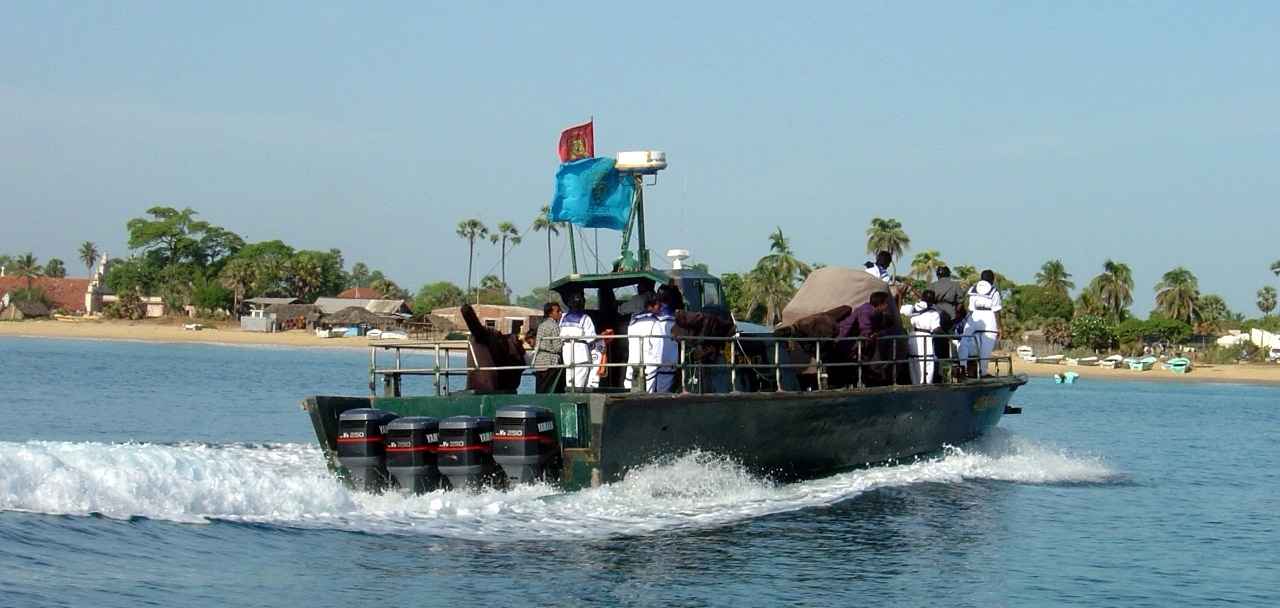
The ultimate test and purpose of this financial network was international procurement. The diaspora’s global footprint was crucial here, providing the nodes for a sophisticated procurement apparatus. Cells in Europe, particularly in Scandinavia, the UK, and Eastern Europe, were tasked with acquiring dual-use technologies: marine navigation equipment, submarine design software, radar and communications jammers, night-vision optics, and precision components for manufacturing weapons. Agents in Southeast Asia and parts of Africa focused on brokering deals for conventional arms, often from black markets or via corrupt officials. The now-famous LTTE merchant fleet—a collection of aging cargo ships like the MV Sunbird or MV Koinya—was acquired, registered under flags of convenience (Cambodia, Honduras), and crewed through these international networks. This “Sea Pigeon” fleet, financed by diaspora funds, enabled the long-distance transport of hundreds of tons of arms, artillery, and ZPU-4 anti-aircraft guns from Southeast Asia to the shores of the Wanni, representing the logistical pinnacle of the diaspora-funded war machine.
International Counter-Measures and Their Asymmetric Effectiveness
By the late 1990s and early 2000s, Western governments, slowly recognizing the scale of the LTTE’s transnational operations, began to implement a series of legal and financial counter-measures. These actions, while significant, revealed the challenges of combating a financially fluid non-state actor embedded within a sympathetic civilian diaspora.
Key state actions followed a recognizable pattern:
· Formal Proscription: The legal designation of the LTTE as a Foreign Terrorist Organization (FTO) or equivalent entity, as done by the USA (1997), the UK (2000), India (1992), and Canada (2006), was the foundational step. It criminalized the provision of material support, including funds, and provided the legal basis for asset freezes and prosecutions.
· Charity Disruptions and Asset Freezes: Targeted strikes against front organizations followed. The US Treasury Department designated the TRO under Executive Order 13224 in 2007, freezing its assets. The UK Charity Commission investigated and shut down LTTE-linked charities. In Canada, the Royal Canadian Mounted Police’s (RCMP) “Project OSALUKI” culminated in the 2008 seizure of $3 million from a network of individuals and front companies.
· Hawala Prosecutions and Law Enforcement: Authorities pursued criminal cases against individual financiers and hawala operators. These were complex, resource-intensive investigations that aimed to dismantle specific nodes of the network and deter others.
However, the effectiveness of these measures was asymmetric and often delayed. Proscription, while powerful symbolically, often simply drove fundraising further underground, from public rallies to private home collections. The social and trust-based hawala system proved inherently resilient to traditional law enforcement. Most critically, government actions consistently lagged behind political and community realities. In democracies with sizeable and organized Tamil diaspora populations—notably Canada, the UK, and parts of Europe—elected officials were often hesitant for years to take robust action against groups that appeared as legitimate cultural or humanitarian associations to a key constituency. The LTTE expertly exploited this space, framing any governmental pushback as an attack on the Tamil community’s right to charity and political expression. This created a fragmented and slow international response, allowing the LTTE’s financial network to adapt, mutate, and survive for over a decade after its initial designations as a terrorist group.
The Dual Legacy: Indispensable Lifeline and Strategic Liability
The role of the diaspora left a complex, enduring legacy with two faces. Financially and logistically, it was the indispensable condition for the LTTE’s longevity and military parity. It funded the entire ecosystem of the proto-state: from infantry salaries, artillery shells, and suicide bomber vests to the salaries of judges in its courts, textbooks in its schools, and the diesel for its generators. Without this constant infusion of foreign capital, the LTTE’s campaign would have collapsed into a localized, low-level insurgency years earlier.
Politically and strategically, however, this same dependency became a profound liability. The diaspora, insulated from the daily realities of war in the Vanni, often subscribed to a purified, ideological version of the struggle. Their financial contributions, filtered through a leadership that brooked no dissent, meant the LTTE high command felt little direct pressure from its primary benefactors to moderate its maximalist stance or its brutal tactics. The diaspora-funded media echoed leadership propaganda without critique. This created a dangerous feedback loop of radicalization at a distance. Furthermore, the very activities that sustained the war—front charities, covert procurement, hawala transfers—inevitably drew the focused attention of powerful international intelligence and financial regulatory agencies. Over time, this attention resulted in the LTTE’s deepening geopolitical isolation, cementing its status as a terrorist entity and eroding the political space for its cause.
In the post-2009 era, the diaspora remains a powerful political, social, and financial force, but its channels have transformed. Resources are now directed into global memorialization projects (Maveerar Naal observances), sustained political advocacy for international accountability for war crimes, and humanitarian support for Tamils in Sri Lanka. Its history as the LTTE’s indispensable lifeline remains a point of intense introspection and controversy—viewed by some as a necessary act of national solidarity in the face of genocide, and by others as a culpable enablement of a terrorist organization that prolonged a devastating conflict. It stands, therefore, as a definitive case study in the modern era of conflict: a demonstration of how nationalist struggles are no longer bounded by territory but are sustained by the invisible, potent, and morally ambiguous circuits of global capital, diasporic identity, and long-distance politics.

Leave a Reply