
In the center of Beijing, overlooking the vast expanse of Tiananmen Square, hangs a portrait of Mao Zedong. It is 4.5 by 6 meters, weighs 1.5 tons, and is replaced every year before National Day. Rumors persist that the portrait shrinks slightly with each iteration—a subtle, almost magical shrinking of the Great Helmsman’s influence. But as Tania Branigan notes in her book Red Memory, the image remains colossal, its gaze inescapable.
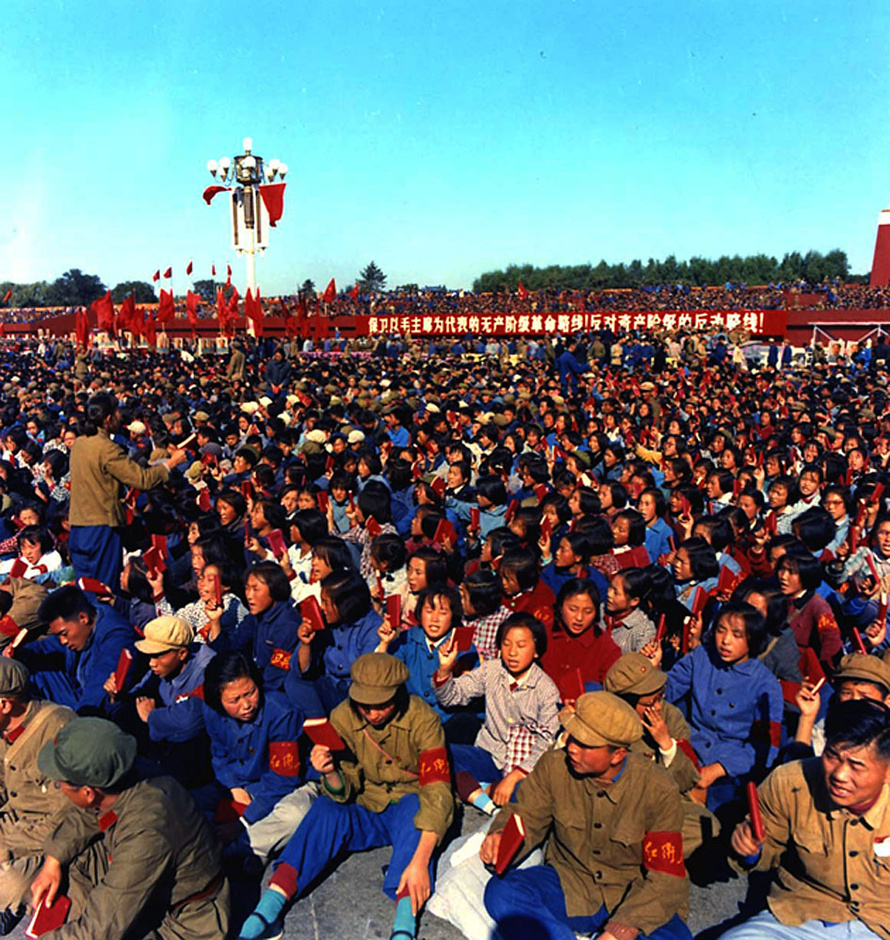
In this week’s podcast, I explored the politics of memory in modern China. Tiananmen Square is not just a physical space; it is a palimpsest of Chinese history. It was the site of the 1919 student protests against the Treaty of Versailles, the place where Mao declared the founding of the People’s Republic in 1949, and the stage for the Red Guard rallies of the Cultural Revolution. And, of course, it is the site of the 1989 massacre—an event that has been meticulously scrubbed from the official record.
The Century of Humiliation
To understand the legitimacy of the Chinese Communist Party (CCP), one must understand the narrative of the “Century of Humiliation” (1842-1949). The Party presents itself not just as a governing body, but as the saviour of the nation—the force that ended the domination of foreign powers and restored China’s dignity.
This narrative is reinforced through “Red Tourism.” Sites like Mao’s birthplace in Shaoshan or the revolutionary base at Yan’an have been turned into pilgrimage destinations, blending historical drama with commercial kitsch. As Branigan writes, business marches in step with the Party. These sites encourage citizens to “recall past bitterness” (pre-1949 misery) to appreciate “present happiness.”
However, this narrative requires selective amnesia. The “bitterness” must always be located before 1949. The Great Leap Forward, which caused a famine killing tens of millions, and the chaos of the Cultural Revolution are glossed over or ignored entirely. In the National Museum, the Cultural Revolution—a decade of trauma—is relegated to a dingy corner, while mobile phones and space capsules take center stage as proof of “socialism with Chinese characteristics.”
The Memory of Silence
Forgetting is a powerful tool of statecraft. In the West, we often assume that historical truth will eventually out, but as we see in post-war Germany or even modern Britain, societies often collude in their own amnesia. In China, this silence is enforced by the state but also adopted by families as a survival mechanism.
Under Xi Jinping, himself a “princeling” born of the revolution, the narrative has tightened. The “Chinese Dream” links the revolutionary past directly to a prosperous, powerful future, bypassing the messy, bloody middle. The Party’s legitimacy now rests on delivering economic growth and nationalism. As long as the economy grows, the silence holds. But as growth slows, the reliance on nationalism—and the memory of overcoming foreign aggression—becomes ever more critical.
Mao’s portrait remains because to remove it would be to pull the thread that unravels the entire tapestry. He may have been “70% right and 30% wrong” according to official doctrine, but he is the anchor. Without him, the Party has no history, and without history, it has no mandate.
Part 3: Tidied Transcript
Nick: Welcome again to the Explaining History podcast.
If I sound a bit odd today, I’ve had a tooth pulled out this morning. So bear with me!
Before we get into anything, a quick reminder: the Russian History Masterclass for students is happening on January 26th at 3pm UK time. This isn’t just about memorizing facts; it’s about structuring arguments, understanding historiography, and getting the top marks. There are only 100 tickets, so grab yours via the link in the show notes.
Also, if you want to listen ad-free, join our Patreon. I’m uploading all new episodes there without ads, plus some exclusive video content.
Today, I want to talk about memory—specifically, official forgetting in China. I’m looking at Tania Branigan’s excellent book Red Memory. In the third chapter, she discusses Tiananmen Square and its resonance beyond the 1989 massacre.
Branigan writes:
“Across the way hangs a portrait of Mao… He gazes over the soldiers and selfie-taking tourists… Most assume that the picture will hang there as long as the party hangs onto power… Though a friend once claimed to me that it shrank by an inch every year… It seemed more than unlikely.”
Tiananmen Square has three key dates, each roughly 40 years apart: 1919, 1949, and 1989.
For Chinese people, the square represents the May Fourth Movement of 1919, where students protested the betrayal of China at the Treaty of Versailles. This nationalist anger against foreign imperialism is partly why communism took root.
Then there is 1949, when Mao proclaimed the founding of the People’s Republic, declaring that the “Century of Humiliation” (starting with the Opium Wars) was over. The square was quadrupled in size to become a public theatre of power.
And then, 1989. For foreigners, this is the defining event—the bloody crackdown on pro-democracy protesters. This destroyed the Party’s claim to serve the people. Its rule now rests on economic well-being and the restoration of national pride.
Since 1989, the Party has redoubled its commitment to “patriotic education.” It has rewritten textbooks and opened “Red Tourism” sites like Mao’s birthplace. Citizens are encouraged to “recall past bitterness” (pre-1949 misery) to cherish present happiness.
Branigan notes a telling detail from the National Museum. A glass case holds notes from Liu Shaoqi investigating the Great Famine of roughly 1960. The famine killed between 30 and 70 million people—the greatest human catastrophe of the 20th century. Yet, the museum captions it vaguely as “difficulties,” without explaining the cause. Liu’s investigation helped end the famine but led to his own death during the Cultural Revolution—a second catastrophe that the museum relegates to a dingy corner.
Forgetting is not unique to China. Post-war West Germany had a similar “don’t ask, don’t tell” attitude about the war years. States shape public memory to maintain moral authority. In China, the Party cannot fully acknowledge the disasters of Maoism because Mao is the foundation of their legitimacy. He is seen as “70% right, 30% wrong,” but the specifics of the “wrong” remain blurry.
Xi Jinping, a “princeling” of the revolution, has embraced this heritage. His “Chinese Dream” links the revolutionary struggle directly to modern prosperity—mobile phones and space capsules are presented as the rewards of “socialism with Chinese characteristics.”
In democratic countries, we see similar battles over memory. In the US and UK, there is a push for “patriotic” narratives in education, trying to inculcate national pride in increasingly diverse societies.
I hope you found that useful. Don’t forget to check out the Patreon and the Masterclass tickets.
Take care, everybody. All the best. Bye-bye.

Leave a Reply