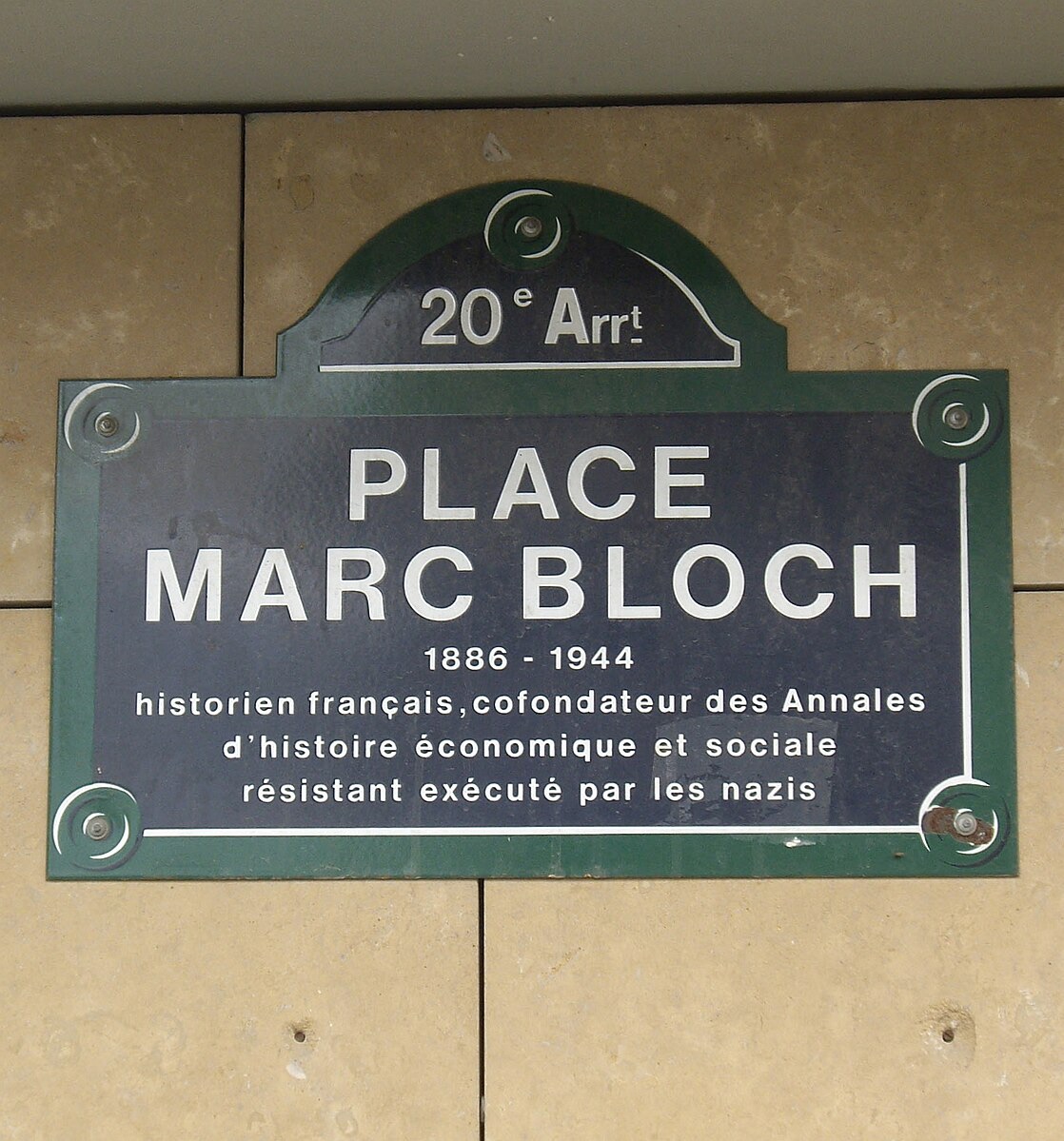

Introduction: The Historian in the Rubble
In the summer of 1940, amidst the debris of a shattered army and a disintegrating nation, a 53-year-old staff officer sat in a garden in the French countryside to write a testament. He was not a career soldier, but a professor of medieval economic history at the Sorbonne. His name was Marc Bloch. The manuscript he produced, L’Étrange Défaite (Strange Defeat), was not published until 1946, two years after he was tortured and executed by the Gestapo for his role in the French Resistance.
Bloch’s text remains arguably the most penetrating analysis of the Fall of France ever written. Unlike the memoirs of generals like Gamelin or politicians like Reynaud, which sought to deflect blame, Bloch’s work was a ruthless forensic examination of his own society. He treated the events of 1940 not as a series of tactical errors, but as the culmination of a long-term sociological and intellectual crisis.
To Bloch, and to the historians who have engaged with his work since, the military defeat was merely the final symptom of a deeper malady afflicting the Third Republic. This article explores the internal political and social rot of 1930s France—the “decadence thesis”—through the lens of Bloch’s critique. It examines a nation paralyzed by a cold civil war between Left and Right, a bourgeoisie that had lost its patriotic compass, and a gerontocratic elite that had intellectually ceased to function. It asks the fundamental question: Did France fall because of the Panzers, or did the Republic commit suicide before the first shot was fired?
The Witness: The Historian as Accuser
To understand the weight of the critique, one must understand the critic. Marc Bloch was a co-founder of the Annalesschool of history, which revolutionized the discipline by moving away from “great man” narratives to analyze long-term social, economic, and geographic structures (la longue durée). In 1939, despite his age and his status as a father of six, he volunteered for service, becoming a captain in the fuel supply logistics service of the First Army.
This vantage point offered Bloch a terrifyingly clear view of the systemic failure. He did not see the battle from the map room of the Supreme Command, nor from the foxhole of the infantryman. He saw it from the connective tissue of the army—the logistical arteries where the chaos was most visible. He witnessed the breakdown of communications, the lethargy of the bureaucracy, and the disconnect between orders and reality.
Bloch’s central thesis was that the defeat was an intellectual failure. “We have been defeated,” he wrote, “by an intellectual laziness.” However, he extended this charge beyond the military staff to the civilian elites. He argued that the Third Republic had become a regime of “old men”—not just in age, but in mindset. The victory of 1918 had calcified into a rigid dogma that stifled innovation. But more damningly, he identified a fracture in the national community so severe that it rendered a unified defense impossible.
The “Cold Civil War”: The Polarization of the 1930s
The Third Republic (1870–1940) was historically the most stable of France’s post-revolutionary regimes, yet by the 1930s, it was plagued by chronic ministerial instability. Between 1932 and 1940, France saw nineteen different cabinets. This revolving door of leadership meant that consistent long-term planning, particularly in rearmament and foreign policy, was structurally difficult.
However, the instability was not merely procedural; it was ideological. The Great Depression arrived late in France (around 1931), but it lingered longer than elsewhere, exacerbating social tensions. The rise of fascism in Italy and Germany polarized the French domestic landscape. On the extreme Right, leagues like the Croix-de-Feu and Action Française agitated against the parliamentary system, which they viewed as corrupt and weak. On the Left, the Communist Party (PCF) followed Moscow’s directives, initially treating the moderate socialists as enemies before pivoting to the “United Front” strategy.
The tension exploded on February 6, 1934, when right-wing riots in Paris nearly stormed the Chamber of Deputies. The police fired on the crowd, leaving 15 dead. To the Left, this was an attempted fascist coup; to the Right, the government’s response was a massacre. This event traumatized the political class and set the stage for the definitive rupture: the victory of the Popular Front in 1936.
“Better Hitler than Blum”: The Class Fracture
The 1936 election brought a coalition of Socialists, Radicals, and Communists to power under Léon Blum, France’s first Jewish Prime Minister. The Popular Front was hailed by the working class as a new dawn, sparking a massive wave of spontaneous strikes and factory occupations (the “Joyous Strikes”).
For the French bourgeoisie and the traditional Right, however, 1936 was the beginning of the apocalypse. They viewed the factory occupations not as a labor dispute, but as the prelude to a Bolshevik revolution. The panic was visceral. Capital flight accelerated as the wealthy moved their assets to Switzerland or London.
It was in this toxic atmosphere that the infamous slogan “Better Hitler than Blum” (Plutôt Hitler que Blum) began to circulate. While actual pro-German collaborationism was a fringe position in 1936, the sentiment behind the slogan was widespread among the conservative elites. They increasingly viewed the domestic enemy (the Communists and the Socialist government) as a greater threat to their property and social status than the foreign enemy (Germany).
Marc Bloch, himself a moderate Jew and a patriot, was scathing in his assessment of his own class (the bourgeoisie) during this period. He accused them of prioritizing their class interests over the national interest. He noted that during the drôle de guerre (Phoney War), many officers and industrialists seemed more concerned with maintaining social discipline than preparing for combat. The defeat of 1940, in the eyes of some reactionaries, came to be seen as a “divine surprise” (in the words of Charles Maurras)—a harsh but necessary purgative that would crush the Republic and the labor unions, allowing for a conservative restoration.
The “Spirit of Enjoyment”: The Myth of the 40-Hour Week
Following the Armistice in June 1940, Marshal Pétain addressed the nation to explain the defeat. He placed the blame squarely on the moral failings of the Republic. “The spirit of enjoyment,” he declared, “has prevailed over the spirit of sacrifice.”
This was a direct attack on the Popular Front’s social reforms, specifically the introduction of the 40-hour workweek and two weeks of paid vacation (congés payés). The Vichy narrative was simple: while Germans were working 60 hours a week forging Panzers, French workers were sipping wine on the beach in tandem bicycles.
Bloch dismantled this myth even as it was being constructed. While he acknowledged that the implementation of the 40-hour week in the aviation industry had been chaotic and had hampered production rates initially, he argued that the industrial failure was primarily one of organization, not laziness. The French worker, Bloch argued, was willing to work, but the industrial mobilization was overseen by a bureaucracy that lacked urgency.
Furthermore, Bloch pointed out the hypocrisy of the elites. The “spirit of enjoyment” was not limited to the working class. The bourgeoisie, too, had retreated into a life of comfort, intellectual lethargy, and risk aversion. The High Command itself operated on “peacetime hours” during the Phoney War, with offices closing for lunch and generals returning to comfortable villas at night. The lethargy was systemic. Pétain’s moralization was a convenient political lie designed to shift the blame from the incompetence of the General Staff and the defeatism of the politicians onto the shoulders of the working class and the schoolteachers.
The Sclerosis of the Military Intellect
Bloch’s professional critique as a historian was most lethal when applied to the military institution. He described the French High Command as a “bureaucracy” in the Weberian sense, but one that had become pathological.
He identified a rupture between the “School” (theory) and the “Field” (practice). The generals of 1940 had been the brilliant young staff officers of 1918. They had codified the lessons of that victory into rigid doctrines (Methodical Battle) and taught them as scientific truths at the École Supérieure de Guerre. They believed they had “solved” the problem of war.
This intellectual arrogance led to a refusal to process new information. When intelligence reports arrived indicating German concentrations in the Ardennes, they were dismissed not because they were unreliable, but because they did not fit the pre-existing theoretical model which stated the Ardennes was impassable for tanks. Bloch termed this a “crisis of the imagination.” The French commanders were not stupid; they were highly intelligent men who had stopped thinking. They were managing a war, not fighting it.
Bloch contrasted this with the German approach, which he saw as dynamic, empirical, and willing to take risks. The German officer corps, despite serving a barbaric regime, had maintained an intellectual flexibility that the French Republic, ostensibly a free society, had lost.
The Educational Failure: A Nation Unprepared
Bloch also scrutinized the French educational system, specifically the universities and the grandes écoles. He argued that the French system produced elites who were excellent at abstract manipulation of ideas and rhetoric but woefully deficient in “character” and adaptability.
The selection process for the French elite—based on rigid competitive exams (concours)—favored conformity over creativity. The men leading the army and the civil service in 1940 had all passed the same exams, studied the same texts, and internalized the same worldview. There was no cognitive diversity.
Moreover, Bloch criticized the lack of a broad “civic education.” The teaching corps (the instituteurs), largely pacifist and left-leaning, had taught a hatred of war, which was morally commendable but strategically disastrous. Meanwhile, the elite education had failed to instill a sense of shared destiny with the common people. The result was a nation where the leaders did not trust the led, and the led did not respect the leaders. When the crisis struck, the social contract evaporated because it had not been reinforced by a robust civic culture during the interwar years.
The Betrayal of the Information
One of the most chilling aspects of Bloch’s account is his description of the information environment. He details how the High Command systematically lied to the government and the public. During the breakthrough at Sedan, officials issued communiqués speaking of “elastic retreats” and “rectifications of the line” while the front was actually collapsing.
This culture of secrecy and euphemism prevented the mobilization of national will. In 1914, the government had eventually been honest about the desperate situation, rallying the nation. In 1940, the public was kept in a twilight of ignorance until the Wehrmacht was almost in Paris.
Bloch argued that this was not just operational security; it was a symptom of the elite’s contempt for the public. They believed the masses would panic if told the truth. Instead, the lack of truth fueled rumor and panic (the Exode). A democracy, Bloch argued, requires an informed citizenry to function, especially in war. The Third Republic treated its citizens like children, and in doing so, ensured they could not act like soldiers.
Conclusion: The Failure of the Citizen
Marc Bloch ended his manuscript with a reflection on his own responsibility. He did not exempt himself or his generation of intellectuals from the verdict. He admitted that they had preferred the quiet of their libraries to the noise of the political arena. They had allowed the fanatics of the Right and the dogmatists of the Left to dominate the public square.
The “Strange Defeat,” in Bloch’s final analysis, was a failure of citizenship. The Third Republic fell because it had ceased to be a shared project worth dying for. The Right preferred order to liberty; the Left preferred pacifism to security; and the Center preferred comfort to sacrifice.
Was France “decadent”? Not in the way Vichy claimed—not because of short skirts, jazz music, or paid holidays. It was decadent in a political sense: its institutions could no longer process reality or generate effective action. The regime died of a “hardening of the arteries.”
When the Armistice was signed, it confirmed Bloch’s darkest fears. The Republic did not go down fighting; it dissolved. The National Assembly voted full powers to Pétain, effectively voting itself out of existence. This suicide was the final proof that the rot Bloch observed in the logistics depots of the First Army extended to the very heart of the French state. The Germans defeated the French Army, but the Third Republic defeated itself.
Historiographical Note
The historiography of the domestic crisis of the Third Republic has shifted dramatically over the decades.
1. The Vichy Orthodoxy (1940–1944):
The initial narrative was controlled by the Vichy regime, which promoted the idea that the “Anti-France” (Jews, Freemasons, Communists) and the Popular Front were solely responsible for the defeat. This was a political narrative designed to legitimize the National Revolution.
2. The Post-War Defense (1945–1970s):
After the Liberation, the narrative swung the other way. The Gaullists and Communists, seeking to rebuild national unity, downplayed the internal divisions and focused on the “betrayal” by a few elites (Pétain, Laval) or the lack of Allied support. The structural rot was minimized to preserve the honor of the nation.
3. The Return of “Decadence” (Jean-Baptiste Duroselle):
In 1979, Duroselle published La Décadence. While a rigorous academic work, it revived the term “decadence” to describe a regime that had lost its vitality and ability to make decisions. He focused on the mediocrity of the political class and the paralysis of the institutions.
4. The Revisionist Turn (Philip Nord, Robert Young):
More recent scholarship, particularly Philip Nord’s France 1940: Defending the Republic (2015), challenges the Bloch/Duroselle thesis. Nord argues that the Third Republic was not moribund; it was actually reforming, rearming, and cracking down on the extremes in the late 1930s. He argues that the defeat was contingent—a result of specific military gambling—and that historians have been too eager to read the military result back into the political history. He suggests that if the Dyle Plan had worked, we would today be praising the resilience of the Third Republic.
5. The Cultural Turn (Julian Jackson):
Julian Jackson takes a middle ground, acknowledging the political toxicity but refusing to see it as deterministic. He emphasizes that while the political divisions were real, they did not necessarily preclude a military defense, pointing out that deeply divided societies (like the USSR) managed to fight effectively.
Further Reading
- Bloch, Marc. Strange Defeat (W.W. Norton, 1968).
- The primary text for this article. It is essential reading not just for history, but for the sociology of organizations and the study of leadership failure.
- Weber, Eugen. The Hollow Years: France in the 1930s (W.W. Norton, 1994).
- A brilliant cultural history that captures the mood of the decade—the anxiety, the xenophobia, and the sense of impending doom. Weber argues that France entered the war with a “bad conscience.”
- Nord, Philip. France 1940: Defending the Republic (Yale University Press, 2015).
- The key revisionist text. Nord argues that the “decadence” narrative is a construct and that the Republic was far more robust than usually given credit for.
- Irvine, William D. French Conservatism in Crisis: The Republican Federation of France in the 1930s (LSU Press, 1979).
- Explores the radicalization of the French Right, documenting the shift from parliamentary conservatism to authoritarian temptation and the “Better Hitler than Blum” mentality.
- Sirinelli, Jean-François. The Children of the Miracle (Duke University Press, Eng. Trans.).
- (Alternatively, works by Sirinelli on the intellectual history of the interwar period). Focuses on the role of intellectuals and the cultural divides.

Leave a Reply