
Introduction: The Geometry of a Wartime Alliance
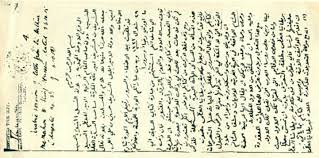
In July 1915, a courier traveling from Mecca arrived at the British residency in Cairo carrying a letter addressed to the High Commissioner, Sir Henry McMahon. The letter was signed by Hussein bin Ali, the Sharif of Mecca and the Emir of the Hejaz. It contained a proposal that would fundamentally alter the British strategy in the Middle East: an offer to launch an armed uprising against the Ottoman Empire in exchange for British recognition of an independent Arab state.
Over the next eight months, a series of ten letters were exchanged between McMahon and Hussein. This correspondence, conducted in secret and often relying on ambiguous translations, constitutes one of the most significant and debated episodes in diplomatic history. It formed the political basis for the Arab Revolt of 1916, immortalized in the Western imagination by the exploits of T.E. Lawrence. However, the subsequent unraveling of the commitments made in these letters—specifically regarding the territorial boundaries of the proposed Arab kingdom—sowed the seeds of a century of conflict in the Middle East.
The McMahon-Hussein Correspondence cannot be understood in isolation. It was one strand of a tripartite British diplomatic offensive that also included the negotiations with France (leading to the Sykes-Picot Agreement) and the overtures to the Zionist movement (leading to the Balfour Declaration). The tragedy of the post-war settlement lies in the fact that these three strands were mutually incompatible. This article analyzes the strategic context of the correspondence, the specific textual ambiguities regarding Palestine and Syria, and the collision between British imperial necessity and Arab nationalist aspiration.
The Strategic Imperative: The Ottoman Jihad and the Search for a Counter-Caliph
To understand why the British government was willing to entertain the ambitious territorial demands of a Bedouin ruler in the Hejaz, one must appreciate the precarious position of the British Empire in 1915.
The entry of the Ottoman Empire into the First World War in November 1914 posed a unique threat to Britain. Unlike Germany or Austria-Hungary, the Ottoman Sultan possessed the title of Caliph—the spiritual leader of the global Sunni Muslim community. When Sultan Mehmed V declared a Jihad (holy war) against the Entente powers, British planners feared it would trigger uprisings among the millions of Muslim subjects in British India, Egypt, and the Sudan.
Lord Kitchener, the Secretary of State for War, and his subordinates in Cairo (notably Ronald Storrs and Gilbert Clayton) devised a strategy to neutralize this ideological weapon. They sought to fracture the Islamic world by supporting a rival claimant to religious authority. Hussein bin Ali was the ideal candidate. As the Sharif of Mecca, he was the custodian of the Holy Cities. As a Hashemite, he traced his lineage directly to the Prophet Muhammad—a genealogical qualification for the Caliphate that the Ottoman Turks lacked.
For Hussein, the alliance was driven by political survival. The Young Turk government in Istanbul was aggressively centralizing power, stripping the Arab provinces of their traditional autonomy. Hussein had received intelligence that the Ottoman leadership planned to depose him and replace him with a more pliable appointee. The war offered him a window of opportunity to secure his dynastic future and realize the burgeoning aspirations of the Arab nationalist societies in Damascus and Beirut.
The Opening Gambit: Hussein’s Territorial Demands
The correspondence formally began with Hussein’s letter of July 14, 1915. In it, the Sharif outlined the conditions under which he would lead the Arabs into war against the Turks. His demands were maximalist. He requested that Britain acknowledge the independence of the Arab countries bounded:
- On the North: By the line Mersina-Adana to the 37th degree of latitude (cutting deep into modern-day Turkey).
- On the East: By the border of Persia down to the Gulf of Basra.
- On the South: By the Indian Ocean (with the exception of Aden).
- On the West: By the Red Sea and the Mediterranean Sea up to Mersina.
In essence, Hussein was claiming the entirety of the Arab-speaking lands of the Ottoman Empire: the Arabian Peninsula, Greater Syria (including Lebanon and Palestine), and Mesopotamia (Iraq).
The British reaction in Cairo was mixed. While they desired the revolt, they viewed Hussein’s territorial claims as unrealistic. Britain had its own interests in Mesopotamia (specifically the oil of Basra and the security of the Persian Gulf) and was aware of France’s historic claims to Syria.
McMahon’s initial reply on August 30 was evasive. He attempted to defer the discussion of boundaries until after the war, praising Hussein’s spiritual leadership but avoiding political commitments. Hussein, however, was astute. He replied on September 9 that the discussion of boundaries was “the fundamental point” and that without a clear agreement, there could be no alliance.
The Crucial Letter: October 24, 1915
Realizing that Hussein would not move without guarantees, and under pressure from London to secure Arab support as the Gallipoli campaign faltered, McMahon sent his definitive reply on October 24, 1915. This document contains the specific pledges—and the specific exclusions—that would become the center of the controversy.
McMahon accepted the principle of Arab independence within the limits proposed by Hussein, but with two major modifications:
- The Coastal Exclusion:“The two districts of Mersina and Alexandretta and portions of Syria lying to the west of the districts of Damascus, Homs, Hama and Aleppo cannot be said to be purely Arab, and should be excluded from the limits demanded.”
- The British Sphere:“With regard to the vilayets of Bagdad and Basra, the Arabs will recognize that the established position and interests of Great Britain necessitate special administrative arrangements.”
Within the remaining areas, McMahon pledged that “Great Britain is prepared to recognize and support the independence of the Arabs in all the regions within the limits demanded by the Sherif of Mecca.”
IV. The Anatomy of Ambiguity: Palestine and the “West of Damascus”
The controversy that followed—specifically regarding whether Palestine was included in the Arab state—hinges on the interpretation of the exclusion clause: “portions of Syria lying to the west of the districts of Damascus, Homs, Hama and Aleppo.”
The British Position:
In the years following the war (notably in the Churchill White Paper of 1922), the British government argued that the entire area west of the Jordan River (Palestine) was excluded. Their logic was geographical and political.
- Political: McMahon intended to exclude areas where France had a claim. France claimed the entire Levant coast. Therefore, by excluding the coastal strip, McMahon believed he was covering all areas of French interest, which implicitly included Palestine.
- Geographical: The British argued that the term “district” (in Arabic, Wilayah) of Damascus referred to the Ottoman administrative province, which extended south. Therefore, “west of the province of Damascus” would technically cover the area of Palestine.
The Arab Position:
Hussein and Arab historians rejected this interpretation on linguistic and geographic grounds.
- Linguistic: They argued that “districts” referred to the cities themselves and their immediate environs (the Sanjaks), not the larger provinces.
- Geographic: If one draws a line west of the city of Damascus, one hits the Lebanon mountains and the Mediterranean coast (modern Lebanon). Palestine lies to the south of Damascus, not the west. If McMahon had intended to exclude Palestine, he would have explicitly mentioned the Sanjak of Jerusalem or the “West of the Jordan,” just as he explicitly mentioned Baghdad and Basra. By failing to do so, and by defining the exclusion solely by reference to northern cities, Palestine naturally fell within the area of independence.
Historians examining the internal British Foreign Office minutes have largely concluded that the ambiguity was deliberate, but also a result of incompetence. McMahon was not a professional diplomat; he was a colonial administrator. He was drafting the letter hurriedly, without a precise map, and was primarily concerned with protecting French interests in Lebanon (to keep the Entente together) while not explicitly giving away Palestine, which Britain might want for itself as a buffer for Egypt. The resulting text was a diplomatic fudge—vague enough to secure Hussein’s agreement, but imprecise enough to allow for future maneuvering.
The Collision with Sykes-Picot
The true depth of the diplomatic duplicity becomes apparent when the McMahon Correspondence is juxtaposed with the Sykes-Picot negotiations occurring simultaneously in London.
While McMahon was promising the interior of Syria (Damascus, Aleppo, Homs, Hama) to Hussein as part of an independent Arab state, Mark Sykes and François Georges-Picot were assigning those exact same cities to “Zone A”—the French sphere of influence.
The contradiction was fundamental.
- McMahon: Envisioned an Arab state with British advisors, effectively excluding France from the interior.
- Sykes-Picot: Envisioned the Arab state in the interior as a French protectorate, where France had “priority of right of enterprise and local loans” and was the sole supplier of foreign advisors.
Critically, Hussein was never informed of the Sykes-Picot Agreement during the war. He launched the Arab Revolt in June 1916 under the assumption that the British government was the sole guarantor of his future kingdom. When rumors of the Anglo-French deal reached him in 1917, the British government issued denials, assuring him that the rumors were Ottoman propaganda designed to fracture the alliance.
The Revolt and the Facts on the Ground
Despite the diplomatic murkiness, the Arab Revolt proved militarily valuable. Under the guidance of Faisal (Hussein’s son) and British liaison officers like T.E. Lawrence, the Arab forces harassed the Hejaz Railway, tying down tens of thousands of Ottoman troops who would otherwise have been deployed against the British in Palestine.
However, the political disconnect began to widen as the war neared its end. T.E. Lawrence was fully aware of the Sykes-Picot betrayal. Wracked by guilt but committed to the Arab cause, Lawrence adopted a strategy of “creating facts on the ground.” He urged Faisal to race the British army to Damascus. Lawrence believed that if the Arabs liberated Damascus before the British or French arrived, it would be politically impossible for the Allies to remove them.
On October 1, 1918, Arab forces entered Damascus. Faisal established an Arab administration, seemingly fulfilling the McMahon pledge. For a brief moment, it appeared that the Arab Kingdom was a reality.
The Paris Peace Conference and the Betrayal
The reckoning came at the Paris Peace Conference in 1919. Faisal attended as the representative of the Hejaz, armed with the McMahon letters and the physical possession of Damascus. He was met by the intransigence of the French.
The French Prime Minister, Georges Clemenceau, held Britain to the letter of the Sykes-Picot Agreement (as modified by the cession of Mosul to Britain). France refused to accept an independent Arab state in Damascus that was dependent on Britain. They viewed it as a British puppet regime designed to undermine French influence in the Levant.
The British Prime Minister, David Lloyd George, found himself in a bind. He attempted to argue that the McMahon commitments to the Arabs superseded the Sykes-Picot deal with the French. However, under pressure to maintain the Anglo-French alliance in Europe, Britain ultimately capitulated. The British army withdrew from Syria in late 1919, leaving Faisal alone to face the French.
In July 1920, French General Henri Gouraud issued an ultimatum to the Arab government in Damascus. When Faisal refused to surrender total sovereignty, the French army marched. At the Battle of Maysalun, the Arab forces were crushed. Faisal was expelled, and the French Mandate for Syria and Lebanon was established.
Simultaneously, Britain established its Mandate over Palestine. The text of the Mandate incorporated the Balfour Declaration, facilitating Jewish immigration. To the Arabs, this was the final proof of British perfidy: the land that McMahon had implicitly promised to them was now being promised to another people.
The “Sharifian Solution” and the Legacy
In an attempt to salvage some credibility and stabilize the region, Winston Churchill (then Colonial Secretary) convened the Cairo Conference in 1921. He devised the “Sharifian Solution.”
- Faisal, expelled from Syria, was made King of Iraq (under a British Mandate).
- Abdullah, Hussein’s other son, was made Emir of Transjordan (the territory east of the Jordan River, which was separated from the Palestine Mandate).
This arrangement provided thrones for the Hashemite family but failed to deliver the unified independence promised in 1915. The “Arab Nation” was fractured into artificial states—Iraq, Transjordan, Syria, Lebanon, and Palestine—governed by European powers.
Conclusion: The Original Sin of British Diplomacy
The McMahon-Hussein Correspondence remains a potent symbol of Western duplicity in the Middle East. It demonstrates the danger of vague diplomacy conducted under the pressure of war. By making contradictory promises to the Arabs (for independence), the French (for colonial spheres), and the Zionists (for a homeland), Britain constructed a post-war order built on a foundation of broken faith.
Historians continue to debate whether McMahon was incompetent or Machiavellian, and whether Hussein was naive or simply outmaneuvered. However, the result was unambiguous. The ambiguity regarding Palestine provided the legal and political space for the conflict that defines the region to this day, while the betrayal of the Syrian promise cemented a deep-seated suspicion of Western motives that fueled the rise of radical Arab nationalism in the decades that followed. The lines drawn in the letters of 1915 proved to be as indelible, and as divisive, as the lines drawn on the maps of 1916.

Leave a Reply