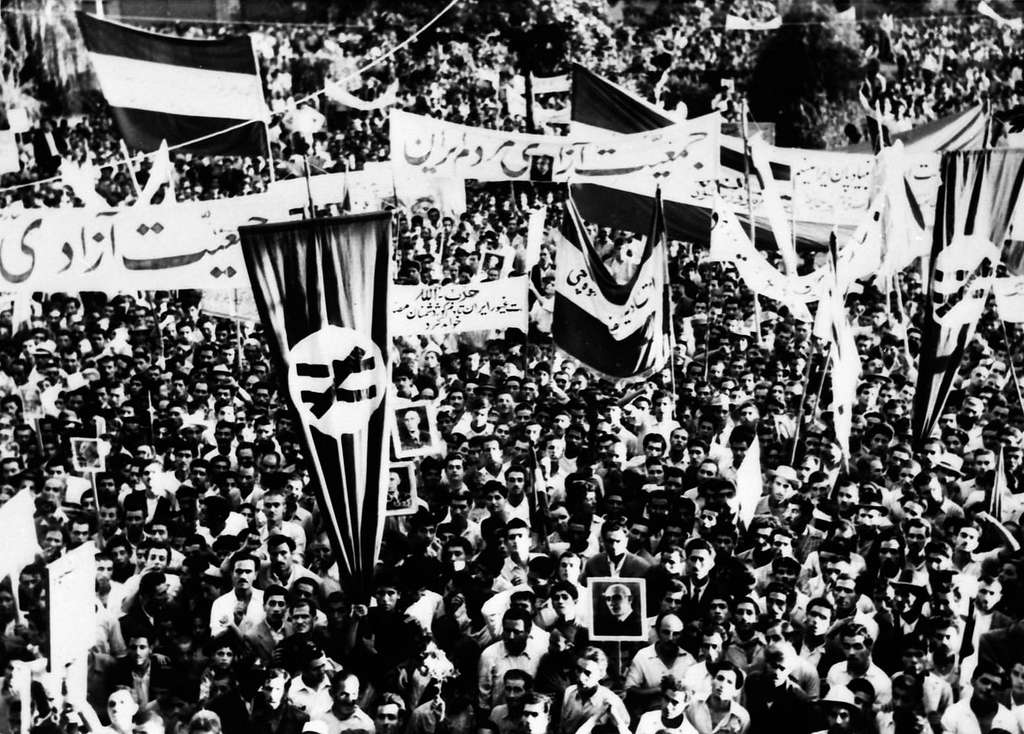

Few events in modern Middle Eastern history have left as deep a scar as the coup of August 1953 that toppled Iranian Prime Minister Mohammad Mosaddegh. In one decisive episode, a democratically elected leader was removed in a covert Anglo-American operation, foreign powers reasserted control over Iranian oil, and the Shah’s autocracy was restored. For many Iranians, the coup became the symbol of Western betrayal, setting the stage for decades of anti-imperialism and fueling the anger that erupted in the 1979 revolution.
The coup is not only a national trauma but also a case study in the collision of empire, oil politics, and Cold War realpolitik. James Barr, in Lords of the Desert, highlights the maneuvering between Britain and America as they sought to protect their Middle Eastern stakes. Stephen Kinzer’s All the Shah’s Men captures the human drama of Operation Ajax, while Ryszard Kapuściński gave it a searing literary treatment. Robert Fisk, in The Great War for Civilisation, placed it within the longer history of Western interference in the region. Scholars such as Ervand Abrahamian, Mark Gasiorowski, and Nikki Keddie have provided sober analyses of its causes and consequences.
This article examines the coup’s origins, course, and legacy — situating it in the context of Iranian nationalism, Anglo-American oil interests, Cold War strategy, and the long-term resentment it bred.
Iran Before the Crisis: Oil and Nationalism
At the dawn of the twentieth century, Iran had already experienced revolutionary upheaval. The Constitutional Revolution of 1906 sought to limit royal power and create a parliament. Yet foreign control remained overwhelming. The Anglo-Russian Convention of 1907 divided Iran into spheres of influence, undermining sovereignty.
The most important development, however, was the discovery of oil. In 1901 William Knox D’Arcy secured a concession from the Qajar Shah granting the British rights to explore and exploit Iran’s petroleum. In 1908 oil was struck in Khuzestan, and soon the Anglo-Persian Oil Company (APOC, later Anglo-Iranian, today BP) was formed. During World War I and beyond, British interests in Iranian oil became strategic: the Royal Navy had converted its fleet from coal to oil, and APOC provided the supply.
The terms of the concession were notoriously exploitative. Iran received only a small royalty while APOC reaped immense profits. British control extended to labor conditions, taxation, and land use in southern Iran. This became a symbol of humiliation for Iranians across the political spectrum.
When Reza Khan seized power in 1921 and became Reza Shah in 1925, he sought to modernize Iran and renegotiate the oil terms. In 1933 he signed a new concession with APOC, which provided somewhat better royalties but extended British control for another 60 years. Nationalists saw this as another betrayal.
By the 1940s, with Reza Shah exiled by the Allies during World War II, his son Mohammad Reza Shah ruled a fragile country. Iran had become a corridor for Allied supplies to the Soviet Union. Postwar politics were lively: communists, nationalists, clerics, and liberals all vied for influence. The oil question loomed over everything.
Mohammad Mosaddegh and the National Front
Mohammad Mosaddegh (1882–1967) was an aristocratic landowner, educated in Europe, and a passionate constitutionalist. He entered politics during the constitutional movement and became known for his integrity and nationalism. By the late 1940s he had emerged as leader of the National Front, a coalition of nationalists, intellectuals, and bazaar merchants.
Mosaddegh’s central demand was simple: Iran must control its own oil. In 1951, amid mounting anger at Anglo-Iranian’s monopoly, the Majles (parliament) voted to nationalize the oil industry. Mosaddegh became prime minister and implemented the law. For many Iranians, this was a moment of pride and sovereignty restored. Crowds chanted his name, and he became a national hero.
Britain reacted furiously. The Anglo-Iranian Oil Company lost its most valuable asset. London imposed a global boycott of Iranian oil, froze assets, and took the case to the International Court of Justice. The ICJ, however, ruled in 1952 that it had no jurisdiction. The United Nations Security CouncilSecurity Council Full Description:The Security Council is the only UN body with the authority to issue binding resolutions and authorize military force. While the General Assembly includes all nations, real power is concentrated here. The council is dominated by the “Permanent Five” (P5), reflecting the military victors of the last major global conflict rather than current geopolitical realities or democratic representation. Critical Perspective:Critics argue the Security Council renders the UN undemocratic by design. It creates a two-tiered system of sovereignty: the Permanent Five are effectively above the law, able to shield themselves and their allies from scrutiny, while the rest of the world is subject to the Council’s enforcement. also failed to condemn Iran, as Mosaddegh personally traveled to New York and made a passionate case for national sovereignty. His dignified speeches won international sympathy.
Yet the boycott devastated Iran’s economy. Oil revenues collapsed, government finances strained, and inflation rose. Mosaddegh responded by mobilizing nationalist fervor, expanding emergency powers, and marginalizing opponents. His popularity remained high, but political divisions deepened.
Britain and America: From Rivalry to CollaborationCollaboration
Full Description:The cooperation of local governments, police forces, and citizens in German-occupied countries with the Nazi regime. The Holocaust was a continental crime, reliant on French police, Dutch civil servants, and Ukrainian militias to identify and deport victims. Collaboration challenges the narrative that the Holocaust was solely a German crime. across Europe, local administrations assisted the Nazis for various reasons: ideological agreement (antisemitism), political opportunism, or bureaucratic obedience. In many cases, local police rounded up Jews before German forces even arrived.
Critical Perspective:This term reveals the fragility of social solidarity. When their Jewish neighbors were targeted, many European societies chose to protect their own national sovereignty or administrative autonomy by sacrificing the minority. It complicates the post-war myths of “national resistance” that many European countries adopted to hide their complicity.
Read more
Initially, Britain sought to manage the crisis alone. British leaders hoped to topple Mosaddegh and reinstall a pliant government. They planned covert operations but lacked the ability to act without U.S. support.
For Washington, the situation was complex. On one hand, the Truman administration sympathized with nationalism and sought compromise: the U.S. had long criticized colonial exploitation. On the other, officials worried that economic collapse in Iran could open the door to communism. The Tudeh Party (Iran’s communists) had a growing presence in labor unions and protests.
By 1952–53, as the Cold War intensified, the balance shifted. Winston Churchill’s government lobbied President Eisenhower to intervene. With the Korean War still fresh and StalinStalin Joseph Vissarionovich Stalin (18 December 1878 – 5 March 1953) was a Soviet politician, dictator and revolutionary who led the Soviet Union from 1924 until his death in 1953. Read More’s shadow looming, the Eisenhower administration became convinced that Mosaddegh might eventually tilt toward the Soviets.
James Barr highlights how Britain, desperate to preserve its declining Middle Eastern empire, persuaded Washington by framing the crisis as part of the global contest with Moscow. In Lords of the Desert, Barr shows that British fears of losing influence meshed with American fears of communist expansion.
The CIA, under Allen Dulles, and MI6 together devised a plan: Operation Ajax. Its aim was to depose Mosaddegh and strengthen the Shah. Kermit Roosevelt, a grandson of Theodore Roosevelt, was chosen to lead the covert operation in Tehran.
Operation Ajax: The Coup of 1953
The plan involved propaganda, political manipulation, and street action. CIA and MI6 operatives funded opposition newspapers, spread disinformation, and bribed politicians, clerics, and military officers. They portrayed Mosaddegh as a communist sympathizer and a threat to Islam.
In August 1953 the Shah, under pressure, signed decrees dismissing Mosaddegh and appointing General Fazlollah Zahedi as prime minister. Initially, the coup faltered: Mosaddegh’s supporters resisted, and the Shah fled to Rome in panic.
But Roosevelt and his team regrouped. They mobilized paid demonstrators and allied military units. On August 19, violent clashes erupted in Tehran. Pro-coup forces, including elements of the army and street mobs, stormed Mosaddegh’s residence. After heavy fighting, Mosaddegh’s government collapsed. He was arrested, tried, and sentenced to house arrest until his death in 1967.
Zahedi assumed power, and the Shah returned triumphantly. The Anglo-American operation had succeeded.
Stephen Kinzer’s All the Shah’s Men describes this as the CIA’s “first great success,” but also a Pandora’s box that would haunt U.S. policy. Kapuściński, writing with literary flair, cast the coup as a tragic betrayal of a nation’s hopes. Robert Fisk later observed that 1953 was “the original sin” of Western involvement in Iran, remembered bitterly for decades.
Aftermath: The Shah Restored
In the coup’s aftermath, the Shah consolidated power. Zahedi remained prime minister for a time, but the monarchy now dominated politics. The Majles was sidelined, opposition suppressed, and the secret police (later SAVAK) created with CIA and Mossad assistance.
Oil was reorganized under a new consortium. The Anglo-Iranian Oil Company returned, but now U.S. firms shared in the spoils: five American companies, plus Shell and French interests, joined the new arrangement. Iran formally retained sovereignty, but in practice Western companies controlled production and distribution.
For the West, the coup seemed a triumph: Iran was secured as a Cold War ally, oil flowed again, and the Shah became a bulwark against Soviet influence. For Iranians, it was humiliation. The memory of foreign manipulation festered.
Historiography: Competing Perspectives
Historians have debated the causes and significance of the 1953 coup for decades.
Ervand Abrahamian emphasizes class conflict and nationalism. In The Coup, he argues that Mosaddegh embodied middle-class and nationalist aspirations, while foreign powers allied with Iran’s landed elite and royalists to crush him. Mark Gasiorowski has highlighted the CIA’s role, reconstructing Operation Ajax through declassified documents. He stresses that U.S. officials were driven less by oil than by Cold War fears of communism. Nikki Keddie situates the coup within Iran’s long struggle between modernizers, nationalists, and foreign powers. She sees Mosaddegh as part of a broader pattern of thwarted reform in Iranian history. Stephen Kinzer offers a narrative of betrayal: the U.S. abandoned its anti-colonial rhetoric and chose imperial realpolitik. His book has popularized the coup’s story for Western audiences. James Barr places it in the context of Anglo-American rivalry and cooperation, showing how Britain’s imperial decline forced it to enlist U.S. power. Robert Fisk emphasizes the moral dimension: 1953 was the moment Iranians learned that democracy would not be allowed if it threatened Western interests. Ryszard Kapuściński, though more literary than scholarly, portrays the coup as symbolic of the wider violence of empire and oil politics.
Together, these perspectives reveal the coup as more than a local event. It was the intersection of Iranian nationalism, Anglo-American imperial strategy, and Cold War geopolitics.
Legacy: Roots of Resentment
The coup’s consequences were profound.
Domestic Authoritarianism: The Shah, restored to power, ruled with increasing autocracy for the next 25 years. His reliance on Western backing and his creation of SAVAK deepened repression.
National Humiliation: The coup became a collective memory of betrayal. When revolution erupted in 1979, chants of “Death to America” and “Death to England” drew directly on the memory of 1953.
Cold War Geopolitics: For Washington, Iran became a key ally, hosting U.S. military bases and serving as a pillar of containment. Yet the very alliance sowed the seeds of future estrangement.
Oil Nationalism: Although Mosaddegh was defeated, the principle of oil sovereignty remained powerful. Later OPEC revolts against Western oil companies drew inspiration from Iran’s example.
Enduring Distrust: The coup poisoned U.S.–Iran relations. Even today, Iranian leaders cite 1953 as proof of American duplicity. For many Iranians, the coup explains why foreign influence must be resisted at all costs.
Conclusion
The coup of 1953 was a turning point in modern Iran. It crushed a democratic experiment, restored an autocratic Shah, and reasserted Western control over oil. For the United States and Britain, it was a Cold War victory; for Iranians, it was a national trauma. Its legacy shaped the revolutionary anger of 1979 and continues to color relations between Iran and the West.
As Robert Fisk observed, “Mosaddegh’s ghost has never left Iran.” The memory of his overthrow still haunts Iranian politics — a reminder that the struggle for sovereignty, justice, and dignity in the face of great-power interference is far from over.

Leave a Reply