
Introduction
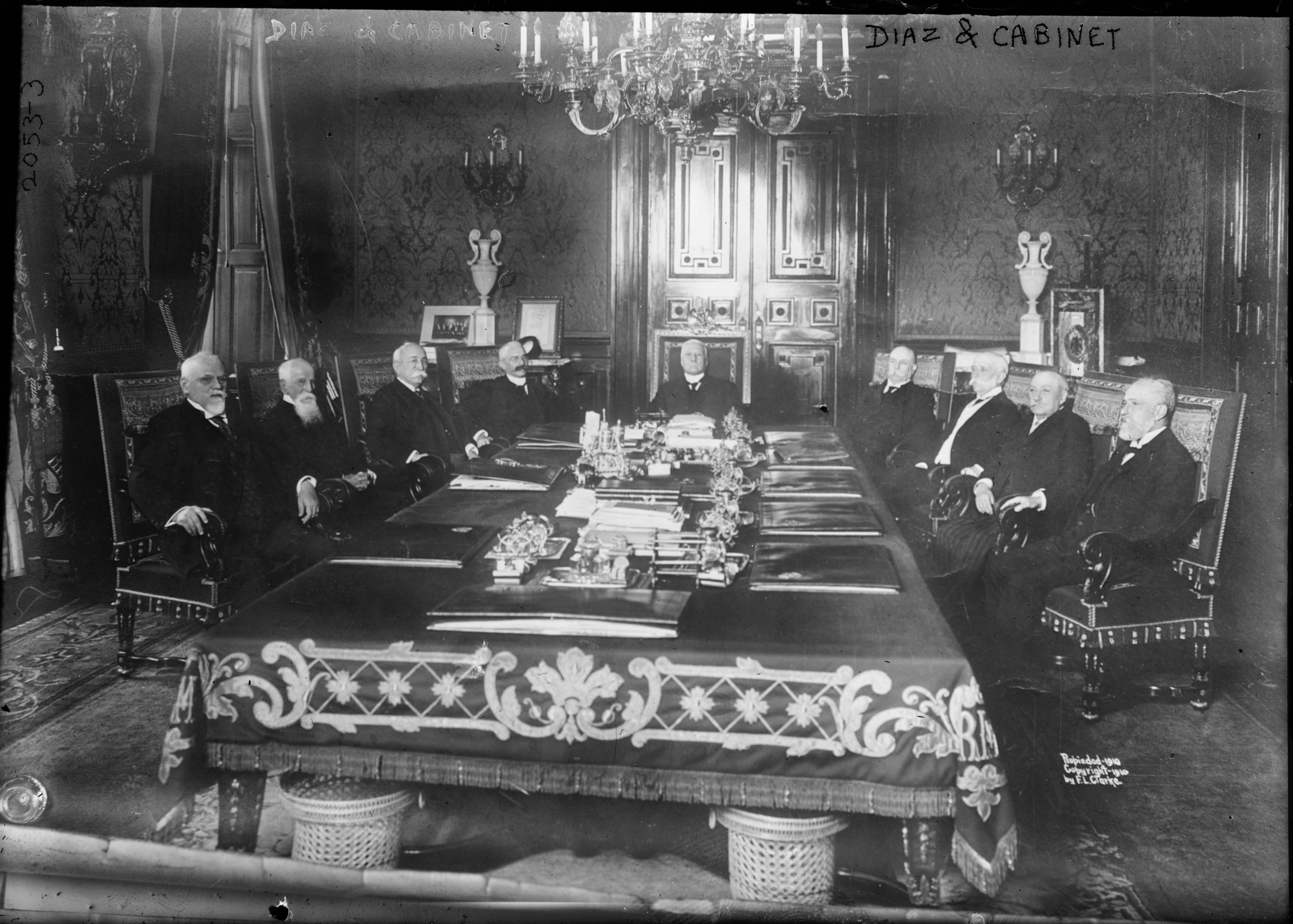
The Porfiriato refers to the long rule of President Porfirio Díaz in Mexico from 1876 to 1911, a period marked by authoritarian stability and rapid economic modernization. For 35 years Díaz presided over a regime that imposed strict political control while transforming Mexico’s infrastructure and economy in the name of “Order and Progress.” Under Díaz, foreign investment poured in, railroads and industry boomed, and a small elite prospered – even as political freedoms were curtailed and rural majorities sank deeper into poverty . These contradictions – a modernizing dictatorship that achieved growth at the expense of social justice – define the Porfiriato. Accessible yet academic in tone, this article explores Díaz’s rise to power, his political strategies and policies, the impact of his rule on different social sectors and regions, the cultural milieu of the era, and comparisons with other Latin American strongmen. We also examine key events like the 1906–07 labor strikes and Díaz’s 1908 Creelman interview, the regime’s internal contradictions, and how the Porfiriato’s legacy set the stage for the Mexican Revolution.
Rise to Power
Porfirio Díaz was born in 1830 in Oaxaca to a modest mestizo family and rose to prominence as a young general fighting in the wars against the French Intervention (1861–1867) . A hero of the Battle of Puebla, Díaz harbored political ambitions. He became disillusioned with President Benito Juárez’s prolonged tenure and in 1871 led an unsuccessful revolt under the Plan de la Noria, opposing Juárez’s re-election and calling for a “No Re-election” principle . After Juárez’s death, Díaz again rebelled in 1876 against Juárez’s successor, President Sebastián Lerdo de Tejada. This time Díaz issued the Plan of Tuxtepec (January 1876), rallied support from various discontented factions, and defeated Lerdo’s forces at the Battle of Tecoac in November 1876 . Seizing power in a coup, Díaz had himself elected president in 1877, beginning his first term in office .
Díaz initially presented himself as a guardian of constitutional principles. Having denounced presidential re-election by others, he symbolically stepped down at the end of his first term in 1880. He handpicked an ally, General Manuel González, to succeed him, thereby maintaining control behind the scenes . The interlude was short-lived and unsatisfactory: when González’s administration faltered, Díaz ran for president again and was re-elected in 1884, abandoning the very “No Re-election” principle that had brought him to power . From 1884 onward, Porfirio Díaz would rule Mexico continuously until 1911, either through consecutive re-elections or by extending presidential terms, effectively nullifying any real competition. This period of continuous rule (interrupted only by the Gonzalez interregnum) is known as the Porfiriato .
Díaz’s ascent was facilitated by his ability to attract a broad coalition. Early on he pursued a “policy of conciliation,” reaching out to former adversaries and power brokers. He pacified regional caudillos and welcomed back into the fold elements of the liberal faction that had supported Juárez or Lerdo . He made overtures to conservatives as well: for instance, he reconciled with the Catholic Church (which the prior liberal Reform had antagonized) and appeased the landowning aristocracy . By co-opting elites and rivals in this manner, Díaz gradually built a durable political machine that underpinned his long rule.
“Order and Progress”: Díaz’s Political Strategy and Governance
Upon consolidating power, Porfirio Díaz crafted an authoritarian political system that promised “order and progress” for Mexico. His governing philosophy can be encapsulated by the slogan “Pan o palo” – literally, “bread or the stick.” This meant that those who cooperated with the regime would be rewarded (with bread in the form of jobs, wealth, or privileges), whereas those who opposed Díaz could expect the stick of punishment – harassment, prison, or worse . In practice, Díaz created a patronage network that made it in the self-interest of the powerful to support him: he dispensed public offices, concessions, and economic favors to loyalists, while using intimidation or violence against intransigent opponents . Through this blend of consensus and repression, the Porfirian state achieved a degree of stability unprecedented in 19th-century Mexico .
Politically, Díaz maintained a veneer of constitutional legality even as he hollowed out democratic institutions. Regular elections were held, Congress convened, and the courts functioned, but all “constitutional processes were assiduously maintained in form” only . In reality, power was centralized in the president’s hands. Elections were a ritual with predetermined outcomes – Díaz was repeatedly re-elected without genuine opposition, as potential rivals were bought off or coerced into silence . A cult of personality grew around Díaz as the indispensable leader, and public praise for “Don Porfirio” became near-obligatory. Meanwhile, Díaz appointed loyalists as state governors and local jefes políticos (“political chiefs”) to extend his control into every corner of Mexico . Although these governors were officially elected by their states, in practice they were personal appointees of Díaz, monitored by the jefes políticos who reported directly to him . This centralized patronage system left little room for autonomous regional authority – a hallmark of Díaz’s method of rule.
Censorship and press control were also key to Porfirian political strategy. In the 1880s, the regime enacted legislation that severely restricted freedom of the press: under a law crafted by Díaz’s government, journalists could be jailed without due process for writings deemed offensive or destabilizing . Opposition newspapers were suppressed or co-opted. Notably, the government subsidized major newspapers like El Imparcial and El Mundo, turning them into virtual mouthpieces of the regime . By muzzling independent media, Díaz was able to manage public opinion and prevent the spread of dissenting ideas. Self-censorship became routine among journalists who wished to avoid exile or imprisonment.
To uphold “order,” Díaz relied on both the regular army and especially the Rurales, a federal corps of mounted rural police. The Rurales (established earlier in the 1860s but expanded and empowered under Díaz) became a feared instrument of Porfirian authority – described as a “praetorian guard” for the dictatorship . They patrolled the countryside to suppress banditry and unrest, giving Mexico an appearance of peace and stability. Indeed, the Rurales largely succeeded in eliminating the endemic banditry that had plagued rural Mexico earlier in the century . However, their heavy-handed tactics also engendered fear and intimidation. The Rurales operated with scant regard for due process or civil liberties, delivering summary justice on Díaz’s behalf . A popular saying of the time – “Entre la ley y la justicia, está la pistola de los Rurales” (“Between the law and justice stands the pistol of the Rurales”) – captured the rough justice they meted out. In addition to the Rurales, Díaz kept the Federal Army under tight control: he reduced its size and budget (to diminish the threat of a military coup) and rotated commanders frequently. Many generals were encouraged to become complacent “gentlemen of leisure” or even businessmen, rather than active power-brokers . By co-opting military men with economic perks and prestige – turning some into entrepreneurs or large landowners – Díaz ensured the army’s loyalty and depoliticization .
Díaz’s inner circle of advisers was dominated by the científicos (“scientists”), a group of technocratic officials and intellectuals who embraced the philosophy of Positivism. Influenced by French thinker Auguste Comte, the científicos believed in applying “scientific” principles and rational planning to solve social and economic problems . They provided the intellectual rationalization for Díaz’s authoritarian rule, arguing that liberty and democracy might need to be postponed until order and material progress were achieved. The científicos were led by figures like José Yves Limantour, the long-serving Minister of Finance after 1893, and Justo Sierra, Minister of Education. Limantour in particular became internationally respected for stabilizing Mexico’s finances. Under his guidance, the regime paid off foreign debts, built up gold reserves, and adopted the gold standard – moves that gave Mexico a stable currency and won the confidence of foreign investors . The influence of the científicos grew in the later Porfiriato, and their pro-business, technocratic outlook meshed with Díaz’s goals. However, they were also resented by many for their perceived arrogance and their closeness to foreign capitalists. Díaz himself kept a certain distance from the científicos clique – he used their expertise but “personally connected little with the científicos,” preferring to present himself as a man of the people . Some historians note that the científicos were a convenient foil: they could be blamed for unpopular policies (like heavy foreign influence in the economy), allowing Díaz to appear above such fray.
Another notable aspect of Díaz’s political strategy was his pragmatic reconciliation with the Catholic Church. During the tumultuous mid-19th century (the Reform era), liberals like Juárez had enacted strict anti-clerical laws, confiscating Church property and banning public religious orders. Formally, those laws remained on the books under Díaz. In practice, however, Díaz reached an understanding with the Church: as long as the clergy stayed out of direct politics, the regime tolerated and even encouraged a revival of Church influence in society . The government quietly permitted Church institutions to regain some wealth and operate schools, charities, and rituals without harassment. Díaz himself was personally devout (he had trained for the priesthood in his youth), and through gestures like attending Mass and reconciling with religious leaders, he mended relations with the Vatican. He even married into a prominent conservative Catholic family – his second wife, Carmen Romero Rubio, was the daughter of Manuel Romero Rubio, a leading statesman from the former conservative camp. This marriage in 1881 was both a personal and political alliance, helping to legitimize Díaz among Mexico’s old upper-class elite . By allowing the Church to recover some of its former status (though without formal legal change), Díaz removed a major source of conflict and gained the moral support of clergy who urged their flocks to obey the government.
Throughout his rule, Díaz suppressed political opposition through a mix of carrots and sticks. Many former rivals were given provincial posts, Congressional seats, or sinecures to keep them loyal (the pan). Those who refused to cooperate faced exile, imprisonment, or mysterious “accidents” (the palo). A notable early opponent was liberal journalist Ricardo Flores Magón, who in 1900 co-founded an opposition newspaper Regeneración to call for democratic and social reforms. The Díaz regime responded swiftly: Flores Magón and his associates were jailed repeatedly and their liberal clubs shut down . By 1904, Flores Magón was forced to flee to the United States, where he and the exiled Mexican Liberal Party (PLM) continued to agitate against Díaz. Likewise, other critical voices – independent journalists, lawyers, local leaders – were often co-opted early or silenced. For many years, overt repression was used sparingly, because open opposition was relatively scarce; the memory of past chaos and the realities of Porfirian power kept most would-be dissidents in check . It was only in the final years (c. 1908–1910), when public discontent began to boil over, that Díaz’s regime resorted to more conspicuous acts of suppression (such as harshly breaking strikes and rigging the 1910 election, discussed later).
Summary of Díaz’s political rule: Porfirio Díaz created a centralized, personalist dictatorship cloaked in legal forms. Through a system of patronage and force, he maintained peace and order – “the Porfirian peace” – that was welcomed by investors and Mexico’s elites after decades of instability. He famously remarked, “A dog with a bone neither fights nor bites,” reflecting his tactic of keeping potential opponents fat and content. At the same time, basic political freedoms were virtually nonexistent. Dissent was dangerous and democracy was postponed in the name of national progress. This autocratic stability, enforced by rurales and gilded by científico rationales, defined the Porfiriato’s governance.
Economic Modernization and Policies of the Porfiriato
If political freedom was the sacrifice, economic progress was the promised reward of Porfirian rule. In large measure, Díaz delivered on modernization – at least for the country’s infrastructure and export economy. The regime’s slogan of “Order and Progress” had a concrete economic program behind it. Díaz’s principal objective was to promote development by opening Mexico to foreign capital and technology . He offered investors (especially from the United States, Great Britain, and France) generous concessions and a stable environment to invest in mining, railroads, agriculture, and manufacturing. The logic was that outside capital and expertise would jump-start Mexico’s economy, much as it was doing in other “modernizing” Latin American dictatorships of the era .
One of the most dramatic examples of modernization was the railroad boom. When Díaz first took office in the 1870s, Mexico had only a few hundred kilometers of rail lines. By 1910, thanks to aggressive investment, the country had built some 15,000 miles (~24,000 km) of railways, stitching together previously isolated regions . U.S. and British financiers underwrote and constructed many of these lines, with the Porfirian government often providing subsidies or land grants. Railroads linked Mexico’s interior to its ports and to the United States, spurring trade. For instance, the Mexican Central Railway (connecting Mexico City to the U.S. border at El Paso) and the Mexican National Railway (linking to Laredo, Texas) were built in the 1880s, integrating the northern states with American markets. New lines opened up remote areas – timber and mining camps in the north, coffee and cotton regions in the south – facilitating the extraction of resources. Rail connectivity also helped Diaz’s military move quickly to trouble spots, enhancing control. Thus, railroad construction was both an economic engine and a tool of governance, achieved in partnership with foreign investors and engineers .
In tandem with railroads, industrial and mining development accelerated. Porfirian Mexico experienced an export boom in commodities. By 1910, the value of Mexico’s foreign trade had increased roughly tenfold compared to the start of Díaz’s rule . Mining, an industry with deep colonial roots in Mexico, was revitalized with new technologies and foreign capital. American and British companies invested heavily in silver mines (e.g. in Chihuahua, Durango) and copper mines (notably Cananea in Sonora). As a result, output surged – Mexico remained one of the world’s top silver producers and became the world’s second-leading copper producer by the early 20th century . Other minerals like zinc, lead, and coal were also exploited on a larger scale than before. After 1900, the oil industry began to emerge: foreign entrepreneurs such as Edward Doheny (U.S.) and Sir Weetman Pearson (UK) obtained petroleum concessions on the Gulf Coast. By the eve of the Revolution, Mexico was among the world’s leading oil producers , setting the stage for its future strategic importance. Much of this mining and oil wealth, however, flowed to the foreign concessionaires and their domestic partners.
The Porfiriato also witnessed growth in manufacturing, especially textiles and foods, albeit from a small base. The regime imposed high tariffs to encourage local industry (ironically, despite professing free-market ideals, they protected domestic production). Textile mills were established in places like Puebla and Veracruz, often by French or Spanish entrepreneurs, turning out cotton fabrics for the domestic market. By 1900, cities such as Orizaba and Puebla had large factory complexes – though often with harsh working conditions that eventually led to labor unrest (e.g. the Río Blanco textile mills, discussed below). Other nascent industries included brewing, cement, cigarettes, and consumer goods, largely catering to urban demand. Still, Mexico in 1910 remained primarily an exporter of raw materials and agricultural products rather than a fully industrialized nation.
In agriculture, Díaz’s policies aimed to convert more land to commercial production for export. There was significant investment in cash crops: sugar cane plantations flourished in Morelos and Veracruz; henequen (sisal), used for rope and twine, turned the Yucatán into a boom region; coffee growing expanded in Chiapas; and tropical fruits (like bananas) in Oaxaca and other southern states. By improving transportation and stability, the Porfiriato enabled an “export agriculture” model to thrive. Haciendas that once produced mainly for local consumption shifted to crops for international markets, reaping good prices in the global economy of the Belle Époque. Mexico’s overall GDP per capita roughly tripled from 1870 to 1910 (albeit from a low starting point), an impressive growth rate outpacing the Latin American average at the time . This growth transformed Mexico’s economic structure: the share of agriculture in GDP fell (from ~42% to 34% by 1910) as commerce and industry’s share rose, indicating a gradual diversification .
Modernization also meant infrastructure beyond railroads. The Díaz regime invested in telegraph lines, linking towns with rapid communication (the telegraph network grew to thousands of miles, often laid alongside the railroads). It introduced the first telephone exchanges in cities like Mexico City and Monterrey. Urban public works received attention: in Mexico City, grand public buildings in French beaux-arts style were erected (the Postal Palace, parts of Avenida Reforma, the upcoming Palacio de Bellas Artes), paved boulevards and electric street lighting were installed, and streetcar systems (initially horse-drawn, later electric) connected affluent neighborhoods . Diaz was determined to showcase Mexico as a civilized, “modern” nation on par with Europe and the United States. Nowhere was this more evident than during the lavish Centennial celebrations of 1910, when Mexico City hosted month-long festivities to commemorate the 100th anniversary of independence. The city was adorned with new monuments – including the iconic Ángel de la Independencia column inaugurated by Díaz – and foreign dignitaries were feted with balls and parades . These displays projected confidence in the material progress achieved under Díaz’s stable rule.
At the macro-economic level, Díaz’s finance ministers (first Manuel Dublán, then José Yves Limantour) achieved stability that encouraged investment. They balanced budgets, restructured or paid off Mexico’s foreign debt, and by 1894 the government was running a surplus . The early Porfiriato saw the Mexican peso stabilize and eventually align with the gold standard, eliminating the currency chaos of earlier decades. Foreign banks (such as Banque de Paris or London banks) opened branches, and a native banking sector began to form (the Bank of México was established in 1894). With fiscal order and a strong commitment to protecting investors, foreign direct investment soared: by 1910, U.S. investors alone had sunk about $1.5 billion into Mexico , a huge sum at the time, constituting perhaps half of all capital in key sectors. British, French, and German investments were also significant in mines, railways, and commerce. One analysis noted that American capitalists controlled as much as 75% of Mexico’s industrial and extractive sectors by the end of Díaz’s rule , reaping hefty profits from Mexican resources. The Porfirian state actively courted such capital with tax breaks, land grants, and guarantees of security. This strategy successfully integrated Mexico into the world economy as a major exporter of minerals, oil, henequen, coffee, and other commodities.
However, the benefits of Porfirian economic growth were very unevenly distributed. Most of the gains accrued to foreign investors and the domestic elite, while ordinary Mexicans saw little improvement or even a decline in living standards . Real wages for workers and peasants stagnated or fell in many regions (even as a new middle class enjoyed better opportunities). The cost of basic goods sometimes rose due to focus on exports over subsistence crops. For example, despite agricultural expansion, Mexico had to import food staples like maize by the 1900s because haciendas prioritized cash crops over corn and beans, causing shortages for the poor . The Porfirian economy’s impressive growth came at the cost of widening inequality, which would have profound consequences.
Effects on Different Social Groups under Díaz
Díaz’s policies and the rapid changes of the Porfiriato affected Mexico’s social classes in markedly different ways. Below we examine the impact on various groups – elites, middle classes, peasants, workers, and foreign investors – highlighting how some prospered while others were marginalized:
Landowning Elites and “Científico” Oligarchs: The traditional hacendado class (owners of large estates) and the new business and technocratic elite were the principal domestic beneficiaries of the Porfiriato. Secure under Díaz’s “pax,” wealthy landowners expanded their estates massively – often at the expense of peasant villages (see below) – and reaped profits from high export prices. By 1910, a few thousand families owned most of Mexico’s land , enjoying more wealth and power than ever. These elites enthusiastically supported Díaz’s strong government as it protected property rights and stifled peasant unrest. They also adopted European tastes and lifestyles: Porfirian high society in Mexico City and state capitals aped Parisian fashions, furnished homes with French art, and spoke French in salons . A clique of positivist intellectuals and officials – the científicos – dominated policy in Díaz’s later years, further entrenching elite interests in government . Though few in number, this oligarchy controlled politics, the best lands, and burgeoning industries. They believed that by leading Mexico’s “material progress,” they were advancing civilization – even as they became increasingly detached from the impoverished majority. For the landed and business elite, the Porfiriato was a golden age of order and opportunity; for them Díaz’s dictatorship largely fulfilled its promise of stability and profit. Middle Class and Professionals: A modest urban middle class – including merchants, minor entrepreneurs, bureaucrats, teachers, and other professionals – grew during the Porfiriato, especially in cities. They benefited from expanding commerce, new government jobs, and improved education (Díaz’s regime did make some investments in secular education and founded the National University in 1910). Many middle-class Mexicans appreciated the improved security and infrastructure. However, politically the middle class found itself excluded from power; a small circle around Díaz monopolized the spoils. Ambitious young professionals saw little upward mobility in a system where aging cronies held onto all top positions. By the 1900s, a new generation of middle-class reformists began to question Porfirian rule . They had no memory of the anarchy before Díaz and thus less fear of change. Some of them – lawyers, journalists, and even industrialists – started voicing demands for a real voice in government and an end to “the old man’s” monopoly on power. Francisco I. Madero, the son of a wealthy provincial family and an educated liberal, emerged from this milieu to challenge Díaz. Likewise, intellectuals like Francisco Bulnes or Emilio Rabasa who had earlier supported Díaz became critical by 1910, sensing that the regime’s refusal to share power was untenable. In summary, the Porfirian middle class was economically better off than before, but its aspirations for political influence were frustrated – a discontent that would fuel reform movements and support for democratic change. Peasants and Indigenous Communities: The peasantry – by far the largest segment of the population – suffered the most under Porfirian development policies. In the late 19th century, Díaz’s government carried out a sweeping privatization of land that devastated village communities. Claiming to modernize agriculture, the regime enforced liberal laws that abolished traditional ejidos (communal lands) and declared millions of hectares as “unoccupied” public land available for purchase . By the Law of 1894, survey companies (often American or British-financed) mapped huge tracts of rural land and acquired title to them at negligible cost, with no limit on how much one person or company could buy . In practice, this meant wealthy hacendados and speculators gobbled up peasant lands. At least 5,000 indigenous villages lost their ancestral lands – lands they had held since before the Spanish Conquest – through legal maneuvering, bribery, or force . The figures are stark: by 1910 around 95% of rural families had become landless, working on someone else’s property . The rural poor were often left with no choice but to become peones (peons) on the expanding haciendas, bound to the land by debt and lack of alternatives. Debt peonage – workers tied to estates due to wage advances and store credits – became widespread, resembling a new form of serfdom. The Porfirian land grab hit indigenous communities particularly hard. Many indigenous farmers were pushed into wage labor or displaced entirely. In the northwestern state of Sonora, the Yaqui people resisted encroachment on their fertile river valleys. Díaz responded with brutal pacification campaigns in the 1890s, seizing Yaqui land and even deporting thousands of Yaqui men, women, and children to distant plantations as slave labor. By the early 1900s, trainloads of Yaqui prisoners were shipped to the henequen fields of Yucatán or to disease-ridden teak plantations in Oaxaca . This policy had a dual purpose: it removed a rebellious population from Sonora and provided cheap workers for southern haciendas experiencing labor shortages. Similarly, in Yucatán, the indigenous Maya population had been subjugated after the long Caste War (which ended around 1901), and under Díaz the region’s henequen boom led to what many termed “plantation slavery.” Maya villagers were effectively coerced or tricked into peonage on vast sisal estates, guarded by private armies. They labored from dawn to dusk to fuel Yucatán’s export riches, with virtually no rights. Repression of rural dissent was often harsh: government forces put down local uprisings or protests with violence, and laws against “vagrancy” were used to press landless peasants into forced work. For the millions of campesinos, especially indigenous ones, the Porfiriato meant loss of land, deepening poverty, and oppressive exploitation – a situation “ripe for rebellion,” even if open revolt was delayed until 1910. Urban Working Class: Alongside the peasantry, a new industrial working class was emerging in Porfirian Mexico, concentrated in mines, factories, and railroads. These workers – many of them former peasants or immigrants from rural areas – toiled long hours for low pay under often dangerous conditions. Díaz’s regime generally sided with industrialists and mine owners in labor matters. Independent labor unions were prohibited, and strikes or worker organizing were viewed as subversive threats to order . The government’s approach to labor unrest was unequivocal: troops would be sent in to break strikes and “denied the right to form unions” was effectively the law . Two famous incidents highlight the workers’ plight and the regime’s repressive response: In June 1906, workers struck the huge Cananea Consolidated Copper Company in Sonora, an American-owned mining operation. Mexican miners protested for better pay (they earned less than half the wages of U.S. miners for the same work) and humane hours . The local authorities proved unable or unwilling to resolve the dispute. When violence broke out between strikers and American supervisors, the mine owner William Greene appealed to Díaz for help . In a controversial move, a posse of Arizona Rangers from across the U.S. border was allowed to assist company guards in quelling the strike. The confrontation turned bloody – at least 10 up to 23 miners were killed when armed forces fired on the crowd . The Cananea strike was crushed, its leaders arrested and jailed as “agitators” . The episode became legendary as a precursor to revolution; it revealed the Porfirian regime’s willingness to cooperate with foreign capital even to the point of violating sovereignty (by letting U.S. Rangers intervene) and the extent to which Díaz would go to repress labor for the sake of “order.” It also galvanized Mexican nationalist sentiments – the sight of American gunmen shooting Mexican workers on Mexican soil was a potent symbol of the regime’s subservience to foreign interests . Just over six months later, in January 1907, another major strike erupted – this time in the textile mills of Río Blanco, Veracruz. Thousands of workers in the Rio Blanco factory (one of Latin America’s largest textile plants) walked off the job, protesting wage cuts and abusive management practices. Influenced by some of the same liberal and anarchist ideas circulating in Cananea and by radicals from the PLM, the textile workers’ strike quickly met a brutal fate. Federal troops and rural police confronted the strikers; according to accounts, when workers gathered outside a company store to protest, soldiers opened fire, killing dozens (some sources say over 50) and wounding many more. The Rio Blanco massacre underscored that Díaz would not hesitate to use lethal force against unarmed workers. In the aftermath, the textile mills were scorched by rioters, but the strike was effectively broken by bloodshed. Along with Cananea, Rio Blanco became a martyrdom story for the labor movement and further proof that peaceful appeals for change were impossible under Díaz . Beyond these well-known strikes, smaller labor disturbances in railroads, tobacco factories, and other mines were similarly suppressed. The Porfirian state often labeled strikers as criminals or seditionists, and sometimes strike leaders were conscripted into the army or “disappeared.” By keeping wages low and banning unions, Díaz made Mexico attractive to investors but sowed resentment among the working class. That said, some skilled workers (like railroad engineers or mechanics) did attain middle-class status, and a few company towns had relatively better conditions (often due to paternalistic foreign managers). But for the mass of labor – working 12 hours a day for meager pay – the Porfiriato’s promise of progress rang hollow. These workers’ grievances would later make them a key base of support in the Revolutionary upheaval that toppled Díaz. Foreign Investors and Businesses: Foreigners were an integral social and economic group in Porfirian Mexico, albeit external to the traditional class hierarchy. Díaz’s policies were overtly friendly to foreign investors, who were courted with tax incentives, land grants, and often diplomatic deference. Americans were the most numerous and influential: they managed railroads, owned mines and ranches along the northern border, drilled oil in Veracruz and Tamaulipas, and ran banks and utilities in Mexico’s cities. There were entire enclaves of U.S. citizens in Mexico (for example, the mining town of Cananea was one-third American employees) . The British were prominent in banking, commerce, and some mining (and later oil, via companies like Pearson’s). The French, Spaniards, and Germans also had communities – French merchants and chefs in Mexico City, Spanish entrepreneurs in textiles, German farmers in Veracruz, etc. These foreigners often lived in privileged bubbles, enjoying extraterritorial protections and the support of their consulates. The Porfirian regime granted foreign capital extraordinary influence. It sold off national assets – from rail concessions to public lands – at bargain rates. By one estimate, by 1910 foreigners owned over half of Mexico’s land and wealth, and Americans alone controlled 75% of the mining and rail industries . This fostered a perception that Díaz was selling out the country (vendiendo la patria), a vendepatria to foreign interests. In exchange, foreign businesses became a pillar of support for Díaz’s regime internationally, lobbying their home governments to back Díaz. U.S. President William Howard Taft, for instance, held a cordial summit meeting with Díaz in 1909 on the border – a first between a U.S. and Mexican president – signaling American approval of his leadership. From the perspective of foreign investors, the Porfiriato was a bonanza: Mexico had abundant resources and cheap labor, and Díaz guaranteed stability and often intervened forcefully to protect their investments (as seen in Cananea). Many grew fabulously wealthy from Mexican ventures. However, the flip side was rising Mexican nationalist resentment. The more foreigners profited and flaunted their status, the more resentment brewed among Mexican workers, emerging middle class nationalists, and even some elite national capitalists who felt squeezed out. This xenophobic backlash – particularly against Americans and Britons controlling railroads, mines, and oil – became a significant undercurrent of opposition as 1910 approached .
In sum, Porfirio Díaz’s policies dramatically stratified Mexican society. A tiny elite and foreign capitalists thrived, a moderate middle class grew but hit a political ceiling, and the vast majority – peasants and workers – endured declining living standards and loss of autonomy. By the end of the Porfiriato, social tensions were at a breaking point: the peasantry demanded land, workers demanded rights, and an excluded bourgeoisie and provincial elite demanded political power. These disparate groups would soon find common cause in opposing Díaz.
Regional Variations of the Porfiriato’s Impact
Although Díaz’s centralized rule sought to integrate the nation, the effects of Porfirian modernization varied significantly by region. Mexico is a diverse country, and during the Porfiriato some areas experienced dynamic growth while others were left behind or exploited, creating regional imbalances that also fed into revolutionary sentiment.
In the northern states, such as Chihuahua, Sonora, Coahuila, and Nuevo León, the Porfiriato brought notable changes. These border and mining regions were geographically closer to the United States and attracted heavy U.S. investment. Railroads traversed the north-south axis, linking northern cities to U.S. markets, which stimulated local economies. Mining centers like Cananea (Sonora) and Parral (Chihuahua) boomed with copper and silver extraction; large cattle ranches expanded on the northern plains to supply beef to the U.S. and industrial tanneries. A few powerful families, like the Terrazas-Creel clan in Chihuahua, amassed enormous landholdings (the Terrazas alone reportedly owned over 7 million acres) and virtually ran their state as a family fiefdom under Díaz’s blessing. These northern oligarchs were staunch Porfiristas but also developed regional power bases. Nuevo León under Governor Bernardo Reyes became a model of industrial progress – its capital Monterrey saw steel mills, breweries (Cervecería Cuauhtémoc), and textile factories spring up. Reyes, a rare reform-minded Porfirian general, implemented infrastructure improvements and even some pro-labor measures like an early workmen’s compensation law . The north’s integration into global trade meant some residents enjoyed higher wages (e.g. railroad workers) than their southern counterparts, and border towns engaged in lively commerce. Yet, the north was also where the winds of change first blew: Francisco Madero was from Coahuila; Pancho Villa and Pascual Orozco from Chihuahua; these areas bred revolutionaries galvanized by a mix of frustrations – from ranchers aggrieved by Díaz’s favoritism to foreign companies, to cowboys and miners chafing under outsider bosses. In short, the north’s prosperity was real but uneven (often bypassing the average campesino or laborer), and northern Mexico’s tradition of frontier independence made it less docile under a distant central authority.
In central Mexico, the Bajío and the Valley of Mexico, there was already a long-established agricultural heartland and population centers. States like Jalisco, Michoacán, Guanajuato, and México (surrounding the capital) experienced moderate industrial growth (e.g. Guadalajara had some textiles and tequila exports) and enjoyed the benefits of railroad connectivity to Mexico City and ports. The capital itself, Mexico City, was lavishly transformed – becoming a showcase of modern amenities (paved streets, electric trams, museums) and European-style culture for the elite. However, rural central Mexico saw intense hacienda expansion. For example, in the state of Morelos just south of the capital, the late 19th century brought a sugar boom. New railroad spur lines (like the one from Mexico City to Cuernavaca) made it profitable to export sugar, prompting hacendados to greatly expand their cane fields. They encroached on village lands, often illegally. In Morelos – historically a land of dense indigenous villages – this led to extreme land concentration. Wealthy plantation owners, such as the family of Pedro Antonio de los Santos or others, used local political connections to strip villages of communal fields and pastures. Powerless Indian villagers in Morelos saw their land “legalized” away and their protests ignored . Emiliano Zapata, a young sharecropper-turned-activist from Anenecuilco, Morelos, witnessed as a boy the hacienda’s agents burn a peasant’s house for resisting a land grab . Morelos became one of the richest sugar-producing areas in the world by 1910 (third after Hawaii and Puerto Rico) , but its peasants were dispossessed and desperate. This pattern repeated throughout central Mexico: the fertile Bajío saw commercial agriculture (wheat, chickpea, ranching) flourish for large landowners, while smallholders lost ground.
The southern and southeastern regions – including Yucatán, Chiapas, Oaxaca, and Guerrero – had more isolated, monoculture economies and felt Porfirian policies in distinctive ways. Yucatán, in particular, was transformed by the henequen (sisal) monoculture. Henequen, used for rope and twine, was in high global demand (for binding wheat sheaves, among other uses). During Díaz’s era, Yucatecan planters (the “Divine Caste” of Yucatán) grew fabulously wealthy by exporting henequen fiber, often through U.S. firms like International Harvester. They ran their estates with debt peonage and outright coercion of Mayan labor, as mentioned. The regional capital Mérida became prosperous and connected by rail to its port Progreso, but this wealth was concentrated in a handful of families like the Molinas and Peniches. Yucatán’s Maya peasantry remained impoverished and effectively unfree; many still spoke Maya and were culturally distinct, experiencing Porfirian “progress” as exploitation. Notably, the Yucatán oligarchs had such autonomy that they minted their own tokens (known as fichas) for plantation stores and were politically semi-independent, though allied to Díaz. In Chiapas (far south), coffee plantations owned by immigrant families (German, Italian) expanded in the highlands, displacing indigenous communities there and enlisting them as laborers. Chiapas and Oaxaca remained largely non-industrial, with poor infrastructure – except where coffee or mineral wealth attracted foreign concessions. Infrastructure investments like railroads were fewer in the deep south until very late in Díaz’s rule, so many areas remained isolated (which is one reason revolutionary ideas initially spread more slowly there).
Regional disparities increased under Díaz. One study finds that real wages and income grew somewhat in the north and Gulf coast but stagnated or declined in the center-south, widening the gap between a relatively dynamic north and a poorer south . This north-south divide has long historical roots but was accentuated by Porfirian development focusing on export-rich areas. The resentment of central and southern peasants, who saw themselves sacrificed for the wealth of distant capitalists, fueled regional revolutionary movements (Zapata in the south, for instance). Meanwhile, northern revolutionaries often had different motivations (political and middle-class grievances). Díaz’s centralized regime had to balance these regional forces: he gave considerable latitude to local strongmen (caciques) as long as they paid homage to him. But once the regime began to falter in 1910, various regions rose almost independently, reflecting their particular grievances. In sum, the Porfiriato knit Mexico together with railroads and a national market, yet it also intensified regional inequalities. Some regions gleamed with modernity – tramways in Monterrey, Parisian-style mansions in Mexico City – while others languished or quietly seethed under oppressive local authorities. This patchwork legacy meant that when revolution came, it had different flavors in different locales, all directed against the same central regime.
Cracks in the Regime and the Road to Revolution
By the early 20th century, the seemingly monolithic Porfirian regime was showing signs of strain. Beneath the surface peace, popular discontent had been accumulating, and even some among the elite began to question the perpetuation of Díaz’s rule . A combination of factors – social injustices, economic anxieties, and a growing desire for political change – led to the emergence of opposition movements that would coalesce into the Mexican Revolution of 1910–1911.
One early source of opposition was the group of radical intellectuals and activists centered around Ricardo Flores Magón and his brothers. As mentioned, they formed the Mexican Liberal Party (PLM) in exile and published manifestos calling for democratic and social reforms. In 1906, the PLM issued a revolutionary manifesto that circulated clandestinely in Mexico, outlining an ambitious program: one-term presidency, restoration of freedoms, land redistribution, workers’ rights (e.g. abolition of child labor, establishment of minimum wages), curbing the Church’s power, and reclaiming national resources from foreign control . Although the PLM’s organization inside Mexico was quashed by Díaz’s police, its ideas seeped into the consciousness of literate Mexicans and influenced labor leaders. The strikes at Cananea and Río Blanco were attributed in part to PLM propaganda encouraging workers to stand up to capitalist abuses . The regime’s violent suppression of these strikes had the paradoxical effect of undermining its image as the guarantor of order. Middle-class observers were shocked by the bloodshed, and many workers concluded that change would require more radical action. Thus, by 1907, a saying arose that 1906–1907 were “the years of the strikes,” and these conflicts became rehearsal for revolution . The Cananea and Río Blanco incidents, in particular, entered lore as symbols of Díaz’s corruption and subservience to foreign capital – e.g. letting American enforcers handle Mexican labor disputes . The martyrdom of miners and artisans began eroding the myth of Porfirian benevolence.
At the same time, an economic downturn in 1907 (due to a global financial recession) hit Mexico’s export economy, causing factory slowdowns, mine closures, and unemployment. This downturn made life harder for both urban workers and the middle class, inflaming discontent. Prices of staples rose in some areas; notably, a poor corn harvest in 1908 led to high food prices, compounding rural misery. Such economic stress provided fuel for critics of the regime.
Within Díaz’s circle, a succession crisis quietly brewed. By 1908, Porfirio Díaz was well into his 70s (he would turn 80 in 1910). Many supporters and potential rivals wondered who would succeed the aging ruler if he retired or died. Díaz had not designated a successor, and this uncertainty led to factions among the elite. Two main camps emerged: the “científicos” around Finance Minister Limantour, who favored a controlled handover to a civilian technocrat (possibly Limantour himself), and a group backing General Bernardo Reyes, the popular governor of Nuevo León, who appealed as a moderate military man with reformist inclinations. Reyes had garnered genuine popularity for his progressive administration and was seen by some as a possible liberalizing successor to Díaz . Another potential aspirant was General José Yves Limantour (though not a military man, he had backing of científicos). Sensing these undercurrents, Díaz attempted to play factions off each other to prevent any single successor from gaining momentum. It was in this context that he made a fateful public statement that would open Pandora’s box.
In early 1908, Díaz granted a lengthy interview to an American journalist, James Creelman, of Pearson’s Magazine. Published in March 1908, this Creelman Interview became famous. To the astonishment of Mexicans, Díaz told Creelman that he welcomed the formation of opposition political parties and believed Mexico was ready for democracy . He went further to indicate that he planned to retire at the end of his term (set to expire in 1910) and would not run in the next presidential election . In Díaz’s words, it was time to “advance toward democracy” and he would gladly step aside to inaugurate a constitutional regime . This statement, coming from the man who had ruled like a monarch for decades, landed in Mexico like a bombshell. Newspapers in Mexico (even Díaz’s tame press) reprinted the Creelman interview, and people read between the lines that Díaz did not intend to seek re-election in 1910 . Instantly, long-suppressed political energy surged into the open. Clubs and movements formed, newspapers began discussing potential candidates, and a sense of impending change electrified the air.
Historians debate Díaz’s true motive for the Creelman interview. Some suggest it was a calculated ploy to flush out potential opponents, expecting that he could then manage or neutralize them . Others think Díaz wanted to reassure foreign observers and critics (who were increasingly uneasy about Mexico’s lack of political modernity and the succession issue) that he was not a dictator-for-life. It’s also possible Díaz momentarily misjudged the strength of opposition, believing any election without him would prove how indispensable his leadership was (and that he could be “begged” to stay). Whatever the intent, the effect was clear: Díaz’s hints of retirement legitimized political opposition. It emboldened both the Reyes faction and a new face on the scene: Francisco I. Madero.
Madero was an unlikely revolutionary at first glance – a mild-mannered, wealthy landowner from Coahuila, educated in Europe and the U.S., and a firm believer in liberal-democratic ideals. Inspired by the Creelman interview and appalled by the lack of genuine democracy, Madero authored a book titled La sucesión presidencial en 1910 (“The Presidential Succession in 1910”), published late in 1908. In it, he praised Díaz’s past services but argued that the continued concentration of power was Mexico’s main problem and that the country needed a democratic transition. Madero then traveled the country quietly organizing Anti-Reelectionist Clubs dedicated to preventing Díaz from clinging to power in the 1910 election. His slogan was effective: “Sufragio Efectivo, No Reelección” (“Effective Suffrage, No Re-election”), resurrecting the principle Díaz himself once proclaimed in the 1870s.
By 1909–1910, two opposition movements crystallized: one around General Bernardo Reyes (though Reyes himself, still serving Díaz, was eventually sent on a “military tour” to Europe to sideline him), and a larger one around Madero. Madero’s Anti-Reelectionist Party nominated him as its presidential candidate to run against Díaz. As Díaz turned 80 in 1910, he publicly reneged on the idea of stepping down – deciding he would run for yet another term after all, claiming the nation still needed him. This set the stage for a confrontation.
The 1910 election campaign saw unprecedented open political activity. Madero drew large crowds of peasants, workers, and liberal professionals during his tours, tapping into the accumulated grievances. The Díaz regime reacted by harassing Madero’s campaign, and shortly before the voting in June 1910, Madero was arrested on dubious charges of inciting rebellion . With his main challenger in jail, Díaz proceeded with a farcical election. The official results declared Díaz re-elected almost unanimously, with Madero given an absurdly tiny vote count . This blatant electoral fraud was the final straw – it “aroused widespread anger” across social classes . The façade of legality was utterly shattered. Madero managed to escape custody on bail and fled to the United States (to San Antonio, Texas).
From exile, Francisco Madero issued the Plan of San Luis Potosí on November 20, 1910 – a call to arms proclaiming the election stolen and declaring the Díaz regime illegitimate. Madero urged Mexicans to rise up in revolution on November 20. Though the initial plan was vague and Madero himself was not a military man, the appeal resonated. In late 1910 and early 1911, rebellions broke out in many parts of Mexico . In the north, bands of ranchers and cowboys took up rifles – most famously, Pancho Villa in Chihuahua and Pascual Orozco, who together won key battles against the Federal Army in Chihuahua . In Morelos in the south, Emiliano Zapata led villages in a revolt to reclaim lands from haciendas. Other uprisings flared in Guerrero, Durango, and elsewhere. The once vaunted Federal Army and Rurales suddenly found themselves overstretched, facing multiple guerrilla fronts . Many soldiers were reluctant conscripts with little loyalty; some units simply melted away or joined the rebels. By the spring of 1911, revolutionary forces were closing in on major cities and rail lines. They won a significant victory by capturing Ciudad Juárez on the border, which convinced U.S. observers that Díaz’s days were numbered. Even members of the Porfirian elite started defecting or pressing Díaz to compromise. Realizing that he could no longer “suppress them” – the rebels – and that his support had evaporated , Porfirio Díaz agreed to resign. “Madero has unleashed a tiger,” Díaz reportedly said about the revolution, “now let’s see if he can control it” – a wry acknowledgement of the ferocity of the forces released.
On May 25, 1911, Díaz formally resigned the presidency and went into exile, departing Mexico for Europe a few days later . He was escorted with honors to the port of Veracruz and sailed to Paris, where he lived out his remaining years (dying in 1915). His downfall was the end of the Porfiriato and the beginning of the violent decade-long Mexican Revolution. In November 1911, Madero was elected president, marking the first transfer of power since 1876 – though the revolutionary struggles among various factions were far from over.
How did the Porfiriato lay the groundwork for revolution? In retrospect, virtually every facet of Díaz’s regime contributed to the revolutionary outbreak. Politically, decades of repression meant there were no legal outlets for dissent or reform; change could only come through rebellion. Socially, the extreme concentration of land and wealth created explosive grievances among peasants and workers. Economically, dependence on foreign capital and export markets made parts of Mexico prosperous but also exposed the country to external shocks and fostered resentment of foreign control. Generational change also played a role: a younger cohort of Mexicans, with more education and broader horizons, rejected the idea that only Don Porfirio could rule. Additionally, internal contradictions (discussed next) – such as Díaz’s initial espousal of liberal principles versus his autocratic practice – undermined the regime’s legitimacy. By 1910, an extraordinary coalition of very different groups found common cause in opposing Díaz. Middle-class idealists like Madero, radical workers inspired by Flores Magón, dispossessed peasants rallying to Zapata, and even disaffected elites like the Reyes faction all converged on the notion that the Porfirian system had to end. The Porfiriato, in its success and excess, planted the seeds of its own destruction: it unified Mexico and spurred progress, but it also unified Mexicans in resentment when that progress excluded and exploited them.
Porfirio Díaz in Latin American Context – The Age of the Strongman
Porfirio Díaz was not an isolated case in Latin America; rather, his dictatorship epitomized a broader regional phenomenon of the late 19th and early 20th centuries: the era of “liberal autocrats” or “progressive dictatorships.” Across Latin America, many countries after mid-century instability turned to strongman rulers who promised order, modernization, and economic growth, often at the expense of political liberty. The Díaz regime thus can be compared to contemporaries like José Manuel Balmaceda in Chile (a reformist autocrat in the 1880s), Antonio Cánovas/Primo de Rivera’s regime in Spain’s colony of Cuba (some similarities), or more directly to Latin American presidents-for-life such as General Julio Argentino Roca and the oligarchic governments in Argentina (1880–1910) or General Juan Vicente Gómez in Venezuela (who took power in 1908, ironically inspired by Díaz’s model, and ruled until 1935).
A hallmark of these regimes was the pursuit of “order and progress” under a strong central authority. Inspired partly by Positivism (with its motto “Order and Progress” famously even inscribed on Brazil’s flag after 1889), leaders like Díaz believed that authoritarian control was necessary to achieve stability and material advancement in societies they viewed as not yet ready for full democracy . For instance, in Brazil, the post-1889 Old Republic was an oligarchic system dominated by coffee planters that maintained order but limited suffrage. In Guatemala, President Justo Rufino Barrios (1873–1885) was a liberal strongman who, like Díaz, confiscated Church lands, built an export economy (coffee), and ruled with an iron fist in the name of progress. In Venezuela, Antonio Guzmán Blanco (1870–1888 intermittently) similarly centralized power, modernized Caracas with French-inspired public works, and enriched a small elite. José Porfirio Díaz’s government was explicitly likened to these “progressive dictatorships” by contemporaries . They shared common traits: promotion of railroads and infrastructure, encouragement of foreign investment, subjugation of indigenous or rural populations for plantation economies, and suppression of labor or popular political mobilization .
Díaz stood out for the length of his rule and the degree of peace he maintained. Some strongmen were more tumultuous or short-lived, but Díaz managed to maintain internal peace (the “Pax Porfiriana”) for decades, something even admired by other Latin American elites who struggled with civil wars. This earned him international praise as a statesman who “made the desert bloom” – an exaggeration that overlooked the coercion behind the stability. The United States, after initial wariness, came to see Díaz as the ideal neighbor, a guarantor of stability who welcomed U.S. business – much as the U.S. would later support other anti-communist or pro-business authoritarian regimes. Porfirio Díaz was tremendously popular among American businessmen and travelers around 1900, often celebrated in the U.S. press as a “hero of civilization” bringing progress to a previously lawless land . This mirrored how foreign observers lauded figures like Porfirio’s contemporary President Porfirio Leguía in Peru or General Díaz in some Central American contexts (coincidentally same surname but not related) – often misunderstanding the human cost of their stability.
However, by the 1900s, the winds of change in global political thought were starting to turn against unabashed dictatorship. The Mexican Revolution was one of the first major social revolutions of the 20th century, and it sent a message that the age of the old caudillo might be ending. Díaz’s fall in 1911 prefigured the eventual decline of similar regimes: for example, Argentina moved toward broader (if still controlled) democracy with the Sáenz Peña Law of 1912; even long-standing oligarchies like Chile’s parliamentary regime would face challenges. Yet, in other ways, the pattern of Díaz – a powerful man ruling behind a facade of institutions – remained a template in Latin America (one can see echoes in Getúlio Vargas of Brazil in the 1930s or various 20th-century military regimes).
In sum, Porfirio Díaz can be seen as part of Latin America’s “Age of Order”, where stability and economic growth were achieved through authoritarian means. He was the exemplar of the “liberal dictator”: one who professes liberal economic policies (free trade, private property, foreign investment) and secular modernization, but governs illiberally, concentrating power and denying political rights. The Porfiriato’s accomplishments – railways, foreign trade, foreign investment – closely paralleled what other strongmen did in their countries during the so-called “export boom” era (1870s–1910s) . The difference was that Mexico’s subsequent revolution was far more sweeping than what occurred in some other countries, leading to more profound social change. Porfirio Díaz’s legacy, therefore, is twofold: domestically, he is remembered as the dictator whose downfall unleashed a revolution; regionally, he is remembered as the archetype of the modernizing tyrant, the kind of ruler Latin America produced in its pursuit of progress amid post-colonial chaos.
Contradictions of the Porfirian Regime
The Porfiriato was rife with contradictions – ironies and hypocrisies that were evident both at the time and in hindsight. These internal contradictions ultimately weakened the regime’s legitimacy. Some of the key paradoxes include:
Liberal Ideals vs. Authoritarian Rule: Díaz came to power opposing re-election and claiming to restore democracy, yet he stayed in office for decades through sham elections. The regime kept the forms of the 1857 liberal constitution but subverted its spirit . Freedom of the press, federalism, and honest elections – pillars of liberalism – were discarded in practice . Thus, Díaz the liberal war hero became Díaz the dictator, betraying the very principles (democracy and no re-election) that he initially championed. “Order and Progress” vs. “Liberty”: The Porfirian slogan and policy framework consciously sacrificed political liberty for order and material progress. Díaz and his científicos dropped “Liberty” from the triad of liberal values, insisting that stability and development came first . While this achieved short-term order, it created a populace with pent-up demands for liberty that exploded later. The regime’s claim was that repression was temporary until people “learned” democracy , but after 35 years this rang hollow. In effect, the regime asked the nation to trade freedom for prosperity, a bargain increasingly rejected as prosperity proved unequal. Economic Growth vs. Social Inequality: Under Díaz, Mexico’s economy grew impressively on paper – railroads, mines, exports, and cities flourished. But the benefits of growth were highly concentrated . A tiny upper class and foreign investors gained fabulous wealth, while the rural poor lost land and the urban poor toiled for low wages. Díaz’s policies increased the gap between rich and poor, modernizing some sectors and leaving others destitute. This was a stark contradiction: the regime claimed to be leading Mexico into the modern age for all, yet the majority of Mexicans experienced continued or worsened poverty and even hunger (e.g. needing to import corn despite agricultural “advances” ). The contradiction of glittering prosperity in cities like Mexico City versus desperate conditions in the countryside undermined the regime’s credibility and bred resentment among the masses. Stability vs. Underlying Unrest: The Porfiriato prided itself on having brought peace and stability (after the chronic turmoil of 19th-century Mexico). For many years, Mexico did appear pacified – banditry curtailed, no major wars. Yet, this stability was achieved by force and fear. Beneath the imposed peace lay “social powder kegs”: exploited peasants, abused workers, disaffected liberals, all quietly seething. The regime’s peace was therefore deceptive – “the Porfirian peace” was the silence of suppression, not true social harmony. When the dam broke, the unrest proved to have been there all along. Díaz used to boast “Nothing happens in Mexico without my consent,” but the rapid spread of spontaneous revolts in 1910 showed that latent discontent had been merely bottled up, not eliminated. Modernization vs. Tradition: Díaz promoted European fashions, science, positivism, and industry – hallmarks of modernity. However, in many ways he leaned on traditional, quasi-feudal structures to maintain control. He empowered hacienda bosses over peons (a very old hierarchical model) and relied on personal patronage (old-style caciquismo) more than institutional rule of law. Culturally, while elites enjoyed French opera and positivist lectures, the masses remained illiterate (over 70% illiterate) and folk culture persisted. The regime in effect widened the cultural gap: a Europeanized elite and a traditional mestizo/indigenous folk majority with little upliftment. This contradiction meant that even as Mexico City glittered with electric lights, many villages lived much as they had for centuries – except now with fewer communal lands and more encroachments. The Porfirian idea that Mexico was joining the modern world sat uneasily with the reality that Mexico’s social base was largely excluded from that progress. National Sovereignty vs. Foreign Dependence: As a nationalist who once fought foreign invaders (the French), Díaz paradoxically made Mexico’s economy highly dependent on foreigners. His regime often catered obsequiously to foreign diplomats and businessmen. Critics labeled him a “vendepatria” (seller of the fatherland) for allowing foreigners to own vast tracts and resources. Díaz and his científicos argued that foreign investment was necessary for progress, which had truth to it, but by 1910 foreigners controlled Mexico’s railroads, oil fields, mines, banks – even utilities in cities . This was a point of pride (as a sign of development) but also a point of humiliation for patriots. The regime balanced on a contradiction: asserting Mexico’s stability and greatness, while in effect placing Mexico’s wealth under foreign control. This fueled nationalist backlash, one of the revolutionary rallying cries (Madero himself was not anti-foreign, but later revolutionaries like Villa and the Zapatistas certainly played up anti-foreign slogans). Díaz’s Personal Contradictions: Porfirio Díaz’s own life reflected contradictions. He was of indigenous (Mixtec) heritage yet allied himself with creole elites and distanced himself from indigenous causes. He rose as a reformer and ends-juarista liberal, but made peace with the conservative Church and ruled as a quasi-conservative. He maintained personal modesty and discipline (often noted as frugal and hard-working), yet presided over a regime rife with graft, where his family and favorites amassed fortunes. He touted law (“I have managed to govern through the laws”) but bent or changed laws whenever convenient (extending the presidential term, allowing re-election, etc.). In the 1910 centennial celebrations, the official iconography placed Hidalgo (Independence), Juárez (Reform law), and Díaz (Peace) together . It was deeply ironic – Juárez the constitutionalist and Díaz the dictator side by side. The regime tried to co-opt the legacy of Juárez (building monuments to him during the centennial) even though Díaz had essentially betrayed Juárez’s democratic ideals . This co-opting of liberal history was a contradiction not lost on the educated public.
These contradictions made the Porfirian regime brittle. While it looked formidable externally, it lacked genuine popular legitimacy. By 1910, as noted by historian John Mason Hart, “prosperity had been preempted by a relatively small group” and a new generation no longer saw Díaz’s dictatorship as necessary . The convergence of these contradictions – political, social, economic – created the conditions where a spark (the 1910 electoral crisis) could ignite a revolutionary conflagration. In the end, the Porfiriato’s contradictions ensured that its accomplishments could not be sustained; the regime could neither fully liberalize (without threatening elite interests) nor fully suppress the aspirations it had itself nurtured (for example, through education and economic change). It fell to the Revolution to resolve, however violently, the contradictions of Diaz’s long rule.
Conclusion: Legacy of the Porfiriato
When Porfirio Díaz left Mexico in 1911, he allegedly predicted, “Madero has unleashed a tiger; let’s see if he can control it.” Indeed, the Mexican Revolution that followed was a chaotic, multi-sided affair that went far beyond what Madero or any single leader could control. Yet, the Revolution’s causes and early goals were rooted firmly in the Porfiriato’s legacy. The Porfirian era had unified Mexico territorially and economically, but at the cost of creating acute social conflicts. It had built a modern nation-state but one that served only a few. Thus, the Revolution became a vast national reckoning – an attempt (not fully realized until much later) to redistribute land, assert national economic sovereignty, expand social rights, and create genuine mass politics in place of oligarchic rule.
Porfirio Díaz’s life spanned the Liberal Reform, the French Intervention, and the coming of the modern age; in many ways he was the central figure of 19th-century Mexican history. His rule gave Mexico decades of much-needed peace and development after a half-century of upheaval, for which some still credit him. Mexico’s rail network, mining sector, and many institutions can trace their foundations to the Porfiriato. Even cultural achievements – a flourishing of Mexican arts, music, and literature in the 1900s – occurred under his aegis (albeit benefiting from peace and elite patronage). However, his regime’s downfall and the subsequent Revolution also mean that Díaz is often remembered negatively, as a symbol of stagnant oligarchy and foreign domination. In post-revolutionary Mexico, Díaz’s name was blackened in official historiography; the Revolution justified itself as the necessary response to Porfirian tyranny. Only later in the 20th century did more nuanced assessments arise, recognizing both the positive and negative aspects of his era.
Today, scholars and students view the Porfiriato as a foundational period that explains many aspects of modern Mexican society: patterns of land ownership, the north-south economic divide, traditions of strong centralized power, and the persistent tension between social justice and economic growth. By understanding Porfirian Mexico, one grasps why the Revolution of 1910–1920 took the shape it did. In short, the Porfiriato laid the groundwork for modern Mexico’s transformation – both by what it built and by what it failed to build (a just society). The Mexican Revolution dismantled Díaz’s old order, but in doing so it also fulfilled – in a different way – some Porfirian visions (like land reform, nationalization of resources, a stronger middle class), albeit under a new revolutionary ethos.
Porfirio Díaz died in exile, not living to see his homeland’s eventual stabilization in the 1920s and 1930s. His body remains in a tomb in Paris, as attempts to repatriate his remains have been politically sensitive. In Mexican collective memory, Don Porfirio evokes a bygone era of grandeur and oppression, of elegance and injustice – a complex legacy befitting the complexity of the man and his times.
Recommended Readings
Garner, Paul (2001). Porfirio Díaz. Harlow, UK: Longman. – A modern scholarly biography of Díaz, reassessing his career and the dynamics of the Porfiriato. Knight, Alan (1986). The Mexican Revolution, Volume 1: Porfirians, Liberals and Peasants. Cambridge: Cambridge University Press. – Classic analysis of the Porfiriato’s final years and the outbreak of revolution, with rich detail on social conditions. Hart, John Mason (1987). Revolutionary Mexico: The Coming and Process of the Mexican Revolution. Berkeley: University of California Press. – Examines the economic and social forces during Díaz’s rule, especially the role of foreign capital and the rise of popular movements. Turner, John Kenneth (1910, repr. 1969). Barbarous Mexico. Austin: University of Texas Press. – A jarring contemporary exposé by an American journalist, documenting the exploitation and injustices (debt peonage, Yaqui slavery, etc.) under Díaz just before the Revolution. Krauze, Enrique (1997). Mexico: Biography of Power. New York: HarperCollins. – A broad narrative history of Mexico’s leaders, with an accessible chapter on Porfirio Díaz that captures his character, policies, and the contradictions of his era.
Endnotes:
(The following numbered notes correspond to citations in the text above)
Díaz’s long rule combined modernization with political repression . During the French Intervention, Díaz emerged as a key general; by 1871 he opposed Juárez’s re-election, invoking the principle of “No Re-election” . Díaz launched the Plan of Tuxtepec in January 1876 against President Lerdo; after victory at Tecoac in Nov 1876, he took power and was elected president in 1877 . Díaz initially stepped aside after one term (1880), installing Manuel González as successor, but dissatisfied, he returned and was re-elected in 1884, abandoning his earlier anti-re-election stance . As president, Díaz pursued conciliation, inviting the Church and aristocracy’s support, and building a political machine that co-opted former rivals . Under Díaz, elections and constitutional forms were maintained superficially, but real power was centralized and the regime became a dictatorship in practice . The regime passed press laws jailing journalists without due process and subsidized pro-government papers, effectively muzzling the free press by the mid-1880s . Díaz expanded the Rurales (federal mounted police) into a “praetorian guard” to enforce order and intimidate opponents in the countryside . The Rurales created a myth of ubiquitous law-and-order, eliminating banditry, but often violated due process and ruled by fear in rural areas . The científicos (Positivist technocrats) influenced Porfirian policy, advocating rational economic development; Limantour as Finance Minister helped stabilize finances and attract foreign investment . Díaz maintained Reform laws officially but reconciled with the Catholic Church, allowing it to regain some influence (economic power) in exchange for staying out of politics . By 1910, foreign investors (especially from the U.S.) owned a huge share of Mexico’s economy – e.g. U.S. investment reached $1.5 billion and controlled ~75% of key industries . Railroad construction exemplified Porfirian modernization: about 15,000 miles of tracks were laid by 1910 with foreign capital, integrating the nation and spurring trade . Economic growth under Díaz was striking – foreign trade increased tenfold to ~$250 million by 1910, and government revenues expanded in step . Díaz’s 1894 land law allowed unlimited acquisition of public lands at token prices, facilitating massive hacienda expansions; by 1910 a few thousand landowners held most land, and ~95% of rural people were landless . An estimated 5,000 indigenous villages lost their communal lands during the Porfiriato, their residents becoming laborers on haciendas . Private ownership was supposed to improve agricultural efficiency, but staple food production lagged – Mexico had to import food in Díaz’s later years despite two-thirds of the population in farming . Industrial workers fared slightly better than peasants but were denied the right to form unions, and strikes were routinely broken by government troops . In 1906, the Cananea copper mine strike in Sonora turned violent; U.S. Rangers intervened and over a dozen Mexican miners were killed – a prelude to revolutionary unrest . The Cananea strike and the Río Blanco textile mill strike (Jan 1907) became symbols of Díaz’s repression and his protection of foreign/elite interests over Mexican workers . By the end of Díaz’s rule, U.S. businessmen like William Greene (owner of Cananea) and others had amassed control of roughly three-quarters of Mexico’s economy, fueling nationalist backlash among Mexican workers and intellectuals . Prosperity under Díaz was concentrated: a small clique (including many foreigners) enjoyed affluence, mimicking European styles, while a growing middle class and a vast proletariat became increasingly dissatisfied . Morelos exemplified rural dispossession: once railways made sugar profitable, hacienda owners seized village lands, leaving indigenous peasants powerless – one account notes hacendados simply took lands, even burning homes of resistors . Troublesome indigenous groups were brutally repressed – e.g. entire Yaqui communities were deported from Sonora to labor camps on Yucatán’s sisal plantations and other distant estates . As Díaz aged, criticism mounted. A new generation, with no memory of past chaos, questioned why Mexico remained under a personal dictatorship. Criticism was met with increased repression, setting the stage for revolt . Flores Magón’s radical Liberal Party issued a 1906 manifesto advocating democratic reforms, land redistribution, labor rights, and curbing the Church – many of these ideas presaged demands later enshrined in the 1917 Constitution . Díaz’s troops infamously crushed strikes in Veracruz’s textile region and Sonora’s mines with bloodshed, confirming the charges of radical critics that the regime was brutal and corrupt. To counter bad press (by U.S. muckrakers), Díaz granted a 1908 interview to James Creelman . In the Creelman Interview (1908), Díaz stated that Mexico was ready for democracy and that he would welcome an opposition party and retire in 1910 – this public statement shocked Mexico and encouraged open political activity . Díaz’s interview remarks were interpreted to mean he would not run in the 1910 election. Opposition groups quickly formed – one around General Bernardo Reyes, advocating reform and opposing the científicos, and another led by Francisco I. Madero with his Anti-Reelectionist Party . In the 1910 election, Díaz reneged on retirement, ran again and had Madero jailed. The official results gave Díaz an almost unanimous victory – a blatant fraud that enraged many citizens . Madero’s Plan of San Luis Potosí (Nov 1910) denounced the election fraud and called for armed revolt. The ensuing uprisings across Mexico (north and south) stretched the army thin, revealing the regime’s inability to contain nationwide rebellion . With rebel victories mounting (e.g. Villa and Orozco in Chihuahua) and public support collapsing, the 80-year-old Díaz was unable to suppress the Revolution. He resigned in May 1911 and fled to exile, marking the end of the Porfiriato . The Porfiriato mirrored other Latin American “progressive dictatorships” of the era, which built railroads, coerced peasant labor, repressed popular movements, and favored elites – all in the name of order and progress . Díaz’s rule maintained constitutional appearances but fundamentally contradicted liberal democratic values. As one Britannica account notes, liberty was deliberately “dropped” from the positivist formula of governance – a price Mexico was expected to pay for the material benefits Díaz provided .
Listen & Learn: Related Podcast Collections
Explore these curated episode collections to go deeper on the history behind this article:

Leave a Reply