
Introduction
The Cold War was characterized by a bipolar global order, where states were often compelled to align with either the American or Soviet bloc. Within this framework, the regime of Mohammad Reza Shah Pahlavi in Iran was a quintessential US client state: a massive recipient of American arms, a bulwark against Soviet expansionism, and a guarantor of Western access to Persian Gulf oil. His sudden overthrow in 1979 by a popular revolution espousing a radical Islamist ideology sent shockwaves through the international system. The event was not just the fall of a dictator; it was the catastrophic failure of a core pillar of US containment strategy.
This article contends that the Iranian Revolution was a critical turning point in the late Cold War, whose consequences reverberated far beyond Iran’s borders, directly influencing superpower calculus and regional dynamics for the remainder of the conflict. For the United States, it represented a profound intelligence failure and a massive strategic loss, triggering a crisis of confidence and a dramatic reformulation of its security policy in the Gulf. For the Soviet Union, the revolution presented a tantalizing but perilous opportunity; while it weakened their primary regional adversary, the rise of a militant Islamism on their southern border ultimately contributed to the fateful decision to invade Afghanistan, with devastating consequences. Crucially, the new Islamic RepublicIslamic Republic
Short Description (Excerpt):The unique form of government established after the revolution. It is a hybrid system combining elements of a modern parliamentary democracy (elections, president, parliament) with a theocratic guardianship (Supreme Leader, Guardian Council).
Full Description:The Islamic Republic was the outcome of the referendum in 1979. While it has the trappings of a republic, ultimate power resides with the unelected religious leadership. The constitution explicitly subordinates the will of the people to the principles of Islam as interpreted by the Supreme Leader.
Critical Perspective:This dual structure creates a permanent institutional conflict. The tension between the “republican” mandate (popular sovereignty) and the “Islamic” mandate (divine sovereignty) results in a system where elected officials are often powerless to implement change if it contradicts the interests of the clerical elite. It represents an experiment in “religious democracy” that critics argue is inherently contradictory.
Read more, under Ayatollah Khomeini, rejected the very premise of the bipolar world order. Its ideology of “Neither East nor West” positioned it as a revolutionary revisionist power, challenging both superpowers and appealing to a transnational audience over the heads of traditional nation-states. By examining the pre-revolutionary alliance, the immediate superpower reactions, and the long-term geopolitical realignments, this analysis reframes the Iranian Revolution as a key event that hastened the transformation of the Cold War’s final decade, demonstrating that local actors and non-ideological forces could dramatically upset the global balance of power.
The Pillar of US Strategy: The Shah’s Iran in the Cold War Order
To comprehend the magnitude of the revolution’s impact, one must first appreciate Iran’s paramount value to Washington. This value was rooted in the “Northern Tier” strategy, which envisioned containing the Soviet Union through a network of allied states on its southern periphery. Iran, with its long border with the USSR, was the linchpin of this architecture.
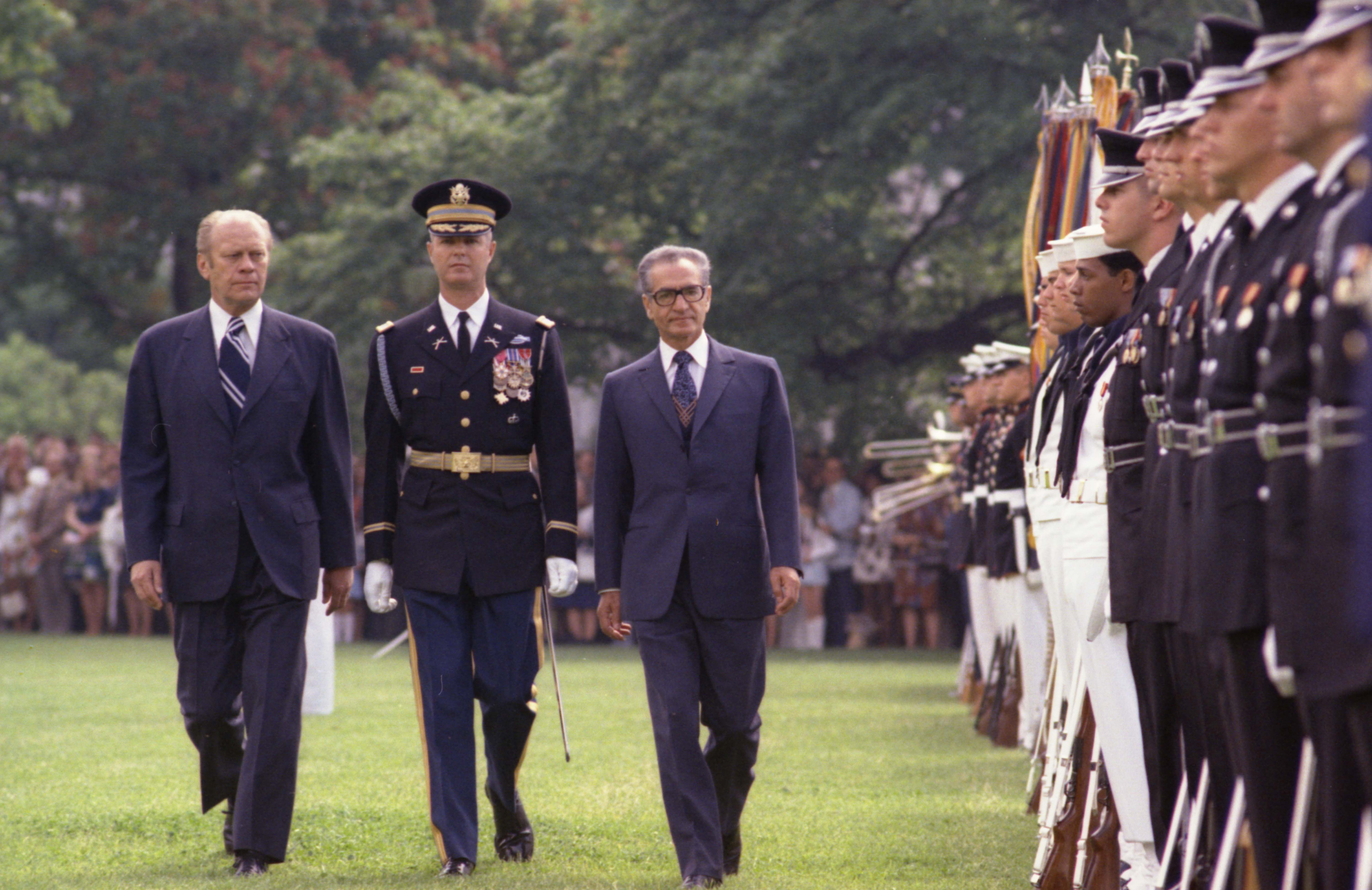
The 1953 coup that restored the Shah to power was the foundational act of this alliance, cementing Iran’s role as a US proxy. Over the next 25 years, the relationship deepened exponentially. The US provided the Shah with a formidable arsenal, making Iran the preeminent military power in the region and the world’s largest purchaser of American weapons. In return, the Shah guaranteed the flow of oil to the West, supported US interests in OPEC, and acted as a regional gendarme, notably providing troops to combat communist insurgencies in Oman. The CIA and SAVAK maintained intimate ties, and thousands of American military advisors and technical personnel were embedded within Iran.
This client-state relationship, however, contained the seeds of its own destruction. The Shah’s regime became so identified with the United States that popular grievances against the monarchy—its authoritarianism, its corruption, its perceived undermining of Islamic and national culture—were inextricably fused with anti-Americanism. As historian Mark Gasiorowski (1991) has argued, the US was “trapped by its success”; its deep investment in the Shah made it impossible to distance itself as the crisis unfolded, rendering it a primary target of revolutionary fury.
A Superpower Blindsided: Intelligence Failures and Strategic Myopia
The revolution stunned both superpowers, revealing profound intelligence failures. The US intelligence community, heavily reliant on SAVAK and the Shah’s own optimistic reports, fundamentally misread the nature and strength of the opposition. Analysts, trapped in a Cold War mindset, persistently viewed the threat through the lens of a potential communist takeover, largely dismissing the clerical leadership as a backwards-looking force that would inevitably cede to modern secular nationalists.
This myopia was rooted in a materialist understanding of power. The US could not conceive that a modernizing state with a powerful military and a growing economy could be overthrown by a movement led by elderly clerics invoking medieval theology. As a result, the Carter administration was caught in a paralyzing dilemma: how to support a key ally without being tainted by its collapse. The eventual decision to pressure the Shah to liberalize and then, belatedly, to advise a military crackdown, satisfied no one and demonstrated a fatal lack of a coherent contingency plan.
The Soviet Union was similarly caught off guard. While Soviet propaganda had long criticized the Shah as an American puppet, the Kremlin had maintained correct state-to-state relations, valuing Iran as a stable neighbor and a trading partner. The KGB had few assets within the burgeoning Islamist opposition, which it also failed to understand. Initially, Moscow viewed the revolution through a hopeful Leninist lens, seeing it as a “anti-imperialist” uprising that would naturally weaken the US and could potentially be steered into the Soviet orbit. They quickly realized, however, that Khomeini’s Islamism was ideologically hostile to Marxist-Leninist atheism and that the new regime’s anti-Americanism did not equate to pro-Sovietism.
The Islamic Republic: A Challenge to the Bipolar Order
The ideology of the new Islamic Republic, as articulated by Ayatollah Khomeini, presented a direct challenge to the superpower dichotomy. Khomeini’s doctrine was one of revolutionary non-alignment, encapsulated in the slogan “Neither East nor West, Islamic Republic.” This was not the non-alignment of India or Yugoslavia, which sought to negotiate a middle path between the blocs. This was an ideological rejection of both blocs as morally corrupt and imperialist.
The US was labeled the “Great Satan”—the primary source of moral corruption and global oppression. The Soviet Union was the “Lesser Satan”—a godless, expansionist empire. This worldview posited Islamism as a third, superior ideological force. In practice, this meant:
· Exporting the Revolution: Actively encouraging Shia communities and Islamist movements across the Muslim world to overthrow their own US or Soviet-backed regimes.
· Strategic Opportunism: While ideologically opposed to both, the state’s actions were often tactically aligned against the greater immediate threat, which remained the United States, particularly after the hostage crisis.
This posture made Iran a wildcard in international relations. It could not be easily integrated into either bloc, and its actions were driven by a revolutionary logic that often defied realpolitik calculations, making it a profoundly disruptive force in the already volatile Middle East.
Superpower Responses: The Carter Doctrine and the Soviet Quagmire
The revolution forced a dramatic reconfiguration of superpower strategy in the region.
The US Response: The Carter Doctrine The strategic loss of Iran, followed swiftly by the Soviet invasion of Afghanistan, created a sense of profound vulnerability in Washington. President Carter’s response was articulated in his January 1980 State of the Union address, which established the Carter Doctrine: “An attempt by any outside force to gain control of the Persian Gulf region will be regarded as an assault on the vital interests of the United States of America, and such an assault will be repelled by any means necessary, including military force.”
This doctrine represented a monumental shift. It effectively militarized US policy in the Gulf, leading to the creation of the Rapid Deployment Force (a precursor to CENTCOM) and a massive build-up of military infrastructure in the region. The US, having lost its “twin pillar” (the other being Saudi Arabia), was now prepared to project power directly into the Gulf to protect its interests, a commitment that has defined US foreign policy ever since.
The Soviet Response: The Invasion of Afghanistan For the USSR, the Iranian Revolution created both an opportunity and an existential threat. The opportunity lay in the crippling of their primary regional adversary. The threat was twofold: first, the potential for Islamist ideology to infect the millions of Muslims within the Soviet Union’s southern republics; and second, that the US would fill the vacuum left by the Shah’s fall by expanding its influence.
These fears culminated in the Soviet decision to invade Afghanistan in December 1979. The Kremlin sought to stabilize a faltering communist government on its border and prevent the spread of what it saw as US-backed Islamist militancy. It was a catastrophic miscalculation. The invasion triggered a decade-long war against US and Saudi-backed Afghan mujahideen, a conflict that became the Soviet Union’s “Vietnam,” draining its economy, demoralizing its military, and contributing significantly to its eventual collapse. The Iranian Revolution, by destabilizing the region and energizing political Islam, was a major catalyst for this fateful decision.
The Iran-Iraq WarIran-Iraq War
Short Description (Excerpt):A brutal eight-year conflict (1980–1988) initiated by Saddam Hussein’s invasion of Iran. While devastating, the war inadvertently strengthened the Islamic Republic, allowing it to suppress internal dissent under the guise of wartime patriotism.
Full Description:The Iran-Iraq War was one of the 20th century’s bloodiest conflicts, featuring trench warfare and the use of chemical weapons. Saddam aimed to seize oil-rich territory and crush the revolutionary threat next door. Instead, Iran mobilized a massive volunteer force (“human waves”) fueled by religious fervor to defend the revolution.
Critical Perspective:Khomeini famously called the war a “divine blessing.” It allowed the regime to militarize society and label any political opposition as treason. The war forged the identity of the Islamic Revolutionary Guard Corps (IRGC) and entrenched the narrative of Iran as a besieged fortress of Islam fighting against a corrupt world, a narrative that sustains the state to this day.
Read more: A Proxy Conflict by Default
The revolution’s Cold War implications were further crystallized by the Iran-Iraq War (1980-1988). While not a classic proxy war with superpowers controlling their clients, it quickly evolved into a conflict where each side was supported by a rival superpower bloc, desperate to ensure the other side did not win.
· Iraq received massive support from the Soviet Union (its traditional arms supplier), France, and, crucially, the United States and its Arab allies. Despite being officially neutral, the US provided intelligence, economic aid, and later direct military assistance to Saddam Hussein’s regime, viewing a victory for revolutionary Iran as the greater evil. This “tilt” towards Iraq was a stark demonstration of how the revolution had realigned alliances.
· Iran was largely isolated. It received some weapons from Syria, Libya, North Korea, and via clandestine arms deals with Israel and the US (the Iran-Contra Affair), but it fought primarily with its own resources and revolutionary zeal. Its ability to withstand a US-and Soviet-backed Iraq for eight years demonstrated the formidable power of its ideological mobilization and became a central pillar of the regime’s mythology.
The war locked Iran into a permanent state of confrontation with the US-led order in the region, a dynamic that has persisted long after the end of the Cold War.
Historiographical Perspectives: A Systemic Shock
Scholars have assessed the revolution’s impact on the Cold War through several lenses:
· The Realist School: Views the revolution as a major strategic loss for the US and a systemic shock that forced a reassertion of American power (the Carter Doctrine) and a fatal overextension by the Soviet Union (Afghanistan). The focus is on the shift in the balance of power and the calculations of state actors.
· The Ideational/Cultural Turn: Scholars like Nikki Keddie (2003) emphasize the ideological shock of the revolution. It demonstrated that a non-communist, non-secular ideology could mobilize masses and topple a modernizing state, challenging the core assumptions of modernization theory that underpinned both superpowers’ approaches to the developing world.
· The Peripheral Agency Argument: This view, advanced by historians of the “Global SouthGlobal South
Full Description:The Global South is a term that has largely replaced “Third World” to describe the nations of Africa, Latin America, and developing Asia. It is less a geographical designator (as it includes countries in the northern hemisphere) and more a political grouping of nations that share a history of colonialism, economic marginalization, and a peripheral position in the world financial system. Bandung is often cited as the birth of the Global South as a self-aware political consciousness.
Critical Perspective:While the term implies solidarity, critics argue it acts as a “flattening” concept. It lumps together economic superpowers like China and India with some of the world’s poorest nations, obscuring the vast power imbalances and divergent interests within this bloc. It risks creating a binary worldview that ignores the internal class exploitations within developing nations by focusing solely on their external exploitation by the North.
Read more,” posits that the revolution is a prime example of how actors on the periphery of the Cold War could dramatically alter the course of the conflict. Iran was not a passive pawn but an active agent that reshaped the geopolitical landscape to which the superpowers could only react.
These perspectives collectively affirm that the Iranian Revolution was a transformative event that exposed the vulnerabilities of the client-state system and proved that local ideologies and actors could exert a decisive influence on global politics.
Conclusion
The Iranian Revolution of 1979 was a seismic event that fractured the Cold War order in the Middle East. It destroyed a critical American ally, provided the catalyst for the Soviet invasion of Afghanistan, and unleashed a potent ideological force that rejected the very foundations of the bipolar world. The US response—the Carter Doctrine—re-militarized its presence in the Gulf, setting a precedent for future interventions. The Soviet response led to a debilitating quagmire that accelerated its imperial decline.
Most significantly, the revolution gave birth to the Islamic Republic, a unique and enduring actor whose foreign policy principle of “Neither East nor West” created a third pole of influence. It demonstrated that the agency of peripheral states, driven by local historical grievances and transnational ideologies, could disrupt the strategies of superpowers. The end of the Cold War did not resolve the tensions unleashed in 1979; it merely removed the Soviet layer, leaving the conflict between the US and the Islamic Republic as a central, enduring feature of the contemporary Middle East. The revolution, therefore, stands not as an epilogue to the Cold War but as a prologue to the conflicts of the 21st century, a stark reminder that the most disruptive forces in international politics are often those that defy easy categorization within existing ideological frameworks.
References
· Gasiorowski, M. J. (1991). U.S. Foreign Policy and the Shah: Building a Client State in Iran. Cornell University Press.
· Keddie, N. R. (2003). Modern Iran: Roots and Results of Revolution. Yale University Press.
· Sick, G. (1985). All Fall Down: America’s Tragic Encounter with Iran. Random House.
· Brzezinski, Z. (1983). Power and Principle: Memoirs of the National Security Adviser, 1977-1981. Farrar, Straus, Giroux.
· Westad, O. A. (2005). The Global Cold War: Third WorldThird World Full Description:
Originally a political term—not a measure of poverty—used to describe the nations unaligned with the capitalist “First World” or the communist “Second World.” It drew a parallel to the “Third Estate” of the French Revolution: the disregarded majority that sought to become something. The concept of the Third World was initially a project of hope and solidarity. It defined a bloc of nations in Latin America, Africa, and Asia that shared a common history of colonialism and a common goal of development. It was a rallying cry for the global majority to unite against imperialism and racial hierarchy.
Critical Perspective:Over time, the term was stripped of its radical political meaning and reduced to a synonym for underdevelopment and destitution. This linguistic shift reflects a victory for Western narratives: instead of a rising political force challenging the global order, the “Third World” became framed as a helpless region requiring Western charity and intervention.
Interventions and the Making of Our Times. Cambridge University Press.
· Rubinstein, A. Z. (1981). Soviet Policy Toward Turkey, Iran, and Afghanistan: The Dynamics of Influence. Praeger.
· Hiro, D. (1985). Iran Under the Ayatollahs. Routledge & Kegan Paul.

Leave a Reply