
The Spanish Civil War (1936-1939) occupies a uniquely contested space in modern historical memory. For decades, a powerful narrative framed the conflict as a stark, elemental clash between the forces of democracy and fascism—a dress rehearsal for the larger world war that followed. While this interpretation contains elements of truth, particularly in how the war was perceived by the outside world, it fundamentally distorts the complex Spanish reality it seeks to explain.
The war was not a simple binary. It was a multi-layered struggle: a military conflict between a rebellious army and a loyalist government; a vicious civil war pitting neighbor against neighbor; a profound social revolution that challenged the very foundations of the state; and, most consequentially, an international proxy war where the future of Europe was decided by foreign intervention. It was the first “media war,” fought with propaganda as much as with bullets. It was a laboratory for new weapons and tactics, from the terror bombing of civilians to the Blitzkrieg. And it was a crucible of ideology, drawing in volunteers from across the globe to fight for their vision of the future. This is the story of that conflict, a uniquely Spanish tragedy that became the world’s crisis.
The Anarchist Exception: A Revolution Within the War
When Spanish generals rose in rebellion in July 1936, they expected a swift coup. Instead, the collapse of state authority in Republican-held territory triggered a profound social revolution, spearheaded by Spain’s powerful anarcho-syndicalist movement. In Catalonia, Aragon, and Andalusia, workers seized factories, peasants collectivized vast agricultural estates, and popular militias were formed to fight the fascists. For a brief, incandescent moment, a stateless, libertarian communist society was a tangible reality.
This revolution-within-a-war fundamentally shaped the conflict’s trajectory. While it unleashed a powerful wave of grassroots anti-fascist energy, it also terrified the Western democracies and the Soviet Union. The sight of a genuine anarchist revolution was a far greater threat to international capitalism and Stalinist communism than Spanish fascism. The subsequent suppression of this revolution by the Republic’s own communist faction, backed by the Soviet Union, was a critical turning point—a civil war within the civil war that crippled Republican unity and morale.
The International Stage: A World of Intervention
The fate of the Spanish Republic was ultimately sealed not in Madrid or Barcelona, but in the capitals of Europe. Foreign intervention transformed a domestic conflict into an international one.
Bystanders to Tragedy: The Non-Intervention Committee
The most decisive form of intervention was, paradoxically, an act of non-intervention. Fearing that the conflict could escalate into a general European war, the Western democracies, led by Britain and France, established a Non-Intervention Committee. This policy, born of the era’s appeasement mindset, was a diplomatic farce and a moral abdication. While it created a de facto arms embargo on the legitimate, internationally recognized Republican government, it became a porous screen through which Germany and Italy could funnel men and matériel to Franco’s Nationalists with impunity. Non-intervention was not neutral; it was a slow strangulation of the Spanish Republic.
The Dress Rehearsal: Germany’s Laboratory of War
For Adolf Hitler, Spain was a strategic opportunity. Intervention allowed him to test his new military machine, the Wehrmacht, and its revolutionary doctrines. The infamous Condor Legion, a unit of the German Luftwaffe, provided Franco with air superiority and pioneered the tactics of modern warfare. In Spain, Germany tested dive-bombers, coordinated air-ground attacks (the foundations of Blitzkrieg), and, most horrifically, perfected the tactic of terror bombing civilian populations, immortalized in the destruction of the Basque town of Guernica in April 1937. Spain was Germany’s laboratory of war.
The Fascist Brotherhood: Italy’s Invasion in All But Name
While Germany’s intervention was clinical and strategic, Fascist Italy’s was a massive, ideologically driven invasion. Benito Mussolini sent far more personnel to Spain than Hitler—nearly 80,000 “volunteers” from the Corpo Truppe Volontarie (CTV), along with hundreds of tanks, aircraft, and warships. For Mussolini, Spain was a crucial battle in his crusade to establish fascist dominance in the Mediterranean. It was a full-scale deployment of the Italian military, an invasion in all but name, driven by a desire to create a sister fascist regime and weaken France.
Stalin’s Double Game: Soviet Intervention
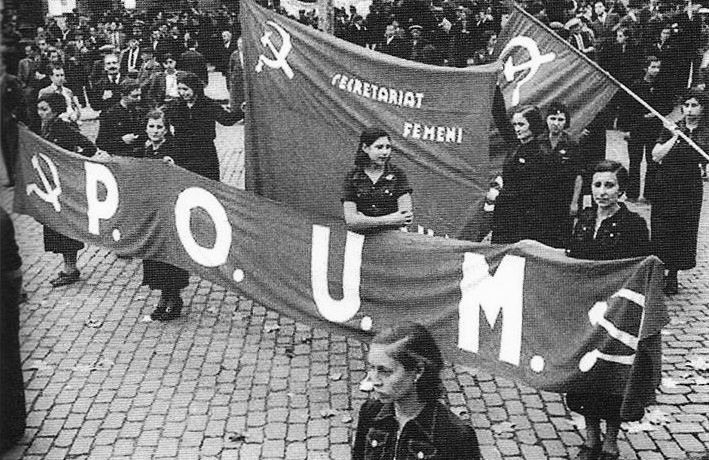
The Soviet Union was the Spanish Republic’s only significant state supporter, providing crucial military aid, including tanks, aircraft, and military advisors. This support, however, came at a high price. Joseph StalinStalin Joseph Vissarionovich Stalin (18 December 1878 – 5 March 1953) was a Soviet politician, dictator and revolutionary who led the Soviet Union from 1924 until his death in 1953. Read More was playing a double game. While he wanted to prevent a fascist victory, his primary goal was to serve Soviet foreign policy interests. He used the war to gain influence over the Republican government, empowering the Spanish Communist Party to suppress its revolutionary rivals, particularly the anarchists and independent Marxists of the POUM. Soviet aid was a lifeline, but it was also a weapon used to ensure that any Republican victory would conform to the dictates of Moscow.
A World of Volunteers: The Global Civil War
The Spanish Civil War’s ideological stakes drew thousands of foreign volunteers to fight on both sides, turning the conflict into a truly global affair.
The Global Brigade: Myth and Reality of the International Brigades
Few subjects are as mythologized as the International Brigades. Composed of over 35,000 volunteers from more than 50 countries, they fought for the Republic and became a powerful symbol of anti-fascist solidarity. This romantic narrative, however, obscures a more complex reality. While the volunteers were driven by selfless idealism, the Brigades were organized and controlled by the Comintern (the Communist International), serving as an instrument of Soviet policy. They were a potent propaganda tool but also suffered from poor training and catastrophic casualty rates, often used as shock troops in the war’s bloodiest battles.
The Forgotten Front: International Volunteers for Franco
While the International Brigades are famous, thousands of foreigners also took up arms for Francisco Franco’s Nationalist cause. This “forgotten front” was a diverse coalition, including Irish Catholic fascists (the “Blueshirts”), exiled White Russians seeking revenge against communism, Romanian Iron Guard members, and French ultra-nationalists. Though less centralized than the International Brigades, these volunteers were instrumental to Nationalist propaganda, allowing Franco to portray the war not as a military rebellion, but as a righteous “crusade” to save Christian Spain from a “Judeo-Bolshevik” conspiracy.
The Unlikely Ally: Mexico’s Defiant Support
In a world of cynical realpolitik and abdication, one nation stood out: Mexico. The left-wing government of Lázaro Cárdenas provided the Spanish Republic with unqualified diplomatic support, material aid, and, crucially, sanctuary for tens of thousands of refugees after the war. Mexico’s principled stand against fascism was a stark contrast to the appeasement of the Western democracies and the self-serving intervention of the other major powers.
The Hidden Fronts: The Wars of Words and Oil
The conflict was also waged on unseen battlefields that proved just as decisive as the military fronts.
The War of Words: The First Media War
The Spanish Civil War was the first “media war” of the modern age. It was fought in the newspapers, newsreels, and radio broadcasts of the world. Both sides waged sophisticated propaganda campaigns to shape international public perception. The conflict drew in some of the 20th century’s greatest writers and artists—Ernest Hemingway, George Orwell, Robert Capa, and Pablo Picasso—whose work immortalized the struggle and framed it for generations to come. The global battle for hearts and minds was a central theatre of the war.
The Battle for Oil: The Economic Chokehold
Underlying the military struggle was a decisive war over a single resource: petroleum. In an age of mechanized warfare, oil was the lifeblood of armies. The outcome of the conflict was critically shaped by the flow of fuel. While the Non-Intervention agreement technically forbade oil sales, major international oil companies, notably Texaco, Standard Oil, and Royal Dutch Shell, created a clandestine supply chain that funneled oil to Franco on credit, effectively starving the Republic of the fuel it needed to power its tanks, trucks, and aircraft. This economic chokehold was as deadly as any military blockade.
Timeline of the Spanish Civil War
- February 1936: The left-wing Popular Front coalition wins the Spanish general election.
- July 17-18, 1936: A military coup led by conservative generals begins in Spanish Morocco and spreads to mainland Spain, marking the start of the Civil War.
- August 1936: The Non-Intervention Committee is formed in London.
- November 1936: The Siege of Madrid begins. The first units of the International Brigades arrive to help defend the city.
- April 26, 1937: The German Condor Legion bombs the Basque town of Guernica.
- May 1937: The “May Days” in Barcelona: fighting breaks out between anarchist and communist factions within the Republican camp.
- July 1938: The Battle of the Ebro, the last major Republican offensive, begins. Its failure seals the military fate of the Republic.
- January 1939: Franco’s forces capture Barcelona.
- March 28, 1939: The Nationalists enter Madrid.
- April 1, 1939: Francisco Franco declares the end of the Spanish Civil War.
Glossary of Terms
- Anarchism (CNT/FAI): The Confederación Nacional del Trabajo (CNT) was the powerful anarcho-syndicalist trade union, and the Federación Anarquista Ibérica (FAI) was the militant anarchist organization that drove the social revolution in 1936.
- Comintern: The Communist International, an organization directed by the Soviet Union that sought to promote world communism. It organized and controlled the International Brigades.
- Condor Legion: The expeditionary air and ground force sent by Nazi Germany to support the Nationalists. It was responsible for the bombing of Guernica.
- Falange: The Spanish fascist party, which became the sole legal political party under Franco’s regime.
- Guernica: A Basque town destroyed by a terror bombing raid by the German Condor Legion in 1937, immortalized in the famous painting by Pablo Picasso.
- International Brigades: Military units composed of foreign volunteers who fought for the Spanish Republic against the Nationalists.
- Non-Intervention Committee: A committee of 27 nations, including Britain, France, Germany, Italy, and the USSR, formed to prevent foreign intervention, but which effectively became a one-sided embargo against the Republic.
- Popular Front: The electoral coalition of left-wing and liberal parties that won the 1936 Spanish election, whose victory triggered the military coup.