-
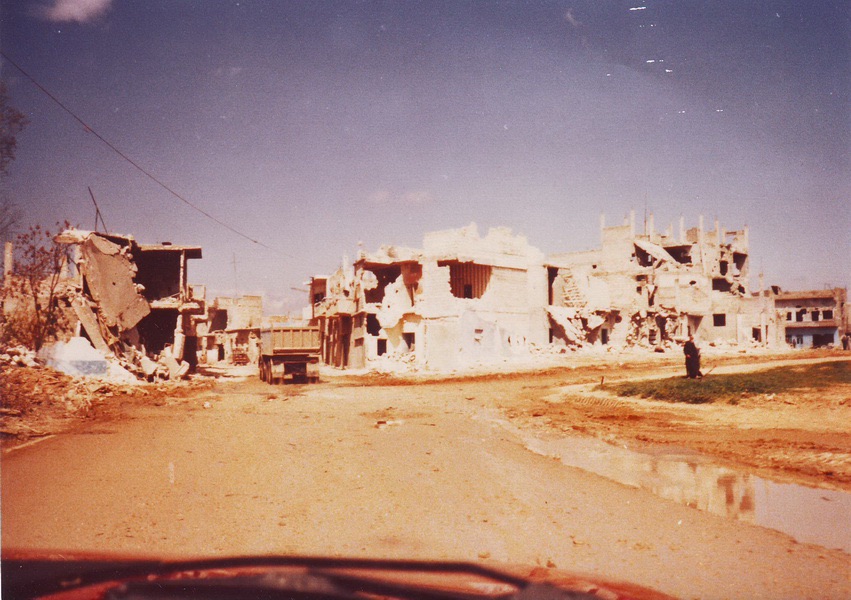
In the first days of February 1982, Syrian army units and security forces surrounded the ancient city of Hama on the Orontes river in central Syria. What followed over the next three weeks was one of the most savage acts of political violence carried out by any Arab government against its own population in the twentieth century — a military assault on an urban centre that killed between ten and forty thousand people, destroyed whole districts of a city that had been continuously inhabited for eight thousand years, and established, beyond any further argument, what the rules of political life…
-

Between 1976 and 2000, Hafez al-Assad transformed Syria from a state perpetually on the brink of internal collapse into a formidable regional power whose approval was required for any significant political transaction in the Levant. He did so not through conventional military dominance — Syria’s armed forces, though large, were never strong enough to defeat Israel outright, and the Gulf monarchies dwarfed Syria’s economic resources — but through a combination of strategic positioning, proxy relationships, calculated ambiguity, and a willingness to sustain costs that other actors could not or would not match.
-

When Hafez al-Assad seized power in November 1970 in what he called the Corrective Movement, he inherited a state that had undergone ten coups in twenty-two years. His singular achievement over the next three decades was to ensure there would not be an eleventh — at least not a successful one
-
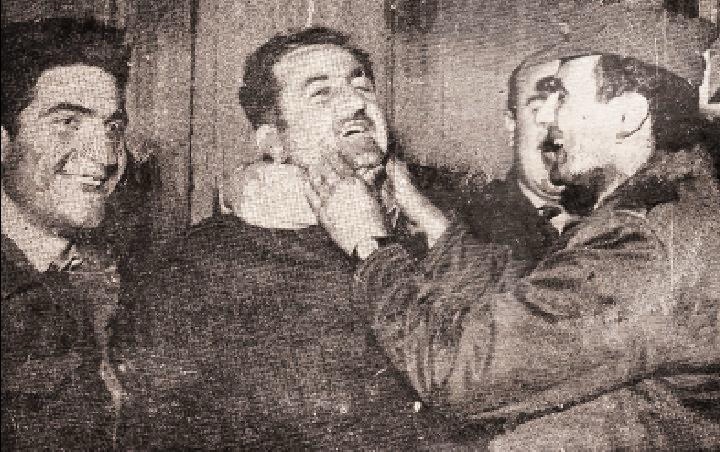
The Ba’ath Party’s seizure of power in 1963 promised Arab socialism and national unity. Within seven years it had consumed itself in factional violence, lost the Golan Heights, and produced the conditions for one man’s absolute rule.
-
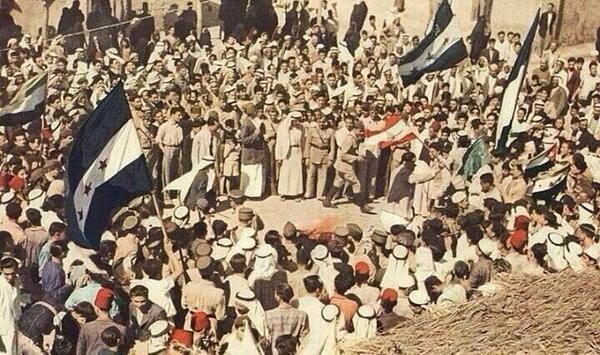
Syrian independence in 1946 brought not stability but a revolving door of coups, failed unions and civilian governments undone by their own militaries — and at the root of it all, the unresolved questions the French Mandate had left behind.
-

By 2016, the Syrian war had lasted five years, killed more than four hundred thousand people, displaced approximately half the country’s pre-war population of twenty-two million, and produced a humanitarian catastrophe of a scale Europe had not witnessed since the Second World War.
-

The Collapse Nobody Predicted In the spring of 1918, Germany appeared to be winning the First World War. The Treaty of Brest-Litovsk in March had knocked Russia out of the conflict, freeing over a million German troops for transfer to the Western Front. Operation Michael, launched in March, achieved the largest territorial gains on the Western Front since 1914, driving deep into Allied lines and threatening to split the British and French armies. By May, German forces were closer to Paris than at any point since 1914. And yet by November, Germany had surrendered. The speed and completeness of the…
-
Why did Russia explode into violence and anarchy in 1905? How the the Czar react? Russia’s experience in 1905 set the stage for the revolution in 1917 and showed to all sides, the Czar, workers, peasants and nobles, who could trust who, and how high the stakes were. Explaining History helps you understand the 20th Century through critical conversations and expert interviews. We connect the past to the present. If you enjoy the show, please subscribe and share. ▸ Support the Show & Get Exclusive Content Become a Patron: patreon.com/explaininghistory ▸ Join the Community & Continue the Conversation Facebook Group:…
-
What You’ll Learn in This Episode The origins and structure of Russia’s aristocratic class under the Tsarist system How the nobility related to the autocracy — support, tension, and dependence Why Russia’s aristocrats failed to present a credible alternative to the Tsar in 1917 The Bolshevik assault on the nobility and the destruction of Russia’s landed elite How the elimination of the aristocracy reshaped Russian society and politics A World of Privilege: Russia’s Aristocracy Before 1917 At the turn of the twentieth century, Russia remained one of the most socially unequal societies in the industrialised world. While Western European nobles…
-
What You’ll Learn in This Episode The conditions inside Russia in early 1917 that made revolution almost inevitable How a spontaneous bread riot in Petrograd grew into the collapse of the Romanov dynasty The role of the army in tipping the balance — why soldiers refused to fire on the crowds What the Provisional Government was, who led it, and why it failed to consolidate power The nature of “dual powerDual Power The political condition in Russia between February and October 1917 in which power was contested between the Provisional Government (representing the liberal and democratic forces of the February…