
In 1839, Louis Daguerre announced to the French Académie des Sciences the development of a process by which light acting on a chemically prepared surface could produce a permanent image of whatever lay before the lens. The physicist François Arago, presenting the discovery to the Academy, recognised immediately that it was not simply a technical innovation. It was an epistemological event. For the first time in human history, the external world could be made to represent itself, bypassing the intermediary of the human hand. The question of what this meant — for knowledge, for art, for memory, for truth — has been argued over for nearly two centuries, and has not yet been resolved.
Photography arrived in the world just as the modern world was being assembled. The Industrial Revolution was remaking the physical landscape; mass print culture was creating new reading publics; nationalism was producing new collective identities that needed visual symbols; science was establishing new criteria for what counted as knowledge. Photography accelerated all of these processes and complicated all of them. It provided the evidence that science required; it also provided the propaganda that nationalist movements exploited. It documented the poverty that reformers needed to prove existed; it also aestheticised that poverty in ways that distanced viewers from it. It preserved the faces of the dead; it also allowed the manipulation of memory. The camera did not tell the truth. But it produced a new and powerful relationship to the question of what the truth looked like.
The Earliest Image and What It Promised
The first photographic image that survives with certainty is Nicéphore Niépce’s “View from the Window at Le Gras,” made around 1826 or 1827. It shows rooftops and an interior courtyard as seen from an upper-storey window, the buildings on both sides of the image illuminated by the sun because the exposure required approximately eight hours — long enough for the sun to pass from east to west and illuminate both sides of the courtyard simultaneously. The image is blurry, ghostly, and almost entirely unrecognisable without explanation. But it represented something no human hand had ever produced: a trace of light made by light itself.
Daguerre’s process, announced a decade later, reduced exposure times to minutes, then to seconds, and produced images of an exquisite and sometimes disquieting clarity. The early daguerreotypes of Paris streets appear almost devoid of human life — the exposure times were long enough that moving figures simply failed to register, leaving the city’s buildings and pavements rendered in perfect detail while its inhabitants vanished. This characteristic of early photography — perfect inanimate detail, absent or blurred human movement — shaped its initial applications: portraiture (where the subject could be made to remain still), landscape, architecture, and the documentation of objects. The portrait studio, which made photography available to middle-class families who could not afford painted portraits, became one of the defining institutions of Victorian urban life.
The American Civil War: Death Made Public
The American Civil War of 1861 to 1865 was the first major conflict to be extensively photographed, and the photographs changed the public experience of war in ways that had no precedent. Mathew Brady, a successful portrait photographer who had photographed every American president from John Quincy Adams onwards, organised teams of photographers — most significantly Alexander Gardner and Timothy O’Sullivan — to document the war in the field. The results were extraordinary: landscapes churned to mud by artillery, field hospitals where surgeons operated without anaesthesia, ammunition wagons and supply trains, and the faces of soldiers on both sides who would be dead within months.
The most powerful images were the dead. In September 1862, Brady exhibited photographs of the battlefield dead from Antietam — the bloodiest single day of the war, in which approximately 22,000 men were killed or wounded — in his New York gallery. The photographs showed corpses lying in the positions in which they had fallen, bloating in the September heat, their faces already beyond recognition. The New York Times described the effect: “Mr. Brady has done something to bring home to us the terrible reality and earnestness of war. If he has not brought bodies and laid them in our door-yards and along the streets, he has done something very like it.”
The Antietam photographs were the first time that the American public was confronted with the photographic evidence of mass death. The effect was the beginning of a transformation in the relationship between citizens and war that would continue through the twentieth century and beyond. The camera did not stop wars, but it made it harder to maintain the comfortable distance between the violence that was done in a democracy’s name and the civilians who nominally authorised that violence.
Documentary Photography and the Social Conscience
The use of photography as a tool of social reform — as a means of making the invisible visible — began in earnest in the late nineteenth century. Jacob Riis, a Danish-born journalist working in New York, used the newly available flash photography to document the interior of the tenements of the Lower East Side in a series of images published in 1890 as How the Other Half Lives. The photographs showed rooms of almost inconceivable density and squalor, children sleeping on floors, families occupying spaces designed for storage. The book directly influenced Theodore Roosevelt’s reform programme as New York police commissioner and contributed to the Progressive Era’s legislative assault on the worst conditions of industrial urbanism.
Lewis Hine documented child labour in the mills and mines of the American South and the Northeast in the early twentieth century, producing images — children whose bodies were already damaged by the work they were doing, children whose ages he sometimes recorded on the back of the print because the mills denied it — that were used as evidence by the National Child Labor Committee in its campaign for legislation. The photographs were not simply illustrations; they were documents in a legal and moral argument, and they carried an evidential weight that words alone could not produce.
The Farm Security Administration photography project of the 1930s — in which Walker Evans, Dorothea Lange, Arthur Rothstein, Russell Lee, and others were sent across rural America to document the human consequences of the Great Depression and the Dust Bowl — remains the most sustained and significant programme of social documentary photography in history. The FSA images are so thoroughly embedded in the American cultural memory of the Depression that it is now almost impossible to think about that era without seeing them: the faces of the migrant workers, the eroded fields, the broken-down cars and makeshift shelters. Dorothea Lange’s “Migrant Mother” — Florence Owens Thompson, photographed in a pea-pickers’ camp in Nipomo, California, in February 1936 — became the defining image of Depression-era America and one of the most reproduced photographs in history.
The ethical dimensions of documentary photography were present from the beginning and have never been fully resolved. The photographer enters lives of suffering from outside and leaves with images that will have careers entirely independent of the subjects. Florence Owens Thompson expressed, in later life, a complex and sometimes bitter relationship to the photograph that had made her face one of the century’s most recognisable: she felt that she and her family had received nothing from the image’s circulation while it was used for purposes she had not authorised. The question of what social documentary photography is for — for the subjects, for the audience, for the photographer, for the historical record — remains genuinely contested.
War Photography and the Problem of the Frame
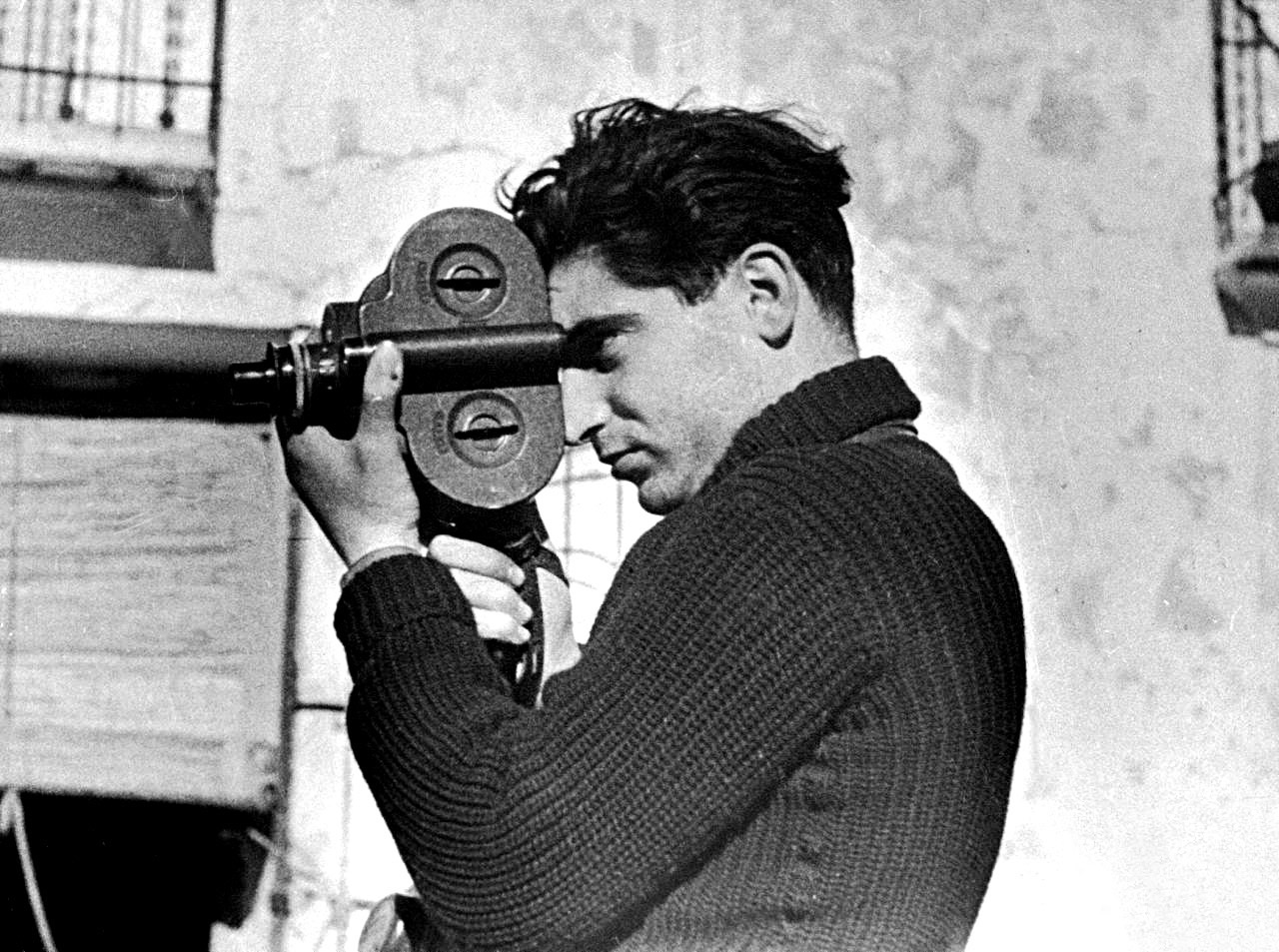
Robert Capa, born Endre Friedmann in Budapest in 1913, became the most celebrated war photographer of the twentieth century and the figure around whom the ethics and aesthetics of the genre crystallised. His photograph “The Falling Soldier,” made during the Spanish Civil War in September 1936, shows a Republican militiaman at the apparent moment of death, his body falling backwards, his rifle dropping from his hand. The image was published internationally and became one of the defining images of the Spanish Civil War. Whether the photograph was staged, or whether it actually captured a man dying, has been debated for decades without definitive resolution. Capa’s response to challenges about his methods — “If your pictures aren’t good enough, you’re not close enough” — defined a philosophy of war photography that prioritised proximity, immediacy, and emotional impact over detachment.
The D-Day landing photographs that Capa made on Omaha Beach on 6 June 1944 were nearly lost when a darkroom technician in London overheated the drying film and destroyed most of what Capa had shot. The eleven surviving frames — out of one hundred and six — are blurry, partially exposed, and technically imperfect. They are also the most authentic visual record that exists of those first terrible minutes on the beach, and their technical imperfection is inseparable from their power: you feel the chaos and terror through the limitations of the image.
Nick Ut’s photograph of Phan Thi Kim Phuc, the nine-year-old girl running naked and screaming down a road in South Vietnam after a napalm attack in June 1972, was credited by many observers with accelerating the turning of American public opinion against the Vietnam War. Eddie Adams’ photograph of South Vietnamese Brigadier General Nguyen Ngoc Loan executing a Viet Cong prisoner in the street during the Tet Offensive in 1968 — the prisoner’s face at the moment the bullet entered his skull, the general’s pistol still raised — produced a visceral revulsion that no description could have generated. These images were not sufficient causes of political change; the political conditions for the change already existed. But they provided visual confirmation of what was being argued in words, and they did so at a speed and with an immediacy that no other medium could match.
The question of whether photographic evidence changes political outcomes has been consistently difficult to answer. Susan Sontag, whose sustained engagement with photography in On Photography (1977) and Regarding the Pain of Others (2003) remains the essential reference point for these arguments, suggested that images of atrocity are as capable of producing numbness as they are of producing outrage: that the sheer volume of suffering available to be photographed, and the conditions of its consumption — in newspapers, on screens, alongside advertisements and entertainment — domesticated it rather than confronting the viewer with its full weight.
Photography and the Visual Record of Black America
African American photographers and their subjects occupy a distinct and important chapter in the history of photography’s relationship to social reality. The photographic record of Black America was, for most of the medium’s history, made largely by white photographers and distributed through white-owned media institutions, with consequences for what was shown, how it was framed, and whose experience was centred. The counter-tradition of Black photographers — James Van Der Zee, who documented the Harlem Renaissance; Gordon Parks, who worked for Life magazine and later made films; Roy DeCarava, whose work documented everyday Black life in Harlem with an intimacy that no outsider could have achieved — produced a visual record that was different in kind as well as in content.
The photographs of the civil rights movement — the Birmingham Campaign fire hoses, the Selma marchers on the Edmund Pettus Bridge, the little girl in a white dress walking past the segregationist crowds outside a newly integrated school — were made mostly by white photojournalists and distributed through mainstream American and international media. Their effect on Northern white opinion was substantial. But the Black photographic tradition also documented the civil rights era from within the movement and from within the communities it was fighting for, producing a record whose relationship to its subjects was less that of witness to suffering than of member of community to community.
The Digital Turn and the Crisis of Evidence
Digital photography transformed the medium’s relationship to truth in ways that the preceding century had only partially anticipated. The technical ability to manipulate a digital image — to remove people from backgrounds, alter colours, composite separate images into a single frame — existed from the early years of digital photography, but the ease of manipulation increased exponentially as the tools became cheaper and more widely available. The assumption that a photograph provides evidence of something that occurred — the foundational epistemological claim that had given photography its authority — was directly undermined by the knowledge that any digital image might have been altered.
The proliferation of images in the digital era created a different problem. The smartphone camera made everyone a photographer, and the social media platforms that distributed their images created a supply of visual content that no editorial system could meaningfully curate or verify. The consequences were contradictory: documentary photography became, in one sense, more democratic — the ability to record and distribute images of police violence, of political repression, of the quotidian realities of lives that mainstream media had not previously covered was no longer confined to professional photographers with institutional backing. The images that documented police killings of Black Americans in the 2010s and contributed to the Black Lives Matter movement were, for the most part, made on smartphones by bystanders.
But the same proliferation created conditions in which fabricated images — deepfakes, AI-generated photographs, images from one conflict mislabelled as another — circulated with the same apparent authority as genuine documentary images. The epistemological assumption that grounded photography’s authority — that a photograph is evidence of something that was physically present before the camera at the moment of exposure — had been eroded by decades of digital manipulation and was now being further undermined by the ability to generate photorealistic images of scenes and events that had never occurred.
The Memory of Light
Photography’s most intimate function has always been the preservation of personal memory. The family photograph album is the medium at its most democratic and its most universal: the record of births, deaths, marriages, childhood, the faces of people who are no longer alive. Roland Barthes, in Camera Lucida (1980), wrote about a photograph of his recently dead mother as a child — a photograph he described but declined to reproduce in the book — as containing what he called the punctum, the detail that pierces the viewer and opens a wound in time. Photography is full of photographs of people who were about to die, whose deaths had not yet happened at the moment of the image and have long since occurred. Every portrait is, in this sense, haunted.
The digital age has not diminished this function, but it has altered its texture. The smartphone photographs that most people now take of their lives are simultaneously more numerous, more immediately distributable, and less materially stable than the printed photographs that preceded them. They exist on servers and platforms whose long-term survival is not guaranteed, in formats that may not be readable by future devices, in quantities too vast for the kind of selective curation that gives a photograph album its character. The archive of the personal past is larger and more fragile than at any previous point in the medium’s history.
What photography has done, over nearly two centuries, is change the relationship between the present and the past, between the visible and the evidential, between the individual and the historical record. It has made it possible to see what you were not there to witness, and to preserve what you were. It has made it harder to deny what happened and easier to distort what happened. It has been used to document the worst human beings have done to each other, and to record the most private and tender moments of human life. The machine has caught the world’s light, and the light has been both evidence and argument, both memory and manipulation, both testament and lie.

Leave a Reply