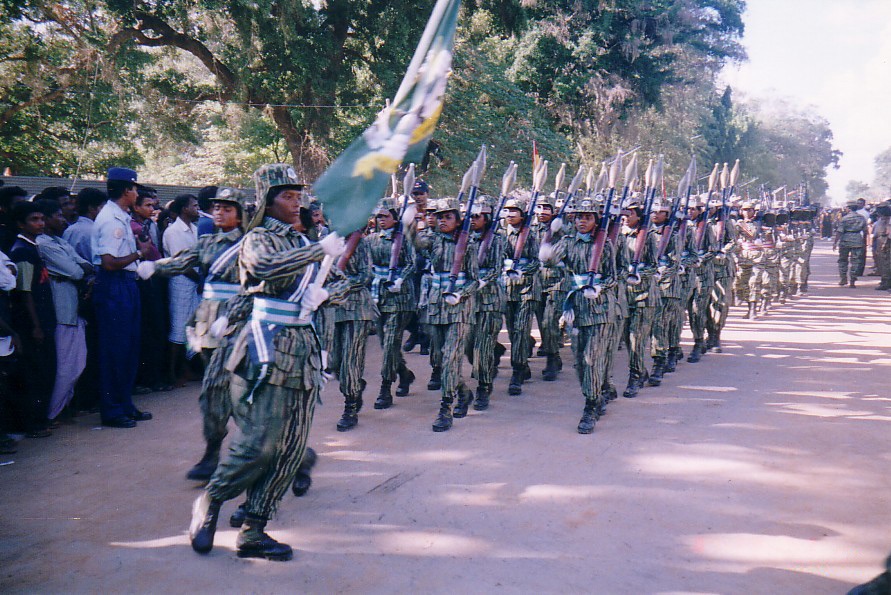

The Sri Lankan Civil War (1983-2009) was one of the longest-running and most brutal intra-state conflicts of the late 20th and early 21st centuries. It was a war of staggering human cost, profound geopolitical complexity, and devastating finality. At its heart was a violent struggle between the Sri Lankan state, dominated by the Sinhalese majority, and the Liberation Tigers of Tamil Eelam (LTTE), a separatist insurgent group that fought for an independent Tamil homeland in the island’s north and east. To reduce the conflict to a simple binary, however, is to misunderstand its essence. It was not merely a war of secession but a multidimensional tragedy born from the contentious post-colonial nation-building project, escalating ethnic outbidding, and the failure of successive political solutions. This introductory article provides a foundational analysis of the war’s anatomy, examining its deep historical roots, the transformative rise of the LTTE as a uniquely potent insurgent force, the key phases of the military struggle, and the controversial endgame that concluded the fighting but left a legacy of unresolved trauma and political challenge. This overview serves as the central pillar for a detailed exploration of the war’s specific dimensions, from its military innovations and political ideology to its human cost and enduring aftermath.
The Seedbed of Conflict: Post-Colonial Politics and the Crisis of Inclusion
The origins of the civil war are inextricably linked to the processes of identity formation and state construction following Ceylon’s independence from Britain in 1948. The colonial period had, in many ways, crystallized a distinct Tamil political identity, particularly among the Ceylon Tamils of the north and east, who had leveraged English education for significant representation in the colonial civil service. The post-independence political order, however, was defined by majoritarian Sinhala-Buddhist nationalism, which sought to rectify perceived colonial-era imbalances and establish Sinhala as the sole national language and Buddhism as the privileged religion.
Key legislative acts—the Sinhala Only Act (1956), which made Sinhala the sole official language, and the discriminatory university standardization policies of the 1970s—were perceived by many Tamils not as corrective measures but as systematic tools of political disenfranchisement, cultural subordination, and economic marginalization. These state-driven policies fostered a deep-seated grievance that transformed Tamil political demands from federalism and parity to, ultimately, separatism. Simultaneously, anti-Tamil pogroms, particularly in 1958, 1977, and most catastrophically in 1983, served as critical accelerants. The July 1983 riots, in which Sinhalese mobs killed hundreds—possibly thousands—of Tamils and destroyed billions in property while state security often stood by, marked a definitive rupture. It radicalized a generation, provided the LTTE with a powerful recruitment narrative, and signaled to many Tamils that the Sri Lankan state could not be a protector of their rights.
The Rise of the LTTE: From Faction to Proto-State
The militant response to state discrimination initially manifested in a fragmented landscape of Tamil rebel groups. The LTTE, founded in 1976 by Velupillai Prabhakaran, distinguished itself through a ruthless commitment to ideological purity, centralized command, and unmatched brutality, both against the state and rival Tamil factions. By the mid-1980s, through a campaign of assassinations and intimidation, it had effectively eliminated groups like TELO and EPRLF to become the “sole representative” of Tamil armed resistance.
The LTTE’s potency stemmed from its unique fusion of attributes:
· Military Innovation: It pioneered the use of suicide terrorism as a systematic weapon of war through its Black Tiger unit, assassinating high-profile targets including Indian Prime Minister Rajiv Gandhi (1991) and Sri Lankan President Ranasinghe Premadasa (1993). It also built the Sea Tigers, one of the world’s most capable non-state naval forces, which challenged the Sri Lankan Navy for control of coastal waters.
· Transnational Networks: A deeply committed global Tamil diaspora provided crucial financial, logistical, and diplomatic support, enabling the procurement of arms and technology.
· Proto-State Building: In areas it controlled, particularly the Vanni region after 1990, the LTTE established a comprehensive, if authoritarian, civil administration with its own police, courts, tax system, and “bank,” projecting an image of a state-in-waiting (Tamil Eelam).
This combination of guerrilla tactics, conventional military capabilities, and quasi-state functions made the LTTE an exceptionally resilient and formidable adversary, one that could not be addressed through purely military or purely political means alone.
The Contours of War: Stalemate, Intervention, and Escalation
The war’s 26-year trajectory can be divided into several distinct, though overlapping, phases:
- The Eelam Wars I-III (1983-2002): Characterized by initial LTTE gains, followed by the disastrous intervention of the Indian Peace Keeping Force (IPKF) (1987-1990), which fought the LTTE to a stalemate and departed having alienated both sides. The 1990s saw cycles of major conventional battles (like the defense and loss of Jaffna), terrorist strikes in Colombo, and failed peace talks. A military stalemate solidified, with the government controlling main population centres and the LTTE dominating large rural tracts of the north and east.
- The Norwegian-Brokered Ceasefire (2002-2006): A period of fragile peace facilitated by international mediation. While it brought respite and hope, it was undermined by deep mistrust. The LTTE used it to re-arm and regroup, while a split in its eastern command led by Vinayagamoorthy Muralitharan (Karuna Amman) in 2004 significantly weakened the organization. The 2004 Indian Ocean tsunami further complicated the humanitarian and political landscape. The ceasefire unraveled amid escalating violence, setting the stage for the final, most brutal phase.
- Eelam War IV (2006-2009): Under President Mahinda Rajapaksa, the Sri Lankan state pursued a war of annihilation, abandoning negotiated settlement for total military victory. The government, bolstered by increased defence spending, diplomatic cover from China and others, and a unified military command, pursued a relentless multi-pronged offensive. The LTTE, abandoning its mobile guerrilla strengths for a static conventional defence, was pushed into an ever-shrinking enclave in northeastern Mullaitivu district. The final months (January-May 2009) witnessed a catastrophic humanitarian crisis, with hundreds of thousands of civilians trapped between the LTTE, which used them as a human shield and conscripted them forcibly, and the Sri Lankan military, which employed indiscriminate shelling in supposed “No Fire Zones.” The war ended on May 18-19, 2009, with the military’s final assault, the death of the entire LTTE leadership, including Prabhakaran, and the surrender of remaining fighters.
The Endgame and Its Enduring Aftermath
The war’s conclusion was decisive but morally and politically fraught. The Sri Lankan government declared a historic victory, celebrating the eradication of a group designated as terrorist by many nations. However, the final offensive was accompanied by credible allegations of widespread violations of international humanitarian and human rights law by both sides, with estimates of civilian deaths in the last phase ranging from 40,000 to over 70,000. The UN and human rights organizations have documented evidence of possible war crimes and crimes against humanity.
In the years since, Sri Lanka has grappled with a difficult peace. The post-war triumphalism of the Sinhala majority has often clashed with the unaddressed grief and demands for accountability from Tamils. Issues of political power-sharing, militarisation of the north and east, land rights, disappeared persons, and transitional justice remain largely unresolved. While the LTTE’s military defeat removed the threat of secessionist violence, it did not automatically address the political grievances that fueled its rise. The challenge of constructing a genuinely inclusive Sri Lankan identity, one that acknowledges the trauma of all communities and devolves meaningful power, persists as the unfinished business of the post-war era.
Conclusion: A Conflict of Unparalleled Complexity
The Sri Lankan Civil War was a conflict of unparalleled complexity, a grim laboratory for modern hybrid warfare, suicide terrorism, and information operations. It was driven by the toxic interplay of ethnic nationalism, political opportunism, and historical grievance, and sustained by diasporic finance and regional geopolitics. Its legacy is a society still grappling with the shadows of violence, the imperatives of justice, and the arduous task of reconciliation. Understanding this war requires moving beyond simple narratives of terrorism versus counter-terrorism to engage with its deep historical roots, its multifaceted nature, and its profoundly ambiguous conclusion—a military victory that ended the killing but has yet to secure a stable and just peace. The following series of articles will dissect these complexities in detail, exploring the specific dimensions that defined this protracted and devastating conflict.

Leave a Reply