
The military history of the Spanish Civil War is a complex story of campaigns, battles, and foreign interventions. Yet, underlying this violent surface was a decisive, less-visible struggle waged over a single, indispensable resource: petroleum. In an era where military mobility, air power, and industrial logistics were increasingly mechanized, oil was the lifeblood of modern warfare. The conflict’s outcome was thus shaped not only by the flow of men and arms across borders but by the clandestine and politicized flow of hydrocarbon fuels. The Spanish Civil War starkly revealed how economic warfare, conducted through the control of strategic resources, could function as a decisive form of proxy intervention. This essay argues that the Republic’s eventual strangulation was as much a result of a de facto oil embargo—enforced by the geopolitical constraints of Non-Intervention and the commercial policies of Western oil corporations—as it was of battlefield defeat. Conversely, the Nationalist war machine was sustained by a reliable, if covert, stream of fuel, facilitated by the strategic alignment of fascist states and the willing complicity of certain international corporations. An examination of the petroleum politics of the war illuminates the intimate nexus between global capital, state power, and military logistics, demonstrating how economic levers could be pulled to achieve strategic ends in a proxy conflict, often with a façade of corporate neutrality.
The Lifeblood of Modern War: Petroleum as a Strategic Sine Qua Non
By the 1930s, the fundamental transformation of warfare by the internal combustion engine was complete. The doctrines tested in Spain—Blitzkrieg, tactical air support, motorized infantry—were entirely dependent on uninterrupted fuel supplies. Oil powered the tanks, trucks, and aircraft of the foreign interventionists; it fueled the ships that transported matériel; and it ran the generators and industrial plants behind the lines. Spain itself possessed negligible domestic oil reserves, rendering both sides utterly dependent on imports. As historian Enrique Moradiellos notes, control of oil was not merely a logistical concern; it was a fundamental strategic imperative that could determine operational reach, tempo, and ultimately, endurance.
The two sides faced asymmetrical challenges. The Republican government, as the recognized state, initially held the legal and financial high ground. It controlled the treasury, including the gold reserves, and possessed the legitimate authority to purchase fuel on the international market. The Nationalist rebels began with no such legitimacy, limited credit, and an urgent need to secure resource flows to sustain their offensive. The central question of the oil war was whether the Republic could leverage its legal and financial position to maintain supply, and whether the Nationalists could circumvent their illegal status to establish a clandestine pipeline. The answers to these questions were determined not in Spanish boardrooms, but in the executive suites of Houston and London, and the foreign ministries of Rome, Berlin, Washington, and London.
The Republican Strangulation: The Gold, the Embargo, and the Soviet Bargain
The Republic’s struggle for oil is a story of progressive suffocation under the dual pressures of geopolitical isolation and corporate caution. Initially, it could draw on contracts with major international oil companies, particularly the American giant Standard Oil of New Jersey (later Exxon) and the Anglo-Dutch Shell Group. These companies, adhering to a conservative interpretation of neutrality and wary of political risk, insisted on cash payments and became increasingly reluctant to ship to Republican ports as the war escalated and the Non-Intervention Committee’s naval patrols established a de facto blockade.
The Republic’s primary instrument for purchasing oil was its vast gold reserve, the fourth largest in the world. The controversial shipment of approximately 510 tonnes of this gold to the Soviet Union in October 1936 was, in part, a move to safeguard it from capture, but it was also the necessary collateral to finance all its war purchases, including oil. However, the gold’s transfer to Moscow created a new dependency. While Soviet oil was available, it came with severe logistical and political constraints. Shipping had to traverse the hazardous Mediterranean, running a gauntlet of Italian submarines and Nationalist warships. More critically, Soviet oil was part of a barter package; it competed for cargo space and credit with the more urgently demanded weapons. The USSR, as Gerald Howson’s research on arms trafficking details, was also a hard bargainer, and the Republic’s oil purchases were subject to the same stringent accounting and high prices as its armaments.
Furthermore, the Western powers’ policy of Non-Intervention, while blatantly violated by Germany and Italy in the realm of arms, was more effectively enforced in the economic sphere through credit restrictions and corporate hesitancy. The United States’ moral embargo, a precursor to formal neutrality legislation, discouraged American businesses from trading with either side, but in practice, its chilling effect was felt more acutely by the cash-strapped Republic than by the Nationalists, who had other avenues. By 1938, the Republic’s fuel situation was critical. Its forces were frequently paralyzed by shortages, its air force grounded for lack of aviation gasoline, and its industrial production hamstrung. This economic asphyxiation was a silent, continuous drain on combat effectiveness, a slow-motion catastrophe that undercut every military plan.
Franco’s Secret Pipeline: Texaco, the Axis, and the Infrastructure of Supply
In stark contrast, the Nationalist rebels successfully established a robust and reliable oil supply chain, a feat central to their eventual victory. This achievement rested on three pillars: the strategic support of the fascist powers, the clandestine use of Portuguese ports, and the decisive, clandestine partnership with the American oil company Texaco.
The Axis powers provided not only weapons but the fuel to use them. Germany and Italy included substantial petroleum products in their aid packages, often shipped directly with military convoys. This direct state-to-rebel transfer bypassed all market restrictions. More importantly, the fascist states provided the logistical and diplomatic cover for the broader supply operation.
Portugal, under the authoritarian regime of António de Oliveira Salazar, was the critical geographic linchpin. Although formally adhering to Non-Intervention, Portugal was a fervent ideological ally of the Nationalists. The ports of Lisbon and Leixões became the primary clandestine entry points for Nationalist-bound matériel, including oil. Tankers would discharge their cargo in Portugal, and it would then be transshipped overland by rail or in smaller coastal vessels to Nationalist Spain. This route was protected from Republican interference and provided a façade of neutrality.
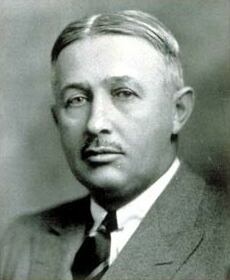
The most crucial actor, however, was the Texas Oil Company (Texaco). Under its president, Torkild Rieber, a Norwegian-born shipping expert with strong fascist sympathies, Texaco became the Nationalists’ chief oil supplier. Rieber leveraged Texaco’s integrated structure—controlling production, tanker fleets, and distribution—to orchestrate a continuous flow. He extended massive lines of credit to Franco’s representatives when no one else would, allowing the Nationalists to purchase oil on a promise. He directed Texaco tankers, flying the neutral American flag, to sail directly to Nationalist-held ports like El Ferrol and Tenerife, or to Portuguese transshipment points. Most egregiously, as documented by the U.S. diplomatic correspondence and later investigations, Rieber provided the Nationalists with detailed intelligence on Republican oil shipments, including sailing routes and schedules, enabling their interception by Nationalist warships or Italian submarines.
This corporate collusion was a form of private-sector proxy intervention. Texaco’s actions violated the spirit of U.S. neutrality policy and, arguably, its letter, but were facilitated by the Roosevelt administration’s reluctance to police American businesses aggressively. For Franco, Texaco was not merely a vendor but a strategic partner, ensuring that his trucks, tanks, and aircraft—many of German and Italian make—remained operational. The reliability of this supply stood in devastating contrast to the Republic’s perpetual crisis.
Diplomacy and Double Standards: The Political Economy of Non-Intervention
The stark disparity in oil access underscores the profound hypocrisy and selective enforcement of the Non-Intervention policy. The committee and its naval patrols were designed to stem the flow of arms, turning a blind eye to the less visible but equally vital flow of fuel that enabled those arms to be used. Britain and France, while refusing to sell arms to the Republic, continued for a time to allow commercial sales of non-military supplies. However, the private risk aversion of major oil companies, coupled with the physical dangers of delivery, effectively curtailed this trade for the Republic.
The Western democracies’ approach was rooted in a desire to avoid confrontation with Hitler and Mussolini, and in a degree of ideological sympathy for the Nationalist cause among conservative elites. Allowing Franco to secure oil was seen as less provocative than selling arms, yet it was militarily just as consequential. The United States, hiding behind the Neutrality Acts, allowed corporate actors like Texaco to make de facto foreign policy, prioritizing profit and political preference over any coherent democratic interest. This created a perverse international environment where the legally recognized government was starved of a vital resource, while the rebel faction was kept fueled by a combination of fascist state aid and Western corporate collaborationCollaboration
Full Description:The cooperation of local governments, police forces, and citizens in German-occupied countries with the Nazi regime. The Holocaust was a continental crime, reliant on French police, Dutch civil servants, and Ukrainian militias to identify and deport victims. Collaboration challenges the narrative that the Holocaust was solely a German crime. across Europe, local administrations assisted the Nazis for various reasons: ideological agreement (antisemitism), political opportunism, or bureaucratic obedience. In many cases, local police rounded up Jews before German forces even arrived.
Critical Perspective:This term reveals the fragility of social solidarity. When their Jewish neighbors were targeted, many European societies chose to protect their own national sovereignty or administrative autonomy by sacrificing the minority. It complicates the post-war myths of “national resistance” that many European countries adopted to hide their complicity.
Read more.
Conclusion: Oil and the Anatomy of a Proxy Strangulation
The battle for oil in the Spanish Civil War was a decisive front fought in corporate boardrooms, foreign ministries, and shipping lanes. It demonstrates with brutal clarity that in mid-20th century industrialized warfare, logistics and resource economics could be as determinative as tactics or valor. The Republic, for all its gold and legal legitimacy, was slowly asphyxiated by a combination of geopolitical isolation, the effective blockade of Non-Intervention, and the risk-averse policies of major Western oil companies. Its dependency on the Soviet Union merely exchanged one set of constraints for another.
The Nationalists, conversely, triumphed in the resource war through a hybrid model of state-corporate fascist collaboration. The Axis provided direct aid and diplomatic cover, Salazar’s Portugal offered a neutral gateway, and Texaco furnished the credits, the cargoes, and the clandestine logistics. This network guaranteed the Nationalist military a operational consistency the Republic could never match.
Ultimately, the petroleum politics of the war reveal the true mechanics of the proxy conflict. It was not merely that foreign powers sent troops and tanks; they integrated the Spanish belligerents into their own economic and logistical systems. The Republic was grafted onto a strained, distant, and politically costly Soviet supply chain. The Nationalists were integrated into a smoother, more reliable axis of fascist-aligned states and sympathetic corporations. The flow of oil thus mapped the contours of global allegiance and power in the late 1930s. It was a tangible expression of the fact that Franco’s armies were not just Spanish, but components of an international fascist logistical apparatus, while the Republic, despite its moral claim, was left to fuel its defense on the dwindling reserves of its own sovereignty. In the end, the engine of Nationalist victory ran on fuel supplied by a world that was, in ways both active and passive, already choosing sides for the coming global conflict.

Leave a Reply