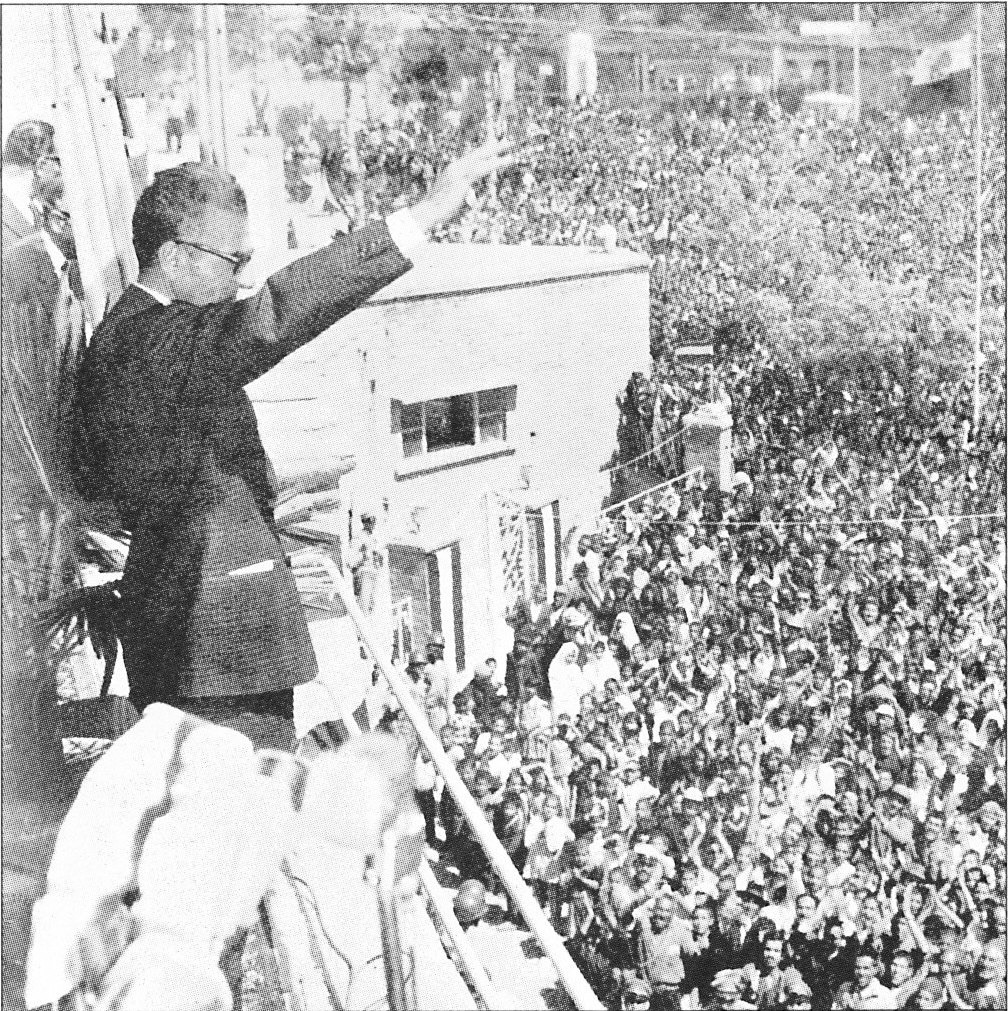

This regional case study examines the implementation and impact of the land reform program—the centrepiece of the Shah’s White RevolutionWhite Revolution Full Description:The White Revolution was a project of authoritarian modernization. It sought to break the power of traditional landlords through land redistribution and to rapidly industrialize the economy. It was billed as a bloodless (“white”) revolution to prevent a communist (“red”) one. Critical Perspective:Despite lofty goals, the reforms destabilized the social order. The land reforms often failed to provide peasants with enough resources to farm effectively, driving millions into urban slums where they became foot soldiers for the revolution. Furthermore, the rapid secularization alienated the powerful merchant class (Bazaaris) and the clergy, creating a united front of opposition against the Shah. (Enqelāb-e Sefid)—in Iran’s vast and historically significant province of Khorasan. It expands upon the national overview of the White Revolution, detailing how this top-down modernization policy played out in a crucial agrarian region, revealing the tensions between central planning and local realities that ultimately limited the program’s success.
The Context: Khorasan on the Eve of Reform
In the early 1960s, Khorasan was a microcosm of Iran’s traditional agrarian structure, yet with distinctive features that would shape the reform process. The province was dominated by large, often absentee, landholdings (arbābi), with a complex web of sharecropping relationships. Khorasan’s agriculture was diverse, including grain cultivation in the north and west, and intensive orchard and vegetable farming in the famed oases around cities like Mashhad, Sabzevar, and Birjand. A significant portion of the rural population were landless peasants (raʿiyat), whose livelihoods were precarious and subject to the whims of landlords and their bailiffs (mobāsher).
Crucially, Khorasan also contained large expanses of endowed religious land (waqf), much of it associated with the shrine of Imam Reza in Mashhad, one of Shia Islam’s holiest sites. This added a layer of institutional complexity, as waqf properties were theoretically inalienable and meant to serve charitable purposes, but were often managed in ways indistinguishable from private estates. The province’s geography—spanning arid plains and fertile pockets—meant land quality and water rights (haqq-e āb) were uneven, making a uniform reform template problematic from the outset.
Phase One Implementation: Distribution and Its Discontents
The first phase of land reform (1962-1963), governed by the original Land Reform Law, focused on limiting individual landownership to one village. In Khorasan, this meant the state purchased excess villages from large landlords for distribution to the peasants working them. On paper, the scale was significant. Official statistics suggest tens of thousands of families in Khorasan received land deeds during this phase.
However, the implementation exposed immediate flaws. The compensation paid to landlords, based on declared tax values, was often below market rate, creating resentment among the old elite without fully dispossessing them. More critically for the peasants, the process was frequently manipulated. Landlords routinely exercised their right to choose which one village to retain, often keeping the most fertile, water-rich properties and divesting themselves of marginal, arid lands. In Khorasan’s fragile ecosystem, a parcel without secure water access was nearly worthless. Consequently, many peasants found themselves owners of nominal deeds to dust, while effective control of productive resources remained concentrated.
Furthermore, the distribution of waqf lands became a politically sensitive quagmire. The Pahlavi state, keen to curtail the economic power of the religious establishment, attempted to bring these lands under the reform program. This provoked quiet but firm resistance from the waqf administrators and the clerical network in Mashhad, sowing early seeds of discontent with the regime’s secular modernizing agenda. The reform, in this instance, was perceived not as social justice but as state encroachment on religious domain.
Later Phases and the Rise of Agribusiness
The second and third phases of reform (1964-1971) shifted from redistribution to the creation of a new class of commercial farmers and farm corporations. In Khorasan, this translated to two parallel developments.
First, wealthier peasants and urban investors began to purchase land from smaller landlords who were now forced to sell under the new laws. This created a stratum of medium-scale, market-oriented owners in areas like the Mashhad plain, who had the capital to invest in pumps, fertilizers, and new crops. They benefited from the state’s agricultural extension services and credit from the newly established Agricultural Development Bank.
Second, and more prominently in Khorasan’s eastern and central plains, the state promoted the formation of Farm Corporations (Sherkat-e Sahami-ye Zerāi). These were joint-stock companies where peasants contributed their newly acquired, often fragmented, plots to create a consolidated commercial farm managed by state-appointed agronomists. Peasants became shareholders and labourers. In theory, this introduced modern techniques and economies of scale. In practice, in Khorasan as elsewhere, it represented a startling reversal: peasants who had just received title now lost direct control over their land to a new bureaucratic authority. The corporations often focused on cash crops for export or urban markets, disrupting local subsistence patterns and creating a dependent rural proletariat.
Social and Political Impact: Dislocation and Disenchantment
The net effect of land reform in Khorasan was profound social dislocation rather than transformative empowerment. A three-tier rural structure emerged:
- A small, prosperous class of new commercial farmers.
- A larger group of nominal landowners struggling on inadequate, dry plots without the capital to improve them.
- A growing number of landless agricultural wage labourers, often former peasants who had sold their meagre shares to the corporations or richer neighbours.
Economically, while agricultural output in certain irrigated zones increased, rural inequality often deepened. The promised support services—credit, cooperatives, infrastructure—were slow to arrive in Khorasan’s remote villages, leaving new owners vulnerable. Socially, the dissolution of the traditional arbāb-raʿiyat bond, however exploitative, removed a framework of patronage and (minimal) security without fully replacing it with a functioning, equitable market system.
Politically, the outcome was a loss of legitimacy for the Pahlavi state. The old landowning class was alienated by the forced sales. The peasantry, whose political consciousness the Shah hoped to bypass by making them conservative smallholders, was largely disillusioned by the reform’s compromised results. The religious elements were antagonized by the interference with waqf. By the mid-1970s, Khorasan’s countryside was not the bastion of royalist support the regime had envisioned. Instead, it contained populations receptive to the revolutionary message that condemned the Shah’s modernization as a fraudulent, Western-imposed project that had uprooted traditional society without delivering justice or prosperity.
Conclusion: A Paradigm of Centralized Reform
The experience of land reform in Khorasan stands as a paradigm for the contradictions of the White Revolution. It was a program designed in Tehran and imposed with uniform legislation on a diverse, complex agrarian landscape. It succeeded in dismantling the classic arbābi system but failed to create a stable, productive, and politically loyal class of smallholders. Instead, it fostered new forms of inequality, accelerated rural-to-urban migration (including to the swelling slums of Mashhad), and disrupted socio-economic networks without building robust alternatives. In Khorasan, as in much of Iran, the land reform did not pacify the countryside; it contributed to its destabilization, demonstrating how a reform intended to fortify the Pahlavi state ultimately exposed its administrative weaknesses and alienated key constituencies on the road to 1979.

Leave a Reply