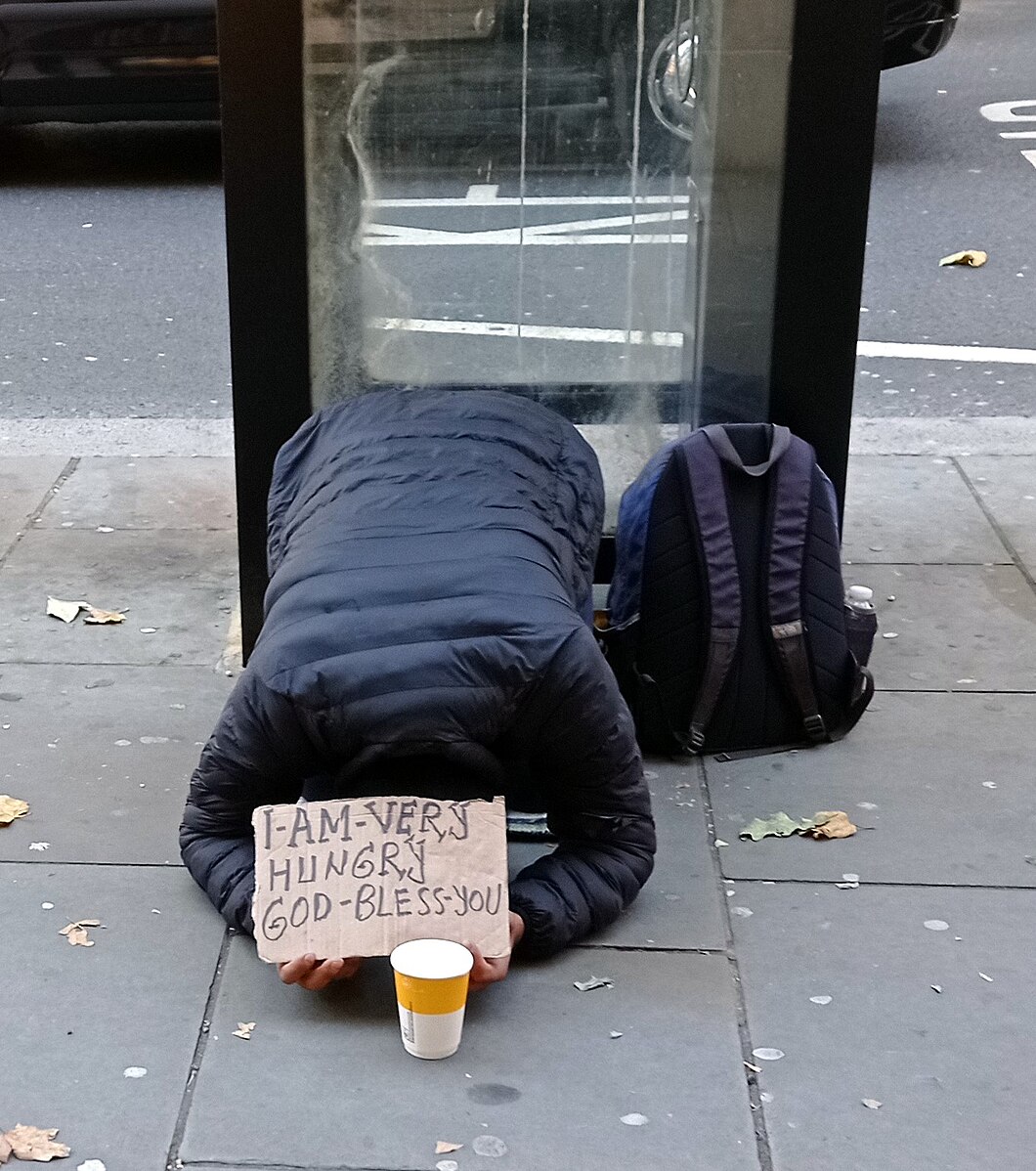

When historians look back at the early 21st century in Britain, the defining theme will not be Brexit or the pandemic, but austerity. It is a policy that has reshaped the social fabric of the nation more profoundly than any event since the Second World War.
In this week’s podcast, I sat down with Dr. Rachel Morris to discuss her anthology, Levelling Down. This collection of essays from Bylines Cymru documents the devastation wrought by 15 years of cuts—a process that has arguably “de-developed” the UK.
The Economics of Cruelty
The logic of austerity, introduced by the Coalition government in 2010, was purportedly to reduce the national debt. By that metric, it failed. But as we discussed, perhaps the cruelty was the point. Austerity was less about balancing the books and more about shrinking the state and creating a compliant, flexible labor market.
Rachel points out a chilling statistic: research suggests that the excess deaths caused by austerity measures may now exceed the number of British civilians and soldiers killed in World War II. This is a peacetime disaster without parallel.
PrivatizationPrivatization Full Description:The transfer of ownership, property, or business from the government to the private sector. It involves selling off public assets—such as water, rail, energy, and housing—turning shared public goods into commodities for profit. Privatization is based on the neoliberal assumption that the private sector is inherently more efficient than the public sector. Governments sell off state-owned enterprises to private investors, often at discounted rates, arguing that the profit motive will drive better service and lower costs.
Critical Perspective:Critics view privatization as the “enclosure of the commons.” It frequently leads to higher prices for essential services, as private companies prioritize shareholder returns over public access. It also hollows out the state, stripping it of its capacity to act and leaving citizens at the mercy of private monopolies for their basic needs (like water or electricity).
Read more as Theft
One of the most powerful arguments Rachel makes is that the privatization of public assets—from utilities to council buildings—is a form of intergenerational theft. These assets were built and paid for by our parents and grandparents, intended to be a legacy for the future. Their sale to private equity firms, often for a fraction of their value, is a robbery of the public purse.
This theft continues today under the guise of “efficiency.” Local authorities, starved of cash, are forced to sell off libraries, community centers, and land just to meet their statutory obligations. As physicist Leo Szilard warned, “Do not destroy what you cannot create.” We are destroying the social infrastructure that took a century to build.
The Failure of Opposition
Perhaps the most depressing aspect of our current moment (speaking from late 2025) is the lack of a genuine alternative. The Conservative Party suffered a historic defeat, yet the Labour government that replaced it has largely continued the same fiscal approach.
Under the mantra of “growth,” the new administration continues to court private equity and outsource state functions. There is no plan to rebuild the welfare state or reverse the privatization of the NHS. As Rachel notes, we are all “getting ever less but costing ever more.”
A New Media for a New Reality
In response to this grim landscape, Rachel is pioneering a new form of journalism with Cymru Conversations on Substack. Traditional media, with its top-down model of “firing news at eyeballs,” has failed to hold power to account or represent the voices of ordinary people.
By building a community-led platform in Wales, Rachel hopes to create a space for the stories that aren’t being told—stories of resilience, struggle, and the reality of life on the sharp end of policy. It is a model that relies on solidarity, something we need now more than ever.
Download the book: Levelling Down is available now. It operates on a “pay what you can” model, ensuring that this vital history is accessible to everyone.
Transcript
Nick: Hello there and welcome again to the Explaining History podcast. I’m delighted to be joined by a very dear friend of mine, Dr. Rachel Morris. I was fortunate to collaborate with her a couple of years ago on a local citizen journalism project, Bylines Cymru. It was an attempt to give marginalized voices an opportunity to talk about the pressing things happening in society. Welcome, Rachel.
Rachel: Thank you so much for having me. I’m delighted that this is my first ever podcast guest experience.
Nick: We are here to talk about austerity. Rachel has created an anthology of writing from Bylines Cymru, which you can download via the link in the show notes.
This is a history podcast, and I usually talk about the 20th century. But if you look at what has happened in Great Britain over the last 15 to 16 years, it is almost without parallel. I cannot think of a peacetime disaster that comes close to what austerity has done to this country.
Rachel: I’m glad you mentioned the war. As I say in my foreword, research suggests it is possible that more than twice as many people as died in World War Two—soldiers and civilians combined—have been killed by austerity policies since 2010.
It was a political choice. They said it was necessary to reduce the debt, but it never did. There were three elements: reduce the debt, reduce the deficit, and cut public services. They only succeeded in the third. Public services and local authorities are now on their knees.
One thing that makes me angry is the endless privatization of public assets. I see that as theft. Our parents and grandparents invested in these things—gas, telecoms, public buildings. They were supposed to be inherited by the next generation. Instead, they were sold off without a mandate. Now, local authorities are selling off treasures and resources just to keep going. As the scientist Leo Szilard said: “Do not destroy what you cannot create.”
Nick: It often seems that these policies aren’t driven by stupidity, but by an ideological vision—or perhaps just cynicism. I come back to the idea that the poverty is the point.
Rachel: Interestingly, when George Osborne was asked about austerity, he didn’t mention the economy. He said it was “stupendously politically effective.” They never did an impact assessment on human beings. Economists like Amartya Sen have pointed out that everyone knows austerity doesn’t bring growth; it does the opposite. Many believe the purpose was to asset-strip the state.
Nick: Poverty acts as a coercive measure. Poor people are economically pliable and politically alienated. When you hear stories about mothers turning to prostitution to feed their children due to the two-child benefit cap, you see how social cohesiveness is shattered.
Rachel: It’s Maslow’s hierarchy of needs. You can’t fight for your rights if you have to choose between heating and eating. Though, I must say, there were disabled people fighting for their rights outside Westminster yesterday, so perhaps they underestimate people.
I grew up with the legacy of the post-war welfare state. I was the first in my family to go to university. Now I look at students today—someone in the book mentions that because they took a gap year, their fees jumped from £3,000 to £9,000. It’s that randomness and cruelty that defines the era.
Nick: For those listening outside the UK, you might be forgiven for thinking the Conservative Party is still in power. They were defeated last year in a historic route. Yet, we are still in this situation because the Labour Party has become the secondary party of austerity.
Rachel: Absolutely. I want to mention the origins of this book. I launched Bylines Cymru in March 2023, and one of the first pieces was yours, Nick, about destitution in Cardiff. It set the tone.
I tried to build a community around the publication, but it was hard. However, when I asked, “Who cares about austerity?” the response was overwhelming. We had so much high-quality writing that I decided to collect it into an anthology.
I resigned as editor-in-chief in April to start a new model of journalism centered around Substack. It’s called Cymru Conversations. It’s a hub for Welsh voices. Traditional media treats us as passive “eyeballs” to be fired at. I want to create a space for conversation and community.
Nick: You mentioned the book is free?
Rachel: Yes, it’s a “pay what you can” model. If you can afford to pay, that supports the work, as I’m funding a lot of this myself. I’m nearly 60, and my primary income from proofreading was wiped out by AI overnight in November 2023. I’m on benefits for the first time in my life. The government is pushing AI, but for many creators, it is simply theft.
Nick: That is a crucial point. AI is devouring value and leaving people precarious.
Rachel: I hope this new journalism allows anyone to take part without gatekeepers. Wales is the perfect place to start—small enough to be a community, but with lots to say. I’m hoping to find funding for a companion volume focusing on lived experiences of austerity.
Nick: We have listeners all over the world—in the US, Australia, Canada. Austerity is a global experience. If anyone listening identifies with this, get in touch.
Rachel: Yes, it touches on Scotland, Portugal, Greece. The language being used in the US right now about cutting services is horribly reminiscent of what we heard here. It’s the opposite of trickle-down economics; it’s a flood upwards. We are all getting less, paying more, and the quality is worse.
Nick: We must finish there, but I’d love to continue this conversation, perhaps comparing austerity to the 17th-century enclosures.
Rachel: That comparison is definitely worth exploring.
Nick: The book is Levelling Down, available via the link in the show notes. Rachel, thank you so much.
Rachel: Thank you, Nick.

Leave a Reply