

The Damascus Affair: Blood Libel, Empire, and the Birth of Jewish Internationalism – Explaining History
In the modern imagination, the history of antisemitism often focuses on the horrors of the 20th century or the pogroms of Tsarist Russia. But to understand the birth of modern Jewish politics, we must look to the year 1840 and the city of Damascus.
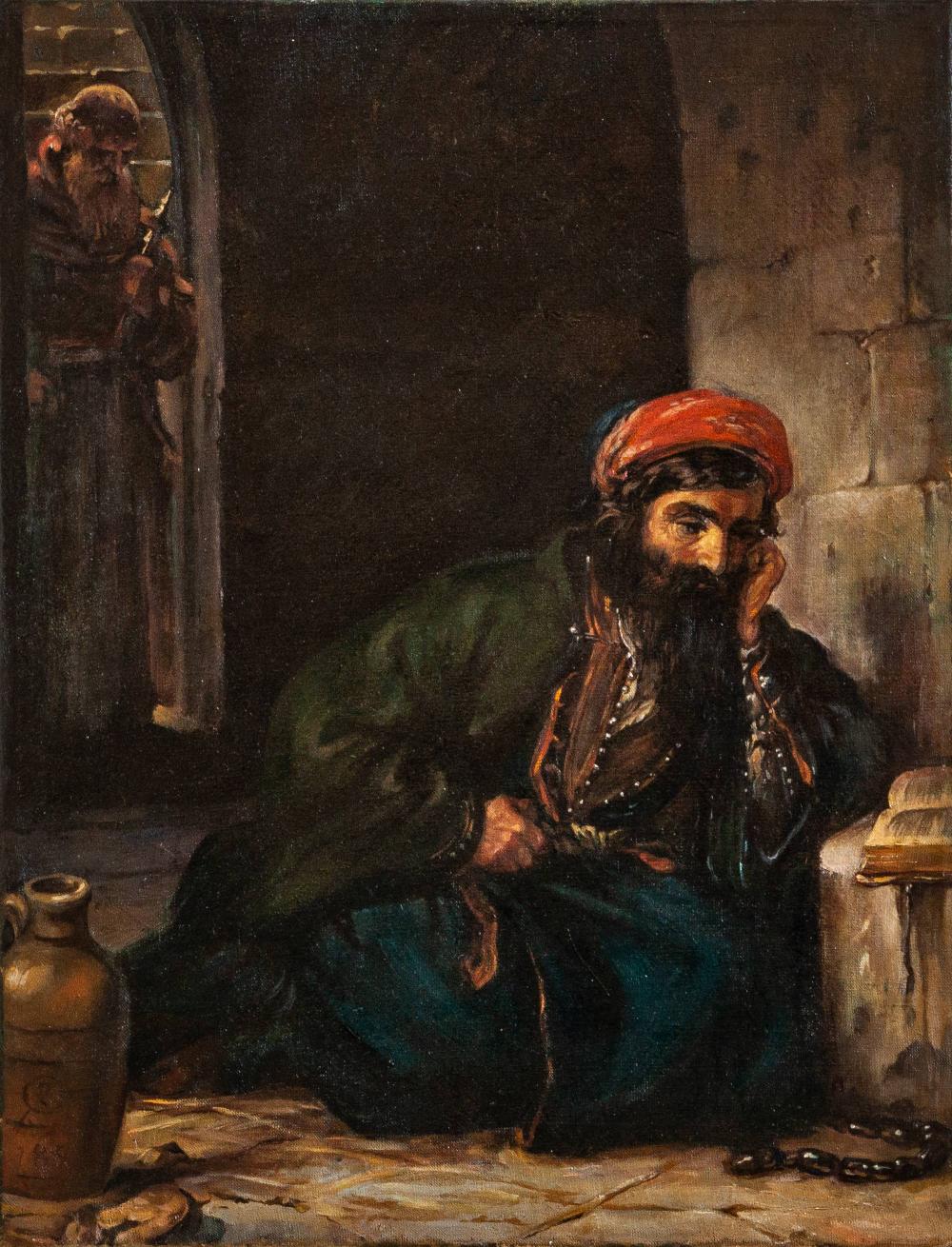
In this week’s podcast, I explored the “Damascus Affair,” a crisis that Jonathan Frankel argues was a landmark moment for the Jewish world. When a Capuchin friar and his servant vanished in Damascus, the local Christian community and the French consul revived the medieval blood libel—the false accusation that Jews murder Christians to use their blood for ritual purposes. The resulting torture and imprisonment of Jewish leaders didn’t just stay local; it became an international cause célèbre.
The Birth of Jewish Internationalism
What makes the Damascus Affair so significant is the response it triggered. For centuries, Jewish communities had often dealt with persecution through quiet diplomacy or endurance. But in 1840, Jewish leaders in the West—most notably the British philanthropist Sir Moses Montefiore and the French lawyer Adolphe Crémieux—tried a new strategy.
They launched a public campaign. They wrote letters to the editors of major newspapers, lobbied ministers in London and Paris, and held protest meetings at the Mansion House in London. They appealed not just to the mercy of rulers, but to the “court of public opinion” and the ideals of European civilization.
As Frankel notes, this was the “emancipationist” style of politics in action. Crémieux and Montefiore argued that the defense of Jews in Damascus was not just a tribal obligation, but a defense of reason and justice against “medieval barbarism.” If the blood libel could stand in Damascus, they feared, it could easily return to Paris or Berlin.
Imperial Games
However, the affair was inextricably linked to the Great Game of 19th-century imperialism. The French government, led by Adolphe Thiers, actually supported the antisemites in Damascus because they were allied with the rebellious Egyptian governor Mehmet Ali, who controlled Syria at the time. France saw itself as the protector of Catholics in the East and was willing to throw the Jews under the bus to maintain its influence.
On the other side stood Britain. Lord Palmerston, the British Foreign Secretary, threw his weight behind Montefiore and the Jewish cause. But this wasn’t purely altruistic. Palmerston saw an opportunity to extend British influence in the Ottoman Empire by becoming the protector of the Jews, much as France protected Catholics and Russia protected the Orthodox.
Proto-Zionism and the Christian Right
One of the most fascinating aspects of this story is the role of Christian evangelicals. Figures like Lord Shaftesbury (Palmerston’s son-in-law) urged the British government to support a “Jewish restoration” to Palestine.
In a dispatch from August 1840, Palmerston suggested that the Sultan should encourage Jewish settlement in Palestine, arguing that their “wealth and industry” would revitalize the Ottoman economy. This reveals a curious mix of philo-semitism and anti-semitic stereotypes—the assumption that all Jews were wealthy capitalists who could be moved around the chessboard like colonial subjects in India or Africa.
Crucially, this British imperial Zionism predates the political Zionism of Theodor Herzl by decades. It shows how the idea of a Jewish return to Zion was circulating in the European imagination long before it became a mass movement among Jews themselves.
Conclusion
The Damascus Affair was a crucible. It tested the loyalty of assimilated Jews like the Rothschilds, who used their financial power to pressure governments. It exposed the fragility of Jewish security even in the “enlightened” West. And it planted the seeds of the idea that perhaps, in a world of competing nationalisms and empires, the Jews might need a nation of their own.
Part 3: Tidied Transcript
Nick: Hi there and welcome again to the Explaining History podcast.
Earlier this week, I did a reading from Crisis, Revolution, and Russian Jews by Jonathan Frankel. It turned out to be the unexpected breakout hit of the year. This episode received more attention than virtually anything else, and I can see why. There is so much we can learn about the Jewish diaspora, its internal politics, and the crises that gripped it during the 19th century—particularly the pogroms and rising antisemitism that accompanied the various waves of European nationalism.
Today, we are going to talk about the response to the Damascus Affair. In 1840, an Italian monk and his servant went missing in the Christian quarter of Damascus. The rumor spread that the Jews had murdered them for ritual purposes—the “blood libel.” This led to violent persecution, with many Jews tortured into false confessions. It was a key moment of antisemitic hatred towards the end of the Ottoman Empire.
I want to explore what the diaspora in Russia, Germany, and beyond knew about this, and what they made of it.
Frankel writes:
“The Damascus case was surely more a landmark than a crossroads… When all is said and done, the events of 1840 absorbed the attention of world Jewry and riveted non-Jewish interest upon the Jews in ways probably without example between 1815 and the 1870s.”
The degree of solidarity displayed by Jewish communities in France, England, and the United States fits uneasily into historical accounts that emphasize assimilation. In a previous episode, we discussed the schism between assimilationism (becoming French, German, etc.) and Jewish nationalism. Frankel argues here that the intense international response to Damascus suggests assimilation wasn’t the whole picture. Even highly acculturated Jews felt a deep connection to an international diaspora.
“The Damascus case is precisely of interest as the first full example within the Jewish world of the emancipationist style of politics… Adolphe Crémieux, Moses Montefiore and many other Jewish spokesmen chose to take their stand as members of European civilization… appealing to the rights of man.”
They chose to fight this battle in the “court of public opinion.” They wrote letters to newspapers, lobbied ministers, and held protest meetings. They framed the defense of Damascus Jews as a defense of enlightened European values against barbarism.
Interestingly, this campaign was easier to conduct in England than in France. In Britain, Foreign Secretary Lord Palmerston supported the Jewish cause. In France, the government of Adolphe Thiers was hostile. This reflected imperial rivalries. The French were supporting Mehmet Ali in Egypt (who controlled Damascus), while the British were looking to check French influence.
The British establishment had a split view of the Ottoman Empire. Figures like Disraeli and Queen Victoria wanted to prop it up to stop Russian expansion. Liberals like Gladstone and Palmerston were far more critical. Palmerston was horrified by the reports of torture in Damascus.
Crémieux, a French Jew, defied his own government to support the campaign. He saw Jewish solidarity as the “highest expression of French patriotism”—arguing that true French values were those of liberty and justice, not the realpolitik of the current administration.
Frankel notes that Western Jewish leaders weren’t just acting out of altruism. They recognized that if the blood libel was credited in the East, it posed a direct threat to their own security in the West. As they saw it, the struggle against “medieval reaction” was indivisible.
A decisive role was played by the Rothschild family. Their financial and political connections were invaluable. At the time, the Rothschilds were still “one step out of the ghetto”—Anselm in Frankfurt was strictly observant, and Salomon in Vienna lived in a hotel because Jews couldn’t own property there. Their instinctive reaction was one of traditional Jewish solidarity.
The crisis also stirred Messianic expectations. The year 5600 in the Jewish calendar (1839-40) had been awaited by kabbalists as a potential Messianic year. Were the tragedies in Damascus the “birth pains” of redemption?
This was closely watched by English Christian missionaries, particularly millenarians who believed the return of Jews to Palestine was a prelude to the Second Coming. Intervention by these groups followed two tracks: defending the Jews in Damascus and urging the British government to support a Jewish restoration to Palestine.
Lord Shaftesbury, a prominent evangelical and Palmerston’s stepson-in-law, pushed this view. Palmerston himself wrote a dispatch suggesting the Sultan encourage Jewish settlement in Palestine, arguing that their “wealth and industry” would benefit the Ottoman Empire.
This reveals a “proto-Zionism” among the British imperial elite. Men like Palmerston were used to moving ethnic groups around the map. There was also a casual antisemitism in the assumption that all Jews were industrious businessmen who could revitalise a backwater region—much like how the British later viewed Indian subjects in East Africa.
So, in the midst of this crisis, we see a convergence of interests: Western Jewish leaders fighting for justice, religious traditionalists looking for the Messiah, and British imperialists looking for a foothold in the Middle East.
I’ll probably do more on this topic because I’m enjoying it. I’ll catch you on the next Explaining History podcast. All the best. Bye-bye.

Leave a Reply