
Introduction
Modern states have long wrapped power in moral language. From “civilization” and “freedom” to “the rules-based order,” the case for war, sanctions, or strategic alignment is rarely framed as naked interest. Yet the credibility of that moral language shifts with events. This piece traces how “moral authority” was constructed and performed by Western powers across the last century—and why, in 2025, it appears fragile. The story runs from the First World War’s sudden moral turn, through interwar peace movements and the Second World War, to the Cold War’s contradictions and the Bretton Woods order. It ends with the present: international law’s resurgence in the Gaza context and the rise of coalitions beyond the old centers of power.
1917 and the Invention of a “Moral War”
When the First World War began in 1914, belligerents did not widely sell it as a universal crusade. Public appeals leaned on national honor, alliance obligations, and immediate threats. The rhetoric changed abruptly with two events in 1917: the Russian February Revolution, which toppled the tsar, and U.S. entry into the war. With an autocracy off the Allied team (for a time) and America’s liberal language at hand, it became easier to recast the conflict as a struggle for freedom and law. Later commemorations sometimes overreached—recall British debates around 2014 centenary claims that 1914–18 was a straightforward fight for liberty—but the shift in 1917 was real: the war could now be narrated as moral, not merely strategic. (The Guardian)
That moral turn collided with awkward facts. In 1914–17 a large share of British soldiers still lacked the vote, and the British Empire’s coercive practices hardly mirrored the democratic ideals invoked at the front. But the point wasn’t perfect consistency; it was mass consent. With expanding suffrage and mass media, elites learned that modern warfare required a moral story legible to millions.
Between the Wars: Peace as a Popular Morality
After 1918, “moral authority” migrated from war-making to peace-keeping. The League of Nations embodied hopes that law and arbitration could prevent catastrophe. In Britain, this hope became a grassroots ethic. The Peace Pledge Union, founded in 1934 by Canon Dick Sheppard, mobilized hundreds of thousands for a public vow against war, and the earlier 1934–35 “peace ballot” revealed deep popular commitment to collective security. The League ultimately failed, but its moral vocabulary mattered: international law, self-determination, sanctions-before-bombs.
The Second World War: “The Free Economy and the Strong State”
Historian Richard Overy argues that 1931–45 was a global imperial conflict, not just a nation-state duel: established empires faced insurgent empires in Europe and Asia. That framing complicates simple Allied moralism while explaining the war’s scale and brutality. Still, Western leaders learned to articulate the conflict as a defense of “civilization” and, in the U.S. case, of universal Four Freedoms—speech, worship, freedom from want, and freedom from fear—popularized in Norman Rockwell’s 1943 paintings. The rhetoric offered a moral horizon expansive enough to mobilize societies and justify sacrifice.
The paradox is familiar: Allied states invoked freedom while ruling colonies and striking deals with unsavory regimes. Andrew Gamble’s phrase—“the free economy and the strong state”—captures the post-war settlement’s character: markets and liberties at home, energetic statecraft (including coercion) to sustain the wider order. The moral language and the strategic behavior were never identical; they were mutually enabling.
Bretton Woods and the “Rules-Based” Order
The 1944 Bretton Woods conference institutionalized a vision of stable capitalism underwritten by U.S. power, creating the IMF and World Bank to govern finance and reconstruction. The order promised predictable exchange rates, development finance, and liberal trade—an ethicalized economics of “prosperity” and “stability.” For many newly decolonizing states, it also felt like structured dependence: credit with conditions, aid with strings, and a Security Council dominated by veto powers. Moral authority and material hierarchy were braided together.
The Cold War: Freedom’s Language, Empire’s Tools
From the late 1940s, Western moral narratives hardened around “freedom” versus “totalitarianism.” Much was grounded in fact—Stalinism was murderous; later Soviet regimes repressed dissent. Yet sustaining a global anti-communist order required compromises that undercut Western credibility: coups, client regimes, covert action, and ugly colonial endgames (from Indochina to Kenya and Algeria). Each crisis forced new justifications—defense of allies, containment, stability. The pattern endured: moral authority explained the ends; reason of state selected the means.
After 1991: Monopoly on Legitimacy
For a brief 1990s window, the West seemed to monopolize not just power but legitimacy. Wars were framed as humanitarian (Kosovo), policing (Iraq no-fly zones), or counter-terror (Afghanistan). The 2003 Iraq invasion—sold on WMD claims and democratization—was the hinge. As the war dragged on, the gap between rhetoric and reality widened publicly. By the late 2000s, the credibility of Western moral claims had eroded among many in the Global South and within Western publics.
Gaza, International Law, and the Re-politicization of Accountability
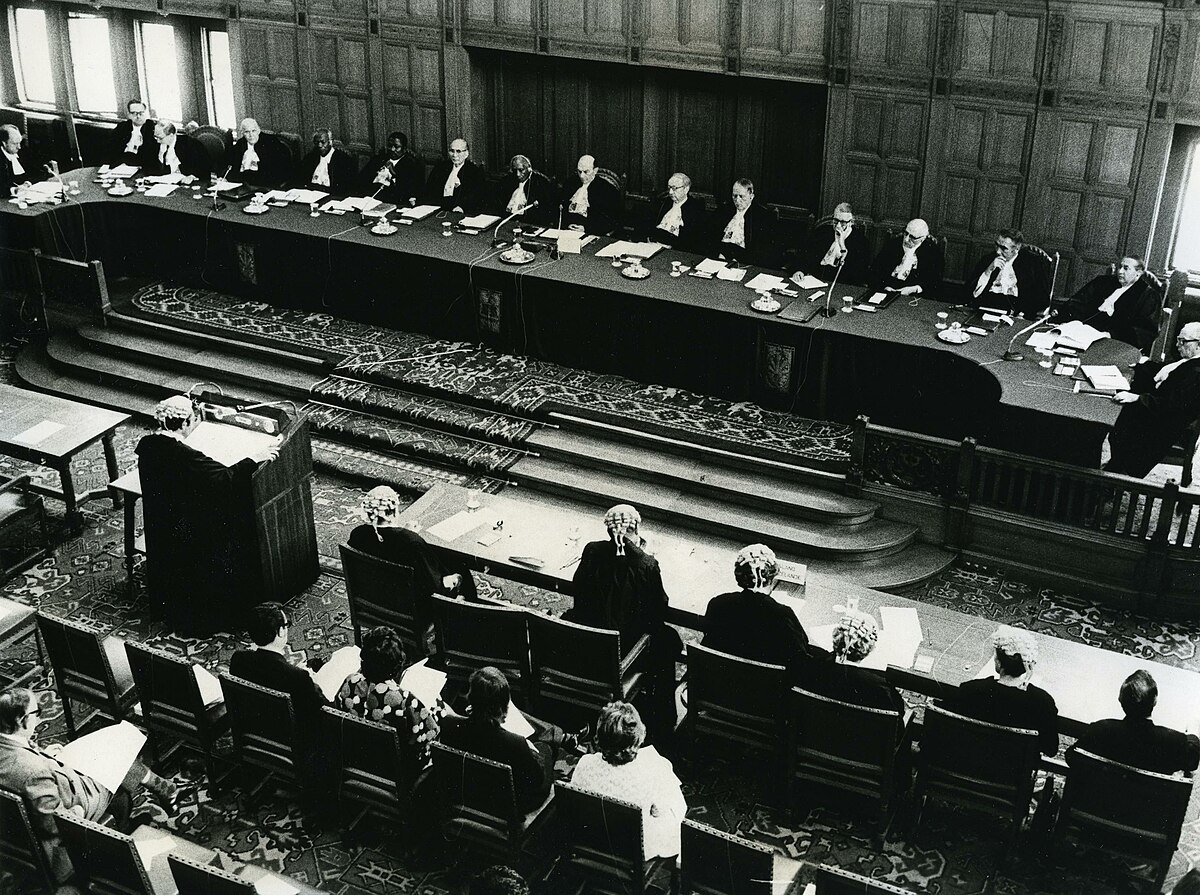
In 2024, the International Court of Justice (ICJ) issued provisional measures in South Africa v. Israel under the Genocide Convention, ordering Israel to prevent acts prohibited by the Convention, allow humanitarian aid, and later to halt the Rafah offensive. The Court did not decide the genocide merits; it held that the rights claimed were plausible and the risk serious—enough to trigger interim obligations. However one assesses the underlying conflict, these rulings placed international law—not just geopolitics—at the center of global argument. (The Guardian)
For many states and civil societies outside the Euro-Atlantic, Gaza crystallized a long-standing charge: that Western powers invoke law selectively. When legal bodies demand restraint but leading capitals continue arms exports or political cover, the claim that the “rules-based order” is universal becomes harder to sustain. The result isn’t the end of moral language; it’s competition over who may credibly use it.
Multipolar Morality: Who Speaks for “Law” Now?
A notable shift since 2024 has been the emergence of issue-based coalitions—some led by Global South states—explicitly anchored in legal arguments (ICJ orders, humanitarian law, arms-export controls). Whether in national courts, UN organs, or ad-hoc groupings, these actors say: if formal institutions are blocked (e.g., by Security Council vetoes), coalitions will act in parallel—through embargo debates, arrest-warrant cooperation, or procurement blacklists. The language is classic post-1945 legality; the speakers are more geographically diverse.
That does not mean non-Western powers are disinterested moral arbiters. China, Gulf states, and others pursue interests, too. The difference is structural: with alternatives to U.S. finance, markets, and technology, the cost of defying Western pressure is lower. That empowers states to adopt legal-moral stances that diverge from Washington, London, or Brussels without automatic isolation.
Think Tanks, Media, and the Manufacture (and Loss) of Consent
Across the century, moral authority has been made as much as argued. Policy institutes, editorial pages, film, and art have supplied the frames: “civilization,” “freedom,” “stability,” “credibility with markets.” When frames align with lived experience (e.g., post-1945 reconstruction), they persuade. When they collide (e.g., prolonged occupations, austerity amid asset booms), they corrode. The post-2008 era—financial rescues, slow wage growth, and visible double standards abroad—has made publics more skeptical that moral claims track public good.
Where Moral Authority Goes From Here
- Law as Arena, Not Arbiter
International law is re-centralized but contested. Competing blocs cite the same texts (UN Charter, Geneva Conventions, Genocide Convention) to opposite effect. Expect more litigation, more cross-border investigations, and more fights over jurisdiction and immunity. - From Monopoly to Pluralism
The West no longer monopolizes the power to define what counts as a “legal” or “moral” response. That pluralism can be healthy—closing impunity gaps—or messy, if states weaponize legality to mask new coercions. - Domestic Politics Matters
Moral authority abroad depends on credibility at home. When publics perceive selective empathy or selective legality, consent for costly international ventures wanes—whatever the party in power. - Narratives Will Evolve
If the century-long moral script is fraying, governments may lean less on universal claims (“defending freedom”) and more on concrete interests (“supply chains,” “energy security”), or on narrow legalese. Others may double down on values—but with more scrutiny.
Conclusion
From 1917’s liberal reframing of a great-power war to 1940s Four Freedoms; from Bretton Woods optimism to Cold War contradictions; from 1990s humanitarian confidence to Iraq-era skepticism; and now to Gaza’s legal turn—moral authority has never been a fixed Western asset. It is performed, tested, and sometimes forfeited. The present moment isn’t the end of moral politics; it is a redistribution of who can plausibly speak its language, under the eye of courts, publics, and rivals.
If there is a lesson from the last century, it is this: moral authority endures only where law is applied consistently, material interests are made transparent, and the promised freedoms are felt not simply in speeches and posters but in everyday life.
Further Reading (peer-reviewed & scholarly)
- Richard Overy, Blood and Ruins: The Great Imperial War, 1931–1945 (Penguin/Allen Lane, 2021). Recasts WWII as an imperial struggle with global scope. (TLS)
- Andrew Gamble, The Free Economy and the Strong State (Palgrave, 1994). Classic on how post-war Britain married market economics to strong statecraft.
- Gary Gerstle, The Rise and Fall of the Neoliberal Order (Oxford University Press, 2022). On the political order that shaped late-20th-century moral-economic language.
- Mark Mazower, Governing the World (Penguin, 2012). History of internationalism, from Concert of Europe to the UN.
- Samuel Moyn, Humane: How the United States Abandoned Peace and Reinvented War (Farrar, Straus and Giroux, 2021). On moralized warfare after 1945.
- Susan Pedersen, The Guardians: The League of Nations and the Crisis of Empire (Oxford University Press, 2015). The mandates system and imperial moralism.
- Kimberley Brayson & others (eds.), The Limits of the Legal Order (various journals). On enforcement gaps in international law.
- David Runciman, The Confidence Trap (Princeton University Press, 2013). How democracies narrate crises and recoveries.
- James C. Scott, Seeing Like a State (Yale University Press, 1998). On how states render societies legible—useful for understanding policy narratives.
Notes & Sources Mentioned
- ICJ provisional measures in South Africa v. Israel (January & May 2024): orders to prevent prohibited acts, facilitate aid, and halt the Rafah offensive—without deciding the genocide merits. (The Guardian)
- Four Freedoms (Rockwell, 1943) as wartime moral iconography rooted in FDR’s 1941 address. (Wikipedia)
- Peace Pledge Union and interwar pacifism as popular moral politics. (Wikipedia)
- Bretton Woods institutions and their 1944 genesis. (World Bank)
Listen & Learn: Related Podcast Collections
Explore these curated episode collections to go deeper on the history behind this article:

Leave a Reply