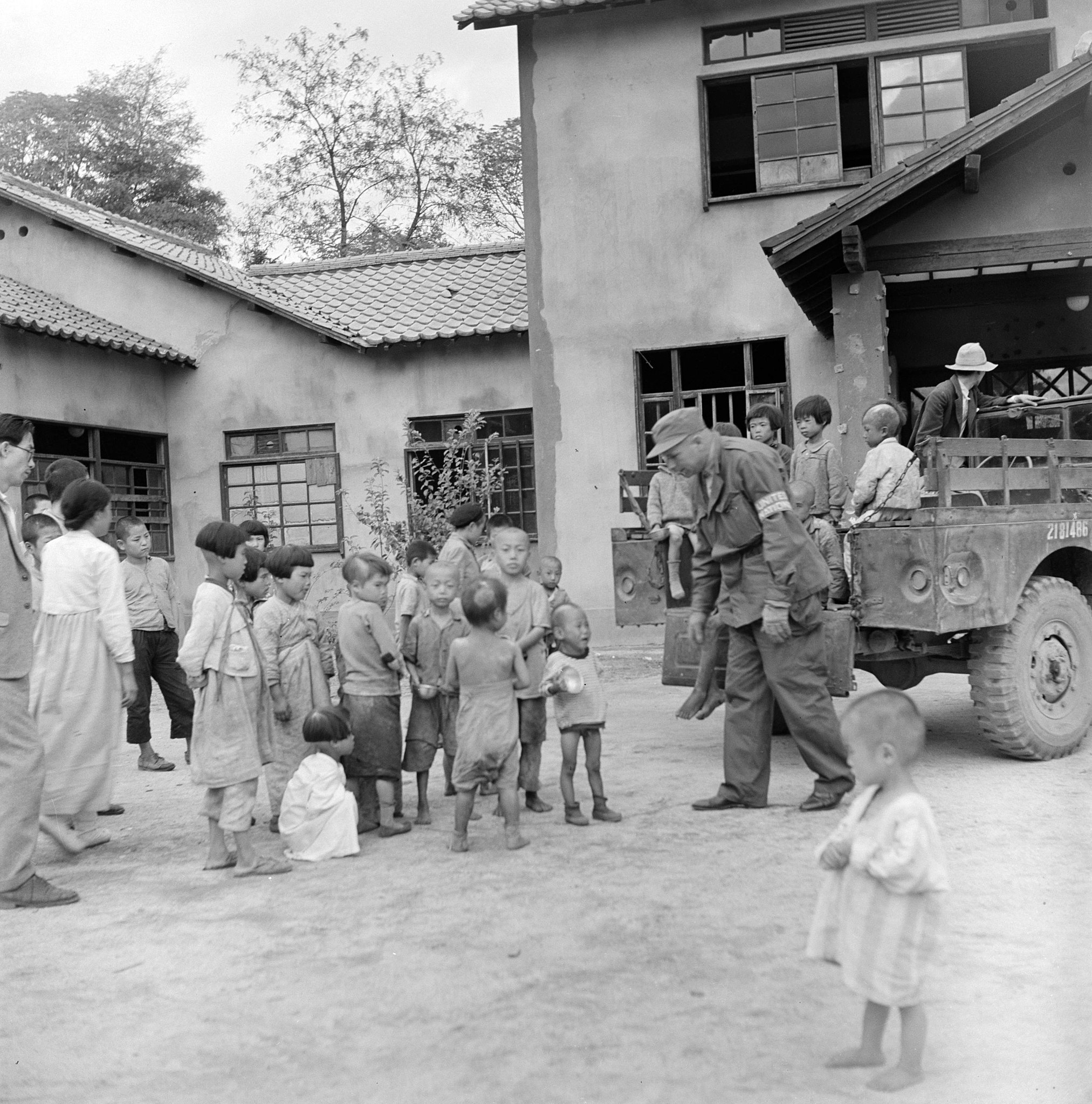


Korea: War, Division, and Divergent Destinies
Welcome to your central resource for understanding the tumultuous modern history of the Korean Peninsula. A nation tragically bisected by Cold War geopolitics, Korea’s story is one of profound resilience, devastating conflict, and two of the most starkly divergent development paths of the 20th century. This page serves as your starting point to explore the arbitrary line that created two states, the brutal war that cemented that division, and the radically different worlds that emerged on either side of the demilitarized zone. The curated articles below delve into the key moments of this history, from the initial split and the horrors of war to South Korea’s economic miracle and North Korea’s nuclear ambitions. We invite you to explore these narratives to grasp the complex forces that have shaped one of the world’s most enduring geopolitical flashpoints.
A Line Drawn in Haste: The Seeds of Division
The division of Korea was not an ancient inevitability but a hasty, almost haphazard, decision made in the final days of World War II. With the collapse of the Japanese empire, which had colonized Korea for 35 years, the United States and the Soviet Union agreed to temporarily divide the peninsula for the purpose of accepting the Japanese surrender. This temporary administrative line, drawn along the 38th parallel, quickly hardened into a rigid ideological frontier as the Cold War set in, creating two hostile states where one nation had stood.
A Line Drawn in Hurry: The 38th Parallel and the Seeds of Division (1945-1948): This article explores the fateful decision to divide Korea, the failure of international efforts to unify it, and the establishment of two rival governments, each claiming to be the sole legitimate ruler of the entire peninsula.
The Korean War: A Global Conflict in a Divided Land
On June 25, 1950, the simmering tensions erupted into full-scale war when North Korea, backed by the Soviet Union, launched a massive invasion of the South. The conflict, often called the “Forgotten War,” was a brutal and destructive affair that quickly escalated from a civil war into the first major armed clash of the Cold War, drawing in the United States, the newly formed United Nations, and eventually, China.
“The Day the Sky Fell”: The Outbreak of War and North Korea’s Blitzkrieg (June-September 1950): This piece details the shocking initial invasion and the rapid advance of the North Korean People’s Army, which pushed South Korean and American forces to the brink of defeat in the Pusan Perimeter.
The United Nations in the Early Cold War: Korea, Vetoes, and Peacekeeping: Discover how a Soviet boycott of the UN Security Council allowed the fledgling world body to authorize its first major military intervention, assembling a multinational force to defend South Korea.
Inchon: MacArthur’s Masterstroke and the UN Counter-Offensive (September-November 1950): Explore the audacious amphibious landing at Inchon, a brilliant and risky maneuver led by General Douglas MacArthur that completely reversed the tide of the war and led to the liberation of Seoul.
China’s Intervention in the Korean War: Motives, Strategies, and Historiographical Debates: This article examines the pivotal moment when China, fearing an American presence on its border, sent hundreds of thousands of “People’s Volunteer Army” soldiers into Korea, turning the war into a bloody stalemate.
Parallel Paths: Two Koreas After the Armistice
The Korean War ended in 1953 not with a peace treaty, but with an armistice, leaving the two Koreas in a state of suspended conflict that persists to this day. In the decades that followed, the North and South embarked on radically different paths of reconstruction and nation-building, creating two of the world’s most politically and economically dissimilar societies.
Parallel Paths: The Two Koreas from 1953 to the Present: This piece provides a broad overview of the post-war history of the peninsula, tracing the divergent trajectories of the two states.
Building a State Behind Barbed Wire: North Korea’s Post-War Reconstruction and Stalinist Transformation (1953–1979): Learn how North Korea, under Kim Il Sung, rebuilt from the ashes of war into a militarized, industrialized, and highly centralized state based on the ideology of Juche (self-reliance).
The Miracle on the Han River: South Korea’s Transformation, 1953–1990: Discover the story of South Korea’s astonishing post-war economic development, which saw it transform from one of the world’s poorest countries into a global economic powerhouse.
Twin Visions: Ideological Nation-Building in North and South Korea (1953–Present): This article compares the competing state ideologies—Juche in the North and anti-communism and developmentalism in the South—that were used to legitimize the two regimes and shape their societies.
The Modern Era: Reconciliation and a Nuclear Standoff
The end of the Cold War ushered in a new era for the Korean Peninsula, one marked by moments of hope for reconciliation but also by the growing threat of a nuclear North Korea. The relationship between the two Koreas has since been defined by a cycle of engagement and confrontation that continues to shape regional and global security.
From Sunshine to Shadow: Inter-Korean Reconciliation, 1998–2010: Explore South Korea’s “Sunshine Policy” of engagement with the North, which led to historic inter-Korean summits and cooperative projects but ultimately failed to bridge the fundamental divide.
The Nuclear Dilemma: North Korea’s Atomic Program and Global Responses Since 2006: This piece examines North Korea’s pursuit of nuclear weapons, its motivations for becoming a nuclear power, and the decades of failed international diplomacy aimed at curbing its atomic ambitions.

