
The journey from a packed steamship hold in 1907 to a boarding gate at Dubai International Airport in 2024 is more than a century of technological progress—it is the story of how states, capital, and human aspiration have collectively reengineered the very architecture of global human movement.
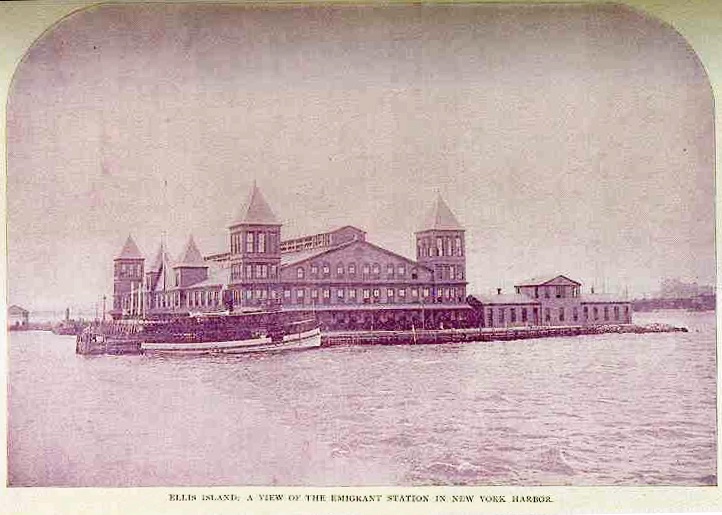
The iconic image of 12 million immigrants arriving at New York’s Ellis Island between 1892 and 1954 has come to symbolize an entire era of migration. It was an age of mass arrival centers, steamship manifests, and physical inspection lines, where the journey was long, arduous, and culminated in a decisive, often anxious, encounter with state authority at a single point of entry. Today, that process has been fragmented, digitized, and globalized. The modern migrant’s journey is managed through online visa portals, biometric databases, and layered security checks that begin long before boarding a plane. The arrival gate is no longer the primary site of adjudication; the state’s border has been pushed outward, into consulates abroad and algorithms in the cloud. This article traces the profound transformation in the infrastructure, bureaucracy, and experience of migration from the age of steamships to the era of hyper-mobility, arguing that this shift reflects a fundamental change in how states manage populations: from selectively admitting newcomers at the gate to pre-sorting global mobility through a regime of remote control.
The Age of Mass Migration and the Centralized Gateway (c. 1880-1924)
The late 19th and early 20th centuries witnessed the first great wave of globalization, powered by steam. This technology created the physical possibility for mass, transoceanic movement on an unprecedented scale.
The Steamship: The Conveyor Belt of Nations
The replacement of sail by steam was revolutionary. It regularized schedules, shortened the Atlantic crossing from six weeks to about one, and lowered costs. Shipping companies like Cunard and White Star operated vast fleets, and competition for steerage-class passengers—the human cargo in the ships’ holds—was fierce. This was a for-profit infrastructure, where private companies (often subsidized by governments seeking to export population, as with Germany or Italy) were the primary facilitators of movement. The journey itself was a brutal class-based experience: while elites enjoyed promenade decks and dining salons, steerage passengers endured cramped, unsanitary quarters, setting the stage for the medical inspections that awaited them.
Ellis Island: The “Island of Hope and Tears”
Opened in 1892, Ellis Island was not a border in the modern sense but a processing and filtering plant. Its purpose was to swiftly inspect, sort, and either admit or reject the human output of the steamship conveyor belt. The process was an assembly line of bureaucracy and medicine:
- The Manifest: The primary tool was the ship’s manifest, a paper document filled out at the port of departure listing each passenger. This was the original database, the state’s first point of information.
- The Line Inspection: Officials would quickly scrutinize arrivals for obvious physical or mental defects.
- The Exam: Doctors used simple tools (a buttonhook to examine eyelids for trachoma, chalk to mark clothing) to identify those with contagious diseases.
- The Legal Interrogation: Inspectors questioned migrants, often through interpreters, to verify their identity, occupation, and that they were not likely to become a “public charge.”
The entire process was designed for volume and efficiency. Only about 2% were ultimately denied entry, but the threat of rejection loomed large. Ellis Island represented a model of centralized, point-of-entry control. The state’s power was exercised at the literal threshold, in a dramatic, personal, and visible encounter.
The Age of Restriction and the “Paper Wall” (1924-1965)
The era of open gates slammed shut with the U.S. Immigration Act of 1924 (Johnson-Reed Act). This did not end migration but radically restructured it, shifting control from the port of entry to the point of origin.
Quotas and the Birth of Remote Screening
The 1924 Act established national origins quotas, capping annual immigration from any country at 2% of its U.S.-born population as of 1890—a formula deliberately designed to favor Northern Europeans and exclude Southern and Eastern Europeans, Jews, and Asians. The key innovation was the visa system. Now, to emigrate, one had to apply at a U.S. consulate in their home country. A consular officer would determine if the applicant was likely to be admissible before they ever booked passage. Ellis Island’s inspection line was moved overseas. This created a “paper wall” that was both more effective and less visible. Denials happened in consular offices in Warsaw or Naples, not on a public stage in New York Harbor. The criteria for exclusion expanded beyond health and paupersim to include ideological tests aimed at barring anarchists and communists, reflecting the geopolitical anxieties of the interwar and early Cold War periods.
The Demise of the Mass Arrival Centre
With pre-screening in place, the role of places like Ellis Island diminished. It became less an inspection station and more a detention and deportation center for those who slipped through. It officially closed in 1954, its physical infrastructure rendered obsolete by a bureaucratic one. The model of migration control had shifted decisively from processing at arrival to pre-clearance at departure.
The Jet Age and the Fragmentation of Mobility (1965-Present)
The advent of commercial jet travel in the late 1950s shattered the old geographic and temporal constraints of migration. It made the world smaller but also enabled states to develop far more sophisticated, layered systems of control.
Speed, Volume, and Stratification
Jet travel collapsed distance. A journey that took weeks now took hours. This enabled new patterns: circular migration, frequent homeland visits, and the emergence of truly transnational lives. However, it also created new challenges for control. The volume of travelers skyrocketed, making Ellis Island-style inspections impossible. In response, states developed a multi-layered filtering system:
- The Visa Regime: The modern visa application is a forensic exercise. It requires bank statements, employment letters, property deeds, and biometric data. It assesses “immigrant intent”—the very desire to move permanently that was once the baseline for admission is now a grounds for denial for most temporary visas.
- The Airline as Border Agent: Through “carrier liability” laws, airlines are fined for transporting passengers without proper documents. Check-in agents and ground staff have become de facto, outsourced immigration officers, performing the first document check.
- Externalized Borders: Programs like the U.S. Visa Waiver Program and pre-clearance facilities (where U.S. customs operates in airports in Dublin, Abu Dhabi, or Toronto) push the border overseas. The physical border crossing becomes a formality; the real decision has already been made.
The Digital Panopticon
The most profound shift is the move from paper manifests to interconnected digital databases. Systems like the U.S. Advanced Passenger Information System (APIS) and various “no-fly” lists allow authorities to screen travelers against watchlists before takeoff. Biometrics—fingerprints, iris scans, facial recognition—create seemingly infallible digital identities. This enables a regime of “remote control” where algorithms and database flags, not just officers, make preliminary determinations of risk. The border is no longer a line on a map but a diffused, data-driven system of surveillance that tracks mobility from the moment a visa application is filed online.
The Contemporary Landscape: Asymmetrical Mobility and Global ApartheidApartheid Full Description: An Afrikaans word meaning “apartness.” It refers to the system of institutionalized racial segregation and discrimination that governed South Africa. It was a totalizing legal framework that dictated where people could live, work, and travel based on their racial classification. Apartheid was not merely social prejudice; it was a sophisticated economic and legal machine designed to maintain white minority rule. It involved the complete spatial separation of the races, the banning of mixed marriages, and the denial of voting rights to the black majority. Critical Perspective:Critically, Apartheid was a system of racial capitalism. Its primary function was to secure a steady supply of cheap, compliant labor for the white-owned mines and farms. By keeping the black population uneducated, disenfranchised, and restricted to specific areas, the state ensured that the immense wealth generated by the country’s resources flowed exclusively to the white minority and international investors.
The modern infrastructure of migration has not created a borderless world, but a world of highly stratified mobility. The experience of crossing borders is now a perfect indicator of global privilege.
· The Elite Flow: Airport Lounges and “Global Citizen” Passports
For holders of powerful passports from North America, the EU, or East Asia, mobility is often visa-free or visa-on-arrival. Their journey is seamless: automated e-gates, expedited lanes, and access to airport lounges. For this “kinetic elite,” the border is a minor inconvenience. Investment migration programs—where citizenship or residency is exchanged for a large financial investment—commodify this privilege, literally allowing the wealthy to purchase superior mobility.
· The Constrained Flow: Visas, Risk, and the Shadow of Illegality
For citizens of the Global SouthGlobal South
Full Description:The Global South is a term that has largely replaced “Third World” to describe the nations of Africa, Latin America, and developing Asia. It is less a geographical designator (as it includes countries in the northern hemisphere) and more a political grouping of nations that share a history of colonialism, economic marginalization, and a peripheral position in the world financial system. Bandung is often cited as the birth of the Global South as a self-aware political consciousness.
Critical Perspective:While the term implies solidarity, critics argue it acts as a “flattening” concept. It lumps together economic superpowers like China and India with some of the world’s poorest nations, obscuring the vast power imbalances and divergent interests within this bloc. It risks creating a binary worldview that ignores the internal class exploitations within developing nations by focusing solely on their external exploitation by the North.
Read more, the process is defined by constraint. Visa applications are expensive, intrusive, and prone to high refusal rates based on perceived risk of overstay. The journey is fraught with the fear of rejection at multiple checkpoints. This system creates a self-fulfilling prophecy: by making legal pathways so narrow, it inevitably channels some migration into irregular routes, which in turn justifies further restrictions. The “airport lounge” experience is replaced by that of the visa queue, the secondary inspection room, and the detention center.
· The Virtual Diaspora
Yet, technology also enables new forms of connection that circumvent physical borders. Migrants maintain real-time links to home through WhatsApp, Zoom, and mobile banking. They can participate in homeland politics, manage property, and raise children from afar. This digital transnationalism means one can be socially and economically embedded in two places simultaneously, challenging the very notion of a singular, territorially bound community.
Conclusion: The Border in the Cloud and the Persistence of the Human Journey
The evolution from Ellis Island to airport lounges reveals a central paradox of our globalized age. Technological progress has made physical movement faster and cheaper than ever before, while political and bureaucratic systems have made legal movement for most of the world’s population more difficult and stratified.
The state’s power has not receded; it has been reconfigured. It has moved from the theatrical, personal inspection at the port to a dispersed, digital, and often invisible system of pre-screening and risk management. The “chalk mark” of the Ellis Island doctor has been replaced by the database flag in a security algorithm. The steamship company’s profit motive has evolved into the airline’s liability and the “global mobility industry” of visa consultants and citizenship-by-investment schemes.
Yet, through all these transformations, the fundamental drivers of migration—the search for safety, opportunity, and a better life—remain unchanged. What has changed is the architecture of opportunity itself. The story of this changing face is not one of linear progress toward openness, but of a continuous struggle between the age-old human impulse to move and the modern state’s relentless effort to categorize, channel, and control that movement. The gates are now digital, the inspections are remote, but the hope, anxiety, and determination that propel people across borders are as palpable today as they were for those standing in line on Ellis Island, gazing at the Statue of Liberty for the very first time.

Leave a Reply