
Revolutions rarely end with the fall of the old regime. Often, that is merely the prelude to a deeper, bloodier struggle over what comes next. In the Ottoman Empire, the Young Turk Revolution of 1908 was greeted with jubilation. Turks, Arabs, and Armenians celebrated in the streets, believing that the restoration of the constitution would save the empire.
But as I discussed in this week’s podcast, that hope was short-lived. By 1909, the empire was tearing itself apart.
The Counter-Revolution
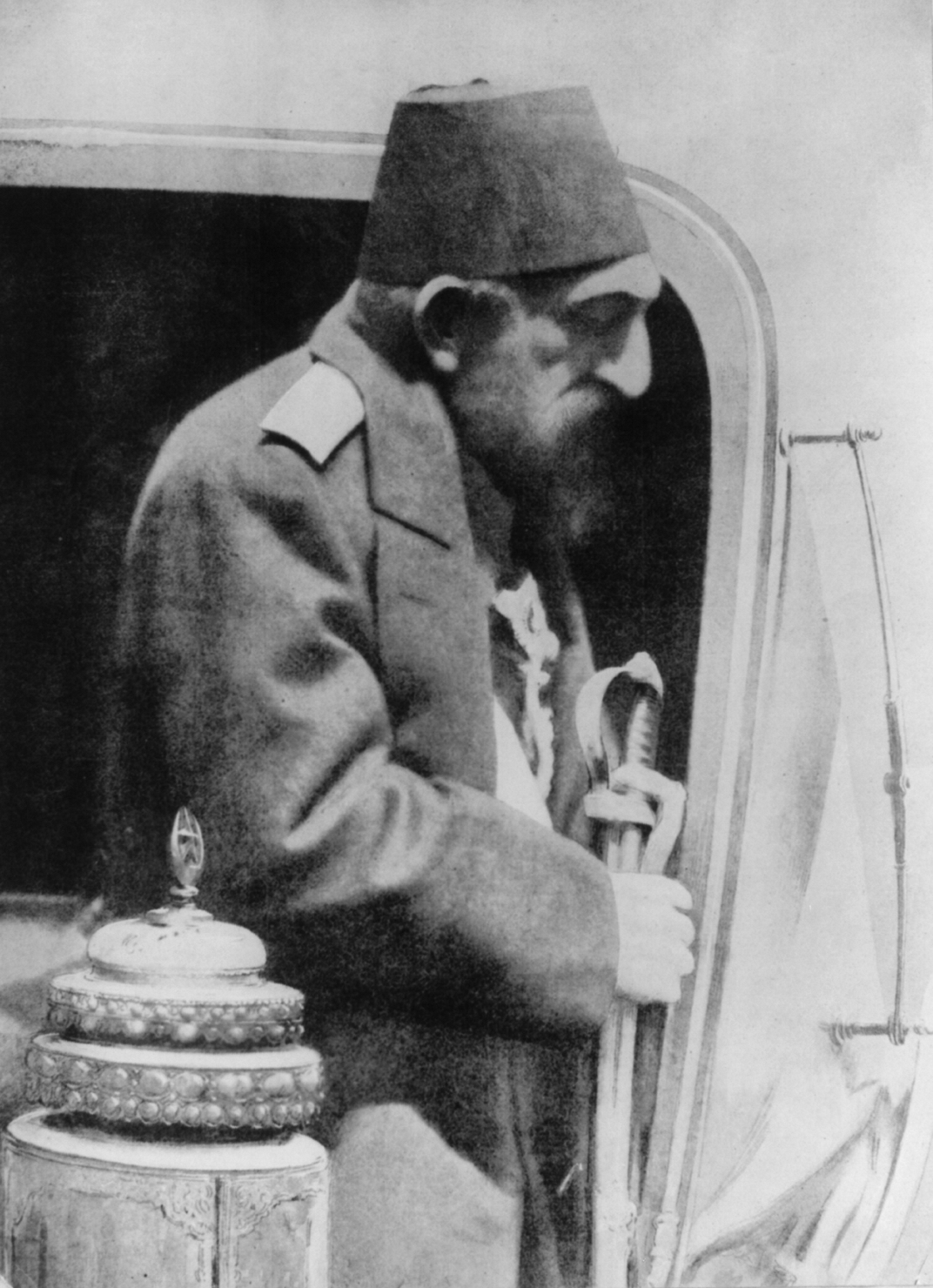
The revolution of 1908 left Sultan Abdul Hamid II on the throne, a fatal error by the Committee of Union and Progress (CUP). The Sultan, a master of intrigue, bided his time. In April 1909, religious conservatives and mutinous soldiers marched on parliament, demanding the restoration of Sharia law and the expulsion of the secular “Young Turks.”
For a few days, the counter-revolution seemed to succeed. Liberal politicians fled, and the Sultan regained control. But the CUP struck back. The “Action Army,” led by Mahmud Shevket Pasha, marched from Macedonia to Istanbul, crushed the mutiny, and deposed Abdul Hamid, replacing him with his pliant brother, Mehmed V.
This was a victory for the constitution, but it came at a terrible price. The counter-revolution revealed that the empire was deeply divided between secular modernizers and religious traditionalists—a fault line that would plague the region for the rest of the century.
The Armenian Tragedy
More ominously, the chaos of 1909 unleashed a wave of ethnic violence. In the city of Adana, thousands of Armenians were massacred by Muslim mobs who viewed the constitutional movement as a cover for Armenian separatism.
This violence didn’t happen in a vacuum. Since the Treaty of Berlin in 1878, European powers had positioned themselves as protectors of the empire’s Christian minorities. To the Ottoman elite, the Armenians were not just fellow citizens seeking rights; they were a “fifth column” for British and Russian imperialism.
The fear of partition was existential. The Ottomans had already lost the Balkans and North Africa. They looked at the map and saw the Armenians in eastern Anatolia—the heartland of the empire—demanding autonomy similar to what had been granted in Lebanon. If they succeeded, the empire would be dismembered.
The Trap of Intervention
This dynamic created a deadly feedback loop. Armenian revolutionaries, like the Hunchaks and Dashnaks, sometimes staged provocations to invite European intervention, believing that only foreign pressure could save them. But foreign pressure only confirmed the Ottomans’ worst fears, leading to harsher repression.
As Eugene Rogan notes in The Fall of the Ottomans, this culminated in the massacres of the 1890s and the Adana pogrom of 1909. These events were dress rehearsals for the horror of 1915.
The tragedy is that the European powers were happy to use the Armenians as pawns in their geopolitical games but were rarely willing to offer actual protection when the killing started. It is a grim lesson in the consequences of cynical interventionism—a lesson that resonates painfully in the Middle East today.
Transcript
Nick: Welcome again to the Explaining Historypodcast. This is my second week of trying to improve the sound quality, so I hope it sounds a bit better!
Before we start, some housekeeping. The podcast is now available ad-free on Patreon via the link in the show notes. I’ll be adding some exclusive video content there too. Also, our Russian History Masterclass for students is on Sunday, January 25th. We’ll cover essay structure, exam technique, and how to argue like a historian.
Today, we dive back into Eugene Rogan’s The Fall of the Ottomans. We are looking at the aftermath of the 1908 Young Turk Revolution—a parable about revolutionary expectations and disappointment.
Rogan writes that the revolution led to disillusionment. The Committee of Union and Progress (CUP) left Sultan Abdul Hamid II on the throne because he was revered as Caliph. They lacked the confidence to rule directly, instead acting as an oversight committee.
Economic chaos followed. Inflation soared to 20%, and workers launched over 100 strikes. The new government responded with crackdowns. Worse, Turkey’s neighbors seized on the instability to annex territory: Bulgaria declared independence, Austria-Hungary annexed Bosnia, and Crete united with Greece.
Abdul Hamid bided his time. In April 1909, enemies of the CUP mounted a counter-revolution. Mutinous soldiers and religious scholars marched on parliament, demanding the restoration of Islamic law. The Sultan accepted their demands, and CUP politicians fled.
However, the “Action Army” from Macedonia, loyal to the constitution, marched on Istanbul. They crushed the revolt in two weeks, deposed Abdul Hamid, and installed his brother Mehmed V.
This reveals interesting paradoxes. You had a secular Ottoman bourgeoisie—officers and intellectuals—who believed reform was the only way to save the empire from dismemberment. This was a liberal civic nationalism, similar to Meiji Japan. Opposing them were religious conservatives and soldiers who viewed any limit on the Sultan’s power as a breach of sacred duty.
Rogan notes that the counter-revolution exposed deep divisions, none more dangerous than Turkish-Armenian antagonism. Immediately after the CUP returned to power, thousands of Armenians were massacred in Adana.
This pogrom had roots going back to the 1870s. The Ottomans suspected the Armenians of being a nationalist fifth column. Unlike other groups, Armenians were dispersed across the empire, meaning they couldn’t achieve statehood without foreign support.
At the Congress of Berlin in 1878, European powers forced the Ottomans to promise reforms for Armenians. This European meddling terrified the Ottoman elite. Having lost territory in the Balkans, they couldn’t contemplate losing eastern Anatolia.
Armenian nationalist societies like the Hunchaks and Dashnaks emerged, some advocating violence to provoke European intervention. The Ottomans branded them terrorists. This volatile mix led to the massacres of 1894-96, where up to 300,000 Armenians were killed.
This history shows us the fears of partition that radicalized the Ottoman state. It also highlights the cynical role of European powers, who used ethnic tensions to further their imperial interests—a dynamic that continued throughout the 20th century in the Middle East.
I’ll be posting something later tonight for our US listeners about the current situation there. It’s a frightening time, and I want the podcast to help provide context.
Take care, everyone. Stay safe. Bye-bye

Leave a Reply