
By Explaining History
There is a grim, cyclical inevitability to the history of the British Left. It is a history punctuated not just by defeat, but by “glorious disasters”—moments where moral victory is prioritized over political strategy, and where doctrinal purity tests dismantle movements before they can even contest an election.
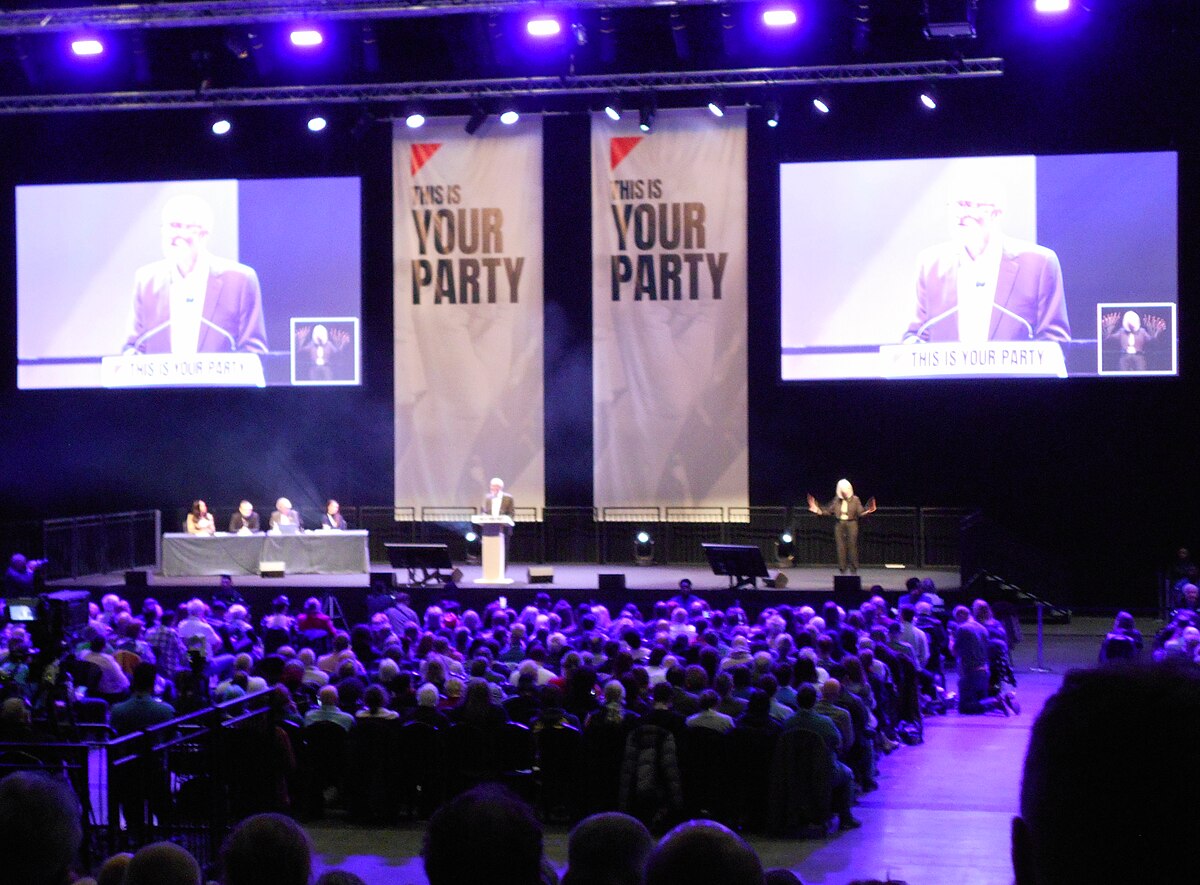
In this week’s podcast, we discussed the events of last weekend, which may well be remembered as the moment the post-Labour Left strangled itself in the cradle. The founding conference of “Your Party”—the political vehicle formed by Jeremy Corbyn, Zarah Sultana, and the independent MPs elected in 2024—descended into the kind of chaos that right-wing columnists dream of.
To understand why this matters, we have to look at the vacuum they are trying to fill.
The Vacuum of Ambition
Since the defenestration of the Labour Left in 2019 and the subsequent ascendancy of Keir Starmer, British politics has suffered from a lack of genuine choice. Starmer’s project has essentially been one of “competent management of decline”—a softer, more managerial embrace of neoliberalism that accepts the Thatcherite settlement as immovable law.
For millions plunged into Dickensian poverty by fifteen years of austerity, the difference between Rishi Sunak and Keir Starmer has become negligible. This created a fertile ground for a revolt, which we saw the first sparks of in the 2024 General Election with the election of Independent MPs on a pro-Gaza, anti-austerity ticket.
The Left currently has two potential lifeboats. The first is the Green Party, which, under the leadership of Zack Polanski, has pivoted sharply to become a party of economic justice, taxing wealth, and fighting inequality. The second was supposed to be “Your Party”—a mass membership socialist party led by the heavyweights of the Corbyn era.
The Spectre of Entryism
However, the founding conference of this new party revealed the structural weaknesses that have plagued left-wing movements for a century. The conflict centers on a tension between “movement bureaucracy” and “mass democracy.”
Jeremy Corbyn, ever the cautious figure, sought a party structure managed by experienced hands—former Labour staffers who understand how to run a machine. Zarah Sultana, representing a younger, more urgent generation, pushed for radical democratization. This friction resulted in Sultana walking out of the conference on Saturday, citing the expulsion of delegates.
This is where history repeats itself. The delegates in question were largely members of the Socialist Workers Party (SWP). For those unacquainted with the taxonomy of the British far-left, the SWP is a Trotskyist organization that views the parliamentary system as illegitimate. Historically, they do not join parties to win elections; they join to radicalize the membership and steer the vehicle toward revolutionary politics—a tactic known as “entryism.”
In the 1980s, the Labour Party spent a decade tearing itself apart trying to expel the “Militant Tendency.” This weekend, “Your Party” effectively voted to invite them in. By voting down the ban on dual membership, the conference decided that anyone—from SWP revolutionaries to, theoretically, Nigel Farage—could join.
The Poison Pill
This decision to allow dual membership is likely the death knell for the project. A political party requires discipline and a unified strategy to survive the onslaught of the British media and the security state. If “Your Party” becomes a holding pen for various revolutionary splinter groups, it will become ungovernable. It will spend its time debating the dialectics of 1917 rather than the cost of living in 2025.
Furthermore, the British establishment—the media, the arms industry, and the security services—are already hostile to any party that challenges NATO membership or support for Israel. By allowing the SWP and other fringe groups to enter the fold, the new party has voluntarily handed its enemies all the ammunition they need to paint it as a dangerous, extremist rabble.
A Missed Opportunity?
It brings me no joy to analyze this. The need for a robust, socialist opposition in the UK is desperate. We are living through a period of de-development, where the state is receding, and inequality is widening.
The tragedy is that the energy exists. The public appetite for taxing billionaires, renationalizing utilities, and ending foreign wars is higher than it has been in decades. Yet, the vehicle built to harness that energy seems to have blown its engine on the starting grid.
Unless a miracle occurs—perhaps an electoral pact between the Greens and the surviving sanity of the Corbyn/Sultana faction—we are looking at another generation of the Left in the wilderness. As Peter Mandelson once arrogantly (but accurately) predicted, the Left is expected to have “nowhere else to go.” For a brief moment, it looked like they did. After this weekend, the map looks blank once again.
Transcript
Nick: Welcome again to the Explaining History podcast. I’m delving a little bit today into the workings of the British Left, of which I consider myself to be a constituent part—a very minor part, but certainly on the Left.
For those who are not following the changes and permutations in the British Left—and you’d be forgiven if you aren’t—the background goes something like this. From Thatcherism onwards, the parliamentary British Left, specifically the Labour Party, concluded that ultimately there was no other way than a slightly softer embrace of neoliberalism. They decided that Thatcher had won all the arguments.
The Right of the Labour Party has always been the more powerful faction. After the defeat of Tony Benn (who ran for deputy leader) and the 1983 General Election where Michael Foot was defeated, the Right was ascendant. This ran through Neil Kinnock, John Smith, and then Tony Blair and Gordon Brown, all the way up to 2010.
In 2010, we saw the arrival of one of the most ruinous governments Britain has ever seen—a government that, through austerity, essentially de-developed the state. They plunged untold millions in Britain into Dickensian levels of poverty. If you listen to my podcast recording with Dr. Rachel Morris on austerity, you’ll have a picture of what that was like.
This produced a revolt in the Labour Party in 2015, giving us Jeremy Corbyn. The revolt was about austerity and the complicity of the Labour Right in it—their willingness to say, “Well, we just have to do these things, but we’d do it slightly better and more efficiently.”
The Labour Right lost control of the party until 2019. When Jeremy Corbyn lost the 2019 election—having come very close in 2017—it terrified the Labour Right. They sabotaged Corbyn and installed Keir Starmer. What we have now is essentially “continuity Toryism.” There is no material difference whatsoever between Rishi Sunak and Keir Starmer. Starmer essentially told the Left of the party to clear off, looking to build a more managerial, Thatcherite party.
Peter Mandelson famously said years ago that the Left will always vote for Labour because “they’ve got nowhere else to go.” Fortunately, they now have two other places to go.
They have Zack Polanski’s new Green Party. Zack Polanski, the leader, is a very erudite, talented guy who has managed to use social media effectively to communicate a key message about austerity, inequality, billionaires, and taxing the wealthy.
Then there is what is now known as “Your Party.” This was founded by Jeremy Corbyn, Zarah Sultana, and a block of independent MPs elected in 2024. These independent MPs were chiefly elected on a wave of anger against Labour’s complicity in the genocide in Gaza. They came to Parliament as independents, not part of any party machine, and not necessarily on the same page regarding the cultural politics that often divide the Left.
The Left is divided in two ways. There is a Marxist materialist argument that cultural debates are often cooked up by the political Right. While there is an element of intolerance there—suggesting trans rights aren’t important compared to poverty—it is difficult to separate the two. Trans people are massively overrepresented in stats regarding homelessness and poverty. However, right-wing think tanks do create culture wars to divide people.
These tensions exist within the “Your Party” Left. Some of the MPs who formed the party were accused by activists of being insufficiently pro-trans rights, or of being landlords. Landlordism is a colossal bête noire for a generation who will likely never own a home.
Jeremy Corbyn was perhaps cautious, waiting to found this new party. Zarah Sultana essentially bounced him into it earlier this year with the announcement of its formation. Now, right-wing columnists love to point out that the Left will argue amongst itself endlessly before doing anything practical, and unfortunately, they are being given quality material at the moment.
The accusation from Zarah Sultana’s supporters is that Jeremy Corbyn’s faction is just a continuity of the Labour Party bureaucracy—founded by insiders like his former Chief of Staff, Karie Murphy. There is a feeling that decisions about the makeup of the party are not being made democratically.
However, to found a mass political party, you need bureaucrats. It can’t be decided by a glorious outpouring of democratic action. If you look at the Petrograd Soviet in 1917, it descended into chaos until the Bolsheviks—the antithesis of mass democracy—gobbled up the committees.
I think the people around Jeremy Corbyn are trying to prevent “Your Party” from being undermined by what the Labour Party in the 80s called “entryism.” This was the idea that the Militant Tendency or the Socialist Party would covertly enter Labour to push for far-left policies.
“Your Party” had its first foundational conference this weekend. On Saturday, Zarah Sultana walked out in protest because some delegates had been expelled. These delegates were largely members of the Socialist Workers Party (SWP). The SWP is a fringe Trotskyite party that believes the political system is illegitimate and generally doesn’t contest elections. Why they want to enter an electoral machine is a question for the ages.
Zarah chose to return on the second day, and her faction was largely successful. They won the debate on joint leadership rather than solo leadership. Had Corbyn’s proposal for solo leadership won, there would have been a head-to-head election in January, likely between Zara and Jeremy, which would have alienated one group or the other.
Jeremy Corbyn has a “star quality” on the Left; the appeal of the party is largely based on him. But Zarah Sultana also has great appeal—there is a great deal I like about her. But frankly, I think there is something about this crisis that validates the criticisms of the British Left.
The second major event at the conference was that the ban on dual membership was voted out. Delegates decided you can be in any other political party and still join “Your Party.” I fear that may have killed the entire project stone dead. If Nigel Farage wanted to join for a laugh, he could.
What you will likely get now is the SWP joining in large numbers. That will have a toxic effect, causing chaos and doctrinal infighting. There is no firewall around the party now; it can be undermined from within.
If a Left party in Britain gains even the smallest bit of traction, it faces the entirety of the political establishment, the media, and the security state. Organs like MI5 are not well disposed to a radical Left party that would change Britain’s role in NATO, its support for Israel, and the arms industry. Members from the SWP will simply provide the establishment with the ammunition they need to attack the party.
This is part of a longer story of “glorious disasters” on the British Left. There are moments where British social democracy manages to succeed, but I genuinely don’t believe this is going to be one of them. It pains me to say that. It will likely be viewed as a missed opportunity.
Hopefully, the Green Party will continue its surge in popularity and retain its newfound commitment to Left ideas and the fight against inequality. Hopefully, there can be some electoral understanding between the Greens and the Corbyn/Sultana faction, though I don’t hold out much hope.
It’s a bit of a dismal one to start the week with, but we soldier on. I’ll catch you on the next Explaining History podcast. We have an amazing interview about David Bowie coming up on Wednesday, so check that out. All the best. Bye-bye.

Leave a Reply