
The historiography of the Cold War Space Race has often been framed within a binary ideological competition. This article argues that a more convergent reality underpinned this technological rivalry: the foundational reliance of both the United States and the Soviet Union on German scientific personnel recruited from the ruins of the Third Reich. Through an analysis of the mechanisms of Operation PaperclipOperation Paperclip
Full Description:A secret post-WWII program in which more than 1,600 German scientists, engineers, and technicians—many of whom were former members and leaders of the Nazi Party—were recruited by the United States for government employment. A similar effort, Operation Osoaviakhim, was conducted by the Soviet Union.
Critical Perspective:Operation Paperclip represents the foundational moral contradiction of the Space Race. By harvesting the “intellectual capital” of the Third Reich to build Cold War missiles, both superpowers prioritized geopolitical dominance over moral accountability. This “Nazi inheritance” challenges the clean, heroic narrative of the journey to the Moon by linking it directly to the technology of the V-2 rocket and the horrors of the Holocaust.
Read more and its Soviet counterpart, Operation Osoaviakhim, and through detailed case studies of figures like Wernher von Braun and Arthur Rudolph, this article demonstrates a shared technocratic pragmatism that systematically privileged strategic advantage over ethical accountability. Engaging with the scholarship of Michael J. Neufeld, Linda Hunt, and Asif Siddiqi, it deconstructs the myth of the apolitical technocrat and posits that the knowledge systems upon which the Space Race was built were intrinsically shaped by the conditions of their production within the Nazi war machine, creating a lasting paradigm of moral compromise in the pursuit of technological supremacy.
Introduction: Beyond the Binary
The conventional narrative of the Space Race presents a tale of two systems: the liberal, capitalist democracy of the United States pitted against the centralized, communist party-state of the Soviet Union. This framework, while capturing the superstructural conflict of the Cold War, obscures a more complex and unsettling substratum. The technological foundations upon which both superpowers launched their celestial ambitions were not solely products of indigenous innovation but were deeply embedded in the moral and geopolitical aftermath of the Second World War. The systematic recruitment of scientific and engineering personnel from the defeated Third Reich—most notably through the United States’ Operation Paperclip and the Soviet Union’s analogous initiatives—represents a foundational moment of moral compromise that challenges the clean ideological dichotomies of the era.
This was not a mere footnote of personnel transfer but a constitutive process that demonstrated a shared technocratic pragmatism. In both contexts, the pursuit of strategic advantage systematically overrode public commitments to justice, denazificationDenazification The Allied initiative aimed at ridding German and Austrian society, culture, the economy, and politics of National Socialist ideology. While initially ambitious, it quickly devolved into a superficial bureaucratic exercise as the Cold War priorities shifted toward rebuilding West Germany against the Soviet Union. Denazification was the legal and psychological process intended to purge the perpetrators of the Third Reich from positions of influence. It involved tribunals, questionnaires, and the banning of Nazi symbols. However, as the divide between East and West deepened, the Western Allies prioritized efficiency and stability over justice.
Read more, and the principles ostensibly vindicated by the Allied victory. This analysis argues that the integration of German scientists, particularly those demonstrably complicit in the Nazi war apparatus, into the American and Soviet missile and space programs reveals a critical paradox. Despite their proclaimed ideological antipathy, both superpowers operated under a similar calculus that prioritized technological acquisition over ethical accountability. By examining the bureaucratic architectures of these recruitment programs, the specific and documented complicity of key figures, and the subsequent historiographical debates, we can deconstruct the enduring myth of the apolitical technocrat. In doing so, we illuminate how humanity’s reach for the cosmos was irrevocably tethered to the depths of terrestrial atrocity, forcing a necessary reckoning with the price of progress and the nature of “tainted knowledge.”
The Architecture of Acquisition: A Comparative Analysis
The immediate post-war period was characterized by a frantic Anglo-American and Soviet competition for German scientific and industrial assets, an endeavor formally recognized as the pursuit of “intellectual reparations.” The methods employed, while starkly divergent in execution, shared a fundamental objective: the capture of technical knowledge and the human capital that possessed it.
Operation Paperclip: Bureaucratic Sanitization and Strategic Denial
Formally initiated by the Joint Chiefs of Staff in 1945 and later codified by President Truman in September 1946, Operation Paperclip was driven by the dual objectives of acquiring Germany’s top scientific minds and, just as crucially, denying them to the Soviet Union. The program’s moral complexity is most starkly illustrated not in its conception, but in its bureaucratic machinery. Truman’s directive explicitly barred the immigration of any individual found to have been “a member of the Nazi Party and more than a nominal participant in its activities, or an active supporter of Nazism or militarism.”
This policy immediately created a significant impediment. The very individuals coveted by the War Department’s Joint Intelligence Objectives Agency (JIOA)—the senior engineers and project managers who had thrived under the Nazi system—were, by definition, ardent Nazis or collaborators. The solution, as documented by historian Linda Hunt through her pioneering archival work, was a systematic campaign of bureaucratic whitewashing. JIOA officials, including Director Bosquet Wev, deliberately altered, expunged, and minimized incriminating evidence in the scientists’ files. SS memberships, Nazi Party affiliations, and direct complicity in war crimes were systematically omitted or reframed as nominal or coerced.
For instance, the OMGUS (Office of Military Government, United States) security report on Wernher von Braun initially stated he was “an SS Officer and a Nazi party member…a security threat.” The JIOA version that reached State Department reviewers softened this to a man who “may have been” an SS officer and whose political inclinations were “inward.” Similarly, the file of Arthur Rudolph, a V-2 production manager, was cleansed of his active role in the exploitation of slave labor at the Mittelwerk factory. This process was not an oversight but a deliberate, coordinated policy designed to circumvent U.S. immigration law and presidential directive. The scientists were recast as apolitical technocrats, their expertise a neutral resource to be harvested. By 1947, this sanitization allowed over 1,600 scientists, engineers, and their families to enter the U.S., where they were integrated into military-industrial facilities like Fort Bliss, White Sands, and eventually the Army Ballistic Missile Agency at Redstone Arsenal.
The Soviet “Operation Osoaviakhim”: Forced Relocation and Institutionalized Extraction
The Soviet approach, while ideologically framed as rightful reparations from a fascist state, exhibited a parallel pragmatic ruthlessness. Initially, the Soviets employed a system of sharashkas—technical research laboratories within the GulagGulag Full Description:The government agency that administered the vast network of forced labor camps. Far more than just a prison system, it was a central component of the Soviet economy, using slave labor to extract resources from the most inhospitable regions of the country. The Gulag system institutionalized political repression. Millions of “enemies of the people”—ranging from political dissidents and intellectuals to petty criminals—were arrested and transported to camps to work in mining, timber, and construction.
Critical Perspective:Critically, the Gulag was an economic necessity for the Stalinist system. The “Economic Miracle” of the Soviet Union relied heavily on this reservoir of unpaid, coerced labor to complete dangerous infrastructure projects that free labor would not undertake. It signifies the ultimate reduction of the human being to a unit of production, to be worked until exhaustion and then replaced.
Read more system—and contracts to utilize German scientists within their occupation zone. However, growing distrust and the fear of their expertise being siphoned off by the West led to a more drastic solution.
On the night of October 22, 1946, Soviet NKVD forces executed Operation Osoaviakhim, a meticulously planned action named after the Soviet paramilitary organization. In a single sweep, over 2,200 German technical specialists—from rocketry, aviation, and chemical weapons fields—along with their families, totaling over 6,000 people, were forcibly relocated to the USSR. As described in the scholarship of Asif Siddiqi, this was not an invitation but an act of state-sponsored intellectual impressment. Key figures like Helmut Gröttrup, a senior V-2 engineer, were taken, along with entire design bureaus.
The contrast with the American method was stark. Where Paperclip offered contracts and a path to citizenship (however morally compromised), Osoaviakhim was an act of coercion. These individuals were high-value intellectual detainees, transported to isolated, closed research centers like Institute Rabe in Bleicherode and the installation on Gorodomlya Island. Their living conditions were privileged compared to the Gulag—they received better rations, housing, and salaries—but they were prisoners nonetheless, surrounded by barbed wire and NKVD guards. Their knowledge was to be systematically extracted through collaborative work and outright coercion. Under the direction of Sergei KorolevSergei Korolev
Full Description:The anonymous mastermind behind the Soviet space program, responsible for Sputnik and Yuri Gagarin’s flight. A survivor of Stalin’s gulags, Korolev was so essential to the USSR’s success that his identity was kept secret by the state until after his death in 1966.
Critical Perspective:Korolev’s life embodies the tragic paradox of the Soviet system. Though he was the primary architect of their greatest triumphs, he was also a victim of the state’s paranoia and repression. His premature death is often cited as the definitive turning point that cost the Soviets the Moon, illustrating how heavily their program relied on a single “irreplaceable” individual compared to the institutionalized NASA model.
Read more—who understood their plight all too well, having been a zek (prisoner) himself in the Gulag’s sharashkas—the German teams were instrumental in helping the Soviets reverse-engineer the V-2, leading to the R-1 rocket. Once Korolev and his native Soviet engineers had absorbed all they could, the Germans were gradually repatriated between 1951 and 1958, their utility to the state exhausted. The Soviet program, having built its foundational knowledge, could now continue on its own trajectory.
Case Studies in Complicity: Beyond the Myth of the Apolitical Technocrat
To comprehend the depth of the moral compromise, one must move beyond abstract bureaucratic processes and examine specific lives. The careers of Wernher von Braun and his colleague Arthur Rudolph provide the most potent case studies, revealing a complicity that extends far beyond the defense of mere political affiliation.
Wernher von Braun and the Mittelbau-Dora Complex
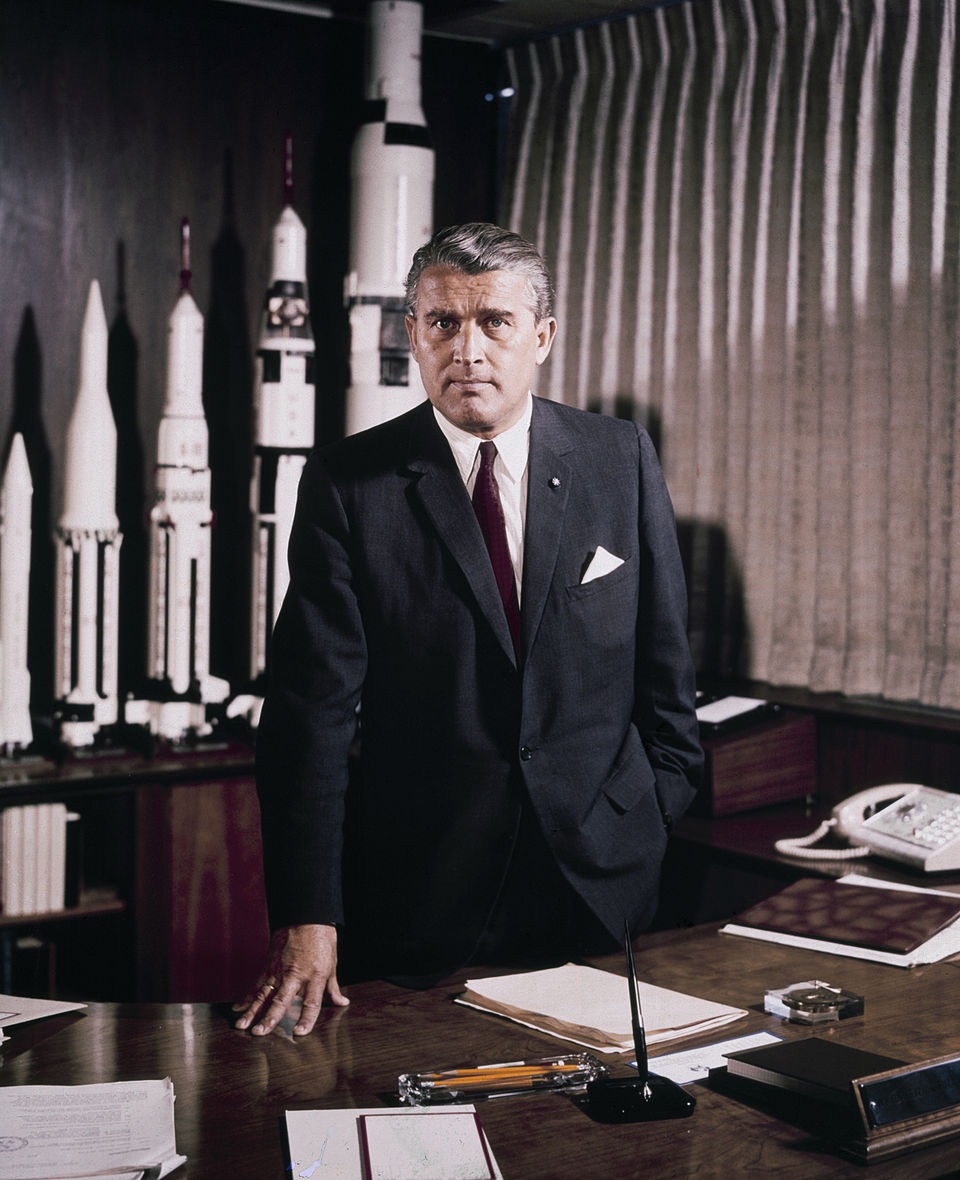
The popular narrative, carefully cultivated by the U.S. government and media, portrayed von Braun as a brilliant, apolitical dreamer, a scientist forced to work for the Nazis to pursue his cosmic vision. This caricature collapses under the weight of archival evidence, as meticulously detailed in Michael J. Neufeld’s seminal biography, Von Braun: Dreamer of Space, Engineer of War.
Von Braun was not a low-level technician but the technical director of the V-2 program, a pivotal strategic project. To achieve and maintain this position required political reliability. Von Braun held the rank of SS-Sturmbannführer (Major), a rank he accepted in 1940 and wore. He was also a member of the Nazi Party. While some apologists argue these were pragmatic necessities, they were active choices that integrated him into the coercive apparatus of the Nazi state.
More critically, his work was directly and inextricably linked to the Holocaust and the Nazi system of enslaved labor. As the V-2 program accelerated in 1943, Allied bombing raids necessitated moving production underground. The result was the Mittelwerk factory, a massive network of tunnels dug into the Kohnstein mountain, and the associated Mittelbau-Dora concentration camp. The construction and operation of this facility relied on the forced labor of tens of thousands of prisoners. An estimated 20,000 inmates died from starvation, disease, and summary execution. As Jean Michel, a French survivor, noted in his memoir Dora, the prisoners were “dying from the V-2.”
Von Braun’s complicity was functional. Correspondence and wartime documents place him at the Mittelwerk and Dora on multiple occasions. A memo from him, dated August 15, 1944, requests the allocation of more skilled prisoner laborers from the SS, specifically mentioning a need for “turret lathe operators.” He was aware of the conditions; he walked through the tunnels where emaciated men assembled his rockets. In a later, oft-cited admission, he told a reporter, “the conditions…were, indeed, horrible.” This belated acknowledgment does not negate his active participation in the system that produced those conditions. He made the V-2 program possible, and the V-2 program required the Dora camp. This was not a tragic coincidence; it was a causal relationship.
Arthur Rudolph: From Mittelwerk Manager to NASA Executive
The case of Arthur Rudolph provides an even starker illustration of direct operational culpability and its subsequent erasure. As the Operations Director for V-2 production at Mittelwerk, Rudolph was responsible for meeting relentless production quotas. His presence and authority in the tunnel system were direct and daily. Survivor testimonies from the Dora War Crimes Trial and subsequent Office of Special Investigations (OSI) files describe Rudolph as a demanding manager who was fully aware he was overseeing slave labor. He worked in concert with SS officers to discipline and manage the prisoner workforce.
Under Paperclip, this history was systematically whitewashed. His JIOA file presented him as a non-Nazi, a mere engineer. In the United States, he became a naturalized citizen and a crucial figure at NASA, managing the development of the Saturn V rocket’s Pershing first stage—the very engine that would propel Americans to the Moon. For this, he received NASA’s Distinguished Service Medal in 1969.
The unraveling of this narrative began in 1979, when the OSI, reinvestigating Nazi war crimes, presented Rudolph with the evidence from his own past. Faced with the prospect of denaturalization and a public trial, he signed an agreement in 1984 to leave the United States voluntarily and renounce his citizenship. The U.S. government, having once sanitized his record to bring him in, now used that same record to expel him, long after his technological utility had been exhausted. The Rudolph case stands as a belated and incomplete acknowledgment of the original moral failure of Paperclip, demonstrating that the ethical contradictions of the program were not buried in the past but had a long and active half-life.
The Historiographical Debate: Technocratic Neutrality, Tainted Knowledge, and the Limits of Pragmatism
The legacy of these recruitment programs has generated a persistent and multifaceted scholarly debate, centering on the relationship between technological progress, ethical responsibility, and the very nature of knowledge itself.
The “Dual-Use” Justification and its Critics
A persistent line of argument, often advanced by the scientists themselves and by some contemporaries, posits that their work was “dual-use.” This defense hinges on the concept of the apolitical technocrat—a figure whose dedication to scientific progress exists in a realm separate from political applications. The rocket is a neutral vehicle; the state determines its payload. Von Braun himself frequently articulated this view, deflecting responsibility with statements like his famous quip that the rocket worked perfectly except for “landing on the wrong planet.”
This argument, however, fails to withstand contextual scrutiny. As historian John Gimbel argues in Science, Technology, and Reparations, the exploitation of German science was a pragmatic and highly successful policy from a strategic standpoint. However, this pragmatic defense does not address the ethical vacuum at its core. Historians like Neufeld and Hunt contend that accepting senior rank in the SS and managing a project reliant on slave labor are not politically neutral acts; they represent a conscious and active collaborationCollaboration
Full Description:The cooperation of local governments, police forces, and citizens in German-occupied countries with the Nazi regime. The Holocaust was a continental crime, reliant on French police, Dutch civil servants, and Ukrainian militias to identify and deport victims. Collaboration challenges the narrative that the Holocaust was solely a German crime. across Europe, local administrations assisted the Nazis for various reasons: ideological agreement (antisemitism), political opportunism, or bureaucratic obedience. In many cases, local police rounded up Jews before German forces even arrived.
Critical Perspective:This term reveals the fragility of social solidarity. When their Jewish neighbors were targeted, many European societies chose to protect their own national sovereignty or administrative autonomy by sacrificing the minority. It complicates the post-war myths of “national resistance” that many European countries adopted to hide their complicity.
Read more with a criminal regime. The “dual-use” defense conveniently ignores the fact that the V-2 program was not a peacetime research initiative but a key component of the Nazi war machine, and its very existence was predicated on atrocity. The knowledge was not merely “used” by the regime; it was produced by and within the regime’s coercive and murderous apparatus.
The “Tainted Knowledge” Thesis and the Structural Analysis of Complicity
A more critical scholarly perspective questions the very possibility of separating knowledge from the conditions of its production. This view, implicit in the work of Hunt and explicit in the philosophical explorations of scholars like Michael André Bernstein, argues that the foundational technologies of the Space Race were not merely inspired by the V-2 program but were directly derived from it. This technological lineage is inextricably linked to human suffering. The gleaming rockets on their launch pads were, in a very real sense, the direct progeny of the dark, hellish tunnels of Mittelwerk.
This perspective forces a difficult epistemological and ethical question: can a technological achievement be truly celebrated if its foundational knowledge is born from evil? To celebrate the achievement while ignoring its origins is to engage in a form of historical amnesia that sanitizes the past. Furthermore, as historian Audra J. Wolfe notes in Competing with the Soviets, the Cold War was, in part, a competition over the legitimacy of knowledge systems. The Western narrative of “free” science versus Soviet ideologically constrained science is profoundly undermined by the Paperclip precedent, which demonstrates that American science was equally willing to compromise its foundational ethics for state power.
The precedent set by Paperclip and Osoaviakhim established a durable Cold War paradigm in which gross human rights abuses could be strategically overlooked. This template would be reused for decades—in the recruitment of former Nazi intelligence agents for anti-Soviet networks, in alliances with brutal dictatorships, and in the embrace of any individual or regime that could provide a tactical advantage. The Faustian bargain struck in the ashes of World War II demonstrated that when faced with a perceived existential threat, liberal democracies were willing to suspend their own proclaimed values, creating a lasting tension between principle and pragmatism.
Conclusion: The Unavoidable Shadow and the Enduring Paradox
The recruitment of German scientists by the superpowers was not an anomalous episode but a foundational element of the Cold War technopolitical order. It demonstrated that despite their profound ideological differences, the United States and the Soviet Union shared a common operational logic: the primacy of the state’s technological and strategic needs over the demands of justice and ethical consistency. The gleaming achievements of the Space Race—the satellites that beeped, the capsules that orbited, the footprints on the lunar dust—were built upon an infrastructure of knowledge that emerged directly from the abyss of the Mittelbau-Dora complex and the calculated pragmatism of the early Cold War.
To acknowledge this difficult truth is not to diminish the sheer magnitude of the technological accomplishments, nor is it to engage in simplistic historical condemnation. Rather, it is to engage with their full, unnerving complexity. It forces a critical reassessment of the heroic figure of the “visionary” engineer, revealing the often-inconvenient realities that lie beneath carefully constructed public personas. It challenges the comforting but inaccurate narrative of scientific progress as an inherently virtuous and linear pursuit, revealing instead a path littered with moral compromises and tragic choices.
The legacy of Paperclip and its Soviet equivalent is a permanent and necessary reminder. It reminds us that technological ambition, when divorced from a rigorous and unwavering ethical framework, can lead to a bargain whose moral costs echo across generations. The path to the cosmos, for all its wonder and inspiration, was paved with the stones of a profound earthly contradiction. The engineers of the abyss built the bridges to other worlds, but they cast a long, unavoidable shadow from the one we inhabit, forcing us to continually ask: what, and who, are we willing to sacrifice in the name of progress, and what does that sacrifice ultimately do to us?
Further Reading
· Gimbel, John. Science, Technology, and Reparations: Exploitation and Plunder in Postwar Germany. Stanford University Press, 1990.
· Hunt, Linda. Secret Agenda: The United States Government, Nazi Scientists, and Project Paperclip, 1945 to 1990. St. Martin’s Press, 1991.
· Michel, Jean. Dora. Weidenfeld and Nicolson, 1979.
· Neufeld, Michael J. The Rocket and the Reich: Peenemünde and the Coming of the Ballistic Missile Era. The Free Press, 1995.
· Neufeld, Michael J. Von Braun: Dreamer of Space, Engineer of War. Alfred A. Knopf, 2007.
· Siddiqi, Asif A. The Red Rockets’ Glare: Spaceflight and the Soviet Imagination, 1857-1957. Cambridge University Press, 2010.
· Wolfe, Audra J. Competing with the Soviets: Science, Technology, and the State in Cold War America. Johns Hopkins University Press, 2013.

Leave a Reply