Introduction: The Structural Transformation of Chinese Socialism
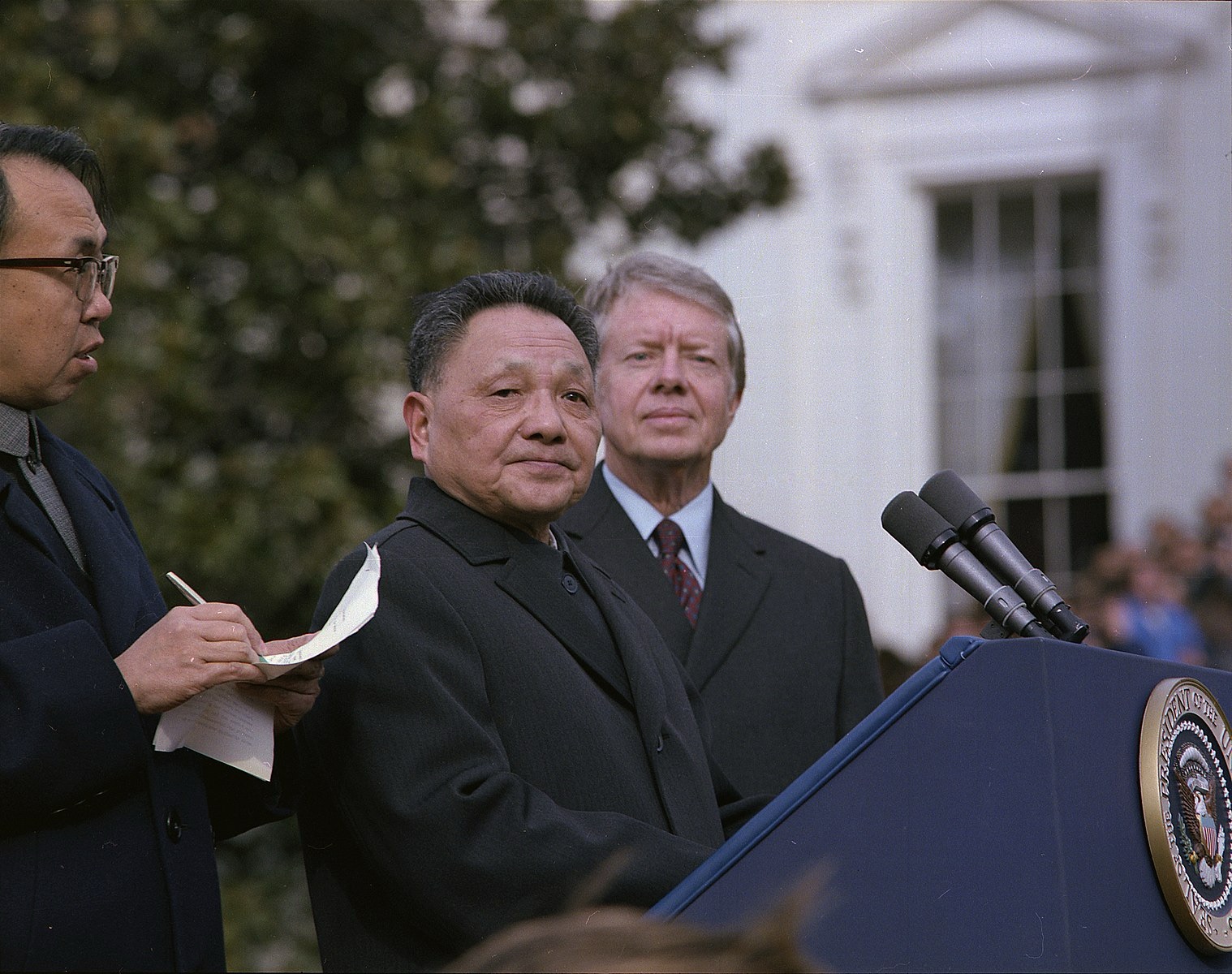
The death of Deng Xiaoping in February 1997 marked the conclusion of the most transformative period in the history of the People’s Republic of ChinaRepublic of China
Full Description:The state established on January 1, 1912, succeeding the Qing Dynasty. It was the first republic in Asia, but its early years were plagued by political instability, the betrayal of democratic norms by Yuan Shikai, and fragmentation into warlordism. The Republic of China was envisioned by Sun Yat-sen as a modern, democratic nation-state. It adopted a five-colored flag representing the unity of the five major ethnic groups (Han, Manchu, Mongol, Hui, and Tibetan). However, the central government in Beijing quickly lost control of the provinces.
Critical Perspective:The early Republic illustrates the “crisis of sovereignty.” While it had the forms of a republic (a president, a parliament), it lacked the substance. It could not collect taxes efficiently or command the loyalty of the army. It remained a “phantom republic” internationally recognized but domestically impotent, existing in a state of semi-colonialism until the nationalist consolidation in the late 1920s.
Read more (PRC). Between the Third Plenary Session of the 11th Central Committee in 1978 and his final years, Deng presided over a fundamental restructuring of the Chinese political economy. This transformation involved the dismantling of the Maoist command economyCommand Economy Full Description:An economic system in which production, investment, prices, and incomes are determined centrally by the government rather than by market forces. It represents the antithesis of free-market capitalism. In a Command Economy, the “invisible hand” of the market is replaced by the “visible hand” of the state planning committee (Gosplan). The state dictates what is produced, how much is produced, and who receives it. There is no competition, and prices are set by decree to serve political goals rather than reflecting scarcity or demand.
Critical Perspective:While theoretically designed to ensure equality and prevent the boom-bust cycles of capitalism, in practice, it created a rigid, inefficient bureaucracy. Without price signals to indicate what people actually needed, the economy suffered from chronic shortages of essential goods and massive surpluses of unwanted items. It concentrated economic power in the hands of a small elite, who enjoyed special privileges while the masses endured stagnation and hardship.
Read more, the integration of China into the global trading system, and the re-stratification of Chinese society. However, unlike the transitions observed in the post-Soviet bloc, these changes did not result in the collapse of the Leninist party-state. Instead, Deng orchestrated a process of “authoritarian adaptation,” creating a hybrid system often termed “Market-Leninism” or “Socialism with Chinese CharacteristicsSocialism with Chinese Characteristics
Short Description (Excerpt):The official ideology adopted by Deng Xiaoping in the aftermath of the Cultural Revolution. It provided the theoretical justification for introducing market capitalism and foreign investment while maintaining the Communist Party’s absolute political control.
Full Description:Socialism with Chinese Characteristics represents the great pivot away from Maoism. It argues that the primary goal of socialism is to develop the productive forces of the nation, and that market mechanisms are neutral tools that can be used to achieve this.
Critical Perspective:Critics view this as a euphemism for state capitalism. It allowed the party to survive the collapse of global communism by delivering economic growth, but it generated massive inequality. It represents a tacit admission that the ideological goals of the Cultural Revolution were a failure, replacing the promise of utopian equality with the promise of national wealth.
Read more.”
Deng’s legacy is defined by a central paradox: the use of capitalist economic mechanisms to strengthen the political monopoly of a communist party. This article assesses the enduring structural impacts of the Dengist era. It examines the theoretical innovation of the “Socialist Market Economy,” the emergence of a unique state-market hybrid, the stratification of society through the rise of a co-opted capitalist class, and the geopolitical strategy of “hiding capabilities and biding time” (tao guang yang hui). It argues that Deng’s reforms were not a transition toward Western liberal democracy, but the construction of a sui generis model of developmental authoritarianism that decoupled economic liberalization from political enfranchisement.
Theoretical Innovation: The Decoupling of Market and Capitalism
The primary intellectual obstacle facing the post-Mao leadership was the Marxist-Leninist orthodoxy which posited that central planning was an intrinsic feature of socialism, while market mechanisms were inherently capitalist. Deng Xiaoping’s most significant theoretical contribution was the epistemological separation of the “market” from “capitalism.”
Throughout the 1980s and culminating in the 1992 Southern Tour, Deng advanced the argument that planning and markets were merely “means” or “tools” of economic organization, neutral regarding the political character of the state. In this formulation, the ideological nature of the state is determined by the ownership of the “commanding heights” of the economy and the political leadership of the Communist Party, not by the mechanism of resource allocation.
This theoretical shift, codified as “Socialism with Chinese Characteristics,” allowed for a pragmatic flexibility that replaced Maoist teleology. The “Cat Theory”—”It doesn’t matter if a cat is black or white, so long as it catches mice”—was an assertion of performance legitimacy over ideological purity. By redefining socialism as the “liberation of productive forces” and the achievement of “common prosperity” (eventually), Deng created an ideological framework that could accommodate private property, foreign capital, and income inequality without formally abandoning Marxism-Leninism. This de-ideologization of economic policy permitted the survival of the Party by allowing it to claim credit for the prosperity generated by non-state actors.
The State-Market Hybrid: The Persistence of State Capitalism
A prevailing assumption in early transition economics, heavily influenced by the “Washington ConsensusWashington Consensus The Washington Consensus refers to a specific array of policy recommendations that became the standard reform package offered to crisis-wracked developing countries. While ostensibly designed to stabilize volatile economies, critics argue it functions as a tool of neocolonialism, enforcing Western economic dominance on the Global South. Key Components: Fiscal Discipline: Strict limits on government borrowing, often resulting in deep cuts to social programs. Trade Liberalization: Opening local markets to foreign competition, often before domestic industries are strong enough to compete. Privatization: Selling off state-owned enterprises to private investors. Critical Perspective:By making aid and loans conditional on these reforms, the consensus effectively strips sovereign nations of their ability to determine their own economic destiny. It prioritizes the repayment of international debts over the welfare of local populations, often leading to increased poverty and the erosion of public infrastructure.,” was that partial reforms would inevitably lead to full marketization and the retreat of the state. The Dengist legacy, however, is characterized by the resilience and reconfiguration of state power within the market.
Deng’s reforms did not abolish the state sector; they rationalized it. Through the policy of “Grasp the Large, Let Go of the Small” (zhua da fang xiao) initiated in the 1990s, the state divested itself of small, inefficient enterprises while consolidating control over strategic industries such as energy, telecommunications, banking, and infrastructure. These reformed State-Owned Enterprises (SOEs) were corporatized, listed on stock exchanges, and subjected to market competition, yet the state retained majority ownership and personnel control.
The result is a distinct form of “State Capitalism.” The state retains the capacity to direct macroeconomic development not through rigid five-year plansFive-Year Plans Full Description:A series of centralized economic mandates that set ambitious, often unrealistic targets for industrial production. They marked the end of the “New Economic Policy” (market socialism) and the beginning of total state planning. The Five-Year Plans were designed to rapidly transform the Soviet Union from an agrarian society into an industrial superpower capable of competing with the West. The entire economy was organized like a military campaign, with “shock brigades” of workers and resources mobilized to build steel mills, dams, and factories at breakneck speed.
Critical Perspective:While these plans achieved unprecedented industrial growth, they did so at a staggering human cost. The focus on heavy industry (steel, coal, armaments) came at the complete expense of consumer goods, condemning the population to decades of shortages and low living standards. The plans treated labor as a raw material, expendable in the pursuit of production quotas.
Read more, but through control of the financial system, land allocation, and the strategic behavior of national champions. This “Birdcage Economy” (a term associated with Chen Yun but operationally refined under Deng’s successors) allows the state to leverage market efficiency while maintaining the capacity for large-scale industrial policy. The legacy of Deng is not a free market, but a dirigiste state that uses the market as an instrument of national power.
Social Stratification: The Rise of the Red Capitalists
The most visible societal legacy of the Deng era is the radical re-stratification of the Chinese population. The Maoist era was characterized by a high degree of equality in poverty (a low Gini coefficient) and a rigid status hierarchy based on political class background. Deng’s dictum to “let some people get rich first” fundamentally altered this social contract.
1. The End of Egalitarianism
The introduction of market incentives resulted in a sharp increase in income inequality. The breakdown of the danwei(work unit) system and the commodification of labor, housing, and healthcare dismantled the “iron rice bowl.” Consequently, China transformed from one of the most egalitarian societies in East Asia to one with income disparity levels comparable to the United States and Latin America. This inequality was spatially concentrated, creating a stark divide between the industrialized coastal provinces and the agrarian interior, and between urban residents and the rural “floating population.”
2. The Co-optation of the Bourgeoisie
Perhaps the most politically significant legacy is the emergence of a new business elite. In classical Marxist theory, the rise of a bourgeoisie inevitably leads to demands for political power, threatening the proletarian dictatorship. Deng and his successors circumvented this by co-opting the emerging capitalist class.
This strategy involved integrating private entrepreneurs into the political system. By offering them membership in the National People’s Congress (NPC) and the Chinese People’s Political Consultative Conference (CPPCC), and eventually allowing them to join the Party itself (codified in Jiang Zemin’s “Three Represents” theory, a direct continuation of Dengist pragmatism), the CPC prevented the formation of an independent, oppositionist business class. The result is a symbiotic relationship between political power and economic wealth. This “cronk capitalism” or “alliance of elites” ensured that the beneficiaries of reform had a vested interest in the preservation of the authoritarian one-party state.
Governance: Institutionalization and Fragmented Authoritarianism
In the realm of governance, Deng Xiaoping sought to remedy the chaos of the Cultural Revolution not through democratization, but through institutionalization. He recognized that the unchecked personal power of Mao Zedong had nearly destroyed the Party. Consequently, Deng introduced norms of collective leadership, mandatory retirement ages, and term limits for state offices.
1. Decentralization
Deng initiated a profound administrative decentralization, often termed “fiscal federalism.” By granting local governments greater autonomy over economic decision-making and allowing them to retain a portion of tax revenues, Deng incentivized local cadres to pursue growth. This created a system of “jurisdictional competition,” where local officials competed to attract investment and boost GDP figures to secure promotion. This structure turned the local state into a developmental engine.
2. Fragmented Authoritarianism
The governance model that emerged is described by Kenneth Lieberthal as “fragmented authoritarianism.” While the center retains control over ideology and personnel (the nomenklatura), policy implementation involves a complex bargaining process between various ministries and provincial governments. This system allowed for flexibility and local experimentation (such as the Special Economic Zones), preventing the rigidity that doomed the Soviet Union.
However, the limits of this political reform were clearly demarcated. Deng strictly adhered to the “Four Cardinal Principles,” most importantly the leadership of the Communist Party. The suppression of the Democracy Wall movement in 1979 and the Tiananmen Square protests in 1989 demonstrated that while administrative and economic liberties would be expanded, challenges to the Party’s political monopoly would be met with force. Deng’s legacy is thus a system of “consultative Leninism,” where the state responds to public grievances and incorporates expert opinion but denies the possibility of electoral accountability.
Globalization: Integration Without Assimilation
Deng Xiaoping fundamentally reoriented China’s relationship with the international system. Abandoning Maoist autarky and revolutionary foreign policy, Deng adopted a pragmatic stance centered on the “Open Door” policy. His dictum for foreign policy—”Observe calmly; secure our position; cope with affairs calmly; hide our capacities and bide our time; be good at maintaining a low profile; and never claim leadership” (tao guang yang hui)—guided Chinese diplomacy for decades.
This strategy was predicated on the understanding that China needed Western capital, technology, and markets to modernize. Deng presided over China’s entry into international institutions, culminating in the accession to the World Trade Organization (WTO) in 2001 (a process initiated under his tenure).
However, Deng viewed globalization as a resource to be managed, not a teleology to be surrendered to. The objective was integration into the global economy to strengthen the Chinese state, not to assimilate into the Western liberal order. By maintaining capital controls, managing the exchange rate, and restricting foreign access to critical sectors, China practiced a form of “strategic globalization.” This allowed China to become the “factory of the world” and accumulate massive foreign reserves without suffering the volatility that plagued other developing economies that liberalized their capital accounts prematurely.
The Unresolved Contradictions of the Dengist Model
While the Dengist model delivered four decades of unprecedented economic growth, it engendered deep structural contradictions that constitute the contemporary challenges of the Chinese state.
1. Corruption and Rent-Seeking
The “dual-track” transition and the close nexus between the state and the private sector institutionalized corruption. Because the state retained control over key resources (land, credit, licenses), rent-seeking became the primary avenue for wealth accumulation. This systemic corruption eroded the Party’s legitimacy and necessitated periodic, often politically weaponized, anti-corruption campaigns.
2. Environmental Degradation
The developmentalist ethos (“Development is the absolute principle”) prioritized GDP growth over all externalized costs. This resulted in severe environmental degradation, creating a public health crisis and a source of social unrest. The “grow first, clean up later” approach left a legacy of soil contamination, water scarcity, and air pollution that threatened the long-term viability of the Chinese economy.
3. Demographic Distortions
The One Child Policy, enforced rigorously during the Deng era as a necessary component of economic modernization, created a severe demographic distortion. The resulting rapidly aging population and shrinking workforce now pose a significant threat to the sustainability of the social welfare system and the continuation of economic growth, threatening to plunge China into the “middle-income trap” before it becomes a fully developed nation.
4. The Stability-Maintenance Trap
By decoupling economic freedom from political rights, the Dengist model relies heavily on “stability maintenance” (weiwen). As the society became more complex and pluralistic, the cost of suppressing dissent and managing social grievances increased. The reliance on repression and censorship to manage the tensions of a stratified society created a “pressure cooker” dynamic, where the state must constantly expand its security apparatus to maintain control.
Conclusion: The Durability of Market-Leninism
Deng Xiaoping’s legacy is not merely the restoration of China as a great power, but the creation of a distinct alternative to Western modernity. He demonstrated that a Leninist party-state could survive and thrive by embracing market mechanisms, contradicting the modernization theory which posited that capitalism inevitably leads to democratization.
The system Deng built is a hybrid: it combines the organizational hierarchy of Leninism with the profit-seeking dynamism of capitalism; the global integration of the economy with the insulation of the political system; and the rhetoric of socialism with the reality of stark inequality. It is a system designed for national rejuvenation and party survival above all else.
While current leadership under Xi Jinping has moved to centralize power and reassert ideological control, dismantling some of the institutional norms Deng established (such as term limits and collective leadership), the fundamental structure of the political economy remains Dengist. It rests on the conviction that the Party is the sole entity capable of managing China’s modernization. Deng Xiaoping did not bury the Chinese Communist Party; he reinvented it, creating a resilient, efficient, and ruthless instrument of state power that redefined the global geopolitical landscape of the 21st century.
Historiographical Note
The scholarly assessment of Deng Xiaoping and the era of reform has evolved through several distinct phases, reflecting broader debates in comparative politics and sinology.
1. The “Transition” Paradigm vs. “Resilient Authoritarianism”
In the 1990s, much of Western scholarship (e.g., Gordon Chang) viewed the Dengist reforms through the lens of the “Transition Paradigm,” anticipating that marketization would inevitably lead to the collapse of the CPC, much like the Soviet Union. However, as the regime endured, scholars like Andrew Nathan formulated the concept of “Resilient Authoritarianism.” Nathan argued that the institutionalization of succession politics and the co-optation of elites allowed the regime to adapt and survive, challenging the notion that democracy is the only stable endpoint of modernization.
2. The Nature of the Political Economy
Debate persists regarding the precise nature of the economic system Deng created. Barry Naughton characterizes it as a “growing out of the plan” model, emphasizing the gradual marketization. Conversely, Yasheng Huang argues that the 1990s (post-Southern Tour) represented a regression towards “State Capitalism,” where the state sector cannibalized the vibrant rural entrepreneurship of the 1980s. Minxin Pei, in China’s Trapped Transition, offers a more pessimistic view, arguing that the partial reforms created a “predatory state” where decentralized corruption prevents the transition to a fully functional market or rule-of-law system.
3. The “China Model” Debate
In the 2000s, the concept of the “Beijing Consensus” (coined by Joshua Cooper Ramo) suggested that Deng’s model offered a viable alternative to the neoliberal “Washington Consensus” for developing nations. Scholars like Daniel Bellhave explored the normative aspects of this, describing it as a “political meritocracy.” However, critics like Acemoglu and Robinson (Why Nations Fail) argue that while extractive authoritarian institutions can generate growth for a time (catch-up growth), they lack the innovation capacity for sustained long-term development.
4. Social Stratification and Class
Sociologists such as Lee Ching Kwan and Sun Liping have focused on the “fractured society” left by Deng. Their work highlights how the state-market hybrid created new structures of inequality that are rigidifying, moving the focus of inquiry from “transition” to “stratification” and the stabilization of a new class structure.
Further Reading
Foundational Texts
- Vogel, Ezra F. Deng Xiaoping and the Transformation of China (Harvard University Press, 2011).
- The standard biographical reference. While largely sympathetic, it provides unparalleled detail on Deng’s decision-making processes and the internal political struggles of the era.
- Naughton, Barry. The Chinese Economy: Transitions and Growth (MIT Press, 2007; updated 2018).
- A comprehensive economic history that details the structural mechanics of the reforms, from the dual-track system to the restructuring of the SOEs.
- Shirk, Susan L. The Political Logic of Economic Reform in China (University of California Press, 1993).
- Analyzes how Deng designed economic reforms specifically to build political coalitions within the bureaucracy, explaining the logic of “gradualism” as a political necessity.
Political Science and Governance
- Nathan, Andrew J. “Authoritarian Resilience.” Journal of Democracy 14, no. 1 (2003).
- The seminal article that shifted the field’s focus from “when will China collapse” to “how does the CPC survive,” focusing on institutionalization and norm-building.
- Dickson, Bruce J. Red Capitalists in China: The Party, Private Entrepreneurs, and Prospects for Political Change (Cambridge University Press, 2003).
- Empirical research demonstrating that Chinese entrepreneurs are more likely to be partners of the state than agents of democratic change.
- Pei, Minxin. China’s Trapped Transition: The Limits of Developmental Autocracy (Harvard University Press, 2006).
- A critical analysis arguing that the CPC’s refusal to undertake political reform has locked the country into a cycle of corruption and inefficiency that threatens future growth.
- Heilmann, Sebastian, and Elizabeth J. Perry (eds.). Mao’s Invisible Hand: The Political Foundations of Adaptive Governance in China (Harvard University Press, 2011).
- Argues that the CPC’s resilience stems from its ability to repurpose Maoist campaign techniques for modern governance and economic experimentation.
Social and Global Dimensions
- Whyte, Martin King (ed.). Myth of the Social Volcano: Perceptions of Inequality and Distributive Injustice in Contemporary China (Stanford University Press, 2010).
- Examines the social impact of inequality and why, despite high Gini coefficients, widespread social unrest has not destabilized the regime.
- Economy, Elizabeth C. The River Runs Black: The Environmental Challenge to China’s Future (Cornell University Press, 2004).
- Details the devastating environmental costs of the Dengist developmental model.
- Yahuda, Michael. The International Politics of the Asia-Pacific (Routledge, 2011).
- Provides context on Deng’s foreign policy strategy and the integration of China into the regional and global order.
Leave a Reply