
Studying an entire century of a country’s history is always going to be challenging, especially one as dramatic and complex as Russia. Include in this the different political movements and the dramas of revolution and war and it can seem overwhelming.
This article is a helpful guide to deal with the daunting nature of this period of study for the aqa history exam board and it’s based on one simple practice – breaking down each phase of the past to help you have a greater understanding of the period. We’re going to look at nine segments of Russian history and try to understand each one in its own right. So that we don’t have to consume an entire textbook in one blog post here, I’m going to give a brief overview to each section, not a detailed description. Some of these periods are longer than others, and in some short phases crucial events take place. In each period we will examine one core theme that defined the political, social and economic changes during that time. This article is based on specification content and will focus on the key events of the period. For full details of each section of the module click here.
1855-1881: Alexander II
Core theme: The tension between reform and autocracy.
In a nutshell: Alexander II, not a natural reformer, realised that Russia’s defeat in the Crimean War was the product of its backwardness. Alexander also knew that unless serfdom was ended by the autocracy, it would end itself through peasant revolts that would consume Tsarist Russia. Alexander therefore wanted to modernise and strengthen the institutions of the Russian state (army, judiciary, education etc) and end serfdom. He wanted to do this without reforming the autocracy. Alexander’s reforms brought improvements to some areas of Russian life such as equality before the law but his halfway-house attempts to reform serfdom actually led to more unrest and anger in the countryside. Overall Alexander’s limited reforms led to greater revolutionary tensions in Russia, which in part led to his assassination in 1881.
1881-1894 Alexander III
Core Theme: Re-establishing reaction
In a nutshell: Alexander III was a deeply reactionary Tsar and believed that his father’s reforms had been a mistake. Instead of binding the chaotic Russian empire together with reform of its institutions, Alexander sought to use Russian language, culture and Orthodox Christianity to unify the country through a policy of Russification. He also believed that the emancipation of the serfs had been a disaster and empowered the nobles to take back control of a restless countryside by creating the land captains, rural policemen (often nobles) who could harshly discipline the peasantry. Alexander’s attempts to restore what he believed had been lost under his father ended in failure, as the revolutionary tensions that were unleashed in the 1860s endured.
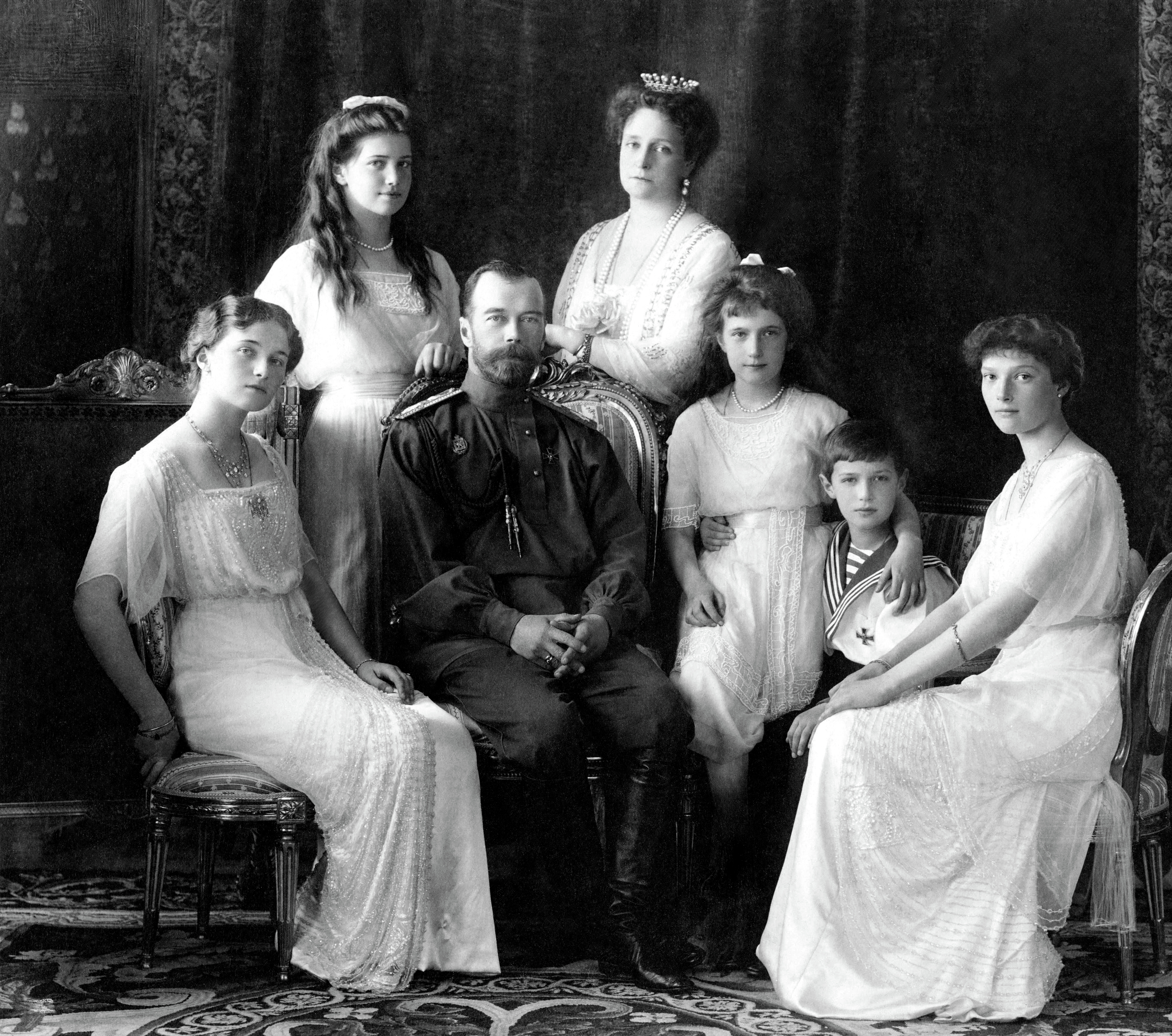
1894-1917 Nicholas II
Core Theme: The incapable autocrat
In a nutshell: When Nicholas II came to the throne he inherited the problems of his father and grandfather. Unlike his forebears, however, Nicholas lacked the skills, abilities and temperament to rule. Nicholas was a weak autocrat who was dedicated to maintaining the autocracy but lacked the skill and judgement to do it effectively. In 1905 the Tsar came close to losing his throne in a revolution and was only saved by the skill of his Chairman of the Council of Ministers, Sergei Witte and the creation of the October Manifesto. In 1914 the Tsar was swept towards war and the resulting revolutionary pressures led to the collapse of the autocracy in February 1917. Note that in February the regime collapsed rather than was overthrown, the Russian Revolution happened because the state stopped functioning.
1917-1924 Lenin
Core Theme: The trapped revolution
In a nutshell: When Lenin and the Bolsheviks came to power in October 1917, Lenin anticipated a civil war and even welcomed one, knowing that it would be ideal in order for him to institute the massive changes he wanted in Russia. A civil war would lead the introduction of mass terror and class warfare against the bourgeoisie and nobility. Lenin hoped that the revolution would spread to Europe, but by 1919 this had failed to occur. Without Germany, France and other countries falling to revolution, there was no chance that they would help Russia rapidly industrialise and escape its backward peasant society and economy. As a result, by 1921 the USSR had established itself as a powerful one party state, presiding over a mainly peasant economy, one which would need intense coercion in order to transform it into a socialist economy. By the time of Lenin’s death two policies had followed one another, War Communism, the brutal wartime control of the economy and the New Economic Policy, the limited introduction of markets into the USSR. The latter policy was introduced to stave off total economic collapse caused by the former.
1924-1928 Power Struggle
Core Theme: Deciding the future of the USSR
In a nutshell: Lenin’s death in 1924 after three debilitating strokes had left the country directionless. Nobody was sure how long the NEP was meant to last for and the issue had divided the party. Two competing philosophies presented by different wings of the party also vied for dominance. Permanent revolution, favoured by Leon Trotsky, competed with Socialism in One CountrySocialism in One Country
Full Description:Stalin’s central ideological innovation, asserting that the Soviet Union should strengthen itself internally rather than waiting for a global socialist revolution. It was the ideological wedge used to isolate and defeat Leon Trotsky. Socialism in One Country was a nationalist turn in communist theory. Trotsky and the “Left Opposition” believed the Russian Revolution could not survive without revolutions in the West. Stalin argued that the USSR had the resources to build a socialist fortress alone.
Critical Perspective:This theory justified the isolationism and xenophobia of the Stalinist era. It turned the USSR into a besieged fortress, where every failure was attributed to “foreign spies” and “wreckers.” It transformed the international communist movement from a tool of global liberation into a tool of Soviet foreign policy, where the interests of foreign communist parties were always sacrificed to protect the Soviet state.
Read more, the approach of Joseph StalinStalin Joseph Vissarionovich Stalin (18 December 1878 – 5 March 1953) was a Soviet politician, dictator and revolutionary who led the Soviet Union from 1924 until his death in 1953. Read More. Permanent revolution was the idea that spreading revolution beyond Russia’s borders was the key to achieving international socialism and subverting capitalist countries. StalinStalin Joseph Vissarionovich Stalin (18 December 1878 – 5 March 1953) was a Soviet politician, dictator and revolutionary who led the Soviet Union from 1924 until his death in 1953. Read More believed that soon the USSR would face a counter revolutionary invasion (as had happened in the Russian civil war) and the building of socialism in one country through collectivisationCollectivisation Full Description:
The policy of forced consolidation of individual peasant households into massive, state-controlled collective farms. It represented a declaration of war by the urban state against the rural peasantry, intended to extract grain to fund industrialization. Collectivisation was a radical restructuring of the countryside that abolished private land ownership. The state seized land, livestock, and tools, forcing independent farmers into kolkhozy. Resistance was met with brutal force, including the “liquidation” of wealthier peasants (Kulaks) as a class.
Critical Perspective:This policy fundamentally altered the relationship between the people and the land. It treated the peasantry not as citizens to be supported, but as an internal colony to be exploited. By establishing a state monopoly on food production, the regime gained the ultimate lever of social control: the power to grant or withhold the means of survival, leading to man-made famines used to crush regional nationalism and resistance.
Read more, forced industrialisation and the creation of a huge defence industry would be the key to saving the revolution. The triumph of Stalin in the power struggle to succeed Lenin decided the outcome of this debate and the future direction of the USSR.
1928-1941 High Stalinism
Core Theme: The brutal construction of socialism in one country
In a nutshell: Forced industrialisation could only happen in the USSR by establishing the complete control of the state over the production of food. Collectivisation was the means by which Stalin could export enough grain to buy foreign industrial machinery and also feed workers cheaply in the towns and cities. The immense violence and famines that followed also helped Stalin break what he saw as the ‘kulak’ class. Forced industrialisation and its failings were always blamed on saboteurs and class enemies; Stalin saw Russia existing in a state of siege from capitalist powers and this created conditions for revolutionary terror in the second half of the decade. Stalin saw himself in a race against time to eliminate class enemies before a future war with Germany could begin. He believed that if ‘traitors’ were not taken care of, they they would assist Germany or another foreign invader when the next war began.
1941-1953 Wartime Stalinism and Cold War
Core Theme: Changing enemies
In a nutshell: In August 1939 Stalin signed a non aggression pact with Nazi Germany and covertly assisted Hitler with his war on the west for the next two years. In June 1941, the surprise Nazi invasion of the USSR led to Stalin rapidly establishing alliances with Britain and then the USA. All three powers cooperated until 1945, defeating Nazi Germany and then Imperial Japan. From 1945 to his death in 1953, Stalin shaped the early years of the Cold War, as wartime alliances soured in 1945. Within the USSR, he reasserted control that had been disrupted by the chaos of the war, politically purging rivals and commencing a final anti Semitic purge which was curtailed by his death. The development of rivalries with Maoist China and Stalin’s involvement in the Korean War shaped the early Cold War in Asia
1953-1964 Khrushchev
Core Theme: Finding a path after Stalin
In a nutshell: Stalin had economically, politically and psychologically shaped the Soviet Union for three decades and Khrushchev needed to find a way of holding together the USSR whilst dismantling Stalinism itself. The abolition of the gulagGulag Full Description:The government agency that administered the vast network of forced labor camps. Far more than just a prison system, it was a central component of the Soviet economy, using slave labor to extract resources from the most inhospitable regions of the country. The Gulag system institutionalized political repression. Millions of “enemies of the people”—ranging from political dissidents and intellectuals to petty criminals—were arrested and transported to camps to work in mining, timber, and construction.
Critical Perspective:Critically, the Gulag was an economic necessity for the Stalinist system. The “Economic Miracle” of the Soviet Union relied heavily on this reservoir of unpaid, coerced labor to complete dangerous infrastructure projects that free labor would not undertake. It signifies the ultimate reduction of the human being to a unit of production, to be worked until exhaustion and then replaced.
Read more system, the Secret Speech in 1956 and the ‘thaw’ all signalled that change was coming and some overly optimistic onlookers in Eastern Europe also hoped that it might mean the end of communism. However, Khrushchev demonstrated in his crushing of the Budapest uprising and his collaborationCollaboration
Full Description:The cooperation of local governments, police forces, and citizens in German-occupied countries with the Nazi regime. The Holocaust was a continental crime, reliant on French police, Dutch civil servants, and Ukrainian militias to identify and deport victims. Collaboration challenges the narrative that the Holocaust was solely a German crime. across Europe, local administrations assisted the Nazis for various reasons: ideological agreement (antisemitism), political opportunism, or bureaucratic obedience. In many cases, local police rounded up Jews before German forces even arrived.
Critical Perspective:This term reveals the fragility of social solidarity. When their Jewish neighbors were targeted, many European societies chose to protect their own national sovereignty or administrative autonomy by sacrificing the minority. It complicates the post-war myths of “national resistance” that many European countries adopted to hide their complicity.
Read more in building the Berlin Wall that he would defend Soviet communism. The country was still deeply scarred by collectivisation and Khrushchev’s attempts at boosting grain yields through the Virgin Lands campaign were a failed attempt at providing an alternative.
Important Note: This blog doesn’t constitute an essay, an answer or anything that is remotely likely, on its own, to get you serious marks. It’s a framework for thinking about each phase of the course. Also, in each period studied a bunch of other social, cultural, political and economic change happened which you need to know about in depth (I’ve left most of that out here for obvious reasons).
If you found this brief guide to Tsarist and Communist Russia for AQA useful, check out the Explaining History store for modern history study guides and ebooks here

Leave a Reply